Wednesday, December 10, 2025

December 10, 1941: The Last Known Victim of Dr. Emil Gleitsmann

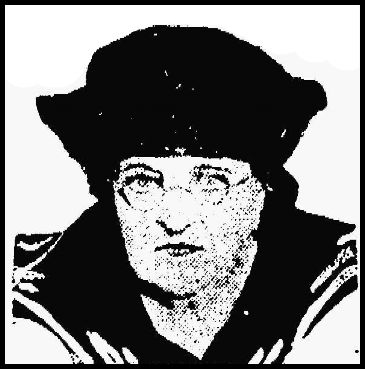
It was December of 1941. Marie O'Malley, age 35,  had an unusual living arrangement. A widow, she lived with Fred Dempsey and his wife and their children. The household also included Marie's six children, one of whom had been fathered by Dempsey.

December 5 - 9

On December 5, Marie, Dempsey, and Marie's cousin Dorothy Salvesen went to the Chicago office of 77-year-old Dr. Emil Gleitsmann. Dorothy said that before taking her back to an exam room Gleitsmann asked Marie why she was there and she answered, "pregnancy." At some point, a $50 (c. $972 in 2022) abortion fee changed hands. 

The following evening, the three again went to Gleitsmann's office. This time Marie went into the exam room with Gleitsmann. When they emerged, Dempsey asked Gleitsmann how things had gone. The doctor replied that Marie had only been pregnant a few months. Marie said that she wasn't feeling well, but, Dorothy said, Gleitsmann told her she'd be feeling better the next day.

Gleitsmann provided instructions for Marie to follow upon her return home. She was to rest in bed for three to five days, massaging her abdominal muscles every day. She would start experiencing severe pains on the 4th or 5th day. He also said that he had put in packing that was to be removed the following day.

Rather than remain in bed, Marie returned to Gleitsmann's office on December 7, accompanied by Fred Dempsey. Again, Gleitsmann took Marie back into the exam room and provided aftercare instructions. She was to perform certain exercises, such as raising her abdomen, which would help her to expel the baby.

Fred Dempsey and Marie O'Malley returned to Gleitsmann's office again on December 8. Dempsey said that Gleitsman lamented that Marie was having to submit to an abortion because she didn't want a baby, and said that in two weeks he'd so something to ensure she'd never get pregnant again.

On December 9, Dorothy Salvesen again joined her cousin and Dempsey to Gleitsman's office. This was a grueling visit. Gleitsmann took Marie back into a treatment room where she lay on a cot. From time to time Dempsey would go into the room, where he observed Gleitsmann rubbing Marie's back while she cried out in pain. Dempsey asked what the problem was. He said that Gleitsmann told him that the procedure was like childbirth and that Marie would have to expel everything that was in her womb. Dempsey said that the bed was bloody and that Gleitsmann kept reaching into Marie's body and pulling out chunks of matter with his bare hand. Gleitsmann also had a metal instrument that he told Dempsey he'd have to use later to scrape Marie out so that infection would not set in. Gleitsmann wrapped all of the tissue he'd extracted in paper and threw it away.

At around 9:00, Gleitsmann assured Dorothy that her cousin would be well cared-for and sent her home.

At around 11:00, Dempsey suggested taking Marie to a hospital, but Gleitsmann recommended against this, saying that this would just lead to Marie developing blood poisoning.

December 10

At around 4:00 that morning, December 10, Dempsey went home to look after his children. He returned at around 8:00. Marie was still lying on the cot. She asked Dempsey to take her home.

Dempsey said he wanted to take Marie to a hospital, but that Gleitsmann assured him that the afterbirth had come out so Marie would be fine in a day or two. He gave Dempsey a "blood builder" to dose Marie with and sent them home.

After taking Marie home, Dempsey called two other doctors. Dr. Lehner arrived at around 10:00 that morning, shortly before Marie died. Gleitsmann arrived shortly thereafter. Upon being told that Marie was dead, he said that he didn't understand how that could have happened and said that he'd sign the death certificate. Dr. Lehner said that he would report the death to the coroner.

Investigation

Dr. Samuel A. Levinson performed an autopsy and concluded that Marie had died from an infection caused by an abortion.

Gleitsmann's Story When Interviewed

Police spoke to Gleitsmann the day of Marie's death. He told them that he practiced "Therapeutics," which consisted of using light, electricity, and massage. He said that when Marie had come to his practice she'd said nothing about pregnancy. She had told him that she didn't want any more children, but they didn't discuss her sex life or the possibility that she might become pregnant. 

Gleitsmann said that Dempsey had accompanied Marie for every visit.

On the first examination, Gleitsmann said, he noticed an inflammation around the cervix, together with an infected exudate. The cervix itself was congested and bluish in color. He noted, he said, a tender mass in Marie's abdomen that was hard to the touch and ended under the navel. He said that he concluded that Marie had cancer. He denied putting anything -- hands, gauze, or instruments -- into her uterus.

When she'd returned on December 9, Gleitsmann said, Marie had pains all over her body and was discharging a tar-like substance which he took to be decomposed blood from where a fetus was decomposing in her uterus. He said, though, that he still didn't discuss pregnancy, or even the possibility of pregnancy, with Marie.

He said that Marie seemed to be in much improved condition by 8:00 on the morning of December 10. He said that he judged from the tarry substance coming from the womb that Marie's fetus had been dead for two or three weeks and could not have decomposed to that degree in just the few days he'd been treating her. 

Gleitsmann admitted that he had indeed discouraged Dempsey from taking Marie to a hospital, but he said that this was because he could provide her with superior care.

Gleitsmann's History

Gleitsmann had a long criminal history of abortion dating back to 1927 when he was implicated in the November 30 abortion death of 22-year-old homemaker Lucille van Iderstine. Gleitsman was indicted for felony murder in Lucille's death but for reasons I do not yet know why the case never came to fruition. 

He was prosecuted but acquitted in the December 12, 1930 death of Jeanette Reder.

After his acquittal for Jeanette's death he was indicted for the February 16, 1931 death of 25-year-old Mathilda Cornelius.

He convicted three times on a single charge of manslaughter by abortion for the March 25, 1933 death of Mary Colbert, but each time his lawyer got a reversal and eventually the prosecutors gave up.

He was implicated again in the June 8, 1934 death of 26-year-old Elsie Quall.

Gleitsman got in trouble again in 1937 for the death of 16-year-old Phyllis Brown. However, that death was eventually attributed to Dr. C. Harold Edmunds.

Gleitsmann's Story in Court

Gleitsmann testified that the first time he'd seen Marie she told him that she'd stopped menstruating and felt unwell. He said that when he examined her there was a foul-smelling pus running from her vagina. He concluded that Marie had peritonitis and blood poisoning and assured her that he could treat her.

Over the ensuing days, Gleitsmann testified, he treated her with electric heat and vibrations. He "cleaned her out" on December 6 and 7. He packed her uterus on the 7th and removed the packing on the 8th and again "cleaned her out."

He admitted to keeping Marie overnight from December 9 because she was in a lot of pain and having trouble breathing. She had, he said, been able to walk to the car when she'd left the office the next day.

He adamantly denied having performed an abortion. Marie, he said, never even requested that he perform one.

They Say He Says

Two women, Pearl Katschke and Edith Hagebush, testified in the trial that Gleitsmann had perpetrated abortions on them in 1941 and 1942 respectively. The treatment they described was similar to what Fred Dempsey and Dorothy Salvesen described.

Gleitsmann testified that he hadn't performed abortions on either woman. He said that when Edith Hagebush had come to him she was already discharging a bloody pus and told him she'd been taking ergot and quinine (abortifacients). He said that he didn't wear gloves during examinations because they're to protect the doctor, not the patient, and he needs to have his sense of touch unimpeded.

Outcome

The jury deliberated a mere 20 minutes before convicting Gleitsmann of murder by abortion. He was sentenced to 1 to 14 years. He appealed but lost. He still had two other indictments, one for murder by abortion and another for abortion, pending at the time of his sentence.

While incarcerated his wife died and he sued his stepson over $25,000 worth of real estate that he said his wife and stepson had bilked him of instead of using it to shore up his defense. He still shows up in the 1950 census as an 84-year-old prisoner in the Illinois State Penitentiary.  He died February 20, 1956.


Sources:

December 10, 1998: FPA Screws Up Anesthesia Again

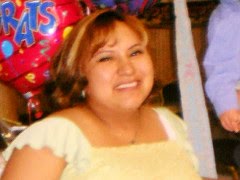
Nakia "Kia" Jorden would have graduated from Hyde Park High School in 2000. Instead on December 10, 1998, she died of anesthesia complications during an abortion at the Albany Medical Surgical Center at 5086 North Elston Avenue in Chicago.
 
She left as her survivors her parents and sisters. They filed suit against Albany, Family Planning Associates Medical Group, abortionist Steve Lichtenberg, and nurse anesthetist Lawrence Hill. FPA is a member of the prestigious National Abortion Federation.
 
According to an expert in anesthesia who reviewed Nakia's records, Nakia was obese, had a history of bronchitis, had some upper airway congestion, and had a pulse ox reading of only 94% when she was sedated for her abortion. The records from Albany indicate that "deep sedation if not general anesthesia was used," but Nakia was not given oxygen, and was not monitored by EKG as appropriate when administering this degree of anesthesia to an obese patient. There was no note of any proper method of monitoring Nakia while she was under sedation. Although she was intubated for anesthesia, there was no documentation that anybody verified proper placement of the endotracheal tube. Hill documented using only Brevital, but Lichtenberg noted administration of both Brevital and Stadol.
 
The greatest fault that the anesthesia expert found was that Hill, upon noting a pulse ox reading of only 74% -- clearly showing that Nakia was not getting nearly enough oxygen -- he did nothing to ensure that she was in fact getting enough oxygen into her lungs. Instead, he administered atropine to increase her heart rate, "which likely delayed the critical intervention of ventilating the patient with oxygen." 

Other abortion patients who have lost their lives after entrusting them to FPA include (*indicates another anesthesia-related death):


CRNA Lawrence Hill was also faulted for his fatal lack of care in the deaths of Antonesha Ross in 2009.


Tuesday, December 09, 2025

December 9, 1956: The Forgotten Victim of the "Angel of Ashland"

Mary Davies
Abortion-rights activists refer to Dr. Robert Spencer as "The Angel of Ashland" because of his willingness to perpetrate abortions in his practice at 531 Centre Street in Ashland, Schuylkill County, Pennsylvania. To his credit, he only has one dead patient to my knowledge, which puts him far ahead of many of his contemporaries. 

On Saturday, December 8, 1956, 26-year-old Mary Davies of Irvington, New York went to 61-year-old Spencer's office. As a physician, Spencer was typical of criminal abortionists. What was unusual about him was that rather than sneak the woman in through the back alley, Spencer plied his abortion trade openly.

Mary was a talented and ambitious young woman. In January of 1951, as a junior at Rockford College in Illinois, Mary was one of two students to attend a conference on the role of women in society. The following year she was featured in many organizations in the college yearbook. 

Mary was working at a medical center and attending Columbia University when she learned of her pregnancy.

The Fatal Abortion

According to Spencer, Mary was alone, and reported that she'd been bleeding for about two weeks. He didn't examine her, but gave her medication for pain and Ergotrate to stop the bleeding. He told her to return the following day for her abortion. She went to spend the night at Hotel Loeper nearby.

Mary returned at about 10 AM on the 9th. He administered 13 ccs. of Evipal in a 10% solution to induce anesthesia. "I injected that solution into the vein of the left arm and in ten seconds she was asleep." Spencer said that the next thing he noticed was that Mary wasn't breathing. Mary did not respond to medications intended to revive her, so Spencer attempted to resuscitate her with oxygen. He called his assistant, Mildred Zettlemoyer, into the room to assist him.

Mary still was not responding, so Spencer had Zettlemoyer call the laboratory assistant, Steve Sekunda, and tell him to come to the office. Spencer put a breathing tube into Mary's throat, but had to work blind because the light on his scope wasn't working. He resumed artificial respiration. By the time Sekunda arrived, at around 11:30, Spencer had concluded that Mary was dead. However, resuscitation efforts evidently continued because Mary wasn't declared dead until 3:30 that afternoon.

Preparing for Trial

Dr. Robert Spencer
William J. Keuch, chief detective of Schuylkill (pronounced "school kill") County, said that when he'd asked Spencer what a young woman from New York City was doing in Spencer's office in Ashland, Spencer answered, "I'm well known in the east. I specialize in women's diseases." Women, Spencer told Keuch, came to him from all over.

Spencer wasn't arrested until after 12 weeks of investigation, which included sending Mary's organs to Dr. Milton Helman, a member of the New York Medical Board, for toxicology review..

When the case was finally ready to go to court in May of 1958, the entire trial was derailed when, during jury selection, one woman asked to be excused because, she said, "I served on a jury in which Dr. Spencer was involved before." This statement was considered prejudicial to Spencer, thus tainting the other jurors.

Trial

The defense seemed to be based mostly on raising reasonable doubt that Mary had actually been pregnant at the time of the abortion. Different experts testified about how they'd drawn their conclusions. The argument evidently worked. Proceeding with an abortion procedure if the patient wasn't actually pregnant, evidently, regardless of Spencer's intention to abort a viable fetus, would not be considered a crime even if the patient died

Spencer's Response

Spencer's widow, Eleanor, told author Patricia Miller that her husband had been quite stricken by Mary Davies' death. He continued to perform abortions, however, along with his regular medical practice, up until the trial.

Spencer briefly stopped doing abortions after the trial, "for a month or so," his widow said. But he resumed his business and eventually got entangled with a fellow named Harry Mace who set up a business for himself rounding up abortion patients and bringing them to Spencer. Spencer's widow lamented that Mace flooded Spencer with patients, pressuring him to rush through abortions. Spencer's health began to fail. He was arrested again, due to the attention from Mace's activities, but died in 1969 before the case went to trial.


Newly added sources:

Monday, December 08, 2025

December 8, 1987: DC Abortion Kills Young Woman

Grok AI illustration
Life Dynamics lists 28-year-old Myria McFadden on their "Blackmun Wall" of women killed by legal abortions. LDI summarizes Myria's case with the following information: 

Myria underwent a second-trimester abortion on December 7, 1987, in Washington, DC, performed by Dr. Hazel Tape. 

Myria had trouble breathing after the abortion. She suffered heart and lung failure and died the following day, December 8, at Holy Cross Hospital in Silver Spring, Maryland.

According to the US Social Security index, Myria was black, which placed her both at higher risk than a white woman of being sold an abortion, and at higher risk of death once she climbed on the table. 

LDI Source: Maryland Certificate of Death

December 8, 1914: Schoolgirl Dies in Chicago

Grok AI illustration

According to public records, 13-Ida Kaufmann was a Chicago native, daughter of German immigrants Julius Kaufmann, who worked as a saloon keeper, and wife, Minna Vocke Kaufmann. Ida was the youngest of four children. By 1910, Julius was no longer keeping a saloon but had become a railroad worker. The family owned their own home. 

On December 8, 1914, Ida was a 13-year-old schoolgirl. She died in her Chicago home at 4226 Tallman Avenue in Chicago after an abortion performed by an unknown perpetrator. 

She had suffered uterine hemorrhage. 

Sources


December 8, 1994: Blood-Spattered OR Team Can't Fix "Screw-Up"

Headshot of a bearded, balding, bespectacled man of Indian ethnicity.
Suresh Gandotra

The California Medical Board knew something about Dr. Suresh Gandotra that 23-year-old Magdalena Rodriguez didn't know. Had they acted on their knowledge, she wouldn't have died.

On December 8, 1994, 23-year-old Magdalena travelled from her home in Tijuana to Suresh Gandotra's clinic, El Norte Clinica Medica, in San Ysidro, California. Magdalena had an appointment for a safe, legal second-trimester abortion. She didn't know about what he'd done to another woman three years earlier. 

That young woman, age 22, had also travelled to San Ysidro from Tijuana. She had been 18 weeks pregnant. Gandotra made an unsuccessful attempt to complete an abortion and sent her home, hoping "the fetus would drop." She returned the next day with an infection because Gandotra had torn a hole in her uterus and pulled out a portion of her bowel. When he realized how seriously injured his patient was, he sent her to UC San Diego Medical Center rather than the nearest properly equipped hospital. The patient arrived in shock, having lost 40% of her blood. The doctor who performed emergency surgery to save this patient's life said, "The damage was so extensive it was difficult to identify the anatomy." Gandotra's comment on the case was, "I guess I screwed up."

The medical board screwed up as well. The case sat forgotten somewhere in their offices. As for Gandotra, he had a similar comment about his care of Magdalena: "I knew I screwed up."

Madgalena's abortion started at 10:00 in the morning. Struggling to remove all the fetal parts, Gandotra realized that something had gone terribly wrong. He later told the medical board that he had delayed calling an ambulance because he had no admitting privileges and Magdalena had asked to be released so she could walk home -- to Tijuana. Clearly Magdalena was already in shock and unable to grasp the situation she was in.

It wasn't until 3:24  p.m. that Gandotra called the University of California San Diego hospital and asked for directions to send Magdalena there by car. The staff at the hospital insisted that Magdalena should be transported by ambulance. They began to assemble an expert team for the expected catastrophic injuries.

In the mean time, Gandotra left Magdalena unattended while he did abortions on other patients. When he finally called an ambulance, he did not inform them of the hospital that was awaiting her arrival with a team ready to treat her.

When the ambulance crew arrived at 4:33 p.m., they found Magdalena lying on the floor in a pool of blood, pulseless and in ventricular fibrillation. Gandotra didn't tell the medics about the hospital that was awaiting this critically injured patient, so they took Magdalena to Scripps Chula Vista Hospital rather than to the hospital that had prepared a specialized team for her. She arrived at around 5:15 that evening.

Gandotra also didn't provide a medical history or any information about her condition or what he'd done to her. The hospital staff were totally unprepared for what they found when they examined her. Magdalena had no vitals on arrival at hospital. She was unresponsive with fixed, dilated pupils.

When the surgeon at the hospital opened Magdalena's peritoneum, it was so distended that the operating room was spattered with the escaping blood. Magdalena's uterus was ruptured, with a fetal limb protruding into her abdomen. Her cervix, uterus, bladder, and colon were lacerated. The mangled and partially dismembered fetus was of approximately 30 weeks gestation. In spite of the surgical team's heroic efforts, Magdalena was pronounced dead from massive blood loss at 10:17 p.m.

Upon autopsy her death was attributed to "complications of the acute pelvic injuries which consisted of lacerations of the lower uterus, vagina, bladder and colon." As the autopsy describes the unborn child, "the body of the baby was not complete when autopsied. Both arms had been cut off; the heart, lungs, liver, and other organs had been cut out, the front of the chest and abdomen were missing, the right femur was fractured, the head was intact except for an area on the scalp which had been taken off from the back of the head."

Gandotra's attorney said, "We don't believe this was below the standard of care nor do we believe it was malpractice." In contrast, a  nurse at the hospital that tried to save Magdalena's life said, "I've never seen anything like this before and I don't want to again."

After Magdalena's death, investigators went to the clinic and found that Gandotra had no means of providing transfusions, only had first-trimester consent forms even though he did second-trimester abortions, did not take after-hours calls, did not keep adequate records, and did not speak Spanish although 95% of his patients were Spanish-speaking.

Gandotra performed about 100 abortions per week at his clinic. He had previously served five months of a fifteen-month sentence for committing Medicaid fraud and allowing non-licensed people to perform medical procedures at his facility.  Eventually a homicide warrant was signed out against him for Magdalena's death and he fled to his native India. As far as I can determine he remains there, a wanted man on Interpol's list, and going about his business.

December 8, 1948: Peritonitis After Criminal Abortion in Manhattan

According to New York death records, 43-year-old Anna Soriono, a Pennsylvania native, died December 8, 1948 at Bellevue Hospital in Manhattan.

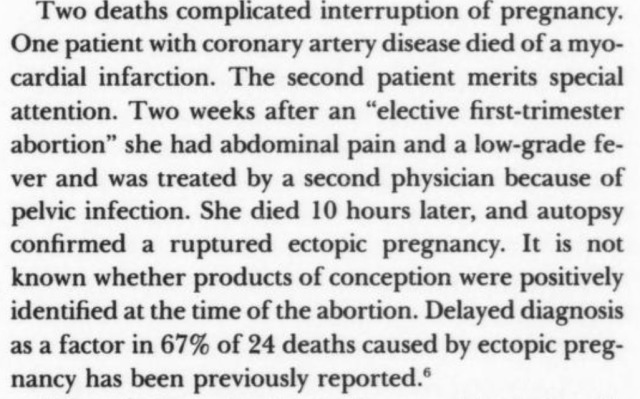
Anna's uterus and sigmoid colon were perforated during a criminal abortion. This caused the acute suppurative peritonitis that killed her.

Sunday, December 07, 2025

Private Investigations

"Private Investigations" by Dire Straits has been the theme song of my work for over 30 years, capturing the frustration, grief, and sense of futility, of screaming into the void. It will loop in my head, a relentless soundtrack as I fight to commemorate the women their betrayers want us to forget.

Scarred for life. No compensation.

I first heard the song in Mark Crutcher's minivan when we were working on the Christi's Choice documentary at Life Dynamics. He played it for us, wanting the haunting music over the closing shot of Fred Stile waking alone in front of Mayfair Women's Center with his daughter's picture and the words, "Mayfair killed baby and MOTHER." The staff would come outside to mock him, laugh at him, spit on him. But Fred kept his lonely vigil, not wanting anybody else to suffer what his family was enduring.

Fred's daughter, Christi, had been left in a permanent vegetative state after a botched abortion at this ill-equipped, ill-staffed clinic. 

The song was perfect. Mark asked for permission. It was denied. Fred walks with no guitar, no voice-over, no catharsis. Just the sound of his shoes on the sidewalk and the occasional jeer from the people who took his daughter from him. 

It's a mystery to me. The game commences.

My journey down this macabre rabbit hole began back in 1984, of all years, when I read Bernard Nathanson's Aborting America, a memoir of his role in launching NARAL -- then the National Association for the Repeal of Abortion Laws, now NARAL Pro-Choice America. I learned that deceit and slovenliness have been part and parcel of the abortion-rights movement from its inception.

Nathanson admitted that NARAL and other organizations lied to the public about abortion deaths:

In N.A.R.A.L. we generally emphasized the drama of the individual case, not the mass statistics, but when we spoke of the latter it was always "5,000 to 10,000 deaths a year." I confess that I knew the figures were totally false, and I suppose the others did too if they stopped to think of it. But in the "morality" of our revolution, it was a useful figure, widely accepted, so why go out of our way to correct it with honest statistics? 

Dr. Milan Vuitch
Nathanson noted that NARAL had referred women to DC abortionist Milan Vuitch for years before finally sending Nathanson to check him out. With his laser-focus on abortions happening rather than on the welfare of the women, Nathanson observed Vuitch in action:

So nimble was he with the dilator, so elegant with the curette that one felt impelled to forgive him his minor lapses in sterile technique, such as failing to use sterile gloves or antiseptic solutions to prepare the vagina. ….. Even the occasional failure to wash hands between cases, a cautionary basic even to a veterinarian or a chef, did not seem as heinous as it should have. 

Nathanson declared Vuitch fit to care for the vulnerable women who were trusting NARAL.

Nathanson told about his experience at CRASH -- Center for Reproductive and Sexual Health -- where he came on board in 1971 to clean up the place. He found CRASH chaotic, crowded, ill-equipped, poorly run, poorly staffed, dirty, and operating with no back-up hospital. Abortionists were paid piece rate so experienced ones would purposely underestimate gestational ages on some patients to trick new, less skilled doctors into taking messy and time consuming late abortions, leaving the quicker, more profitable ones for themselves. Nathanson whipped CRASH into shape long enough to pass an inspection, but as soon as the inspector left, it was back to business as usual - chaotic and unsafe. Nathanson became disillusioned. The clinic’s administrators had a ghoulish preoccupation with doing more and later abortions. Nathanson had a staffer extract a section of liver from a cadaver and send it to the lab. The report came back “pregnancy tissue.” Nathanson eventually left in disgust. The largest freestanding for-profit abortion clinic in the world was a hot mess, and nobody in the abortion-rights movement had a problem with that. 

Aborting America changed my life. I have a low betrayal tolerance, so this evidence that the abortion lobby was betraying women -- promising safety and delivering slovenliness -- wasn't something I was ready to just gloss over. I wanted the truth, and I wanted to share it in the hope that if others knew, others would care and things would change.

I was in for a very rude awakening.

This is my investigation. It's not a public inquiry.

I started doing research at the library. There I discovered the first two of the hundreds of abortion deaths I've since documented: Gloria Aponte and Ellen Williams. Both had died due to appalling malpractice. Gloria's abortionist, Hanan Rotem, allowed his receptionist to administer general anesthesia. The clinic where Ellen had her abortion, Dadeland Family Planning, was a hell hole where a dying woman was offered tea, sympathy, and a bottle of antibiotics that couldn't touch the raging peritonitis. Both deaths bear witness to the type of systematic slovenliness that would reach its full flower in Kermit Gosnell decades later. The response to the revelations about Dadeland -- a closing of ranks by the self-appointed protectors of women's rights, blocking all efforts to shut down places like Dadeland -- sowed the seeds for that deplorable blossom. 

During the 1980s I saw news coverage of a group of prolifers holding signs shaped like tombstones, each commemorating a woman who had died from a "safe and legal" abortion. Clearly Ellen and Gloria had not been flukes. 

This was before the internet. I did what I could. I got a batch of those tombstone signs and did a vigil outside the Supreme Court with Feminists for Life. People saw the vigil live on local news and hurried to join us. Maybe people would notice. Maybe they'd pay attention. As the vigil broke up, somebody had left behind an "Abortion Death Log" that fell into my hands. I tracked down its author, Kevin Sherlock, a dogged abortion death researcher who uncovered scores of deaths. He had even gotten notes that a reporter wrote when investigating the death of Dorothy Muzorewa, describing her apartment as "wall to wall blood." 

I became active locally, wrote for newsletters, called in to talk radio, wrote letters to the editor. Nothing changed.

The futility was overwhelming. I wanted to quit. But I looked at the face of Barbaralee Davis on her tombstone sign. A beautiful young woman with long hair parted in the middle, just like my daughter wore hers. I went through the signs, one after the other, turning them over and reading the stories on the back. Erica Kay Richardson, brought for a secret abortion by her aunt then carried out to the car in the dead of night with instructions to take the moribund teen home. Sylvia Moore, only 18 years old, so weak from blood loss that she couldn't even stand up, literally shoved out the door to die on New Year's Eve. Dawn Ravenell, only 13 years old, her family trying desperately to bring her back from her fatal coma after a secret abortion arranged by the school. I started crying and said to my friend, "I can't quit. These are all somebody's daughter. I can't abandon them."

I go checking out the reports, digging up the dirt.

My volunteering led to a job at Life Dynamics. We provided litigation support to plaintiff malpractice attorneys representing abortion-injured women and the families of those who died. Most of that support took the form of public-records searches for information about practitioners and practices. 

One day Mark Crutcher poked his head into my office and told me that somebody from Henry Hyde's office had called, asking for a report on abortion malpractice. I was to have it ready in 30 days. I started pulling documents from our files and sorting them, trying to get an idea of what we had. Within a few days, I went to Mark. "We don't have a report here. We have a book."

He told me, "So write a book." That book became Lime 5.

Mark put out a call to our mailing list: "Send us dirt on abortionists." He asked for anything: malpractice, deaths, tax evasion, you name it. Documents came flooding in. I wrote summaries then gave Mona Passignano every clue that could lead to more information. Mona would order docket searches, death certificates, health inspection records, and autopsy reports. We became detectives of sorts. We had a prolife snippet about the death of Michelle Madden, but the court records from her family's lawsuit were sealed. We put our heads together and decided on a docket search in Dr. O.B. Evans' home county. His insurance company had sued him over the case. That record wasn't sealed. We got what we were looking for.

More and more documents came in. The pile on my desk was seldom less than two feet high. I'd plow through it with Mark Knopfler's voice and guitar echoing in my head. There was always more dirt. It never ended.

Treachery and treason, there's always an excuse for it.

Ana Rosa Rodriguez
Along the way, I started cross-checking malpractice cases against National Abortion Federation member lists in their annual reports. I found Hanan Rotem -- the one with the receptionist administering general anesthesia -- and Abu "The Butcher of Avenue A" Hayat on the NAF membership rolls, among many others. Hayat had made a brief splash in the news when he'd ripped the arm off Ana Rosa Rodriguez while trying to abort her at 32 weeks of gestation. He'd performed a fatal abortion on 17-year-old Sophie McCoy and sexually abused patients. Mona and I confirmed that 21 of the deaths we had uncovered had been at the hands of NAF practitioners. Mayfair, the seedy facility that had left Christi Stile in a vegetative state, was a member. NAF's promises of safety were ringing pretty hollow.

We started digging deeper.  We obtained tapes of years and years of meetings and seminars held by the National Abortion Federation. If I had my wish, every recorded minute of every word spoken at those seminars and meetings would be readily available to the public. They include some of the most damning words ever uttered about what goes on behind the scenes in America's abortion clinics. Some of the lowlights:
  • In one session of a Risk Management Seminar, a participant indicated that when he pulled bowel (extracted part of a patient's bowel through a hole in her uterus), his preferred method of treatment was to stuff the bowel back in, administer drugs to make the uterus contract and control bleeding, monitor the woman more carefully in recovery, and if she seemed okay, send her home none the wiser. The moderator was appalled. He pointed out that even if there was no obvious injury to the bowel, it might be bruised and damaged. The recommended procedure is to admit the patient to the hospital, examine her bowel, and observe her for signs of further injury. The moderator then asked how many of the other participants followed this method of stuffing the bowel back in and hoping for the best. Six participants raised their hands to be counted.

  • Dr. Warren Hern
    During a discussion about malpractice suits, Dr. Warren Hern, a NAF board member, former head of its Clinical Guidelines Committee, and author of Abortion Practice, repeatedly scolded his fellows for their sloppy practices. "I think that our best defense is to practice good medicine." But Hern was cut off and the discussion moved to legal strategies for avoiding lawsuits rather than medical strategies for preventing injuries and deaths. Additional discussion focused on how to attack the women who sue, including ideas about how to discredit, frighten, and/or intimidate them into dropping their suits. 

  • Kathryn Kolbert of the ACLU scolded the members for being so sloppy and committing so much malpractice. She told them she gets tired of "beating the shit out of this woman" to get her to drop her malpractice suit.

  • Steve Lichtenberg, who was operating "Fast Eddie" Allred's Family Planning Associates Medical Group clinics in Chicago, boasted about performing risky abortions in his outpatient facility and treating life-threatening complications on-site instead of promptly transferring his patients to a fully-equipped hospital. The moderator, Planned Parenthood Medical Director Michael Burnhill, scolded Lichtenberg for "playing Russian roulette with patients' lives."
This was a stark contrast to the sessions where they told each other, always with a catch in the voice, that they do what they do "for the women." The same women they callously endanger, gravely injure, then bully and insult.

Betrayal is part of the package when you trust even the cream of the crop. Mark Knopfler's voice carries the sadness and despair of the injured women and the families of the dead as it echoes again in my mind. I write and we publish and there's a brief flash of public interest and then it all dies away, like Knopfler's last guitar lick and the faint final piano notes. 

And when I find the reason, I still can't get used to it.

I've since left Life Dynamics, but I never stopped checking out the reports and digging up the dirt. I started a website, a blog, and a YouTube channel. I'm far from alone. I owe a massive debt of gratitude to Operation Rescue for how meticulously they document every cause of malpractice and death they encounter. They have prevented cover-ups with their perseverance and determination to dig until they get to the truth. 

But what good does truth do?

Women's Medical Society
On February 10, 2010, the FBI and Philadelphia detectives conducted a drug raid on Dr. Kermit Gosnell's Women's Medical Society. They uncovered what was described as a "house of horrors." Women, many well past the midpoint of their pregnancies, lay moaning on blood-stained recliners while flea-infested cats roamed freely, defecating on the floors. From time to time, untrained staff would administer off-the-cuff doses of dangerous narcotics, followed by drugs to induce labor. The women would expel their living infants. The infants would then be murdered by severing their spinal cords with surgical scissors. 

The fetal remains were stashed all over the facility -- in piles of trash bags in the basement, in empty cat food and orange juice containers in the freezer. The severed feet of aborted babies were collected in jars, each labeled with the name of the mother and the date of the infant's death.

Two women -- Semika Shaw and Karnamaya Mongar -- died under this dubious care. 

A Grand Jury convened to investigate. Their report is jarring reading. The cops, the grand jurors, and the public were shocked by what was uncovered. But some people weren't shocked: the public servants at the health department and the medical board. They had known what was going on as conditions deteriorated year after year for decades. But they turned a blind eye. Why? Because inspections might lead to sanctions or even closure of the facility, thus limiting "access."

And there we have that magic word: access. 
  • Bernard Nathanson had glossed over Milan Vuitch's failure to wash his hands and use proper sterile technique. It was more important that the abortion take place than that it be done in a safe, sanitary manner. Access was more important than safety. Better risk a dead woman than risk a live baby.

  • In 1978, the Chicago Sun-Times did an undercover investigation. They learned of drunken doctors, abortions sold to women who weren't pregnant, rushed abortions, kickbacks for referrals, shoddy and falsified records, procedure rooms "cleaned" by wiping surfaces with wet Kleenex, and patients sent home after 15 minutes with no exam to make sure it's safe for them to leave. They learned about 12 dead women. Did anything change? Illinois passed a law to address the problems, only to have NAF member Richard Ragsdale successfully sue to block enforcement. The deaths continued.  Access über alles.

  •  In 1989, an investigation by the Miami Herald revealed that Dadeland Family Planning, the clinic where Ellen Williams was fatally injured, was reusing disposable instruments, that the doctors were leaving while patients were still in recovery, that there were no nurses on staff, and that recovery was overseen by unqualified staff. The stirrups on the procedure tables were covered with blood. The oxygen mask had lipstick from the previous patient. Abortions were being sold to women who weren't pregnant. The response of the "responsible abortion providers" was to form the Florida Abortion Council, headed by Janis Compton-Carr. She led the fight to halt state oversight of abortion facilities in the wake of the scandal. She summed it up to the Miami Herald: "In my gut, I am completely aghast at what goes on at that place. But I staunchly oppose anything that would correct this situation in law." Access trumps all other considerations.
  • In 1991, 60 Minutes did an expose of a clinic in Maryland where Debra Gray had died and Susanne Logan had been left mute and paralyzed because of slipshod anesthesia practices. When 60 Minutes interviewed Barbara Radford, then-president of the National Abortion Federation, she admitted that they'd known how bad the clinic was but kept silent. She defended the head-in-the-sand attitude by saying, "We want to make sure that women have choices when it comes to abortion services, and if you regulate it too strictly, you then deny women access to the service." It's the same refrain: Access is more important than safety.

  • The current post-Dobbs trend of treating abortion pills as virtually risk-free -- sometimes with no pre-abortion exam or arrangement for aftercare -- has led to the deaths of "Luna," "Lucy," Candi Miller, and Alyona Dixon in 2022; "Alina" in 2023; "Jayden" around 2024; Amber Thurmond in 2024; and "Fawn" in 2025. The abortion lobby claims that this practice is a safe way to preserve access. Better risk a dead woman than risk a live baby.
I find it maddening that a movement that endangers women's lives under the pretense of saving women's lives continues to get away with it. I've been trying since 1984 to get people to care, and they still don't care. And every time I think about it, I get Mark Knopfler in my head again:

And what have you got at the end of the day?
What have you got to take away?
A bottle of whisky and a new set of lies
Blinds on the windows, and a pain behind the eyes

What have you got at the end of the day? Fred's lonely vigil. Christi's death over 21 years later. Ten more years of the same old same old. And nothing on the horizon but more of the same, because the only people with the power to change anything don't care. 

Scarred for life. No compensation.
Private investigations.

December 7, 1925: Mystery Death in Chicago

West End Hospital, Chicago
On December 7, 1925, 18-year-old Margaret Zito died at Chicago's West End Hospital from a criminal abortion performed that day. 

The person responsible for Margaret's death was never identified.

However, the majority of Chicago abortions at that time were perpetrated by either physicians or midwives, so it's likely that Margaret availed herself of the services of one of these professionals.

Source: 

Saturday, December 06, 2025

The Sisyphean Journey

Stuck at home during the COVID quarantine, I started listening to the audiobook of Gosnell: The Untold Story of America's Most Prolific Serial Killer, by Ann McElhinney and Philem McAleer. As I listened, I found myself wanting to comment again and again to McElhinney and McAleer. I've realized that over 30 years of studying abortion malpractice and malfeasance gives me a unique perspective. I want to share that with my readers -- and with the authors of this groundbreaking, must-read book. I am not going to give a blow-by-blow account of what the authors cover. My commentary will be limited to what I can add from what I've observed.

The Political is Personal

I began research into abortion in the fall of 1983, after becoming pregnant with my son in very difficult circumstances. I had been taught in college that poor women who can't feed the children they already have need abortions. It's the only way they can fulfil their responsibilities to their born children. There I was in that situation. My husband and I had pawned our wedding rings to buy food for our daughter. I was skipping meals myself. At four months into the pregnancy I wasn't even beginning to show.

I knew that the entity growing inside my body was a baby, as precious as my daughter. But I had only just graduated from college in June. During those four years I'd absorbed a lot of the Leftist culture of the university setting. The only way I could afford to feed my daughter was to starve myself, which was starving my unborn baby. My primary responsibility was to feed my daughter. It was clear that I had to bite the bullet, to go against my conscience, to bear the moral and emotional burden of aborting the growing child within me.

If I'd had prochoice friends, they would have reassured me that abortion was the right choice, however difficult it was. I had to think of my daughter. I had to think of the damage I'd inflicted on my unborn child already by starving myself. I had to do it.

Fortunately, there was somebody different in my life. My husband's best friend, Eddie. Eddie was able to see what my husband and I couldn't see: that the problem was our living situation. My husband was in the Army, stationed at Fort Ord. We only had one month of temporary housing provided so we'd had to find a place quickly. The apartment we'd found was over a half-hour drive from the Defense Language School. We were far from the commissary or even a grocery store. Our apartment hadn't come with a refrigerator. We'd only been able to afford a bar fridge. We didn't have enough room to store enough food for a week. I made trips to a local mini mart where food was astronomically expensive. The cost of gas for my husband's commute was draining what little money we had. Clearly, Eddie insisted, we needed to find a cheaper place closer to the school.

My husband and I balked. We'd searched. The area around Fort Ord was notorious for expensive housing and enlisted personnel who couldn't afford to feed their families. We were convinced that it was hopeless. Eddie persevered. Finally one Saturday morning he pushed us towards the door and said, "You're looking for an apartment. Now."

We found one that day. It was much nicer, much cheaper, across the street from a grocery store, and in a spot where my husband could carpool to work. Within a few months we were caught up on our debts and not only feeding ourselves but able to invite guests to dinner.

The experience left me with a profound distaste for the prochoice movement, whose rhetoric had very nearly led to the needless death of my unborn son. 

Dirty Secrets

I quickly volunteered at the local Birthright, where part of my training was to read Bernard Nathanson's Aborting America, a memoir of his role in launching NARAL -- then the National Association for the Repeal of Abortion Laws, now NARAL Pro-Choice America. I learned that deceit had been part and parcel of the prochoice movement from its inception. I have a low betrayal tolerance. I became determined to dig deeper.

I started doing research at the library, looking at News Bank. There I discovered the first two of the hundreds of abortion deaths I've since documented: Gloria Aponte and Ellen Williams. Both had died due to appalling malpractice. Gloria's abortionist, Hanan Rotem, had allowed his receptionist to administer general anesthesia. The clinic where Ellen had her abortion, Dadeland Family Planning, was a hell hole. Both deaths bear witness to the type of systematic slovenliness that would reach its full flower in Kermit Gosnell decades later. The response to the revelations about Dadeland -- a closing of ranks by the self-appointed protectors of women's rights, blocking all efforts to shut down places like Dadeland -- sowed the seeds for that deplorable blossom. I only came to see this myself gradually.

During the 1980s, Operation Rescue began a program of blockading abortion facilities. News coverage of one of those blockades include a photo of a group of prolifers holding signs shaped like tombstones, each commemorating a woman who had died from a "safe and legal" abortion. Clearly Ellen and Gloria had not been flukes. I attended a prolife rally in DC. Somebody had left behind an "Abortion Death Log" that fell into my hands. I tracked down its author, Kevin Sherock. Sherlock was a dogged abortion death researcher who documented his work well. He went on to publish Victims of Choice based on that research. Sherlock's research uncovered scores of deaths, some with very few details available, some with an abundance. I'd encounter Kevin Sherlock again.

I went to work at Life Dynamics, a renegade prolife organization headquartered in Denton, Texas. We provided litigation support to plaintiff malpractice attorneys representing abortion-injured women and the families of those who died. What started out as a report to summarize what we had in our files turned into Lime 5, an expose of the scope of the malpractice problem and the combination of cover-up and emabling by the abortion lobby -- especially the National Abortion Federation -- and bureaucrats at the Centers for Disease Control.

While at Life Dynamics I experienced another eye-opener. We had obtained tapes of years and years of meetings and seminars held by the National Abortion Federation. If I had my wish, every recorded minute of every word spoken at those seminars and meetings would be readily available to the public. They include some of the most damning words ever uttered about what goes on behind the scenes in America's abortion clinics. The things David Daleiden recorded came as no surprise to me. They were totally in keeping with what I'd heard on those tapes from the late 1980s through mid 1990s. Nothing has really changed beyond technology making even more ghoulish endeavors possible.

When I left Life Dynamics, I took my files on a CD-ROM and eventually started first a web site, then a blog, then a wiki devoted to abortion deaths. I branched out to include deaths from the pre-legalization era as well because I don't believe that only one type of abortion death is tragic and unnecessary. The site that hosted my wiki closed down, but I was able to salvage most of the content, now at the Cemetery of Choice.

I have kept up-to-date on abortion deaths and malpractice and owe a massive debt of gratitude to Operation Rescue for how meticulously they document every cause of malpractice and death they encounter. They have prevented cover-ups with their perseverance and determination to dig until they get to the truth.

When the Gosnell story broke, I got a copy of the Grand Jury Report as quickly as I could and spent nearly a week of sleepless nights converting it into a searchable wiki plus commentary -- alas since relegated to the Internet Archive after my wiki host shut down. In all honesty, the only thing that really shocked me about the Gosnell story is that he was vigorously and successfully prosecuted. Yes, he was the worst I'd ever seen, but it was a mere matter of degree. Animals in clinics, filth, untrained staff, stockpiled fetal remains, bureaucratic indifference, and the abortion lobby getting away with their lame excuses because a complicit media spreads them unquestioningly are all par for the course in abortion practice. The aftermath -- that nothing has changed -- is also no surprise. Filthy clinics are uncovered, stockpiled fetuses are stumbled across, bureaucrats and officials turn a blind eye, babies are born alive and killed, women's lives are cut short by malpractice, and the media continue to uncritically defend the indefensible by covering it up.

I had long hoped that if given enough information about how appalling abortion practice really is, prochoice citizens would rise up and demand that the "safe" part of "safe and legal" be taken seriously. After thirty years, I'm ready to abandon that dream. Once you start to really care about how the women are treated, becoming a prolifer is inevitable. Once you become a prolifer, you are dismissed out of hand. Of course you say bad things about abortion -- you're one of Them. The fact that we are Them because the bad things are true can't penetrate the wall of fog the abortion lobby and its media lapdogs create. Denial: It's Not Just a River in Egypt.

I have no idea how long it will take to reach the tipping point, where the entire house of lies collapses under its own weight. I have come to doubt that it will come in my lifetime. Still, if I can even poke at that foundation of lie, maybe I can do my part to undermine it. Maybe, for my granddaughters, the days of Safe and Legal Abortion will be universally seen as shameful as the days of The Peculiar Institution of slavery.

In the mean time, I will do everything I can to get the truth out. One piece of that will be sharing and adding to the work of McElhinney and McAleer. Hats off to you, Ann and Philem. Would that all journalists were as honest and courageous as you.