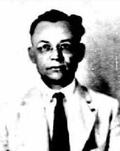
SUMMARY: Stella Murgatroyd, age 27, died on January 30, 1904 after an abortion perpetrated by Dr. C. W. Manley in Illinois.
In late January of 1904, 27-year-old Estella "Stella" Murgatroyd lay ailing at the home of her parents just outside Jacksonville, Illinois.
 |
| Grok AI illustration |
Her father, F. E. Murgatroyd, said that Stella had left home on the afternoon of Thursday, January 21, and had returned home at around 5 p.m. She began to develop a fever the next day at around noon. After that she began to get chills and seemed seriously ill. Mr. Murgatroyd had asked several times if he could summon a doctor for her, but she refused. Finally he'd summoned Dr. J. A. Day without Stella's consent. Dr. Day consulted with Dr. Frank P. Norburg and Dr. F. J. Pitner. The two men were suspicious so they questioned Stella pointedly.
She made a declaration just before her death on January 30, witnessed by Dr. Norburg and Dr. Day:
"I, Miss Estella Murgatroyd, a single (unmarried) lady, 27 years of age, do hereby, and in the presence of witnesses, solemnly declare that I was [pregnant by John Pate] and on Jan. 2, 1904, about 2:30 o/clock p.m., Dr. W. C. Manley operated upon me at his office in Jacksonville. I furthermore declare that upon the morning of Jan. 24, 1904, Dr. J. A. Day was called to attend me and he afterwards on the same day called and consulted with Dr. L. P. Norburg over my condition. I declare furthermore that Dr. L. P. Lorburg and J. A. Day had no association whatever in the operation."
The three doctors who cared for Stella signed a death certificate giving her cause of death as "septic endocarditis and peritonitis." The post-mortem examination verified the cause of death as abortion complications.
Stella's father hadn't known about the abortion. In fact, the day after her death he had believed doctors who had told him they'd operated on Stella for appendicitis. The family gave out that Stella had died from pneumonia.
Dr. Day said that Pate -- who was married to Stella's sister Annie -- had spoken to him on January 31, telling him that Manley had done the abortion is his presence. He'd arranged the abortion, he said, after Stella threatened to kill herself if he wouldn't.
Manley was arrested at his home but refused to speak to Sheriff Rodgers. He consulted with an attorney and refused to say anything to the coroner's jury. He admitted to having been in Jacksonville on January 21, but denied having ever seen Stella or John. However, one of Manley's neighbors testified that Stella had greeted him then gone up the stairs to Manley's office just at about 2:00 on the afternoon on Thursday, January 21.
When the coroner's jury wanted John Pate to testify, he had disappeared. Stella's sister, Annie Pate, said that he'd left without telling her that he was going. Authorities learned that he had withdrawn $200 from the bank and was believed to have taken a southbound Alton train on Monday night.
"Pate is about thirty years of age, although rather younger looking, is heavily built, height about six feet, smooth face, and weighs about 180 pounds. He is not talkative but pleasant in his manner. He dresses very plain and would be easily taken for a farmer. Having been in the business, for a number of years, he will very likely turn to his occupation for work." Identifying marks were given as an injured eye and a patch of white in his dark brown hair.
Note, please, that with overall public issues such as doctors not using proper aseptic techniques, lack of access to blood transfusions and antibiotics, and overall poor health to begin with, there was likely little difference between the performance of a legal abortion and illegal practice, and the aftercare for either type of abortion was probably equally unlikely to do the woman much, if any, good.
For more on pre-legalization abortion, see The Bad Old Days of Abortion
Sources:
- "Sensation at Jacksonville", The Quincy Daily Journal, Feb. 2, 1904
- "Girl's Death is a Mystery," Quincy Daily Herald, Feb. 2, 1904
- "Jacksonville," Quincy Daily Journal, Feb. 3, 1904
- "Dr. Manley is Arrested," Quincy Daily Journal, Feb. 4, 1904
- "Evidence is Very Strong," Quincy Daily Herald, Feb. 5, 1904
- "Hunting for Accused Man," Quincy Daily Journal, Feb. 5, 1904
- "Dr. Manley," Quincy Daily Herald, Feb. 6, 1904
- "Doctor Held for a Crime," Quincy Daily Journal, Feb. 6, 1904
- "Doctor Gave Bond in $10,000," Quincy Daily Journal, Feb. 8, 1904