Summary: Margaret Loise Smith, age 25, sought a safe abortion after being exposed to rubella. She was dead by the end of the day.
Who Was Jesse Ketchum?
 |
| Dr. Jesse Ketchum |
In late 1969 or early 1970, Ketchum was arrested after an undercover policewoman arranged for him to perform an abortion at a motel in Southfield, Michigan. She had been referred to Ketchum through Clergy Consultation Service.
The Michigan Women's Commission and CCS responded to Ketchum's arrest by starting a drive to repeal laws against abortion. County Prosecutor Thomas Plunkett objected to feeling forced to prosecute Ketchum because he, himself, favored abortion rights. Whether allowing the likes of Jesse Ketchum to ply the abortion trade without let or hindrance was not even taken into consideration by his supporters.
Shuffle Off to Buffalo
When New York legalized abortion on demand in 1970, 52-year-old Ketchum -- assisted by his wife, Judith, nearly 30 years his junior -- set up shop in a Buffalo motel suite. For Ketchum, New York must have seemed like the Promised Land. Abortionists were flaunting safety standards with impunity. Practices such as injecting patients with saline then sending them home to abort raised eyebrows, to be sure, but they didn't get anybody thrown in jail even if the woman died. CCS continued to refer women to Ketchum in his new location.
On May 28, 1971, Ketchum did a D&C abortion under general anesthesia on Ellen K. Lawler of New Baltimore, MI, in his Buffalo office. Only later, at an undisclosed time, did Mrs. Lawler discover that Ketchum had lacerated her uterus, anterior cul-de-sac, right broad ligament, and peritoneum. He had told her the abortion had been uncomplicated. Such severe injuries in a criminal abortion patient would have brought the heat down on our boy Jesse. But this was New York, abortion was legal, and although Mrs. Lawler suffered ill effects from Ketchum's foul-up, Ketchum himself was able to carry on. And carry on he did. By late October of 1971, Ketchum had signed and filed 862 fetal death certificates, about 15% of the total abortions done in the county that year. He reported having done 17 abortions in a single day -- February 3, 1971.
Ketchum decided to do hysterotomy abortions -- which involve slicing the uterus open to remove the baby -- in his office. It didn't take long for this practice to turn deadly. In the second half of 1971, Ketchum caught the eyes of the authorities by allowing two hysterotomy patients to bleed to death.
When New York legalized abortion on demand in 1970, 52-year-old Ketchum -- assisted by his wife, Judith, nearly 30 years his junior -- set up shop in a Buffalo motel suite. For Ketchum, New York must have seemed like the Promised Land. Abortionists were flaunting safety standards with impunity. Practices such as injecting patients with saline then sending them home to abort raised eyebrows, to be sure, but they didn't get anybody thrown in jail even if the woman died. CCS continued to refer women to Ketchum in his new location.
On May 28, 1971, Ketchum did a D&C abortion under general anesthesia on Ellen K. Lawler of New Baltimore, MI, in his Buffalo office. Only later, at an undisclosed time, did Mrs. Lawler discover that Ketchum had lacerated her uterus, anterior cul-de-sac, right broad ligament, and peritoneum. He had told her the abortion had been uncomplicated. Such severe injuries in a criminal abortion patient would have brought the heat down on our boy Jesse. But this was New York, abortion was legal, and although Mrs. Lawler suffered ill effects from Ketchum's foul-up, Ketchum himself was able to carry on. And carry on he did. By late October of 1971, Ketchum had signed and filed 862 fetal death certificates, about 15% of the total abortions done in the county that year. He reported having done 17 abortions in a single day -- February 3, 1971.
Ketchum decided to do hysterotomy abortions -- which involve slicing the uterus open to remove the baby -- in his office. It didn't take long for this practice to turn deadly. In the second half of 1971, Ketchum caught the eyes of the authorities by allowing two hysterotomy patients to bleed to death.
Enter Margaret Smith
His first victim was 25-year-old Margaret Louise Smith. Margaret was a divorced mother with two children from her marriage. When she discovered that she was pregnant by her boyfriend, Billy Ray Ellenburg, they intended to keep the baby. However, Margaret's 5-year-old daughter contracted either measles or rubella, commonly known as German measles.
His first victim was 25-year-old Margaret Louise Smith. Margaret was a divorced mother with two children from her marriage. When she discovered that she was pregnant by her boyfriend, Billy Ray Ellenburg, they intended to keep the baby. However, Margaret's 5-year-old daughter contracted either measles or rubella, commonly known as German measles.
If a mother contracted rubella during early pregnancy, there was a significant risk of catastrophic harm to the unborn baby. Later in pregnancy the risks would be less severe but still concerning. Mere exposure, however, would not harm the baby, especially if the mother herself had contracted rubella in childhood. As for ordinary measles, even a full-scale bout of measles posed no risk to the baby at all.
Laypersons could easily be confused about measles vs. German measles, as well as the risk of exposure vs. the risk of actually contracting the disease. It's no surprise, then, that Margaret was afraid that the exposure to her sick daughter had harmed the unborn baby, so she contacted Clergy Consultation Services (CCC).
CCC was organization convinced that they were doing God's work by finding and referring women to abortionists rather than helping them to resolve the issues that were making abortion look like a solution to their problems. In Margaret's case, with a pregnancy she originally planned to carry to term, a responsible course of action would have been to reassure Margaret that the risk was very low and that there was a cheap blood test to determine if she had contracted rubella without showing symptoms. But CCC didn't have a culture of holistic approaches. They had a culture of hasty referrals, and any mention of possible rubella exposure was to be handled with an abortion referral without taking the time or trouble to find out if even a loved and wanted baby had been harmed. When in doubt, abort.
CCC volunteers not only weren't informed of any information that might reassure a frightened pregnant women, they weren't informed of CCC's rather sketchy method of vetting the practitioners women were referred to. They would send women posing as patients to see if the practice looked clean and professional, but these were laypersons with no training in proper medical practice. When CCC did bother to send a doctor to vet abortionist Milan Vuitch, Nathanson noted rushed procedures, inadequate follow up, and a rather blasé attitude towards compilations, but Vuitch was a fellow soldier in the fight for legalization so Nathanson endorsed him in spite of his reservations.
So with zero effort to determine if her wanted baby had even been exposed to rubella and no real appreciation of the background of their trusted practitioner, CCC referred Margaret to Ketchum.
By the time Margaret and her boyfriend arrived in Buffalo on Tuesday, June 15, 1971, Ketchum had moved his practice out of the motel room and into a proper medical office, Room 605 Medical Towers, 50 High Street in Buffalo. (Up through January of 1971, Ketchum had been doing his abortions at the Sheraton Hotel at 715 Delaware Avenue.) The fact that Ketchum was in an actual medical arts building rather than a motel likely would have reassured Margaret that CCC had indeed set her up for an abortion that was not only legal, but safe. She and Billy Ray went to Ketchum's office for a 9:15 appointment on June 16. They gave Ketchum five $100 bills to pay for the abortion. That's just over $1,000 in 2025.
 |
| Grok AI illustration |
Ketchum performed a vaginal hysterotomy on Margaret at 10:30 the morning of June 16, 1971 in his office. Margaret would have been put in stirrups and heavily sedated. Ketchum would then position Margaret's uterus by grasping the cervix with a tenaculum and pulling it into position. This would enable him to cut through the back of the vagina to access the uterus, then cut through the uterus to access and remove the fetus. The fetus would be put in a pan and left to die of prematurity while Ketchum was supposed to remove the placenta and suture shut the incisions he had made.
Ketchum performed his procedure, then left Margaret virtually unattended until Billy Ray returned at around noon. He spent about half an hour with Margaret, noting that she was having trouble breathing. Ketchum reassured him and told him to return later. Billy Ray came back again at around 2 pm and again found Margaret struggling to breathe. He begged Ketchum and his staff to do something.
Paramedics were summoned, but they were unable to revive Margaret. They pronounced her dead at 4:5o pm. The firefighters on the rescue squad considered the circumstances suspicious and contacted the homicide squad. Ketchum told police that Margaret "had a heart seizure."
Paramedics were summoned, but they were unable to revive Margaret. They pronounced her dead at 4:5o pm. The firefighters on the rescue squad considered the circumstances suspicious and contacted the homicide squad. Ketchum told police that Margaret "had a heart seizure."
Margaret's body was taken to the morgue for autopsy. Margaret's vagina had been sutured, but a laceration in her uterus and cervix had not been repaired. Ketchum had cut the uterus open but not stitched the incision shut again. Margaret had bled to death. -- just across the street from a hospital that could have saved her life had Ketchum made the effort to monitor her. (Ketchum V. Ward No. Civ-75-79)
Unexpected Fallout
Ketchum was verily astounded when he was charged with criminally negligent homicide in Margaret Smith's death. Abortion, after all, was legal. How could one be prosecuted for doing something legal? And evidently he didn't think the state could possibly succeed in their case. He kept taking risks with patient's lives Before his case went to trial, he performed a similar abortion on 37-year-old Carole Schaner of Ohio on October 20, 1971. Carole was 14 weeks pregnant. After the abortion, Carole went into shock, and was taken to a hospital. Despite all efforts, Carole died before doctors could even fully assess the extent of her injuries. She left behind four children.
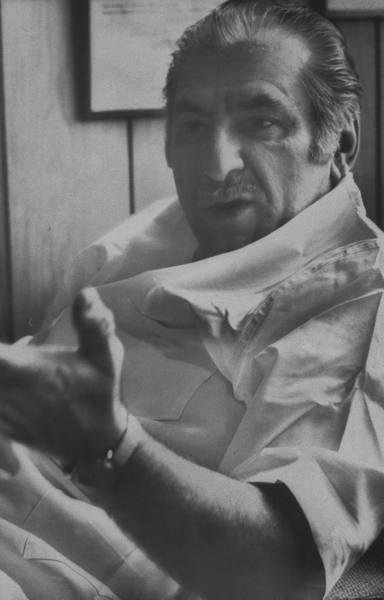 |
| Dr. Milan Vuitch |
Ketchum Bounces Back
Ketchum served little time, however. He was released after less than a year, and relocated to Florida.
.
Ketchum had asked to take the test to become licensed in Florida but his request was denied. In spite of this, he found work at the University of Miami School of Medicine, at Jackson Memorial Hospital, and at the VA hospital in Miami, from September of 1976 to November of 1977. It turned out that no license was required for a doctor to practice in a government operated hospital.
In 1978, he and Judith divorced.
While at the Miami School of Medicine, Ketchum was administering oxygen to Mrs. M for routine surgery. Rather than the 40% oxygen he was to administer, Ketchum provided only 15%. Mrs. M failed to notice until Mrs. M had gone into a coma from which she still hadn't recovered after 19 months.
According to the medical board licensee lookup, Ketchum relocated to Michigan. His petitions to restore his medical license, made in 1984 and 1987, were both denied. Nevertheless, despite killing two women, he remained a free man until his death in 2005.
As for the former criminal abortionist, Milan Vuitch, who had testified on Ketchum's behalf -- he also had kept his nose clean as a criminal abortionist, then went on to kill two legal abortion patients. Wilma Harris and Georgianna English. Another abortionist that I know about, Benjamin Munson, likewise, had a clean record in his criminal abortionist then went on to kill two women in his supposedly safer legal practice -- Linda Padfield and Yvonne Mesteth.
Legalization -- as we can see from these specific tragedies as well as from the numbers -- did nothing to protect women from dying at the hands of abortionists. If anything, it seemed to have emboldened them to take risks they never would have considered taking were a botched abortion alone enough to carry the risk of the loss of a medical license or even of freedom.
Ketchum served little time, however. He was released after less than a year, and relocated to Florida.
.
Ketchum had asked to take the test to become licensed in Florida but his request was denied. In spite of this, he found work at the University of Miami School of Medicine, at Jackson Memorial Hospital, and at the VA hospital in Miami, from September of 1976 to November of 1977. It turned out that no license was required for a doctor to practice in a government operated hospital.
In 1978, he and Judith divorced.
While at the Miami School of Medicine, Ketchum was administering oxygen to Mrs. M for routine surgery. Rather than the 40% oxygen he was to administer, Ketchum provided only 15%. Mrs. M failed to notice until Mrs. M had gone into a coma from which she still hadn't recovered after 19 months.
According to the medical board licensee lookup, Ketchum relocated to Michigan. His petitions to restore his medical license, made in 1984 and 1987, were both denied. Nevertheless, despite killing two women, he remained a free man until his death in 2005.
 |
| Dr. Benjamin Munson |
Legalization -- as we can see from these specific tragedies as well as from the numbers -- did nothing to protect women from dying at the hands of abortionists. If anything, it seemed to have emboldened them to take risks they never would have considered taking were a botched abortion alone enough to carry the risk of the loss of a medical license or even of freedom.
Sources
- "DA Investigating Death of Mother in Doctor's Office," Buffalo Evening News, June 17, 1971
- "2d Woman Dies After Abortion by High St. Doctor," Buffalo Evening News, October 21, 1971
- "Doctor's Status Reviewed After Abortion Death," Buffalo Evening News, October 23, 1971
- "$1 Million Suit In Abortion Is 5th Against Ketchum," Buffalo Evening News, October 27, 1971
- "862 Fetal Death Certificates Filed by Ketchum This Year," Buffalo Evening News, October 29, 1971
- “MD, Indicted in Abortions, Linked Here,” Cleveland Plain Dealer, Jan. 30, 1972
- Berger GS, Tietze C, Pakter J, Katz SH. “Maternal Mortality Associated With Legal Abortion in New York State: July 1, 1970 – June 30, 1972,” Obstetrics and Gynecology 43(3):315-326, March 1974
- “Doctor convicted in N.Y. practicing in Detroit area,” Detroit News, April 26, 1974, 1A & 10A
- Erie County Coroner’s autopsy reports (Schaner & Smith)
- People v. Ketchum trial transcript and appellate filings
- United States District Court for Western New York, Ketchum v. Ward
- New York State Journal of Medicine, October 1975
- Grok AI review November 22, 2025: On Milan Vuitch and Bernard Nathanson's Assessment
- Grok AI review November 22, 2025: 1971 medical consensus on asymptomatic rubella exposure in pregnancy


No comments:
Post a Comment