Thursday, May 21, 2026

1974: Post-Abortion Infection Triggers Ketoacidosis

As a result of a legal abortion, “Rachel” contracted an infection. Post-abortion infection can be dangerous to anyone, but this time it had additional danger since she was diabetic. Serious infections in diabetic patients can affect production of certain hormones, which can work against the effects of insulin.

In Rachel’s case, the effect was so severe that she went into diabetic ketoacidosis. It would have been a very disorienting and painful way to die.

Family Planning Perspectives, 1978

Wednesday, May 20, 2026

May 20, 1934: Third of Five Deaths Attributed to Dr. Justin Mitchell

SUMMARY: On May 20, 1934, 22-year-old Mary Schwartz died from complications of an abortion perpetrated by Dr. Justin Mitchell in Chicago.

Arranging an Abortion

Dr. Justin Mitchell
In May of 1934, 22-year-old Mary Schwartz told Marie Hansen, a coworker at the Illinois Meat Company in Chicago, that she was pregnant. The father of Mary's baby was Joe Henja, who was a foreman at the meat plant. 

According to both marriage and death records, Mary had a husband named Fred. Were they separated? Considering divorce? Or was Mary aborting her baby in an attempt to save her marriage? We have no way of knowing.

Whatever her reasons, Mary asked Marie for help arranging an abortion.

Marie told Mary that she would try to help the best she could. That same day, a Monday, Marie took Mary to Dr. Justin L. Mitchell's office south of Chicago's meatpacking district.

Marie had undergone an abortion at Mitchell's hands three years earlier, and, telling him that her friend “wants to get fixed up,” she negotiated a discount from the usual price of $50 to $30. Marie co-signed on a $25 loan, and lent Mary $5 “in dimes” from her own money.

The Abortion and Complications

The next morning, the two women again went to Mitchell's office. Marie waited outside during the abortion, then took Mary home with her to recover.

That evening, Mary took ill, so Marie called Mitchell and told him that Mary “was bad sick.” Mitchell told Marie to give Mary castor oil, and place warm towels on her abdomen to help with the pain. This did not alleviate Mary's pain, so on Marie took her back to Mitchell's office on Thursday evening and Friday morning. Marie told Mitchell, "Don't forget to scrape her. . . . and do a good job."

Hospital and Death

At 4:00 Saturday morning, Marie was very concerned and called Mary's lover.  Joe complied with Marie's request that he come right away and get Mary. He called his own doctor then rushed Mary to a hospital, where she died on May 20, 1934.

More Deaths Attributed to Mitchell

Mitchell had already been implicated in the abortion deaths of Ethel Vaughan in 1931 and Florence Jordan in 1933.

After Mary Schwartz's death he went on to be implicated in the abortion death of Mary Nowalowski in 1925 and of Alice Haggin in 1936, 

Context

Note, please, that with overall public health issues such as doctors not using proper aseptic techniques, lack of access to blood transfusions and antibiotics, and overall poor health to begin with, there was likely little difference between the performance of a legal abortion and illegal practice, and the aftercare for either type of abortion was probably equally unlikely to do the woman much, if any, good.

In fact, due to improvements in addressing these problems, maternal mortality in general (and abortion mortality with it) fell dramatically in the 20th Century, decades before Roe vs. Wade legalized abortion across America.

Sources:

Tuesday, May 19, 2026

May 19, 1924: Second Known Victim Attributed to Dr. Lou E. Davis

On April 2, 1924, 26-year-old homemaker Mary Whitney underwent an abortion at the Chicago office of Dr. Lou E. Davis. On May 17, Mary died at St. Mary's Hospital of complications of that abortion. Dr. Davis was held by the coroner on May 19. 

Dr. Lou E. Davis

Davis had already been implicated in the September 9, 1913 abortion death of 27-year-old Anna Adler. She went on to be implicated in another four Chicago abortion deaths:


In spite of these six dead young woman, David was never jailed. She was convicted of murder by abortion in 1934, likely for Irene's death, but her conviction was reversed by the Illinois Supreme Court.


She was implicated in an abortion perpetrated on 33-year-old Marie Cooper, a married mother of three in January of 1947 but I have found no evidence of a successful prosecution in that case. 

In September of 1947 Davis was charged with an abortion she has reportedly perpetrated on 22-year-old Mary Kaye in late August.

In August of 1947 Davis was performing an abortion on a 22-year-old woman who played accordion in a night club. The patient's hysterical screaming led the neighbors to call the police, who promptly took the woman to the hospital and Davis to jail.

In November of 1947 she was arrested on two charges of abortion and another of attempted abortion based on accusations from three young women, who of whom made their statements from their hospital beds.

Davis was finally stopped on December 14, 1948, when she was convicted of perpetrating an abortion. At that time she had six other abortion charges pending against her. 

A week after this conviction a criminal court adjudged Davis insane and sent her to Kankakee State Hospital, where she died Monday, May 3, 1954 at the age of 77.

Sources: 

Monday, May 18, 2026

May 18, 2001: Two Kids Left Motherless

Dr. Ronald Blatt

Cynthia Quintana-Morales, a healthy 30-year-old mother of two, entrusted herself to the care of Dr. Ronald D. Blatt at Eastside Gynecology in New York City. She reported for her abortion appointment on May 7, 2001.

The facility administered Brevital to sedate Cynthia, and she went into cardiac arrest. She was transported to Lennox Hill Hospital, where she died of anoxic encephalopathy on May 18. 

She left a 16-year-old son and a 10-year-old daughter motherless.

Cynthia's husband of ten years, Andrew, sued Blatt and the practice, citing failing to use reasonable care, neglecting to heed Cynthia's condition, departing from accepted practices, performing contraindicated procedures, and lack of informed consent. Andrew asserted that his wife never would have consented to the abortion had she been adequately informed of the specific risks to her.

Blatt promptly closed the practice and reopened it as East Side Gynecology Services, effectively protecting his practice from financial liability.

Cynthia's husband settled with Blatt on March 30, 2008 for $1.25 million. Blatt's insurance covered the settlement.

Other women who died from Brevital mishaps include Susanne LoganKia JordenMelissa HeimDonna HeimDelores SmithGabriella AlonsoVenus OrtizDeanna BellTanya WilliamsonSuzanne Logan, and Debra Gray.

Watch Two Children Left Motherless on YouTube.

Thanks to Operation Rescue for these sources:

May 18: Happy Birthday Yamile Munoz

Yamile in the lap of her mother, Maggie Munoz,
with Mrs. Magaly Llaguno, Latin America Coordinator
for Human Life International

When Maggie Munoz learned that she was pregnant, she thought her only option was abortion. She was already an unmarried mother of four, and her friends and relatives told her that she already had "too many children" and that abortion was the "suitable solution." 

Ultrasound prior to the abortion revealed a normal 11-week pregnancy. 

Maggie underwent an abortion by D&C. After returning home, she was ill and depressed. 

Two weeks later, staff at the abortion facility called Maggie to tell her that the pathology report showed that the abortion was incomplete. Maggie returned to the clinic, where an ultrasound revealed a healthy fetus, still very much alive. But the employee told Maggie that there was "retained tissue" and gave her an appointment to return in a week for a second abortion procedure. 

Maggie didn't trust the clinic staff, and decided to go to her own doctor, who ordered an ultrasound showing a healthy 15-week fetus. 

Yamile was born May 18, 1992, perfectly healthy. Every day Maggie thanks God for her perfect daughter. 

Watch Happy Birthday, Yamile on YouTube.

(Source: Abortion Survivors [translation by Babelfish], from Right to Life League of Southern California, Fall 1992)

May 18, 2022: Suicide After Abortion Drugs

"Talia" was 26 years old when she went to an American facility for the abortion drugs mifepristone and misoprostol on an undetermined date.

On May 18, 2022, Talia committed suicide by shooting herself in the head. 

Killed-by-choice cites FAERS Case 21177969 as the source for information about Talia's death.

Sunday, May 17, 2026

May 17, 1876: Midwife Confesses to Fatal Abortion

Matilda Beringer, age 34 arranged for an abortion, which was perpetrated by midwife Johanna White at her New York practice in mid-March of 1876. 

Immediately Matilda began to experience severe pain so she went straight home and took to her bed. 

On Saturday, May 14, Dr. William Fayner was called on to care for her and found her suffering from peritonitis. When his efforts to treat her did not have the desired effect he brought in a second physician, Dr. Samuel Gluck, to consult. The two continued to treat her until her death on May 17.

Matilda's husband, Edward, told authorities the he'd heard gossip about his wife but that she had never said anything to him about the abortion. The police evidently had no reason to doubt him, since he was not charged as an accessory in his wife's death. When arrested, White admitted to having perpetrated the abortion and was held on $2,000 bond.


While looking for additional information about Matilda's death, I learned that While was implicated in the death of another woman, Mary Heinemann, less than six months later.

Watch Midwife Confesses to Fatal Abortion on YouTube.
Watch Midwife Confesses to Fatal Abortion on Rumble.

Source:

May 17, 1919: Unidentified Chicago Midwife

On May 17, 1919, 27-year-old nurse Gertrude Schaefer, a widow, died at Chicago's Wesley Hospital from septicemia caused by an abortion.

According to public records, Gertrude married her husband, John, in September of 1912, when she was 21 and he was 30.

At first police were told that Gertrude had committed the abortion on herself. However, during an inquest held at the hospital, police concluded that a midwife had perpetrated the abortion.

I have yet to find any sources that name the midwife in question.

Sources:

Saturday, May 16, 2026

May 16, 2014: 18th FPA Death (That I Know Of)

An autopsy report tells the story of yet another young woman I know of now to have died after an abortion at that National Abortion Federation flagship: Family Planning Associates Medical Group.

To preserve her confidentiality, I have given her the pseudonym "Kyla Ellis."

Kyla was 23 years old and about 11 weeks pregnant when she went to Family Planning Associate Medical Group at 601 S. Westmoreland Avenue in Los Angeles for an abortion on May 14, 2014. Like other young Black women, she was at higher risk of death than a white woman would be.

The day after the abortion, Kyla suffered agonizing abdominal pain. Her partner, whom I will call "Benjamin," called an ambulance, which rushed her to Centinela Hospital. She arrived at around 3:30 that afternoon. Kyla rated her pain at 10 on a scale of 10. Bright, fresh blood was flowing from her vagina. She couldn't pass urine at all. Hospital staff used a catheter to drain her bladder of about 200 cc of bloody urine.

Doctors decided that Kyla needed more intensive care than Centinela was able to provide. Kyla rode by ambulance to Kaiser West Los Angeles. She arrived shortly after midnight on May 16. At first she was awake, but at around 1:40 a.m. her gaze turned glassy and she became unresponsive. Staff took her to the lab for a CT scan, but on arrival Kyla went into cardio respiratory arrest. All efforts to revive her failed and she was pronounced dead at 2:45 a.m.

The autopsy found her uterus boggy and enlarged. The endometrium (lining) had been scraped away. 

Kyla had bled to death.

She's the seventeenth woman I'm aware of to have died after abortions at FPA. The others are: 

Watch 17th Known Abortion Death at YouTube. (I had not yet learned of the 2003 death of "Imelda" when I recorded this video.)

Autopsy pages 12345678910, 1112131415


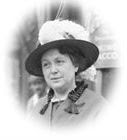
May 16, 1916: Was Dr. Albers Actually Guilty?

Portrait of a middle-aged white woman with short dark hair and fine features, wearing a lacy white top
Anna Albers

On May 16, 1916, 25-year-old Lucile Bersworth died in Chicago's German-American hospital after telling authorities that Dr. Anna Albers had perpetrated an abortion on her.

She also mentioned a man named Fred Krause, so he might have been her baby's father.

Though Albers was held by the coroner and indicted by a Grand Jury, the case never went to trial. She was rather a respectable physician, at least as of 1912, so she seems an unlikely abortionist.


Watch Not a Lot to Go On on YouTube.

Sources:

Friday, May 15, 2026

May 15, 1972: Sudden Death from Hospital Abortion

Another researcher has a likely identity for the woman Life Dynamics dubbed "Wendy" Roe. Since I have seen no sign that the woman's family went public, I will continue to refer to her as Wendy. 

Wendy was 23 years old and 16 weeks pregnant when she sought an abortion at community hospital in a small North Carolina town in 1972. Wendy was black, which placed her at higher risk of death from safe, legal abortion.

Wendy's physician chose the saline technique, but overestimated the age of the fetus, and administered too much hypertonic saline. The saline got into Wendy's bloodstream. 

Wendy went into convulsions and developed disseminated intravascular coagulopathy (DIC), a clotting disorder. She died within the hour before expelling the fetus, leaving two children motherless.

Sources: 

  • "Fatal Pulmonary Embolism During Legal Induced Abortion in the United States from 1972-1985," Lawson, Herschel W., MD, Atrash, Hani K., MD, MPH, Franks, Adele L., MD, American Journal of Obstetrics and Gynecology, Vol. 162, No. 4, April 1990, p. 986-990
  • Death certificate

Thursday, May 14, 2026

1972–1978: Abortion, Not Cancer, Kills Leukemia Patient

As a leukemia patient, “Selena” was already facing a battle for her life. She didn’t know that her cancer wouldn’t kill her, but a “safe and legal” first-trimester abortion would.

Selena suffered from poorly differentiated lymphocytic leukemia and was discovered to be pregnant sometime between 1972 and 1978. She was likely scared and may have also feared the effects of cancer medications on her child. At the time, it was not uncommon for pregnant cancer patients to be told to have an abortion, so she probably thought she had no choice. At eight weeks pregnant, she was put through a suction abortion and surgically sterilized to prevent her from becoming pregnant again.

Leukemia weakens the immune system, making post-abortion infection more hazardous for Selena than it would have been for a healthy client. Instead of improving her prognosis, the abortion made her sicker. She contracted an infection, developed sepsis and did not survive.

Ironically, research later found that surgical abortion for pregnant cancer patients is not associated with higher chances of maternal survival at all. Today, well-established treatments exist for pregnant cancer patients and doctors are usually able to save babies while still effectively treating the cancer patient.


(Patient 3)

Wednesday, May 13, 2026

May 13, 1972: Journey to Safe and Legal Convulsions and Death

Grok AI illustration
"Roxanne" was 17 years old when she decided to take advantage of New York's new abortion law, and traveled there from Michigan to have a first-trimester abortion in a doctor's office. 

The doctor gave her sedatives and local anesthesia to begin the abortion on May 13, 1972. But before the abortion could be started, Roxanne started to have convulsions and went into cardiac arrest.  

Roxanne was taken to an area hospital, but she was declared dead on arrival.  

An investigation into the case revealed that the doctor had exceeded the recommended dose of the local anesthetic. This is the same cause of death of Stacy Ruckman in 1988. 

The 1970 liberalization of abortion had made New York an abortion mecca until the Roe vs. Wade Supreme Court ruling that abortionists could legally set up shop in any state of the union. In addition to "Roxanne," these are the women I know of who had the dubious benefit of dying from the newfangled safe-and-legal kind of abortion in pre-Roe New York:

  • Pearl Schwier, July, 1970, cardiac arrest during abortion
  • Carmen Rodriguez, July, 1970, salt solution intended to kill the fetus accidentally injected into her bloodstream
  • Barbara Riley, July, 1970, sickle-cell crisis triggered by abortion recommended by doctor due to her sickle cell disease
  • "Amanda" Roe, September, 1970, sent back to her home in Indiana with an untreated hole poked in her uterus
  • Maria Ortega, October, 1970, fetus shoved through her uterus into her pelvic cavity then left there
  • "Kimberly" Roe, December, 1970, cardiac arrest during abortion
  • "Amy" Roe, January, 1971, massive pulmonary embolism
  • "Andrea" Roe, January, 1971, overwhelming infection
  • "Sandra" Roe, April, 1971, committed suicide due to post-abortion remorse
  • "Anita" Roe, May, 1971, bled to death in her home during process of outpatient saline abortion
  • Margaret Smith, June 1971, hemorrhage from multiple lacerations during outpatient hysterotomy abortion
  • "Annie" Roe, June, 1971, cardiac arrest during anesthesia
  • "Audrey" Roe, July, 1971, cardiac arrest during abortion
  • "Vicki" Roe, August, 1971, post-abortion infection
  • "April" Roe, August, 1971, injected with saline for outpatient abortion, went into shock and died
  • "Barbara" Roe, September, 1971, cardiac arrest after saline injection for abortion
  • "Tammy" Roe, October, 1971, massive post-abortion infection
  • Carole Schaner, October, 1971, hemorrhage from multiple lacerations during outpatient hysterotomy abortion
  • "Beth" RoeDecember, 1971, saline injection meant to kill fetus accidentally injected into her bloodstream
  • "Roseanne" Roe, February, 1971, vomiting with seizures causing pneumonia after saline abortion
  • "Connie" Roe, March, 1972, cardiac arrest during abortion
  • "Julie" Roe, April, 1972, holes torn in her uterus and bowel
  • "Robin" Roe, May, 1972, lingering abortion complications
  • Pamela Modugno, May, 1972, air in her bloodstream

Sources: 
  • "Maternal Mortality Associated With Legal Abortion in New York State: July 1, 1970 - June 30, 1972," Berger, Tietze, Pakter, Katz, Obstetrics and Gynecology, 43:3, March 1974, 324.
  • "Maternal deaths associated with paracervical block anesthesia," Berger, Tyler, Harrod, American Journal of Obstetrics and Gynecology, 118:8, April 1974, 1142-43.

May 13, 1981: Multiple Professionals Let Barbara Down

Senior photo, Sanford Calhoun High School,
Merrick, NY 1977

A lawsuit filed by Frank Dillon, the father of Barbara Ruth Dillon, a 22-year-old junior at SUNY New Paltz, alleged that Barbara underwent a safe and legal abortion performed by Dr. Mark Silver at Long Island Gynecological Group on April 18, 1981. According to public records, Frank had already faced one tragedy after the other: he had lost his father in 1966, his wife in 1978, and his mother in 1979. 

The Pathology Findings

The tissue from Barbara's abortion was delivered to Idant Laboratory on April 21. Dr. Michael J. Klein completed a microscopic analysis. Both he and the histotechnologist, who performed the gross examination (visible without a microscope), found placental tissue but no fetal parts. The lab notified Long Island Gynecological Group on April 22. 

The pathology finding indicates that the fetus was still inside Barbara's body, either left behind in her uterus or implanted in her fallopian tube. It also didn't eliminate the possibility that Barbara had a double pregnancy -- one embedded in the uterus and the other in her fallopian tube.

Nobody from Long Island Gynecological Group contacted Barbara to inform her that she needed to be seen to determine where the fetus was, or specifically that she needed to be seen to rule out a potentially life-threatening ectopic pregnancy.

Fruitlessly Seeking Care

Barbara suffered pain and bleeding from May 5. On May 10 she finally went to the emergency room at Kingston Hospital and was treated with antibiotics by Dr. Kalyanasundaran Venkataraman and advised to see a gynecologist named Dr. Theodore Jackaway, the on-call gynecologist for the hospital, for follow-up care. 

Barbara was in severe pain later that day and began to vomit, so her roommates called the emergency room again. They were told to give the antibiotics more time. 

At 5:30 on the morning of May 11, Barbara was in so much pain that one of her roommates called Dr. Jackaway's answering service and left a message. Jackaway called back and said that he couldn't take any responsibility for Barbara because he hadn't seen her, so he suggested that she be taken to the emergency room. 

About three hours after talking to Jackaway, Barbara's roommate contacted a neighbor who called the SUNY health center. There, Dr. Johannes D. Weltin requested that somebody take her to the health center so that he could examine her. The neighbor drove Barbara to university health center at around 9:25 a.m. Barbara was unconscious upon arrival, with no respiration, blood pressure, or pulse. 

Dr. Weltin called the hospital and spoke to Dr. Jackaway, and told him that Barbara had blood in her abdomen and needed immediate surgery. Jackaway refused to see her because she wasn't his patient and he didn't want to get involved. Dr. Weltin tried to call Dr. Kirk for a consultation, which he refused to do -- though he did call Dr. Jackaway and try to convince him to treat Barbara.

Too Late

Finally at 11:45 that morning somebody brought in Dr. Venkataraman, who performed emergency surgery. Despite this final doctor's efforts, Barbara went into irreversible shock and died on May 13. (Note: I originally had an incorrect date, May 11, due to lack of clarity in the legal document.) 

It turned out that Barbara had an ectopic pregnancy which the clinic had failed to detect. Barbara's father sued Dr. Silver, Dr. Jackaway, Dr. Kline, and the Long Island Gynecological Group.

Even though, in theory, women who choose abortion should be less likely to die of ectopic pregnancy complications, experiences shows that they're actually more likely to die, due to sloppy practices by abortion practitioners. In Barbara's case, it seems that everybody in the medical establishment except the pathologist and the university physician utterly let her down.

Watch "Passing the Buck Leads to Death" on YouTube.

Source: Dillon v. Silver, New York Appellate Court 134 A.D.2nd 159 (1987)

Tuesday, May 12, 2026

May 12, 1971: Sent Home to Bleed to Death

Anita's Journey

Grok AI illustration
"Anita" was a 23-year-old mother of two when she chose safe and legal abortion in 1971. She was 22 weeks pregnant.

She traveled from Massachusetts to New York for her abortion. She had not told her husband that she was planning on the abortion. She used a fictitious name at the facility.

A Dangerous Choice

On May 11, 1971 the doctor initiated a saline abortion by injecting a strong sterile salt solution into Anita's uterus. The idea was that the fetus would inhale and swallow the fluid, which would cause massive internal hemorrhaging and death. this would then trigger labor. 

Saline abortion was hardly a pleasant experience. The abortionist would remove as much amniotic fluid as he could using a needle and syringe. He would then replace the amniotic fluid with a concentrated saline (salt) solution that would poison and kill the fetus. The woman would then go into labor and expel the fetus.

Saline abortions became very popular in Japan following WWII. Within the Japanese medical community, however, word quickly spread: this method was unsatisfactory. Too many women were being injured and killed. Over 70 papers were published in the Japanese medical community reporting hazards of saline abortions, including at least 60 maternal deaths. The Japanese Obstetrical and Gynecological Society condemned the technique, and it was quickly abandoned. But the Japanese abortionists kept news of the trouble among themselves -- until Western nations discovered instillation abortions and embraced them with great enthusiasm.

Two Japanese doctors, Takashi Wagatsuma and Yukio Manabe, broke the silence. Wagatsuma wrote, "It is, I think, worthwhile to report its rather disastrous consequences which we experienced in Japan." Manabe wrote, "It is now known that any solution placed within the uterus can be absorbed rather rapidly into the general circulation through the vascular system of the uterus and placenta. Thus any solution used in the uterus for abortion must be absolutely safe even if given by direct intravenous injection. ... A solution deadly to the fetus may be equally toxic and dangerous to the mother. ... In spite of the accumulating undesirable reports, the use of hypertonic saline for abortion is still advocated and used ... in the United States and Great Britain. I would like to call attention to the danger of the method and would predict the further occurrence of deaths until this method is entirely forgotten in these countries."

As western abortionists gained experience with saline abortions, other grim reports arose. A British study published in 1966 found that the saline would enter the mother's bloodstream and cause brain damage. Swedish researchers noticed an unacceptably high rate of complications and deaths. Sweden and the Soviet Union abandoned saline abortion as too dangerous for women in the late 1960s.

For whatever reasons, American abortionists were deaf to these warnings. When New York had completely repealed its abortion law, doctors had tremendous leeway in abortion practice. In New York City in particular, it became popular to inject the woman with the saline in the office, then send her home with instructions to report to a hospital when she went into labor. This was, to say the least, a highly irresponsible way to use an abortion technique that was risky even when performed in a hospital under close medical supervision. Women started dying from these reckless saline abortions.

Sent Home to Die

Anita's doctor sent her home to expel the fetus with no aftercare arranged beyond a phone number. The next day, May 12, Anita's husband found her unresponsive on the bathroom floor, lying in a pool of blood.

She was rushed to a local hospital, where she was pronounced dead on arrival. An autopsy found a 630-gram fetus partially protruding from Anita's uterus. At this size, Anita's baby would have been about 24 -25 weeks of gestation. The placenta was still about 25% firmly implanted. A small puncture wound from the saline injection was also identified. 
Anita had bled to death on the bathroom floor.

Not an Isolated Incident

In addition to “Anita,” these are the women I know of who had the dubious benefit of dying from the newfangled safe-and-legal kind of abortion in pre-Roe New York:

  • Carmen Rodriguez, July, 1970, salt solution intended to kill the fetus accidentally injected into her bloodstream
  • Barbara Riley, July, 1970, sickle-cell crisis triggered by abortion recommended by doctor due to her sickle cell disease
  • Pearl Schwier, July, 1970, anesthesia complications
  • "Amanda" Roe, September, 1970, sent back to her home in Indiana with an untreated hole poked in her uterus
  • Maria Ortega, October, 1970, fetus shoved through her uterus into her pelvic cavity then left there
  • "Kimberly" Roe, December, 1970, cardiac arrest during abortion
  • "Amy" Roe, January, 1971, massive pulmonary embolism
  • "Andrea" Roe, January, 1971, overwhelming infection
  • "Sandra" Roe, April, 1971, committed suicide due to post-abortion remorse
  • Margaret Smith, June 1971, hemorrhage from multiple lacerations during outpatient hysterotomy abortion
  • "Annie" Roe, June, 1971, cardiac arrest during anesthesia
  • "Audrey" Roe, July, 1971, cardiac arrest during abortion
  • "Vicki" Roe, August, 1971, post-abortion infection
  • "April" Roe, August, 1971, death after saline abortion
  • "Barbara" Roe, September, 1971, cardiac arrest after saline injection for abortion
  • "Tammy" Roe, October, 1971, massive post-abortion infection
  • Carole Schaner, October, 1971, hemorrhage from multiple lacerations during outpatient hysterotomy abortion
  • "Beth" RoeDecember, 1971, saline injection meant to kill fetus accidentally injected into her bloodstream
  • "Roseanne" Roe, February, 1971, vomiting with seizures causing pneumonia after saline abortion
  • "Connie" Roe, March, 1972, cardiac arrest during abortion
  • "Julie" Roe, April, 1972, holes torn in her uterus and bowel
  • "Roxanne," May, 1972, convulsions and death at start of abortion
  • "Robin" Roe, May, 1972, lingering abortion complications
  • Pamela Modugno, May, 1972, air in her bloodstream

Watch Just Another Mention in a Medical Journal on YouTube.
Watch Just Another Mention in a Medical Journal on Rumble.

Sources: 

May 12, 1946: Second Death in One Year for Seattle Abortionist

SUMMARY: Irene Timmons, age 24, died May 12, 1946 after an abortion perpetrated by Seattle sanitarium operator Marjorie Folsom.

According to "When Abortion was Illegal (and Deadly): Seattle's Maternal Death Toll," Seattle Civil Rights & Labor History Project:

The Kingston housewife [Irene Timmons] was the second woman to die as a result of a procedure performed by Margaret Folsom. According to the brief article, Folsom who was out on bail for the Mary Johnson fatality, operated on Mrs. Timmons on May 8 and "the woman died four days later." Police charged that Folsom had established a new office "set up as an abortion mill" since her arrest two months earlier. It is not clear what happened to this case.

The Project cites a May 17, 1946 article in the Seattle Times.


The abortionist's name was actually Marjorie, not Margaret. 

The investigation concluded that Irene's abortion had been done with an instrument that had not been sterilized. She left behind three children.

Marjorie Folsom
According to the May 17, 1946 Seattle Star, neither Folsom, nor her co-conspirator Ada Pearl Wrench, was a doctor or even a nurse. "The trail of investigation led to an unmarked door in a downtown office building." This was Folsom's office. "When the raiding party broke into Mrs. Folsom's office, she frantically attempted to tear up her records, containing figures as well as women's names and addresses." 

Folsom, the Star said, had been caught in a sting operation when the prosecutor sent a female staff member to Folsom's office to arrange an abortion.

Both Folsom and Wrench pleaded not guilty. Folsom was found guilty for abortion and manslaughter in one of the deaths and sentenced to three years, of which she served ten months and the rest was deferred.

My sources: 

Monday, May 11, 2026

May 11, 1907: Death of Newlywed Mom

Mrs. Florence Zeck Porter, age 18, was admitted to Saint Luke's Hospital in Chicago on Saturday night, May 11, 1907. 

In spite of doctors' best efforts, she died on Monday morning, May 13. 

An inquest held at the hospital determined that she had died from a botched abortion.

According to public records, Florence and her husband, Harvey, had only been married for a little over a year and had a young son.

Sources:

May 11, 1884: Protecting a Deadly Abortionist

On May 11, 1884, a young woman who had given her name as Alice Brown died at the Chicago residence of Mrs. R. A. Hough. She was quickly identified as 20-year-old Lottie Hudson of Austin, Illinois. 

Lottie had gone to Chicago to live with a man identified as C. O. Owen, "a printer who already had a wife and family." He had been boarding with Lottie's mother, Mrs. Hudson.

Mrs. Hough insisted that she hadn't known anything about Lottie's background but had just taken her in out of the goodness of her heart. Lottie's mother visited her twice at Mrs. Hough's home during her illness. 

Lottie had sent two letters to her mother during her illness:

May 5, 1884
My Dear, Darling Mamma:
It is very hard for me to write, for I am very weak, but I know you would be glad if only to get a few words. I am getting along as well as I can. Won't be able to sit up for a week. I don't think I will write as often as I can. I will have to have some more money. Will write about that when I am stronger. Love to all, and May and Willie. Lovingly,
Alice

Chicago, May 8
My Darling Mamma:
Inclosed you fill find a letter for him [likely Owen]. I want you to send it to him immediately; you know his address. I am getting along very well now, though slowly. I sat up a short time yesterday. I can't write any more. I am all tired out now. Mamma, you write to me as 'Auntie.' I will be so glad to hear from you. My address is 'Alice brown, care of Mrs. R. A. Hough, No. 300 garfield avenue, Chicago.' give my love to every one, and keep lots of love and kisses for your own dear self. Yours lovingly,
Alice

On the day of the funeral, Mrs. Hough went to Mrs. Hudson's house and "was decidedly uneasy during the forenoon." At 11 a.m., Hough asked Mrs. Hudson to leave with her because the police would soon come to arrest them since they'd not called in a doctor to attend to Lottie as she was dying.

It was determined that Lottie had died from blood poisoning due to an abortion, believed to be perpetrated by a doctor whose name neither Lottie nor Mrs. Hough either could or would divulge. 

Lottie's family situation had been sad. Her mother had been widowed after her husband had dropped dead in a street car somewhere back East when Lottie and her sibling were very young.

Watch Protecting a Deadly Abortionist on YouTube.
Watch Protecting a Deadly Abortionist on Rumble.

Sources:

May 11, 1915: Home Abortion Leaves 8 Children Motherless

Grok AI imagining of the family
Homemaker May Johnson, age 36, of Melrose Street in Chicago died on May 11, 1915 from a self-induced abortion "after advice from quack."

According to public records, May (also spelled Mae) and her husband, Frank, had 8 children:

  • Perlie, age 2
  • Helen, age 4
  • Mabel, age 6
  • Lillian, age 9
  • Erma, age 11
  • Leslie, age 14
  • Aletha, age 16
  • Fern, age 18

According to the 1910 Federal census, Frank was a laborer who did odd jobs. 

Sources:


Sunday, May 10, 2026

May 10, 1983: Minimal information on New York death

The Blackmun Wall by Life Dynamics had a memorial entry for “Jaime”, who they only noted was a Black woman between the ages of 20 and 24 who died from legal abortion in New York.

Kevin Sherlock’s book, The Scarlet Survey, contained a matching case with more information. Jaime was 20 and from Manhattan, and she died of her legal abortion in New York City on May 20, 1983.

Women of color like Jaime are disproportionately targeted by the abortion industry— especially in New York, where more Black babies are aborted than born.

The little information known about Jaime was obtained through New York State Health Department records. The records on her death were run in 1995, and today the relevant data cannot be found on the NY Health Department’s website.

New York State Department Of Health, Bureau of Biometrics, Abortion Related Deaths, Resident Data (archived data, run on July 19, 1995)

The Scarlet Survey, page 221, citing New York Health Department (Jaime is Jane Roe of Manhattan 1983)

May 10, 1960: Dumped Off the Highway

A Gruesome Discovery 

AI rendition of police at the dump site

At around 6:50 on the morning of Wednesday, May 11, 1960, the body of a young black woman was found in an uncultivated field just off Taylor Road at a spot about 100 yards off Highway 215. Found along with the body were a topcoat, a bundle, and shoes. In the coat pocket was a piece of paper with the dead woman's name. 

Identity and Cause of Death

The dead woman was 30-year-old Miss Corine Lyles of Jenkinsville, SC. She had worked as a domestic servant in Richland.

Dr. C. K. Lindler, who performed the autopsy and signed the death certificate, concluded that Corine had died the previous day from bleeding and shock due to a criminal abortion. The coroner's jury concluded that the abortion had been perpetrated the day Corine died.

The Sister's Story

Corine's sister, Mary Estelle Harrison, was arrested as an accessory before the fact. She stated that Corine had been pregnant and had said that she would "kill herself if she couldn't get rid of the baby." Mary told investigators that 54-year-old Daisy Brown Baxley said that she could "do away with" the baby. Mary said that she paid Baxley $45 as a down payment for the $75 abortion.

Perpetrator or Accomplice?

Baxley, who was also black, was arrested as the principal in the case. She reportedly told Chief Deputy Sheriff J. C. Harrison that she had only referred Corine to Viola Anderson Wheeler, age 44, for the abortion rather than perpetrate it herself. All the parties agreed that regardless of who had wielded the deadly instruments, the abortion had been perpetrated in the Baxter home, 305 Wilkes Road, Columbia.

Daisy Baxley's husband, 53-year-old Herman Baxley, was arrested as an accessory after the fact. 

The Baxleys were evidently a relatively well-off couple. The single-family home in which they lived was only about five years old.

AI image based on actual location of the fatal abortion

Herman Baxley later pleaded guilty, saying that his wife had asked for help dumping Corine's body so he had helped load it into his station wagon and drive to the dump site. 

Wheeler also denied having perpetrated the abortion. Despite her original statement that she had not laid eyes on Corine until after the young woman had died, when her case went to court she admitted that she had been in the room when Corine died. She also admitted that she had helped to dispose of Corine's body and pleaded guilty to her charges.

When the case went to court, Baxley again denied performing the abortion but did admit to having been present when Corine succumbed. She said that Corine "started foaming at the mouth and ... laid back on the bed and died." She pleaded guilty to manslaughter and was sentenced to 3 years in prison.

Herman Baxley, who was Daisy Baxley's husband, and Viola Wheeler were charged as accessories after the fact.

Herman was granted a divorce from Daisy in the spring of 1961. She was paroled on September 21, 1961.

Watch "Dumped by the Highway" on YouTube.