Operational Preparation of the Environment
In 1976, the Hyde Amendment went into effect, banning the use of Federal funds to pay for abortions except to save the mother from an immediate threat to her life. The measure was named for its author, Congressman Henry Hyde. Abortion advocates had been keening from the moment the Hyde Amendment was up for vote. They painted a ghastly picture of coathanger-impaled women littering the streets as poor women were driven to desperation by lack of "access".
When the Hyde Amendment went into effect, abortion advocates ramped up the hysteria and waited for a death, any death, they could hang around Henry Hyde's neck.
 |
| Undated yearbook photo of Rosie |
The initial response of the abortion lobby to news of Rosie's death was little short of euphoric. They had their trophy, their dead woman whose story they could leverage, they hoped, into the restoration of tax money flowing into abortion clinics. They've never stopped using Rosie's death to advocate for cheap, readily available abortions.
A Voice in the Wilderness
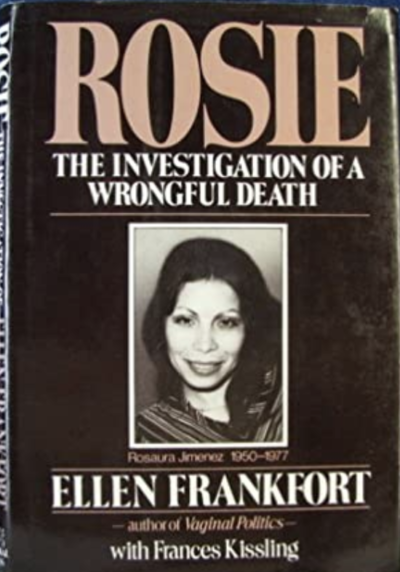
Off to McAllen Frankfort went, to learn all she could.
The Whole Story
Rosie had already undergone two abortions at taxpayer expense, one performed by her private ob/gyn, the second at a facility Rosie had been referred to by a local Planned Parenthood. She had become pregnant prior to both of these abortions after stopping her birth control pills on the advice of a physician.
Rosie had also gone to her family physician, Dr. Homer, for treatment of pain in her sternum on September 19. She mentioned that she might be pregnant. He did not arrange for a pregnancy test or discuss her options with her in any way, but simply informed her that Medicaid would no longer pay for abortions, and let it rest at that. A referral seemed to have been in order, either to a prolife center that would help her with the expenses of continuing the pregnancy, or to the local Planned Parenthood, that could arrange an abortion on a sliding scale and could possibly help her tap into private funds for elective abortions. Dr. Homer effectively abandoned his patient.
The week of September 19, Rosie went to Reynosa, Mexico for some sort of injection to cause an abortion. She had the injection at a pharmacy, and paid $5. When the first injection didn't have the desired effect she returned for a second one. This one left her experiencing nausea, vomiting, dizziness, and fainting but failed to dislodge the fetus.
Rosie had pain and cramping upon returning home. Over the next 12 hours, she developed an increasing fever, and had nausea, vomiting, chills, dizziness, and increasing vaginal bleeding. The next afternoon, Rosie was unable to get out of bed. She asked a friend to take her to the hospital where in spite of heroic efforts, doctors were unable to save her life.
The Reaction

What is particularly telling in Rosie's death is that prochoice groups had been very successful in spreading the word that public funding for abortion had been cut -- Rosie's friend and cousin, as well as her physician, were well aware of this fact -- but they had pointedly failed to also pass out the word that Planned Parenthood still referred for abortions on a sliding scale, and that private funds were available. It's almost as if the public-relations departments of Planned Parenthood and other abortion-advocacy groups had deliberately increased the odds of a tragedy like Rosie's death in order to provide the corpses needed in order to prop up a drive to restore tax monies to abortion facilities. Again, this is a clear example of operational preparation of the environment.
Frankfort was particularly disgusted with the response of public health officials, who likewise simply announced Rosie's death and began a call to restore abortion funding, but made no effort to close down the illegal abortion practice where Rosie had undergone her fatal abortion.
Frankfort took it upon herself to orchestrate a sting. She coordinated a dramatic raid, in partnership with Rosie's close friend Diana Rivera, that put the lay abortionist out of business.

"The FIRST!" Of how many?
And what of the hysteria? Had it been justified? Was Rosie's death the first of a new trend of women dead from being "forced" to resort to criminal abortionists?
There was indeed a small spike in reported illegal abortion deaths after the Hyde Amendment (from 2 in 1976 to 4 in 1977 to 7 in 1978). But there was likewise a spike in reported legal abortion deaths as well -- a far larger spike, from 11 in 1976 to 15 in 1977, falling to 8 in 1978. (I don't believe that the CDC's reported death numbers are accurate, but they're all we have to work with, and more to the point, abortion supporters place great faith in them.)
Despite predictions of a surge in carnage from criminal abortions, a study by the Centers for Disease Control, "The Effect of Restricting Public Funds for Legal Abortion," found "no evidence of a statistically significant increase in the number of complications from illegal abortions." In fact, they found that while there was no change in the illegal abortion complications, there was a significant decrease in publicly funded hospitalizations for legal abortion complications in cities where funding was restricted, compared to cities in areas where state or local government picked up the tab for elective abortions.
In other words, cutting funds for elective abortions actually had a measurable positive impact: Fewer women were ending up hospitalized for complications of elective abortions. Which strikes me as a good thing, personally. But the CDC remained adamantly in favor of funding elective abortions, asserting in the 1977 Abortion Surveillance Summary, "For at least 1 woman, the non-availability of public funds led to a situation in which she was forced to choose the less-safe illegal abortion because of financial factors." Like the abortion lobby they serve, they never took into account that Rosie had the money to pay for a legal abortion, available on a sliding scale. They especially never considered the possibility that Rosie could get support to continue both her pregnancy and her education.
The Verdict
So was Rosie's death a fluke? Probably not. The heavy publicity put out by the prochoice movement about how poor women would be "forced" to resort to dangerous criminal abortions probably left Rosie, and some others like her, with the mistaken impression that criminal abortion (rather than birth or even sliding-scale legal abortion) was their only option. Only after the sting, when Frankfort and Rosie's friends banded together, were abortion funds publicized and new ones started. While I recognize the noble motives of women such as Rosie's friends, I retain cynicism about the motives of abortion-rights organizations, for whom these funds serve to funnel money into the pockets of their major donors -- abortion practitioners.
I agree with abortion advocates that the death of Rosie Jimenez was avoidable. But I disagree with them that lack of public funding was to blame. Prochoice organizations had ample opportunity to tout other resources. Prochoice people all around Rosie had opportunities to steer her toward a "safe and legal" abortion, had they chosen to do so. Not a one of them did. And the bigger problem was that nobody ever seemed to entertain the notion that abortion might not be the answer in the first place.
What's additionally puzzling about this whole turn of events is that the facility to which Planned Parenthood referred abortion patients charged only $130 for an abortion for poor women, just $10 more than Rosie paid for the amateur abortion that took her life.
Rosie Jimenez remains a poster child of the abortion lobby. Their own role in her death is never acknowledged. Henry Hyde is blamed instead -- in spite of his key role in passing a law that reduced abortion injuries among women like Rosie, and in reducing complications, surely also reduced abortion deaths -- in spite of the abortion lobby's best efforts.
- Mary Paredez, who bled to death in the hospital where her abortion had been performed. The Centers for Disease Control, in reviewing deaths like Mary's, noted that, "Deaths from hemorrhage associated with legal induced abortion should not occur." In every hemorrhage death they investigated, "Lack of adequate postoperative monitoring or treatment of hemorrhagic shock" was a factor. Mary was in a hospital. What excuse do they have for letting her bleed out?
- Louchrisser Jackson, who bled to death from a safe and legal abortion in Texas. The abortionist dragged his feet in treating the hemorrhage. First, instead of calling EMS and having her taken to the hospital, he ordered blood for a transfusion and waited for it to be delivered. Then, instead of calling EMS and having her taken to a hospital, he tried to give her a transfusion with his own blood, which was not a compatible blood type. Then, instead of calling EMS, he called a private ambulance service that was not designated for emergency calls but rather for routine transfers, and didn't tell them that the call was an emergency. Louchrisser was already in cardiac arrest by the time they arrived, so rather than wait for an EMS ambulance they began providing care and transported her to the hospital immediately, but by that point it was too late to save her. Hers was another totally avoidable hemorrhage death from a legal abortion.
Barbaralee Davis, who was sent home from a National Abortion Federation clinic with the face and spine of her dead baby embedded in a tear in her uterus. She was pale and weak, with low blood pressure and other signs of hemorrhage when she was discharged. Like Mary and Louchrisser, Barbaralee needlessly bled to death. The CDC did analyze her death in their 1977 Abortion Surveillance Summary, but did nothing to publicize that a National Abortion Federation clinic was so dangerously slipshod in their patient care.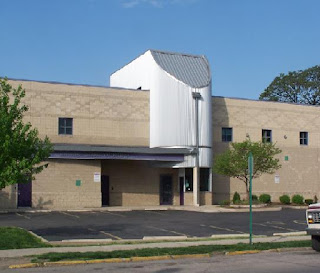
NAF Member: Hope Clinic for Women - Mary Ann Page, who went into cardiac arrest during a combination abortion and tubal ligation
- Jacqueline Bailey, who lay crying out for help and writhing in pain in a California abortion hospital, where nurses just closed the door to her room instead of attending to her. By the time a nurse decided to take her seriously, she was unresponsive. They called an ambulance to transport her to a fully equipped hospital, but it was too late to save her life. Her cries of agony were because her uterus had torn open, and she was left to bleed out. Like Mary, Louchrisser, and Barbaralee, Jacqueline bled to death needlessly.

- Minnie Lathan, who died after her bowel was punctured during a combination abortion and tubal ligation
- Marina Deschapell, who died after a safe and legal abortion in a clinic owned and operated by an erstwhile criminal abortionist. She stopped breathing due to a reaction to the anesthetic drugs, and the facility did not have proper equipment to resuscitate her.
- Gail Mazo, who died after an abortion at Mt. Sinai Hospital in New York
- Elizabeth Tsuji, who was one of five women to die from botched abortions at Inglewood Women's Hospital
- Belinda Byrd, who also died from a botched abortion at Inglewood Women's Hospital. Belinda was the 69th of 74 women that Stephen Pine rushed through Inglewood's single procedure room. Afterwards she was weak and reporting that her legs were numb, but Pine had already left the facility so there was no doctor present to look after her. When she stopped breathing, staff performed CPR for two hours before calling an ambulance to take her to a properly equipped hospital. She arrived there already brain dead and remained in a coma until life support was discontinued. She had bled out from a hole in her uterus. Like Mary, Louchrisser, Barbaralee, and Jacqueline, Belinda needlessly bled to death.
- Sherry Emry, who died because of slipshod procedures. After an abortion, the contents of the suction container are supposed to be examined to ensure that all of the fetal parts are accounted for. If there are no fetal parts, this is a sign that the woman actually has an ectopic pregnancy. But clinic owner Arnold Bickham just had his staff throw the contents of the containers away. They failed to diagnose the ectopic pregnancy, which later ruptured, causing Sherry to bleed to death needlessly, just like Mary, Louchrisser, Barbaralee, Jacqueline, and Belinda. Bickham himself later plunked a hemorrhaging teenage abortion patient into a wheelchair and shoved her out the door to bleed to death.
- Gloria Small, who went to an Orlando facility operated by Dr. Ronald Tauber, who besides being a seedy abortionist also turned out to be a dangerous pedophile. Tauber kept patients overnight, so the place looked like a hospital, but it was actually just his private practice, a doctor's office not subject to state oversight. Tauber punctured Gloria's uterus during the abortion. Instead of identifying and addressing the cause of his patient's bleeding, Tauber packed Gloria's uterus with medical gauze and kept her overnight. He did not transfer Gloria to a hospital until 30 hours after she had been injured. She died despite an emergency hysterectomy. Like Mary, Louchrisser, Barbaralee, Jacqueline, Belinda, and Sherry, Gloria bled to death needlessly.

- Death certificate
- Centers for Disease Control: Abortion Surveillance 1977 Issued September 1979
- "Reckoning With Rosie," Texas Observer, November 3, 2015
-------------------------------
Veteran pro-life investigator Kevin Sherlock asks people of good will to help him have Planned Parenthood prosecuted for profiteering from the rapes and incests of underage girls many thousands of times each year.
Sherlock has pulled the police records of hundreds of cities and has pulled the child protective services records of multiple states to prove Planned Parenthood staffers are violating mandated reporting laws designed to protect girl victims. But there is more to be done. Sherlock will make sure more and more evidence gets to federal and state prosecutors who care about protecting girls from abusers and profiteers.
Thank you for doing what you can to help girls and fight sexual predators and rape profiteers.


No comments:
Post a Comment