Mystery Abortion, 1905
On May 7, 1905, Mrs. Hannah Calhoun died in Peoria, Illinois, from fever and blood poisoning attributed to an abortion. At first, Dr. J. W. Parker and his assistant, Dr. John Peattie, were held in the death. Then the Grand Jury heard from Sophia Spellman, Hannah's mother. Her testimony, to the effect that Parker had only been called in to attend to Hannah after she had taken ill, was enough to lead the Grand Jury to exonerate the men, though they were both reputed abortionists. Parker had been charged in another abortion, evidently not fatal, several years earlier. Hannah's mother would not concede that Hannah had aborted the pregnancy, but said that if there had been an abortion performed, Hannah must have done it herself.
Health of the Mother, 1980
Some time in early 1980, Marie Gibson, age 34, was admitted to Anderson Memorial Hospital in Anderson, South Caroline because of an intestinal obstruction. Marie was pregnant at the time. Doctors decided that an abortion would improve her condition. The abortion had the opposite of the intended effect. Marie's condition deteriorated. She developed respiratory distress system, then went into shock. She died on May 7. Her physician attributed her death to amniotic fluid embolism, but no autopsy was performed to confirm this.
Showing posts with label Peoria abortion. Show all posts
Showing posts with label Peoria abortion. Show all posts
Saturday, May 07, 2016


Tuesday, April 19, 2016
Doctors, Midwives, and Death
1898: A Doctor's Work in Peoria
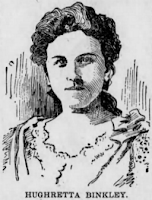 Hughretta "Etta" Binkley was an unmarried woman about 27 years old who worked as a private stenographer for Fred Patee at a bicycle company that he managed. She lived in a boardinghouse owned by George H. Lilly, where she shared a room with Lilly's daughter.
At lunchtime on April 1, 1898, accompanied by Patee, Etta went to the residence/office of Dr. Belle Howard, about four blocks from the boarding house. After work the following day, at about 6:30 PM, she returned to Dr. Howard's house and was sent to a room on the second floor. Howard attended her often, as Etta suffered from pain and bleeding.
On the evening of Saturday, April 9, that Belle Howard drove Etta in her buggy back to the boarding house, where she left her alone on the porch. Mr. Lilly found her there as he was locking up for the night. He described her as being in "a very helpless and distressed condition." Lilly's daughter helped Etta into bed.
The following morning, at about 9:00, Etta somehow managed to trudge to the nearby Cottage Hospital, where she was immediately admitted. Staff physician Otho B. Will was immediately summoned to care for her. Dr. Will found Etta to be so sick that he later expressed astonishment that she had been able to walk to the hospital at all. He examined her and performed surgery to remove decaying and fetid retained portions of placenta.
Etta remained hospitalized under Dr. Will's care until April 19, when she died of septicemia. Howard and her husband fled to Oregon, where they were eventually captured and extradited. Dr. Howard was convicted of manslaughter in Etta's death and sentenced to seven years in prison. She only served 15 months before being released on parole.
1939: Two Midwives in Long Beach, NY
In April of 1939, 27-year-old Mary Narusavage of Long Beach, New York got a phone number from a friend. It was contact information for two midwives, Josephine Williams and her daughter-in-law, 33-year-old Adele Sassen. On April 13, Mary and her husband, 28-year-old Joe, went to the Williams home and were greeted at the door by Sassen. Joe, a waiter, had expected the abortion fee to be $35, so he had brought that amount with him. Sassen said that actually the fee would be $45, but Joe could pay the additional $10 later.
Sassen took Mary through a pair of double doors into a windowless dining room with a bed and a sink in it. Joe waited for about seven or eight minutes. Saussen came out and told Joe, "Everything is OK. Your wife will be all right. Everything is fine." She sent Mary home with three pills, and told the couple to call her if there were any problems.
Over the next few days, Mary suffered bleeding and pain. Williams and Saussen visited her at her home twice, on one occasion using a curette and performing a douche with a bit of Lysol in water. On the other occasion, Williams was in another room with Mary, so Joe didn't know what she did to his wife. By this time, Mary had a copious, foul-smelling discharge.
On April 18, Joe was so alarmed at Mary's condition that he called Dr. David Schiff. Describing the visit, he said, "I was struck by the appearance of the very toxic, pale, white ghostly like woman who was in agony." Upon examining Mary, Schiff concluded that she had peritonitis, so he immediately called an ambulance to take her to Long Beach Hospital, where he cared for her, assisted by intern Henry Miller.
In spite of their efforts, she died at around 10:00 p.m. on April 19. She had a large tear in her uterus, large quantities of pus in her pelvic cavity, and clots and pus in her uterus. She had died from septicemia. The doctor who performed the autopsy estimated that the infection had started between four days and two weeks prior to Mary's death.
The following day, at around 5:20 a.m., police raided Williams' home, where they found abortion instruments wrapped in a wet towel and hidden in a satchel inside a closet. Williams begged the police detective not to take the instruments, to forget he had ever seen them, and even tried to thrust a wad of cash into his hands.
On March 20, 1940, Williams and Sassen were both convicted of first-degree manslaughter and abortion, and was sentenced to two to four years.
1977: A Hospital Abortion in San Jose, California
Mary Paredez, an immigrant, was 26 years old when she underwent an abortion at San Jose Hospital on April 19, 1977. During the procedure, Mary's uterus was perforated. She began to hemorrhage. Less than seven hours later, she was dead. The autopsy found 2500 cc of blood in Mary's abdomen.
 Hughretta "Etta" Binkley was an unmarried woman about 27 years old who worked as a private stenographer for Fred Patee at a bicycle company that he managed. She lived in a boardinghouse owned by George H. Lilly, where she shared a room with Lilly's daughter.
At lunchtime on April 1, 1898, accompanied by Patee, Etta went to the residence/office of Dr. Belle Howard, about four blocks from the boarding house. After work the following day, at about 6:30 PM, she returned to Dr. Howard's house and was sent to a room on the second floor. Howard attended her often, as Etta suffered from pain and bleeding.
On the evening of Saturday, April 9, that Belle Howard drove Etta in her buggy back to the boarding house, where she left her alone on the porch. Mr. Lilly found her there as he was locking up for the night. He described her as being in "a very helpless and distressed condition." Lilly's daughter helped Etta into bed.
The following morning, at about 9:00, Etta somehow managed to trudge to the nearby Cottage Hospital, where she was immediately admitted. Staff physician Otho B. Will was immediately summoned to care for her. Dr. Will found Etta to be so sick that he later expressed astonishment that she had been able to walk to the hospital at all. He examined her and performed surgery to remove decaying and fetid retained portions of placenta.
Etta remained hospitalized under Dr. Will's care until April 19, when she died of septicemia. Howard and her husband fled to Oregon, where they were eventually captured and extradited. Dr. Howard was convicted of manslaughter in Etta's death and sentenced to seven years in prison. She only served 15 months before being released on parole.
1939: Two Midwives in Long Beach, NY
In April of 1939, 27-year-old Mary Narusavage of Long Beach, New York got a phone number from a friend. It was contact information for two midwives, Josephine Williams and her daughter-in-law, 33-year-old Adele Sassen. On April 13, Mary and her husband, 28-year-old Joe, went to the Williams home and were greeted at the door by Sassen. Joe, a waiter, had expected the abortion fee to be $35, so he had brought that amount with him. Sassen said that actually the fee would be $45, but Joe could pay the additional $10 later.
Sassen took Mary through a pair of double doors into a windowless dining room with a bed and a sink in it. Joe waited for about seven or eight minutes. Saussen came out and told Joe, "Everything is OK. Your wife will be all right. Everything is fine." She sent Mary home with three pills, and told the couple to call her if there were any problems.
Over the next few days, Mary suffered bleeding and pain. Williams and Saussen visited her at her home twice, on one occasion using a curette and performing a douche with a bit of Lysol in water. On the other occasion, Williams was in another room with Mary, so Joe didn't know what she did to his wife. By this time, Mary had a copious, foul-smelling discharge.
On April 18, Joe was so alarmed at Mary's condition that he called Dr. David Schiff. Describing the visit, he said, "I was struck by the appearance of the very toxic, pale, white ghostly like woman who was in agony." Upon examining Mary, Schiff concluded that she had peritonitis, so he immediately called an ambulance to take her to Long Beach Hospital, where he cared for her, assisted by intern Henry Miller.
In spite of their efforts, she died at around 10:00 p.m. on April 19. She had a large tear in her uterus, large quantities of pus in her pelvic cavity, and clots and pus in her uterus. She had died from septicemia. The doctor who performed the autopsy estimated that the infection had started between four days and two weeks prior to Mary's death.
The following day, at around 5:20 a.m., police raided Williams' home, where they found abortion instruments wrapped in a wet towel and hidden in a satchel inside a closet. Williams begged the police detective not to take the instruments, to forget he had ever seen them, and even tried to thrust a wad of cash into his hands.
On March 20, 1940, Williams and Sassen were both convicted of first-degree manslaughter and abortion, and was sentenced to two to four years.
1977: A Hospital Abortion in San Jose, California
Mary Paredez, an immigrant, was 26 years old when she underwent an abortion at San Jose Hospital on April 19, 1977. During the procedure, Mary's uterus was perforated. She began to hemorrhage. Less than seven hours later, she was dead. The autopsy found 2500 cc of blood in Mary's abdomen.
Subscribe to:
Posts (Atom)