Her Medical Clinic wasn't even a real clinic. It truly deserved the name "fake clinic." If I'm reading it right, it was just Leo Kenneally's private practice, just a doctor's office. Her Medical Clinic is where the fatal abortion were perpetrated on Donna Heim, Liliana Cortez, and Michelle Thames, and where Maria Soto died of injuries after being left unattended.
Donna was the first to die, in August of 1986. She was given medication that was not appropriate for a patient with asthma and then was not properly resuscitated. Her mother, Barbara Heim, told the Daily News of Los Angeles County, "I thought they'd close the door so no one else would die." But a month after Donna's fatal abortion Liliana Cortez, another woman with asthma, also died after an abortion at Her Medical Clinic. Eighteen-year-old Michelle suffered a seizure during her abortion at Her Medical Clinic on November 17, 1987. She died later that day. Her family filed suit, claiming that Her Medical Clinic staff had made inadequate attempts to resuscitate Michelle.
The battle over Kenneally's medical license turned political after it was suspended by the medical board over the appalling conditions at Her Medical Clinic. Former state medical board executive director Dixon Arnett's said that Leo F. Kenneally's case was "the most egregious I have seen, bar none." But a judge restored Kenneally's license on the grounds that he was doing a public service "providing abortions" in an "underserved area."
The investigation of patient deaths wasn't the first time Kenneally got in trouble. His license had been suspended in 1979 for Medi-Cal theft, and previously in 1975 for records-keeping violations.
As I was looking through the Cemetery of Choice for stories that needed more information, I found an article on the death of Cheryl Tubbs. The article also included information about the death later that year of Jacqueline Bailey, also after an abortion at the same facility. I decided to check for more information on Jackie's death specifically and found more. Here are the updated versions along with the articles I found online.
Cheryl Tubbs
At 9:50 a.m. on August 6, 1975, 29-year-old Cheryl L. Tubbs was admitted to Pacific Glen Hospital in Los Angeles County for a saline abortion. She experienced heavy vaginal bleeding after this safe, legal abortion, so she was transferred by private ambulance to White Memorial Hospital at 7:00 pm. on August 7. This ambulance ride took her past at least three other hospitals, including County USC Women's Hospital.
Cheryl continued to bleed profusely, and twice went into cardiac arrest. Staff performed a paracentesis on her to remove blood and fluids from her abdomen. About an hour after midnight, staff could no longer detect any blood pressure. For an hour they tried heart massage, to no avail. Cheryl was pronounced dead at 2:30AM on August 8. An autopsy revealed that Cheryl's uterus had ruptured during the abortion, spilling blood and uterine material into her abdomen. She had bled to death. Cheryl's family filed a $1 million lawsuit against Pacific Glen and Dr. W. Constantine Mitchell on behalf of her three minor children. The children were left in the custody of Cheryl's parents, Mr. and Mrs. W. C. Gourley. Two years later, Jackie Bailey also bled to death from a ruptured uterus caused by a saline abortion at Pacific Glen. Jacqueline Bailey At 11:45 am.m.On December 1 or 2, 1977, 29-year-old Jacqueline Bailey was injected with saline by Dr. Airo Tunde Eboreime for an instillation abortion at the 22-bed Pacific Glen Hospital in Los Angeles County. She was 20 weeks pregnant.
Five hours after Jackie expelled the dead baby, her condition appeared grave. She suffered cardiac arrest. Shortly after midnight on December 3, she was transferred 12 miles to Memorial Hospital of Glendale.
Two patients who were in the same room with Jackie at Pacific Glen told investigators that no physician provided any attention to Jackie between the injection of the saline and the arrival of paramedics to transport her for emergency care. Jackie had called out for help, they said, but she was ignored and somebody even shut the door so that nurses wouldn't be able to hear her. The call button on Jackie's bed was inoperable. Pacific Glen's own records also indicated that Jackie had not been seen by a physician either. It was nurses who noticed that she appeared to have gone into cardiac arrest. Doctors at Memorial suspected a uterine laceration, so they performed exploratory surgery. The bleeding was so profuse that they then performed a hysterectomy in a last-ditch attempt to save her life. Jackie died at 4:25 a.m. on December 3. The attending physician said that he had found 3,500 to 4,000 ccs of old blood in Jackie's abdomen. The autopsy report found that Jackie's uterus had ruptured during the abortion, and that her uterine artery had been lacerated. She had bled to deathfrom her injuries. Her grandmother, Hassie Holden, demanded an investigation. She told the Los Angeles Times that she didn't even get notified that Jackie was in trouble until about an hour before her death, when Eborieme called to tell her that Jackie was in serious condition from a hemorrhage. "My son was getting ready to go to the hospital when we got another call that she was dead." Mrs. Holden also said that Jackie's brother had mistakenly gone to Pacific Glen looking for her and got the runaround from staff. The family never found out that she had been taken to another hospital until they got the $84 ambulance bill. Eight of nine jurors at the inquest held that Jackie died "at the hands of others, other than by accident," while the holdout held that Jackie's death had been accidental. Dr. Gerald Bernstein of Women's Hospital told the Los Angeles Times that in his opinion, "the patient did not receive appropriate medical care and this was an avoidable death." Due to the two deaths, authorities announced that they would investigate how many of Pacific Glen's abortion patients were discharged home versus transported to other hospitals to be treated for complications. Medi-Cal patients were funneled to Pacific Glen Hospital through Pacific Glen Family Planning Clinic after referrals by social workers at the county health office. A social worker at the office admitted that they had concerns about the care patients were getting but continued to refer them because Pacific Glen accepted Medi-Cal.
On December 8, 1994, 23-year-old Magdalena Rodriguez went to Suresh Gandotra's clinic, El Norte Clinica Medica, for what she thought was a safe, legal second-trimester abortion. Gandotra, who already had an unsavory background, later said, "I knew I screwed up," when he pulled out bowel instead of fetal parts.
Gandotra called a
hospital and asked for directions to send Magdalena there by car. The
staff at the hospital insisted that Magdalena should be transported by
ambulance. They began to assemble an expert team for the expected
catastrophic injuries.
In the mean time,
Gandotra left Magdalena unattended while he did abortions on other
patients. After a half-hour delay, he finally called an ambulance, but
did not inform them of the hospital that was awaiting her arrival with a
team ready to treat her.
When the ambulance crew arrived, they found
Magdalena in ventricular fibrillation, with no pulse, bleeding, and on
the floor. The ambulance crew was not informed about the hospital that
was awaiting this critically injured patient, so they took Magdalena to
another hospital, one that was not prepared to treat a patient with her
specific injuries.
Gandotra sent
Magdalena to the hospital without a medical history or any information
about her condition or what he'd done to her. The staff were totally
unprepared for what they found when they examined her. Magdalena had no
vitals on arrival at hospital. She was unresponsive with fixed, dilated
pupils.
When the surgeon
at the hospital opened Magdalena's peritoneum, it was so distended with
blood that the operating room was spattered with the escaping blood.
Magdalena's uterus was ruptured, with a fetal limb protruding into her
abdomen. Her cervix, uterus, bladder, and colon were lacerated. The
mangled and partially dismembered fetus was of approximately 30 weeks gestation.
As the autopsy describes the unborn child, "the body of the baby was not complete
when autopsied. Both arms had been cut off; the heart, lungs, liver, and
other organs had been cut out, the front of the chest and abdomen were
missing, the right femur was fractured, the head was intact except for
an area on the scalp which had been taken off from the back of the
head."
Magdalena bled to death
during surgery. Her death was attributed to "complications of the acute
pelvic injuries which consisted of lacerations of the lower uterus,
vagina, bladder and colon."
Gandotra told the
medical board that he had delayed calling an ambulance because he had
no admitting privileges and that the patient had asked to be released so
she could walk home. Gandotra's attorney said, "We don't believe this
was blow the standard of care nor do we believe it was malpractice." A
nurse at the hospital that tried to save Magdalena's life said, "I've
never seen anything like this before and I don't want to again."
Most people presented with a breathing newborn -- even a tiny, premature newborn -- would not hesitate to seek care for the baby. It seems to go without saying that a medical facility would be the safest place for a vulnerable baby. Thus, people tend to be shocked into disbelief at the idea that a newborn could be left to die or outright killed. But the world of abortion is not the world that most people live in. The 1977 case of Dr. William Baxter Waddill and "Baby W" illustrates how the abortion facility culture -- what I call Abortion Land -- views babies very differently from the way the rest of us do.
Mary W., a high school student, was examined by an ob/gyn on February 22, 1977, and found to be 28 weeks pregnant. This ob/gyn counseled that Mary's pregnancy was too advanced for an abortion, and advised Mary to consider an adoption plan. Somehow, Mary learned that Waddill would be willing to do an abortion, which he initiated by saline injection on March 2 at Westminster Community Hospital in California.
Mary's baby, a 2 lb, 8 oz infant girl, was expelled that evening and discovered by a nurse who was attending Mary.
The nurse clamped the cord and was about to put the baby in a bucket for transport to the pathology lab, when she noticed that the baby was moving and crying. In a normal hospital, the nurse would have, without hesitation, have taken the baby straight to the nursey for care. But this nurse was not working in a normal hospital setting. She was on an abortion ward. She was working in Abortion Land. Live babies weren't to be expected. They constituted a dismaying surprise. Thus, the nurse was uncertain about how to proceed. Another nurse suggested that regardless of any signs of life, the baby should just go into the bucket and off to the pathology lab per routine. Yet another nurse testified that she had seen the infant move but said nothing about this to avoid distressing Mary. Thus a third Abortion Land nurse, presented with a crying baby, was left uncertain about how to proceed. The first nurse summoned the nursing supervisor, who quite likely supervised the entire ob/gyn department and thus was not a resident of Abortion Land, like the three other nurses. The supervising nurse noted that the baby was pink and making sucking motions. She did whatever any normal person would do. She sent the baby to the nursery and summoned the mother's attending physician -- in this case, Waddill.
Once the baby was in the nursery, she was no longer in Abortion Land, so the nurses there responded to her as they would to any baby. One nurse cleared the infant's throat, placed her in an isolette, and charted a heartrate of 88. A neonatal ICU nurse began providing respiratory assistance on the little girl, and asked for help performing an intubation, which is routine NICU care.
Waddill arrived and chased everybody away. Several witnesses heard Waddill instruct staff "not to do a goddam thing for the baby." An ER doctor -- who evidently had noticed that something was up and had popped in to see for himself what was going on -- saw Waddill squeeze the umbilical cord, whereupon the "child jerked its body and gasped for air."
Waddill evidently had prepared for the birth of a living baby -- though not, one would guess, one that had been removed from Abortion Land and transported to the NICU. A tape was entered into evidence of a call from Waddill to a pediatrician, Dr. Ronald Cornelsen. In this call, Waddill told Dr. Cornelsen to come to the hospital, because the law required a pediatrician to assist when a newborn was in distress. Waddill said, "If we all tell the same story, there will be no trouble. ... So long as we stand together, no one anywhere can make any accusations anywhere. ... Do not get squirrely. Just tell them exactly as we've discussed. Just say you went in, there was no heartbeat and you left."
Dr. Cornelsen testified that when he arrived at the hospital the infant, a baby of about 31 weeks gestation, was breathing and had a heart rate of 60-70. There were bruises on her neck. Dr. Cornelson said that Waddill told him, "Sorry to get you in this mess. We had a baby that came out live from a saline abortion, and it can't live!" Dr. Cornelsen testified that he saw Waddill press on the infant's neck, saying, "I can't find the goddam trachea," and "This baby won't stop breathing." Dr. Cornelsen testified, "I said, 'Why not just leave the baby alone?' He said, 'This baby can't live or it will be a big mess.'" Waddill requested potssium choloride, for an injection to stop the baby's heart, but Dr. Cornelsen wouldn't let the nurse get it. Dr. Cornelsen said Waddill also asked for a bucket to drown the baby in.
Waddill later claimed that he hadn't strangled the baby, that she had died of natural causes before he even arrived at the hospital to deal with the delivery. He asserted that all of his actions were done in the best interests of the mother and the baby. However, having died in the nursery rather than in the abortion ward meant that rather than going into the medical waste incinerator, Mary's baby was afforded an autopsy, which backed what the witnesses said.
A pathologist examined the baby's lungs and concluded that she'd been alive for at least 30 minutes. Though saline causes capillaries to break down and thus gives the aborted baby a mottled, bruised look, the neck trauma was "consistent with manual pressure, and inconsistent with saline." The pathologist also testified that only the infant's placenta and small bowel seemed to have been "significantly affected by the saline," meaning that Mary's baby had not suffered fatal injury from exposure to the saline in-utero. Had the nurses in the NICU been allowed to proceed, Mary's baby would almost certainly have lived. The autopsy found the cause of the baby's death to have been "manual strangulation." Her gestational age was determined to have been 29 to 31 weeks at autopsy, consistent with the observations of Dr. Cornelson.
All told, over 13 weeks of testimony, the witnesses described three unsuccessful attempts by Waddill to strangle Mary's baby, and the fourth, successful, attempt. But during deliberations, the jury asked for clarification of a procedural point. A few phone calls to clarify the point led to the discovery by the attorneys and judge that there was a definition of "death" in the California health and safety code that the jury had not been informed of. Because the testimony hadn't directly addressed this particular definition of "death," the jurors became hopelessly deadlocked over whether Waddill's actions, though clearly causing what laymen would consider the "death" of the baby, had caused what the law would call the "death" of the baby. The judge had to delcare a mistrial. A second jury was also deadlocked, and the charges against Waddill were eventually dismissed.
Mary later sued Waddill, saying that he'd never told her that her baby might been born alive, and that she never would have consented to the abortion had she known this was possible. She said that Waddill "willfully and unlawfully used force and violence upon the person of the baby [W.] ... causing the decedent baby [W.] to die."
Waddill continued to perform abortions in California, and as of 2000 was working for National Abortion Federation member Family Planning Associates Medical Group, a chain where the following women and girls suffered fatal abortions:
In a society where a jury can't even convict a man who strolls into a NICU and strangles a baby in front of half a dozen witnesses, it truly is astonishing that Gosnell was convicted.
Nearly all of today's deaths are connected with facilities or practitioners with multiple abortion deaths to their discredit.
One of Three Deaths at Detroit NAF Member
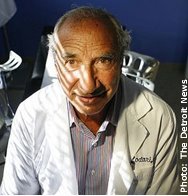
Dr. Alberto Hodari
Chivon Williams, just days short of her 17th birthday, died on May 19, 1995 after an abortion performed by National Abortion Federation member Alberto Hodari in Detroit. According to a lawsuit, a suction abortion was performed on Chivon at about 11:30 a.m. She was discharged from the facility at about 1:10 p.m. even though she reported stomach and chest pains. A short time after returning home, she was found unresponsive, and pronounced dead at 5:17 p.m. Fieger Times, a newsletter put out by the law firm representing Tamiia's family, states that Chivon had been in the first trimester of pregnancy.
Hodari was also implicated in the abortion deaths of 15-year-old Tamiia Russell and of Regina Johnson.
One of Sixteen Deaths at National Abortion Federation Member
Susan Levy was 30 years old when she underwent a safe and legal abortion at the Family Planning Associates in Mission Hills, California on April 9, 1992. FPA is a member of the National Abortion Federation. Susan, originally from Florida, was homeless and was living in a car owned by a friend. On May 19, 1992, she was found dead in that car. The cause of death was determined to be from an infection that developed from fetal tissue that was not removed during her abortion.
Other abortion patients to have died at FPA facilities include:
The autopsy report for 22-year-old Joan Camp attributed her death to "complications apparently as a result of a recent termination of pregnancy." Joan had been found unconscious in the morning on May 18, 1985. She was rushed to Memorial Hospital in San Leandro, California, where doctors tried to save her life. Their efforts were futile. Joan died the next morning, May 19, 1985, from clots in her lungs.
The CDC classified Joan's death as "unknown" abortion, because they could not find out where the abortion was done. The CDC does not count an abortion death as a legal abortion death unless they can verify that the person who performed the abortion was a licensed physician, or another legally qualified medical professional in states that allow non-physician abortions.
One of Six Deaths Blamed on Dr. Lou E. Davis
Dr. Lou E. Davis
Irene Kirschner, age 24, died on May 19, 1932 after an abortion believed to have been perpetrated by Dr. Lou E. Davis. When police went to arrest Davis for Irene's death, they found another abortion-injured woman at her house but no sign of Davis.
On May 19, 1858, 28-year-old Amelia Weber died at the home of 58-year-old Dr. Charles Cobel in Brooklyn and was buried in Greenwood Cemetery. The undertaker testified that Cobel had engaged him to perform the funeral, and that he had collected Amelia's body from Cobel's garret. Cobel attributed Amelia's death to paralysis.
"[F]rom the privacy of the burial and other mysterious circumstances surrounding the case, the body, six days after interment, was ordered by the Coroner to be exhumed for medical examination."
The witnesses at the inquest included Amelia's husband, who kept a hotel in Schobaria County, New York. Testimony indicated that Amelia had left her home and three children in Warrenville a few days before her death, supposedly to visit friends in Brooklyn and to do some shopping. Instead, Amelia went directly to Cobel's house, arriving on May 8.
The inquest findings included:
"Dr. Cobel received an application from Mrs. Weber, who had left home for that purpose with her husband's consent, on the 8th instant, to produce an abortion upon her person, he did so, and violent inflammation supervened, which baffled his skill. He then called Dr. Kertachmann, pretending that the lungs were the seat of disease, but it was to no purpose."
The autopsy revealed noting at all wrong with Amelia other than an abdominal infection caused by the abortion and bringing about her death.
Cobel was indicted for manslaughter in Amelia's death on November 30, 1861. On January 23, 1862 he was tried and found not guilty of manslaughter in the second degree, but guilty of the misdemeanor charge of using instruments on a pregnant woman with intent to cause abortion.
Cobel successfully appealed the misdemeanor conviction on the grounds that he couldn't simultaneously be guilty of performing the abortion yet not guilty of causing Amelia's death by performing the abortion. Cobel, a known abortionist, was also implicated in the deaths of Antoinette Fennor, Catharine DeBreuxal, and Emma Wolfer.
Nearly two decades before the "Mothers Day Massacre" pulled off with Kermit "House of Horrors" Gosnell in Philadelphia, 30-year-old Harvey Karman was working at the Clinical School of the Psychology Department of the University of California at Los Angeles, seeking a doctorate in psychology. He was not licensed to practice medicine.
The Abortion
Around early February of 1955, 26-year-old Joyce Johnson told her husband, Ben, that she was pregnant. They discussed an abortion. Somehow, the couple found out about Harvey's passion for abortion, and arranged for him to practice his hobby on Joyce. His fee was $150.
On April 6, 1955, Karman met Joyce in a motel room and, using a speculum, inserted a nutcracker into Joyce in order to perform an abortion. On April 8, Joyce's husband took her to St. Joseph's Hospital. She was examined by a Dr. Moss who diagnosed her as suffering from "an infected criminal abortion." The dead fetus was still in her uterus. She expelled it while at St. Joseph's.
On April 13, Joyce was transferred to General Hospital for specialized treatment. She died there on April 21. An autopsy was performed, and Joyce's death blamed on bronchial pneumonia brought on by the septic abortion.
Karman was arrested.
The Trial
During the trial, a photograph of the autopsy was available, but the district attorney didn't display it. He instead told the jury, "you can look at it up in the jury room if you are so inclined--it's an autopsy picture--I'm not going to show it to you because some people don't like to see things like that--she was 26 years old April 6th. She was a girl in good health. She was pregnant. She wanted to do something about having an abortion for this pregnancy."
The district attorney also told the jury, "Frankly, I don't know how you feel about this matter of abortion--it is a matter of difference of opinion. Some people say well, people can't afford it, it's all right to have an abortion. Some people say if the woman's health won't stand it it's all right to have an abortion. Our law says it's all right to have an abortion if her health is of such nature she can't have a baby. Some people think abortions are all right. Some people are absolutely against all of them. If you want to know the truth, I'm pretty much against all abortions myself, I think it's a terrible thing for a girl to be talked into this."
Harvey was convicted.
The Appeal
The appeals court found it "improper for the district attorney to express his personal belief as to all abortion," but noted that since the jury was admonished to ignore the comment Karman had no grounds for appeal in the fact that the DA made the comment.
Karman's defense called a Dr. Gilbert as an expert. He reviewed the autopsy report and medical records, an opined that Joyce did not die from a septic abortion. He was paid $150 for his testimony, ironically the same amount Joyce paid for the abortion.
The defense also appealed on the grounds that the the DA unduly prejudiced the jury by bringing out in cross-examining Karman that he'd been convicted previously of a felony. The appeals court ruled that this was proper impeachment of a witness.
Karman's defense further argued that Joyce's husband and friend were improperly granted immunity after they originally refused to testify.
Karman's defense also claimed that the prosecution failed to prove that the abortion wasn't necessary to save Joyce's life. But the appeals court found that the testimony of Joyce's husband and friend that Joyce had been in good health settled that matter. Of course, pure logic would prove that matter, since Joyce was seeking an illegal abortion from an amateur in a motel room. Had her life been in danger, an ob/gyn would have been able to admit her to a hospital and perform the abortion there.
An appeals court found that the district attorney's statement that what defendant did was "absolute butchery" was fair argument on the facts, and not an unduly prejudicious statement. It came out in the case that Joyce's husband was dating another woman and therefore had an interest in Joyce securing an abortion.
The Pardon
Though Karman had finished serving his sentence before Jerry Brown was sworn in as California Governor in 1975, Brown was enamored enough of Karman's work to issue him a pardon.
Joyce's abortion was unusual in that it was performed by an amateur, rather than by a doctor, as was the case with perhaps 90% of criminal abortions. However, it also stands out because Harvey Karman was treated like a real doctor by the abortion establishment. He was invited to train abortionists, and was celebrated by abortion advocates for having invented a suction cannula designed specifically for early abortions. Despite being an amateur, and despite the death of Johce Johnson and the fiasco in Philadelphia, on his death Karman was eulogized .as a champion of safe abortions.
Stella Saenz, age 42, was one of the growing number of safe-and-legal abortion deaths that were to soon almost completely replace illegal abortion deaths in the United States over the coming decade.
Stella had arranged for a legal abortion in the spring of 1968. At that time, California allowed legal abortions, but only in hospitals.
On April 11, she was admitted to Los Angeles County General Hospital with sepsis. Doctors administered penicillin. Stella went into anaphylactic shock; neither she nor the doctors had realized that Stella was allergic to penicillin. Doctors tried to treat both the infection and Stella's reaction to the penicillin, to no avail. She died on April 13.
The California Department of Public Health classified Stella's death as both a drug reaction death and a legal abortion death.
One of Louise Achtenberg's Many Victims
On April 13, 1909, Stella Kelly Lowery, age 28, died of septicemia at a hospital in Chicago, from an abortion that had been perpetrated around March 5. Stella, a waitress, was divorced and was identified by her maiden name in the Homicide in Chicago Interactive Database.
Louise Actenberg, age 59, sometimes identified as a doctor and sometimes as a midwife, was charged with murder by abortion by a coroner's jury. Achtenberg was also implicated in the 1907 abortion death of Dora Swan and the 1909 abortion deaths of Stella and of Florence Wright. In 1918, at the age of 69, she was arrested for performing an abortion on Miss Ruth G. Pickling,[1] but acquitted, going on to be arrested for the 1920 abortion death of Violet McCormick and the 1924 death of Madelyn Anderson. I can find no record that she was ever incarcerated, which is hardly surprising, given how hospitable Chicago has typically been to the many doctors and midwives who perpetrated abortions in the city.
A nurse there inserted laminaria to dilate Edrica's cervx, although Edrica had "odiferous creamy-colored discharge", indicative of a vaginal infection, at the time. Laminaria are sticks of seaweed that absorb moisture and expand, so they would wick any bacteria or viruses from the vagina into the uterus.
Edrica, who had not told her family about the abortion, did not return to the facility to have the laminaria removed and the abortion completed because her mental state had deteriorated overnight. She had became feverish, her mother said. She became mentally "confused and disoriented," not knowing what day it was, and started acting aggressively. She also began vomiting.
Planned Parenthood's patient profile for Edrica said that they mailed Edrica two letters telling her that she had to return and have the laminaria removed, but Edrica's mother said that the letters never arrived. She does indicate that Planned Parenthood called, but that Edrica was too sick to take the calls.
Edrica's family took her to Riverside County Regoinal Medical Center on February 4. A blood test there revealed the pregnancy to the physicians, but the hospital did not perform a pelvic exam because at the time Edrica was unable to consent to the examination due to confusion and inappropriate speech.
Edrica was treated in the medical ward for five days, then transferred to a psychiatric unit, which promptly sent her back to the medical unit to have them check her for possible sepsis. There, her condition continued to deteriorate. After Edrica's boyfriend told her family about the visit to Planned Parenthood, staff at the hospital performed a pelvic examination and discovered the laminaria, along with some gauze. Edrica miscarried that day, and died the next day, Valentine's Day.
The coroner's report attributes Edrica's death to toxic shock syndrome, prolonged retention of laminaria, and pregnancy. Which means that her death will likely be counted as a pregnancy death by health statisticians, but not as an abortion death because no abortion actually took place.
Edrica had been a student at Riverside Community College. Her mother said that she enjoyed traveling and reading. Her mother, Aletheia Meloncon, commented, "My daughter made a choice, but she didn't choose to die." She added, "A lost dog gets more attention than my daughter did. This has really torn at my family."
Edrica is the third known death among Planned Parenthood patients in California in the last four years. Holly Patterson, 18, died of an infection after an RU-486 abortion in 2003. Diana Lopez, 25, bled to death in 2002 after her cervix was punctured during the procedure. Edrica's mother's lawyer indicates that Planned Parenthood did not report any of these deaths to the state, as required by law.
A Socialite's Brutal Death in 1942
Florence Nimick Schnoor
At around 4:00 p.m. on February 14, 1942, socialite Florence Nimick Schnoor, age 24, died at St. Joseph's Hospital in New York of what the coroner called a "brutal and inept" illegal abortion.
Florence, grand-niece of Andrew Carnegie and heiress to a Pittsburgh steel fortune, had eloped with Richard H. Schnoor, sergeant-at-arms of the New York State Assembly, one week earlier. The couple had met the previous September at "a fashionable Greenwich tavern." After their elopement, they'd moved into Florence's rooms at The Maples.
Her husband reported that he had taken her to White Plains so she could catch a train to New York for a day's shopping. Later that morning, she called and asked him to pick her up at the station. He found her obviously ill and asking for a doctor. He took her straight to the hospital, where she died three hours later.
Doctors reported that Florence refused to discuss her case at all, much less implicate the abortionist, despite pleas from her husband.
Investigators contacted all 200 people whose names were in Florence's address book, but were unable to gain any clues as to who performed the fatal abortion. All they were able to piece together is that Florence evidently paid $40 for the abortion, since her husband reported that she had left for New York with $50 in her purse and there had been $3 in her purse when she was hospitalized..
Florence's husband was not implicated in her death; police believed that he had not even known Florence was pregnant.