Showing posts with label San Francisco abortion. Show all posts

Saturday, May 20, 2017

A Claim of Medical Necessity and Other Pre-Legalization Deaths

A Claim of Necessity

Dr. Claude C. Long ran a rather fishy medical practice in San Francisco. He, his wife Isabel, and a relative named Ann Fisher, were charged with the May 20, 1937 murder of 26-year-old Genevieve Arganbright. Genevieve was, according to her husband, Perry, about 2 1/2 months pregnant at the time of her death. She had been in good health, athletic, and in the habit of taking long hikes, dancing, swimming, and playing tennis.

On the evening of Genevieve told her husband she going for her abortion, which she had scheduled by phone the previous day. She brought with her $50 that she had borrowed to pay for the abortion.  That was the last time Mr. Arganbright saw his wife. Nobody at Dr. Long's practice called to tell him that his wife had died on the operating table.
Dr. Long did, however, have Mrs. Fisher make a phone call to a Dr. Goldsand, who verified that Genevieve was dead and refused Long's request that he sign a death certificate.  The next call made from Long's office was to an undertaker's office. When two employees arrived to collect Genevieve's body at about 2:30 the morning of the 21st, Dr. Long wasn't present. Mrs. Long and Mrs. Fisher said that Dr. Goldsand had been the attending physician and that he would sign the death certificate in the morning.
The men took Genevieve's body to the mortuary, where the embalming was done in the morning. But when no relatives called to finalize arrangements, and nobody produced a death certificate, the undertaker notified the coroner.

While things were getting squirrely at the mortuary, Dr. and Mrs. Long were making tracks to a hotel.

While all this was going on, nobody had even tried to contact Genevieve's husband. It wasn't until later that day, when the police arrived, that Mr. Arganbright learned that his wife was dead.
Dr. and Mrs. Long were arrested at the Cecil Hotel on May 22.

The prosecution argued that the abortion had not been medically indicated by Genevieve's heart condition, and that even if it had been, Long's lack of due diligence had caused her death anyway. If the abortion had been elective, and thus illegal, Long was guilty of murder in Genevieve's death. If the abortion had really been to try to prevent Genevieve's death from pregnancy stress on her heart, but had been negligently performed, Long was guilty of manslaughter. And if the abortion had been medically indicated and properly performed -- if Genevieve had died from her pre-existing heart condition -- then Long was not guilty of any crime.

Long did not deny that he treated Genevieve on May 20. He said that she had not come specifically for an abortion, but was certain that she was pregnant, and that she was constantly tired, with chest pain, palpitations, and shortness of breath, all indications of heart problems. Long said that he then informed Genevieve that her heart was in very bad shape and that he recommended an immediate therapeutic abortion to prevent her death.

Expert testimony agreed that Genevieve did indeed have mitral stenosis, but there was no agreement on whether or not it warranted an abortion. The surgeon who performed the autopsy, and a pathologist from the coroner's office, both testified that Genevieve's heart was not at all enlarged. Her mitral stenosis seemed stable, and their expert testimony was that Genevieve would have likely tolerated pregnancy and delivery quite well.
Dr. Carr, the pathologist, testified that a patient sick enough to require an abortion would also have been too sick to simply perform one on the spot; a conscientious physician would have sought a consultation with a cardiologist, and would have hospitalized the patient for some time before the abortion in order to ensure that she was strong enough to survive the surgery. He also noted that the agony of having one's cervix ripped off would be enough in itself to cause shock in a patient with a weak heart.

All of these factors were indicative of lack of due diligence on Long's part in performing the abortion, regardless of his reasons for performing it. At the very least, if he really was performing the abortion due to concerns about Genevieve's heart problems, he was guilty of manslaughter for performing an outpatient surgery and ripping his patient's internal organs so badly.

Long was granted his request for a new trial, and his conviction overturned, on the grounds that the judge had improperly instructed the jury, placing the onus on the defense to prove the abortion had been medically indicated, rather than on the prosecution to prove that it had not been.


One of Three Dead Patients of Dr. Justin Mitchell
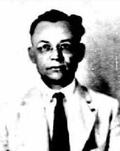
A middle-aged white man with dark hair and a high forehead, wearing a light colored suit and dark tie
Dr. Justin Mitchell
In May of 1934, 22-year-old Mary Schwartz asked Marie Hansen, a coworker at the Illinois Meat Company in Chicago, to help her arrange an abortion. Marie took Mary to Dr. Justin L. Mitchell's office south of Chicago's meatpacking district. Marie had undergone an abortion at Mitchell's hands three years earlier, and, telling him that her friend “wants to get fixed up,” she negotiated a discount from the usual price of $50 to $30. Marie co-signed on a $25 loan, and lent Mary $5 “in dimes” from her own money.

The next morning, the two women again went to Mitchell's office. Marie waited outside during the abortion, then took Mary home with her to recover. That evening, Mary took ill, so Marie called Mitchell and told him that Mary “was bad sick.” Mitchell told Marie to give Mary castor oil, and place warm towels on her abdomen to help with the pain. This did not alleviate Mary's pain, so on Marie took her back to Mitchell's office on Thursday evening and Friday morning.

At 4:00 Saturday morning, Marie was very concerned and called Mary's lover, Joe Henja, who was a foreman at the meat plant. Joe complied with Marie's request that he come right away and get Mary. He called his own doctor then rushed Mary to a hospital, where Mary died on May 20, 1934.

 Mittchell was later implicated in the abortion deaths of Alice Haggin and Mary Nowalowski in 1936.


Two Deaths in One Month

On May 20, 1870, Matilda Henningsen died at No. 182 East Seventh Street in Brooklyn. Matilda's sister, Henrietta Henningsen, testified that she recognized clothes and other items belonging to her sister. Matilda had been sick about two months earlier, and had been treated by Dr. Herzog and Dr. Kennerer. Shortly after having taken ill, Matilda told Henrietta that she'd gotten an invitation to go to Williamsburgh, and that was the last Henrietta had seen of her sister.
Dr. Joseph B. Chshman testified as to the post-mortem examination he had performed. He said he found all the evidence of uterine infection and resulting peritonitis, resulting from an abortion.
Mr. A. A. Wolff, from Denmark, purported to be a physician, but is not identified as such in the source document. Six fetuses, along with various instruments, were found in his office. The jury determined that Wolff had performed the fatal abortion.

Wolff was also implicated in the abortion death of Henrietta Ullman less than a month after Matilda's death.

Thursday, April 20, 2017

Doctors and a Pharmacy Clerk

One of Three Deaths at Chicago Abortion Mill

A middle-aged white man wearing large eyeglasses
Dr. Dusan Zivkovic
Brenda Benton's survivors sued Biogenetics after her death, claiming that Dusan Zivkovic and/or V. Perez had performed a safe and legal abortion on her on March 13, 1987. She was placed under general anesthesia for the abortion. After she was discharged, Brenda developed fever, chills, and back pain.

The suit says that 35-year-old Brenda returned to Biogenetics to report these symptoms on March 27, and that Zivkovic examined Brenda and performed a D&C before transferring her to Martha Washington Hospital. There, Brenda's survivors say, Zivkovic called in other doctors for a consult. They then transferred Brenda to Rush-Presbyterian St. Luke's hospital on April 6. She died there on April 20.

Her death was due to infection and "overwhelming septicemia." Brenda's family said that Zivkovic failed to failed to determine that Brenda had had an adverse reaction to drugs he'd given her, and failed to detect and respond to her medical emergency. An expert opinion on the case attributes Brenda's death to inappropriate follow-up, and septicemia leading to fatal complications. Brenda's death certificate attributed death to hepatic necrosis due to toxicity reaction to abortion anesthesia.

"Susanna Chisolm" (1975) and Synthia Dennard (1989) also died after abortions at Biogenetics.


Dillinger's Doc Does Fatal Abortion

Poor-quality newspaper photograph of a mostly bald, middle-aged white man, in profile
Dr. Clinton E. May
Dr. Clinton E. May had crossed paths with the law when he harbored John Dillinger. In an apparent attempt to keep a low profile, he relocated to California after his release and didn't bother to get licensed to practice medicine, but rather set up housekeeping, and an abortion practice, with a woman in San Francisco using the aliases Cy Dalton and Miss Ralston,

On April 12, 1939, a woman called St. Joseph's Hospital and anonymously told a doctor there that a woman had suffered uterine damage in an abortion. The doctor said to send the woman to the hospital immediately.

The woman, 30-year-old Doris Alexander, arrived at the hospital in a taxi. She was in critical condition. There, she told hospital staff, her husband, and the police about the abortion. Based on the information Doris had provided, police raided Clinton May's apartment the following day, finding a makeshift operating table, abundant surgical instruments typically used in abortions, and parts of a human fetus of about three or four months of gestation that was not Doris' fetus.

May was arrested and taken to the hospital, where Doris tentatively identified him. She never mentioned a woman being involved in the abortion. Doris died on April 20, and police arrested a woman named Frances Zoffel, whom they said was the mysterious "Miss Ralston."

May and Zoffel were charged with murder and conspiracy. May was convicted of second-degree murder, Zoffel of conspiracy. Zoffel was able to get a new trial on the grounds that she was not "Miss Ralston" and that there was no evidence linking her to May's practice, although she had been implicated in abortion rings in the past and would be implicated again in the future.


A Doctor When the Pills Didn't Work

In Seattle, Washington in February of 1933, Mary Agnes McNeil, a 22-year-old unmarried grocery store clerk, discovered that she was pregnant. Mary informed her boyfriend of the pregnancy, and he got her some pills supposed to cause an abortion, but they didn't work. She tried another round of different pills in March.

On April 8, Mary went to a nursing home operated by a nurse to ask about an abortion. The nurse informed the woman and her lover that Dr. E. T. Martin or another doctor would be able to perform an abortion.

On April 11, Mary's boyfriend went to Dr. Martin's office and consulted with him. On Dr. Martin's instructions, Mary's boyfriend brought her back the next morning, a Wednesday, for an examination. Mary was in Dr. Martin's office for about half an hour. Dr. Martin then told Mary's boyfriend that the total fee, including a stay at the nursing home until Saturday night, would be $75. He then instructed the boyfriend to take Mary to the nursing home, which he did that afternoon.

On Friday the 14th, Dr. Martin performed a curettage on Mary to remove the fetus. The nurse claimed that she had no idea what Dr. Martin was planning to do.

After the D&C, Mary became alarmingly ill. Dr. Martin said that he himself was not in proper physical condition to care for the patient, so he summoned a Dr. Templeton. Dr. Templeton evidently cared for Mary at the nursing home until April 19, a Wednesday, when he advised staff to transfer Mary to Virginia Mason hospital. She died the following morning.

Dr. Martin, with some corroboration from the nurse, said that Mary already had a rapid pulse and fever when she first consulted with him. He also said that she was bleeding vaginally already. Dr. Martin said that Mary had told him she'd missed three periods, taken abortifacients, had fallen, and had a chronic bowel condition.

Dr. Martin testified that he'd recommended hospitalization, but that Mary wanted to avoid the possible publicity surrounding a hospitalization. It was then that he'd decided to send her to the nursing home instead. He also testified that she'd been bleeding from the 12th until the 14th, when he'd performed a curretage. He said that this curretage was necessary to treat her fever and bleeding.

Dr. Martin was convicted of manslaughter in Mary's death, but the nurse was acquitted.


A Pharmacy Clerk's Fatal Work

On April 20, 1912, 19-year-old actress and newlywed Ruth Fox died at her Chicago residence from septic peritonitis caused by an abortion perpetrated, possibly there and on that day, by Frank J. Schwartz, a pharmacy clerk. He was arrested and held by the Coroner on May 2, and indicted by a Grand Jury on November 25, but the case never went to trial. Dr. Samuel T. Baldridge was arrested but exonerated after testimony at the coroner's inquest. It is unclear why, with all the physicians and midwives running thinly-veiled ads for abortion practices, Ruth instead went to somebody who had only marginal training in a medical field.

Friday, March 31, 2017

Patterns of Abortion Deaths and a Girl on a Train

Early 20th Century Illinois

Two Deaths in Two Days Linked to Dr. Thomas Eade


Yearbook photo of a smiling young white woman with bobbed hair, wearing a print dress
Gladys Anderson
During an inquest into the March 30, 1930 death of Gladys Anderson, an 18-year-old freshman at the University of Illinois, word came that Cleo Hinton, a 24-year-old stenographer, had also died from a botched abortion. Both deaths were linked to Dr. Thomas Eade.

Chicago Midwife Held for Death

On March 31, 1926, 24-year-old Louise Maday died at Chicago's West End Hospital from complications of an abortion performed at an earlier date. Midwife Amelia Becker was held by the coroner on April 27.

One of Two Deaths Linked to Dr. Struble

On March 31, 1914, 24-year-old Frances Fergus died at Chicago's German Evangelical Deaconess Hospital from peritonitis caused by an abortion.  Dr. James R. Struble was implicated but released after the coroner's jury inquest.  Two years later Struble was implicated in the abortion death of Augusta Bloom.


The Girl on the Train

On March 31, 1891, a sickly young woman boarded a train out of San Francisco, aided by a dapper middle-aged man with enormous muttonchop whiskers. Soon after boarding the train, the young woman fainted. One passenger on the train indicated that the young woman was unresponsive and that her eyes were rolling wildly.

At Benicia, California, fellow passenger James Riley helped the young woman to leave the train and get into a carriage. She died in the carriage just a few minutes later. Her body was taken directly to the morgue for examination.

Sketch of a young woman in a high-collared shirtwaist; her hair is styled very compactly on the top of her head.
Investigators found letters in her possession signed by locomotive fireman John "Jack" McCarville. The letters indicated a romantic attachment, but didn't indicate any intimate involvement between McCarville and the woman, who was identified as 18-year-old Ida Shaddock of Colusa, California. The man who put her on the train was eventually identified as Dr. Samuel Hall.

Dr. H. Janeway, who had been a passenger on the train, observed the autopsy on Ida's body. The physicians found massive infection and damage from a sharp instrument used to perpetrate an abortion. The injuries were so extensive, and in such a location in her body, that Dr. Janeway and other physicians including Dr. Edward Gray said that it was highly improbable if not impossible that Ida could have caused them herself.

The San Francisco Call noted in coverage of the doctors' testimony that "A day before her death it would have been impossible for her to have left her bed of her own will, and her removal hastened teh end at least twenty-four hours and must have caused her untold agony. The slightest motion would have given her excruciating pain. Gangrene set in three days before her death."

Dr. Samuel Hall was arrested and charged with murder in her death. At first he admitted that she'd given birth to a stillborn child at his house, but denied any criminal culpability in her death. Then he admitted that he had performed an operation on her less than a week prior to her death.
Hall was tried twice for murder in Ida's death. The first trial ended in an evenly split hung jury after twenty-two hours of deliberations. The second, three years after Ida's death, ended in an acquittal after the jury had deliberated for four hours. Hall had obtained over sixty continuances between the two trials, and during that time many key witnesses had moved away or died.

Tuesday, February 07, 2017

Care Delayed in 2013, Rumors Reveal Truth in 1871

She Needed Medical Care, not Equestrian Supplies

Quote attributed to Planned Parenthood: "Providers already have plans in place in case of an emergency to ensure patient safety." Photos of Dr. LeRoy Carhart and Jennifer McKenna-Morbelli. This "provider" gave out an emergency contact number that ran to an answering machine at his wife's equestrian supply business. This delayed the help that could have saved the life of this woman. It's time to stop abortion quackery.
Jennifer McKenna-Morbelli, a 29-year-old kindergarten teacher, and her husband, Timothy James "TJ" Morbelli, had eagerly anticipated the birth of their baby, named Madison Leigh. However, because of a prenatal diagnosis, Jennifer, accompanied by her parents, husband, and sister traveled from New Rochelle, New York to a late-term abortion facility in Germantown, Maryland on Sunday, February 3, 2013. Madison was 33 weeks gestational age.

Germantown Reproductive Health Services is a National Abortion Federation member facility, which means that it supposedly provides only the best and safest care. However, it is operated by Dr. Leroy Carhart, who had already had a less than savory history and whose late term abortion clinic in Belleview, Nebraska, looks like a muffler shop and had employees coming forward reporting illegal and dangerous practices.

The prolifers who gather outside when Carhart is perpetrating abortions report seeing the woman arriving for her appointments on Monday, Tuesday, and Wednesday, appearing "pale and weak." Jennifer spent over nine hours at the facility on Wednesday. After she was discharged, Carhart and his wife left the state to work at another abortion facility.

According to Operation Rescue's anonymous source, Jennifer started suffering chest pain early on Thursday morning. She was unsuccessful in her attempts to reach Carhart. Finally, at about 5:00 a.m. her family took her from the hotel to the emergency room. Hospital staff were unable to get in touch with Carhart either, though he eventually did return their calls.

Jennifer was suffering from massive internal bleeding and coded six times as staff struggled to stabilize her. She finally died at around 9:30 a.m.


A headshot of a plump young white woman with short, dark hair gently blowing in the breeze, sitting in a field of bluebonnets
Christin Gilbert
The medical examiner indicated that Jennifer died from disseminated intravascular coagulopathy (DIC) caused by an amniotic fluid embolism (AFE) -- in other words, amniotic fluid and fetal tissue got into her blood stream and caused a cascading series of catastrophic problems including the inability of her blood to clot.

AFE and DIC are rare and difficult to predict, but are also a known complication that abortion doctors should be alert for and ready to quickly diagnose and treat.

This is the second third-trimester abortion patient to die under Carhart's care. The first was Christin Gilbert, who was being treated by Carhart at George Tiller's Wichita abortion facility in 2004.


Rumors Lead to Exhumation and Discovery of Abortion

On February 11, 1871, Dr. C. C. O'Donnell was arrested for murder in the death of 20-year-old mother and homemaker, Addie Hand of Clemtina Street, San Francisco. Addie had died at her home on February 7.

"She was buried on a certificate that she had died of a congestive chill. The publicity given to startling rumors concerning her death led to the body being exhumed, when an examination disclosed the fact that an abortion had been preformed."

An inquest found that she had visited O'Donnell twice before her death. Addie's friend Jennie West testified that Addie had told her that O'Donnell had made two attempts to perform an abortion on her. Her sister-in-law also said that Addie had named O'Donnell as the abortionist. O'Donnell was arrested. However, there was insufficient evidence to hold him, and O'Donnell was released.

Addie's husband, Joseph, was left to care for their little daughter, May, who had been born just the previous June.

Friday, September 09, 2016

A Straightforward Case and a Media Circus

A picture clipped from a newspaper, showing an elderly white woman with upcoiffed hair and a dark hat that peaks in the back, in profile to the camera
Dr. Lou E. Davis
1913: Most Likely the First in a String of Dr. Davis's Abortion Deaths

At around 1:30 a.m. on September 9, 1913, 27-year-old Anna Adler, a homemakert, died in Chicago's St. Anthony's Hospital after an abortion performed by Dr. Lou. E. Davis that day. Davis was arrested that day, and she was indicted by a Grand Jury on October 15, but the case never went to trial.

Davis was also implicated in five other Chicago abortion deaths:

1921: The "Rape" That Ruined "Fatty" Arbukle

A young woman with thick, dark, shoulder-length hair sitting outdoors. She is wearing a dress with a fine checked pattern and holding a matching hat.
Virginia Rappe
In 1921, Roscoe "Fatty" Arbuckle was one of the highest paid men in Hollywood. But on September 5 of that year, Arbuckle's life took a horrible turn nobody could have predicted. An aspiring actress, 25-year-old Virginia Rappe (pronounced rah-PAY), took ill under strange circumstances at a weekend party Arbuckle was holding at a San Francisco hotel. Four days later, she was dead.

Arbuckle stood trial three times for Virginia's death. Two of the trials ended with hung juries. The third brought an unprecedented apology from the jury. Arbuckle had done nothing to harm the girl. He was accused of murder by one Maude Delmont, aka "Madame Black." Delmont ran a blackmail scam, in which she'd provide young women to entertain men at Hollywood parties. A girl would claim that she was raped by some prominent man, who would then pay off Delmont to keep quiet. Delmont's story was so outrageous -- as was her character -- the prosecutors never called her as a witness.

The booze-addled party-goers were not very consistent sources of information about exactly what happened. What is agreed upon is that Virginia stumbled into a bathroom at some point on Monday. Arbuckle followed her. He later said that he found her hunched over the toilet, vomiting and in pain. He moved her to his bed, where he hoped she would sleep it off. He then rejoined the party.

Virginia's condition deteriorated. At some point, she became hysterical, screaming that she was dying and tearing her clothes off. Arbuckle and Delmont argued over what to do next. The drunken party guests eventually decided to put the nude Virginia into a bathtub of ice water. Of course, this did nothing to help Virginia, who continued to scream. Arbuckle carried her to another room and summoned doctors. The guests, thinking Virginia was just hung over, continued to party.

Virginia was not taken to a hospital until Thursday. She taken not to a regular hospital, but to Wakefield Sanitorium, a maternity hospital known for performing quasi-legal abortions. Virginia died the next day, Friday, September 9. The cause of death was listed as peritonitis due to a ruptured bladder due to "external force."

Arbuckle's defense attorney brought forth Josephine Roth, who testified that Virginia had five times availed her self of services at Roth's clinic: four times for abortions, and once to give birth to a baby. This information might seem to be unnecessarily slamming the victim, but turns out to be very relevant. Although Virginia's ruptured bladder was produced as evidence in the trial, her reproductive organs had vanished after the autopsy. The autopsy was performed illegally on site at Wakefield Sanitorium, without consulting the coroner's office. One of the doctors overseeing the autopsy, Dr. Melville Rumswell, was reputed to be an abortionist.

Without the uterus and vagina, there was no way of knowing if Virginia had indeed suffered blunt vaginal trauma inflicted by Arbuckle. Blunt-force trauma would have made a strong case against Arbuckle. But sharp instrument trauma would have cleared Arbuckle and pointed the finger at whoever performed a final, eventually fatal, abortion on Virginia Rappe.

There is also the mystery of why Delmont directed suspicion toward Arbuckle. She was a blackmailer. Why didn't she milk Arbuckle for money? Why didn't she simply allow the police to investigate the death of the young women? To these questions, we can add two others: Why had Virginia's uterus, ovaries, and vagina been removed and disposed of? And why was Virginia brought to a marginal facility like Wakefield Sanitarium?

One theory that answers the mysteries is this: Perhaps Delmont had a hand in arranging an illegal abortion that ruptured Virginia's bladder. When Virginia took ill, perhaps Delmont directed her to the Sanitarium, where the abortion may well have been performed -- where there would be accomplices who would also have a motive to keep the real reason for Virginia's death secret. And after the girl died, perhaps Delmont concocted the rape story to create a scandal that would divert attention away from herself.

This is, of course, speculation. But since an abortionist could face murder charges if a patient died -- and since an accomplice likewise would face a prison sentence -- it's the only scenario that explains the otherwise inexplicable behavior of Delmont and whoever got rid of Virginia's uterus and vagina.


Sunday, June 26, 2016

Disillusioning Abortion Practices

Today we observe one death each from illegal and legal abortion. Each one should give prolifers or prochoicers pause.

The first death is one of a large batch that blew away my presumption that illegal abortionists would be quicly identified and shut down if they injured or killed women. Dr. Lucy Hagenow accumulated a shameful number of dead patients while spending very little time even in trouble, much less in prison, considering the toll her practice was taking.

Mrs. Dr. Hagenow
“Mrs. Dr. Hagenow, a former resident of San Jose, who gained unenviable notoriety in connection with the death of Louise Derchow in San Francisco about a year ago, is again in similar trouble.” 
On June 26, 1888, 16-year-old Annie Dorris died at Dr. Lucy Hagenow's "maternity hospital" in San Francisco. She was buried the following day based on a death certificate filed by Dr. Xavier Dodel, who claimed that he'd been called to tend to her at her home for chills and fever and had transferred her to Hagenow's care about two days before her death, when his treatment was not successful.

The baby's father was a young man named Cox who drowned in the San Francisco Bay the Christmas after Annie's death.

“A autopsy held on the remains which were disinterred for the purpose, showed that death was the result of an abortion.”

During the coroner's inquest, Annie's mother, Augusta, testified that in late July, Annie had come to her, "Troubled with what she thought was some female disease."  Augusta read in a German newspaper that “Mrs. Hagenow's hospital on Twelfth street was a good place,” so she took Annie there. “Mrs. Hagenow said that she would cure the girl for $30 and took her into a private room to examine her.” After Annie emerged, Hagenow charged her mother an additional $10, saying that she had damaged an instrument due to Anna's inability to lie still.


Three days later, Annie took to her bed, complaining of pains in her legs and back. According to Annie's father, Frederick, Hagenow came to the house to check on Annie. Hagenow took the girl into a side room, from which Frederick heard Annie cry out. Hagenow emerged and said that a "man doctor" had to be called in due to inflammation of the bowels and high fever. Hagenow left and returned with Dodel. The two of them went into the room with Annie, and again Frederick heard his daughter cry out. Dodel emerged from the room with bloody hands. Upon his recommendation, Annie was removed to the "Maternity Home," where she died on the third day.

Augusta said that Hagenow's sister, Mrs. Seibert, told her that she'd taken her daughter to a “hell hole” and that “other persons had been murdered there.” Anna Hickert, who operated a bakery, said that she relayed to Hagenow that Seibert had told her that Hagenow ran “a murderous den,” but Hagenow had told Hickert not to relay this because her sister would deny having ever said any such thing.

As Augusta testified about her daughter's death, she “cried pitifully.” After being given time to regain her composure, Augusta, with her husband by her side, was asked about her encounter with Hagenow at the coroner's office. Augusta said that Hagenow told her to denied ever meeting her, or she (Hagenow) would end up doing 25 or 30 years at San Quentin. The coroner had chased Hagenow from the room.

Dr. Lucy Hagenow
Hagenow eventually made bail, but the San Francisco Chronicle noted, “The bond itself is a queer one. Although the signers qualify in the aggregate for $20,000 there is more than the faint suspicion afloat that it is a bond of straw.” Pretty fishy – perhaps in one case even fictitious – characters were putting their signatures on it. “When Mrs. Hagenow was released she ran to Dr. Dodel's cell and held a short conversation with him. It is quite probable that he will soon be out on bond if [Judge] Hornblower can be persuaded to accept the same kind of sureties for him as he did for his female companion." Hagenow stuck to her story that Annie had been deathly ill before she'd even been called in.

Three trials in the case led to three hung juries.

Hagenow was also implicated in the San Francisco abortion deaths of  Abbia Richards, as well as for the suspicious death of Emma Dep at Hagenow's maternity home.

Hagenow relocated to Chicago, a city more tolerant of abortion quackery, and began piling up dead bodies there as well. She was implicated in numerous abortion deaths there, including:

Though she was sentenced to prison for the death of Mary Moorehead, when Hagenow appealed the Supreme Court of Illinois ordered a new trial in 1929. The judge, noting that there was no new evidence, dismissed the case, telling Hagenow, "You had better make your peace with God, Lucy Hagenow. I do not think your months on earth are many."

Hagenow, the Associated Press noted, was nearly deaf and "may not have heard. She muttered something, and shambled laboriously from the room."

As near as I can determine, Hagenow died September 26, 1933, in Norwood Park, Cook County, Illinois. Her occupation on her death record was given as "midwife."

Deaths of her patients must have been a common occurrence, since undertaker W. J. Freckleton, sent by one husband to collect the body of his wife for burial, testified that he had complained to Hagenow how difficult it was to get the body down the narrow staircase; Hagenow had replied that her usual undertaker never had any trouble getting bodies out.


Clearly, laws against abortion can only protect women if the local authorities care enough to enforce them. 

Safe and Legal in Florida

I hope that abortion-rights supporters will grasp that legalization did not have the desired effect of getting rid of quackery. Why should it? If authorities are willing to look the other way when a criminal abortionist kills a patient, why would they address legal abortionists? Killing an abortion patient is no longer a crime, but merely a civil matter not worth the abortion lobby having any concern about. Case in point:

Pamela Colson, age 31, was 12 weeks pregnant when friends drive her to Women's Medical Services in Pensacola, Florida, for a safe and legal abortion June 26, 1994.

Pamela bled heavily during the drive home. According to her friends, Pamela became unresponsive, so they stopped at a motel. Two passers-by did CPR while Pamela's friends called for an ambulance. Pamela was taken to a hospital where she died after an emergency hysterectomy.

Her autopsy showed: bloodstained fluid in chest and peritoneal space, and "extensive hematoma formation in the pelvic area with the peritoneum denuded from the left gutter area caudually." The surgeon who performed an emergency hysterectomy, trying to save Pamela's life, had removed her uterus at the site of the laceration "so that the laceration was a portion of the incision made to remove the uterus." Her uterus showed extensive hemorrhage and blood clots. Her uterine artery was also injured. Several of Pamela's ribs were fractured, apparently during attempts to resuscitate her; this is common in even properly performed CPR.

The cause of death was given as "irreversible shock from blood loss due to a perforated uterus occurring at the time of an elective abortion." William Keene was tentatively identified as having performed the abortion.


The Sad Truth

I know that supporters of abortion rights will assert that although legal abortion deaths are indeed tragic, there would be more such deaths were abortion illegal. This idea doesn't hold water. One need only look at the trends in abortion deaths to see:


Abortion mortality plummetted not due to legalization, but due to the introduction of antibiotics and blood transfusions to the medical arsenal. Legalization of abortion-on-demand didn't even produce a blip in the existing downward trend.

It seems that the primary benificiaries of legalization were the abortion practitioners themselves, who no longer risked prison for quackery. Pamela Colson is just as dead as Annie Dorris, but Lucy Hagenow faced major legal troubles that would be unthinkable in today's safe-and-legal era.

Thursday, June 02, 2016

The Beginning of Lucy Hagenow's Bloody Trail

A Mysterious Death


A death certificate signed by Dr. Xavier Dodel stated that 28-year-old Abbia Richards died on June 2, 1888, at 12 Nineteenth Street, San Francisco -- the "maternity hospital" of Dr. Louise Hagenow.

A headshot of a plump white woman just past middle age, with piercing eyes, a sharp nose, and tiny pursed lips. She wears a dark hat, sailor collar, and wire-rimmed glasses
Dr. Lucy "Louise" Hagenow
Dodel gave the cause of death as peritonitis and filed it with undertaker Theodore Dierks. Health Office officials, however, found the whole thing suspicious. Health Officer Barger and Coroner Stanton visited Dierks, who at first refused to discuss the matter but who finally said that at about 10 p.m. on June 2, a man identifying himself as Mr. Richards had come to the undertaking establishment, saying that he needed to arrange a burial for his wife, who had died at Hagenow's hospital several hours earlier. He said that her maiden name was Maria Schmidt., and that he and his wife had moved to Stockton Street from Port Costa about three weeks earlier.

Dierks and his bookkeeper, Charles Mueller, promptly brought the body back to their establishment. Although several men had gathered at the funeral establishment on June 4, the day of the burial, only one man attended the funeral.

During the inquest, Hagenow and Dodel were brought from the city prison, where they were being held for the June 26 death of Anna Doreis, to the morgue. Hagenow admitted that Abbia had died at her practice but denied having perpetrated an abortion. Dodel admitted that he had signed the death certificate, but made vague references to two other doctors that he refused to name as having had some involvement somehow.

The man who presented himself as Abbia Richards' husband was just a clerk with no connection to the dead woman, who had assumed the name of Richards in order to arrange the burial.

As the investigation went on, a creepy and conflicting picture emerged.

A man named William E. Moorcroft, identified as "the guardian of the deceased Abbie Richards," told the coroner that his ward had been only 19 years of age, not 28. She had become sick in Port Costa and gone to San Francisco, where her guardian had "supported her as well as he was able to." However, suspicions had been raised that Moorcroft had been "criminally intimate with her and responsible for her condition when placed in the hands of Mrs. Hagenow."

Tillie Boyd's Testimony


Tillie Boyd, who had known Abbie well since childhood, testified that she hadn't known that her friend had even been pregnant. She had, though, gone with Abbia to the office Dr. O'Donnell for rheumatism and headaches. Abbia had met privately with the doctor and had come away with powders that "did her head good."

Afterward, Abbie went to Port Costa, to her guardian's home. She came back to San Francisco five days later and told her friend she was going to a lady doctor's house. "I did not see her again until Mr. Moorecroft sent for me and told me that Abbie was very sick. The next thing I heard was that she was dead. I had no idea what as the matter with her. To the best of my knowledge Mr. Moorecroft always treated Abbie well."

Two Physicians' Testimony


Dr. G. M. Terrill "stated that he was visited one night by a man whom he now knows to be Moorecroft, who desired him to go to Mrs. Hagenow's hospital and see a girl who was very sick." Moorecroft wanted two doctors to examine the girl, so Dr. John Morse was called in to assist. 

Morse and Terrill saw Dodel there, with Abbia "in a dying condition." They advised Hagenow to give her stimulants, but didn't examine her.


The Social Worker's Testimony


Special Officer Holbrook of the Society of the Prevention of Cruelty to Children testified that on several occasions they'd had cause to investigate Moorecroft's treatment of his ward. In 1887, Abbia had come to him saying that "her guardian was going to Port Costa and wanted her to go with him as his mistress. The society took care of her for a while, but she soon disappeared," and the next Holbrook heard, Abbie was living with Moorecroft again.

The Board of Health


Secretary Williams of the Board of Health testified that he issued a burial permit upon a death certificate for Maria Schmidt, signed by Dr. Xavier Dodel. Several days later a worker from the Dierks undertaking business came to the office, stating that the dead woman's name was actually Abbie Richards. The board issued the corrected burial permit, but Williams' attention was struck by Dodel's name on a certificate for a death at Hagenow's address, since those were the same signatory and address involved in the Annie Doreis death earlier in the year.

Hagenow was also implicated in the San Francisco abortion deaths of Louise Derchow, as well as for the suspicious death of Emma Dep at Hagenow's maternity home.


A More Welcoming Home


Hagenow relocated to Chicago, an area much more congenial to abortionists, and began piling up dead bodies there as well. She was implicated in numerous abortion deaths, including:


The End of the Road


Though Hagenow was sentenced to prison for the death of Mary Moorehead, when she appealed the Supreme Court of Illinois ordered a new trial in 1929. The judge, noting that there was no new evidence, dismissed the case, telling Hagenow, "You had better make your peace with God, Lucy Hagenow. I do not think your months on earth are many."

Hagenow, the Associated Press noted, was nearly deaf and "may not have heard. She muttered something, and shambled laboriously from the room."

As near as I can determine, Hagenow died September 26, 1933, in Norwood Park, Cook County, Illinois. Her occupation on her death record was given as "midwife. 

Sunday, February 07, 2016

Criminal in San Francisco, 1971; Safe and Legal in Maryland, 2013

On February 11, 1871, Dr. C. C. O'Donnell was arrested for murder in the death of 20-year-old mother and homemaker Addie Hand of Clemtina Street, San Francisco. Addie had died at her home on February 7. "She was buried on a certificate that she had died of a congestive chill. The publicity given to startling rumors concerning her death led to the body being exhumed, when an examination disclosed the fact that an abortion had been preformed." An inquest found that she had visited O'Donnell twice before her death. Addie's friend Jennie West testified that Addie had told her that O'Donnell had made two attempts to perform an abortion on her. Her sister-in-law also said that Addie had named O'Donnell as the abortionist. O'Donnell was arrested. However, there was insufficient evidence to hold him, and O'Donnell was released.

Jennifer McKenna-Morbelli
Jennifer McKenna-Morbelli, age 29, and her husband, TJ, had eagerly anticipated the birth of their baby, named Madison Leigh. However, because of a prenatal diagnosis, Jennifer, accompanied by her parents, husband, and sister traveled from New Rochelle, New York to a late-term abortion facility in Germantown, Maryland on Sunday, February 3, 2013. Madison was 33 weeks gestational age. Germantown Reproductive Health Services is a National Abortion Federation member facility, which means that it supposedly provides only the best and safest care. However, it is operated by Dr. Leroy Carhart, who had already had a less than savory history.

LeRoy Carhart
The prolifers who gather outside when Carhart is perpetrating abortions report seeing Jennifer arriving for her appointments on Monday, Tuesday, and Wednesday, appearing "pale and weak." Jennifer spent over nine hours at the facility on Wednesday. After she was discharged, Carhart and his wife left the state to work at another abortion facility.

According to Operation Rescue'sanonymous source, Jennifer started suffering chest pain early on Thursday morning. She was unsuccessful in her attempts to reach Carhart. Finally, at about 5:00 a.m. her family took her from the hotel to the emergency room. Hospital staff were unable to get in touch with Carhart either, though he eventually did return their calls. Jennifer was suffering from massive internal bleeding and coded six times as staff struggled to stabilize her. She finally died at around 9:30 a.m.

The medical examiner indicated that Jennifer died from disseminated intravascular coagulopathy caused by an amniotic fluid embolism -- in other words, amniotic fluid and /or fetal tissue got into her blood stream and caused a cascading series of catastrophic problems including the inability of her blood to clot. Jennifer was the second third-trimester abortion patient to die under Carhart's care. The first was Christin Gilbert, who was being treated by Carhart at George Tiller's Wichita abortion facility in 2004.