Showing posts with label Brooklyn abortion. Show all posts

Saturday, May 20, 2017

A Claim of Medical Necessity and Other Pre-Legalization Deaths

A Claim of Necessity

Dr. Claude C. Long ran a rather fishy medical practice in San Francisco. He, his wife Isabel, and a relative named Ann Fisher, were charged with the May 20, 1937 murder of 26-year-old Genevieve Arganbright. Genevieve was, according to her husband, Perry, about 2 1/2 months pregnant at the time of her death. She had been in good health, athletic, and in the habit of taking long hikes, dancing, swimming, and playing tennis.

On the evening of Genevieve told her husband she going for her abortion, which she had scheduled by phone the previous day. She brought with her $50 that she had borrowed to pay for the abortion.  That was the last time Mr. Arganbright saw his wife. Nobody at Dr. Long's practice called to tell him that his wife had died on the operating table.
Dr. Long did, however, have Mrs. Fisher make a phone call to a Dr. Goldsand, who verified that Genevieve was dead and refused Long's request that he sign a death certificate.  The next call made from Long's office was to an undertaker's office. When two employees arrived to collect Genevieve's body at about 2:30 the morning of the 21st, Dr. Long wasn't present. Mrs. Long and Mrs. Fisher said that Dr. Goldsand had been the attending physician and that he would sign the death certificate in the morning.
The men took Genevieve's body to the mortuary, where the embalming was done in the morning. But when no relatives called to finalize arrangements, and nobody produced a death certificate, the undertaker notified the coroner.

While things were getting squirrely at the mortuary, Dr. and Mrs. Long were making tracks to a hotel.

While all this was going on, nobody had even tried to contact Genevieve's husband. It wasn't until later that day, when the police arrived, that Mr. Arganbright learned that his wife was dead.
Dr. and Mrs. Long were arrested at the Cecil Hotel on May 22.

The prosecution argued that the abortion had not been medically indicated by Genevieve's heart condition, and that even if it had been, Long's lack of due diligence had caused her death anyway. If the abortion had been elective, and thus illegal, Long was guilty of murder in Genevieve's death. If the abortion had really been to try to prevent Genevieve's death from pregnancy stress on her heart, but had been negligently performed, Long was guilty of manslaughter. And if the abortion had been medically indicated and properly performed -- if Genevieve had died from her pre-existing heart condition -- then Long was not guilty of any crime.

Long did not deny that he treated Genevieve on May 20. He said that she had not come specifically for an abortion, but was certain that she was pregnant, and that she was constantly tired, with chest pain, palpitations, and shortness of breath, all indications of heart problems. Long said that he then informed Genevieve that her heart was in very bad shape and that he recommended an immediate therapeutic abortion to prevent her death.

Expert testimony agreed that Genevieve did indeed have mitral stenosis, but there was no agreement on whether or not it warranted an abortion. The surgeon who performed the autopsy, and a pathologist from the coroner's office, both testified that Genevieve's heart was not at all enlarged. Her mitral stenosis seemed stable, and their expert testimony was that Genevieve would have likely tolerated pregnancy and delivery quite well.
Dr. Carr, the pathologist, testified that a patient sick enough to require an abortion would also have been too sick to simply perform one on the spot; a conscientious physician would have sought a consultation with a cardiologist, and would have hospitalized the patient for some time before the abortion in order to ensure that she was strong enough to survive the surgery. He also noted that the agony of having one's cervix ripped off would be enough in itself to cause shock in a patient with a weak heart.

All of these factors were indicative of lack of due diligence on Long's part in performing the abortion, regardless of his reasons for performing it. At the very least, if he really was performing the abortion due to concerns about Genevieve's heart problems, he was guilty of manslaughter for performing an outpatient surgery and ripping his patient's internal organs so badly.

Long was granted his request for a new trial, and his conviction overturned, on the grounds that the judge had improperly instructed the jury, placing the onus on the defense to prove the abortion had been medically indicated, rather than on the prosecution to prove that it had not been.


One of Three Dead Patients of Dr. Justin Mitchell
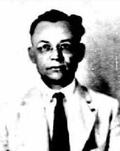
A middle-aged white man with dark hair and a high forehead, wearing a light colored suit and dark tie
Dr. Justin Mitchell
In May of 1934, 22-year-old Mary Schwartz asked Marie Hansen, a coworker at the Illinois Meat Company in Chicago, to help her arrange an abortion. Marie took Mary to Dr. Justin L. Mitchell's office south of Chicago's meatpacking district. Marie had undergone an abortion at Mitchell's hands three years earlier, and, telling him that her friend “wants to get fixed up,” she negotiated a discount from the usual price of $50 to $30. Marie co-signed on a $25 loan, and lent Mary $5 “in dimes” from her own money.

The next morning, the two women again went to Mitchell's office. Marie waited outside during the abortion, then took Mary home with her to recover. That evening, Mary took ill, so Marie called Mitchell and told him that Mary “was bad sick.” Mitchell told Marie to give Mary castor oil, and place warm towels on her abdomen to help with the pain. This did not alleviate Mary's pain, so on Marie took her back to Mitchell's office on Thursday evening and Friday morning.

At 4:00 Saturday morning, Marie was very concerned and called Mary's lover, Joe Henja, who was a foreman at the meat plant. Joe complied with Marie's request that he come right away and get Mary. He called his own doctor then rushed Mary to a hospital, where Mary died on May 20, 1934.

 Mittchell was later implicated in the abortion deaths of Alice Haggin and Mary Nowalowski in 1936.


Two Deaths in One Month

On May 20, 1870, Matilda Henningsen died at No. 182 East Seventh Street in Brooklyn. Matilda's sister, Henrietta Henningsen, testified that she recognized clothes and other items belonging to her sister. Matilda had been sick about two months earlier, and had been treated by Dr. Herzog and Dr. Kennerer. Shortly after having taken ill, Matilda told Henrietta that she'd gotten an invitation to go to Williamsburgh, and that was the last Henrietta had seen of her sister.
Dr. Joseph B. Chshman testified as to the post-mortem examination he had performed. He said he found all the evidence of uterine infection and resulting peritonitis, resulting from an abortion.
Mr. A. A. Wolff, from Denmark, purported to be a physician, but is not identified as such in the source document. Six fetuses, along with various instruments, were found in his office. The jury determined that Wolff had performed the fatal abortion.

Wolff was also implicated in the abortion death of Henrietta Ullman less than a month after Matilda's death.

Friday, May 19, 2017

Habitual Killers

Nearly all of today's deaths are connected with facilities or practitioners with multiple abortion deaths to their discredit.

One of Three Deaths at Detroit NAF Member

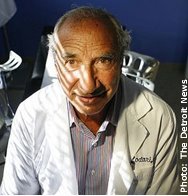
Bald, middle-aged physician in his lab coat, with light from venitian blinds shinging on his face
Dr. Alberto Hodari
Chivon Williams, just days short of her 17th birthday, died on May 19, 1995 after an abortion performed by National Abortion Federation member Alberto Hodari in Detroit. According to a lawsuit, a suction abortion was performed on Chivon at about 11:30 a.m. She was discharged from the facility at about 1:10 p.m. even though she reported stomach and chest pains. A short time after returning home, she was found unresponsive, and pronounced dead at 5:17 p.m. Fieger Times, a newsletter put out by the law firm representing Tamiia's family, states that Chivon had been in the first trimester of pregnancy.
Hodari was also implicated in the abortion deaths of 15-year-old Tamiia Russell and of Regina Johnson.


One of Sixteen Deaths at National Abortion Federation Member


The letters "FPA" inside a box superimposed upon a large cursive letter F
Susan Levy was 30 years old when she underwent a safe and legal abortion at the Family Planning Associates in Mission Hills, California on April 9, 1992. FPA is a member of the National Abortion Federation.  Susan, originally from Florida, was homeless and was living in a car owned by a friend. On May 19, 1992, she was found dead in that car. The cause of death was determined to be from an infection that developed from fetal tissue that was not removed during her abortion.
Other abortion patients to have died at FPA facilities include:

An "Unknown" Abortion in California

The autopsy report for 22-year-old Joan Camp attributed her death to "complications apparently as a result of a recent termination of pregnancy."  Joan had been found unconscious in the morning on May 18, 1985. She was rushed to Memorial Hospital in San Leandro, California, where doctors tried to save her life.  Their efforts were futile. Joan died the next morning, May 19, 1985, from clots in her lungs.
 
The CDC classified Joan's death as "unknown" abortion, because they could not find out where the abortion was done. The CDC does not count an abortion death as a legal abortion death unless they can verify that the person who performed the abortion was a licensed physician, or another legally qualified medical professional in states that allow non-physician abortions.


 One of Six Deaths Blamed on Dr. Lou E. Davis

Low-quality newspaper picture of a white woman, in profile, with short curly light-colored hair and a dark hat coming to a sharp peak at the back
Dr. Lou E. Davis
Irene Kirschner, age 24, died on May 19, 1932 after an abortion believed to have been perpetrated by Dr. Lou E. Davis. When police went to arrest Davis for Irene's death, they found another abortion-injured woman at her house but no sign of Davis.
 
Davis was also implicated in five other Chicago abortion deaths:  Anna Adler in 1913, Mary Whitney in 1924, Anna Borndal and Esther V. Wahlstrom in 1928, and Gertrude Gaesswitz in 1934.
 
 
One of Four Deaths Linked to Dr. Charles Cobel 
 
On May 19, 1858, 28-year-old Amelia Weber died at the home of 58-year-old Dr. Charles Cobel in Brooklyn and was buried in Greenwood Cemetery. The undertaker testified that Cobel had engaged him to perform the funeral, and that he had collected Amelia's body from Cobel's garret. Cobel attributed Amelia's death to paralysis.

"[F]rom the privacy of the burial and other mysterious circumstances surrounding the case, the body, six days after interment, was ordered by the Coroner to be exhumed for medical examination."

The witnesses at the inquest included Amelia's husband, who kept a hotel in Schobaria County, New York. Testimony indicated that Amelia had left her home and three children in Warrenville a few days before her death, supposedly to visit friends in Brooklyn and to do some shopping. Instead, Amelia went directly to Cobel's house, arriving on May 8.

The inquest findings included:

"Dr. Cobel received an application from Mrs. Weber, who had left home for that purpose with her husband's consent, on the 8th instant, to produce an abortion upon her person, he did so, and violent inflammation supervened, which baffled his skill. He then called Dr. Kertachmann, pretending that the lungs were the seat of disease, but it was to no purpose."

The autopsy revealed noting at all wrong with Amelia other than an abdominal infection caused by the abortion and bringing about her death.

Cobel was indicted for manslaughter in Amelia's death on November 30, 1861. On January 23, 1862 he was tried and found not guilty of manslaughter in the second degree, but guilty of the misdemeanor charge of using instruments on a pregnant woman with intent to cause abortion.

Cobel successfully appealed the misdemeanor conviction on the grounds that he couldn't simultaneously be guilty of performing the abortion yet not guilty of causing Amelia's death by performing the abortion. Cobel, a known abortionist, was also implicated in the deaths of Antoinette Fennor, Catharine DeBreuxal, and Emma Wolfer.

Thursday, May 11, 2017

A Century and More of Fatal Abortions

1994: Safe, Legal Abortion Kills Teen in Atlanta

Fifteen-year-old Sara Neibel went to Midtown Hospital in Atlanta for a safe and legal abortion at 17 weeks. She was given a clean bill of health and sent home.

The next day, she reported a severe headache, sore neck, neck stiffness, and trouble seeing. Her parents began the drive to take her to the hospital. On the way there, Sara began screaming and behaving strangely. When they got to the hospital, she refused to get out of the car. She was disoriented and stuporous upon admission.

Sara went into respiratory arrest, and was admitted to the ICU. She was pronounced dead May 11, 1994. The cause of death was determined to be Group B Streptococci Meningitis caused by infected amniotic fluid in her bloodstream. The autopsy performed on Sara found dead tissue and a fetal bone fragment in her infected uterus.


1992: Antiquated Abortion Method Proves Fatal in Brooklyn

"Melissa" is one of the women Life Dynamics identifies on their "Blackmun Wall" as having been killed by a safe and legal abortion. Melissa was 27 years old and five months pregnant when she checked into Lutheran Medical Center of Brooklyn on May 1, 1992. For some reason, her doctor chose the dangerous and antiquated saline abortion procedure. She died of complications on May 11.


1981: Sloppy Practices Kill Student in Long Island

A lawsuit filed by the father of Barbara Dillon, a 22-year-old college student, alleged that Barbara underwent a safe and legal abortion performed by Dr. Mark Silver at Long Island Gynecological Group April 18, 1981. Barbara's father said that the pathology report identified placental tissue, but no fetal parts. This meant that something had gone wrong, and that Barbara needed medical care, but nobody contacted her to tell her this.

Barbara suffered pain and bleeding from May 5. She went to the emergency room and was treated with antibiotics and advised to see her family doctor. She was in severe pain later that day, so her roommates called the emergency room again. They were told to give the antibiotics more time.

Barbara's pain did not abate. On May 10, her roommates got a neighbor to take Barbara to the university health center. Barbara was unconscious upon arrival, with no respiration, blood pressure, or pulse, and was rushed to the emergency room. There were delays finding a doctor from the clinic who would aid the emergency room physician in addressing Barbara's symptoms. She went into irreversible shock and died on May 11. It turned out that Barbara had an ectopic pregnancy which the clinic had failed to detect. Barbara's father also sued Silver over his daughter's death.

Even though, in theory, women who choose abortion should be less likely to die of ectopic pregnancy complications, experiences shows that they're actually more likely to die, due to sloppy practices by abortion practitioners.


1884: Unidentified Perp Kills Young Chicago Woman

On May 11, 1884, a young woman who had given her name as Alice Brown died at the Chicago residence of Mrs. R. A. Hough. She was identified as 20-year-old Lottie Hudson of Austin, Illinois.

She had gone to Chicago to live with a man identified as C. O. Owen, "a printer who already had a wife and family." He was boarding with Lottie's mother, Mrs. Hudson, who had visited Lottie twice at Mrs. Hough's home during her illness.

It was determined that Lottie had died from blood poisoning due to an abortion, believed to be perpetrated by a doctor whose name neither Lottie nor Mrs. Hough either could or would divulge.

On the day of the funeral, Mrs. Hough went to Mrs. Hudson's house and "was decidedly uneasy during the forenoon." At 11 a.m., Hough asked Mrs. Hudson to leave with her because the police would soon come to arrest them since they'd not called in a doctor to attend to Lottie as she was dying.

Friday, April 07, 2017

Three Abortions, Over a Century Ago

Mystery Abortion in Chicago, 1915

Katherine McFarland, a 25-year-old homemaker in Chicago, died on April 7, 1915 from peritonitis caused by an abortion. I have been unable to find any other information about her death.


A Cry in the Night, 1896

On the evening of Monday, April 6, 1896, Tillie Karcher heard moaning in the flat of seamstress Millie Meyers, just upstairs of her at 415 Bushwick Avenue in Brooklyn. She listened again and heard a young female voice crying out, "Oh, let me go home to my mama!"

Alarmed, Mrs. Karchner sought out a policeman on his rounds, who went to the apartment and found a young woman there, ailing and alone. The girl gave her name as Mrs. Emily Scott and said that her husband, Ollie Scott, was a fireman on a Fulton ferry.

The policeman found prescription bottles in the room, so he copied the information from them and went to the pharmacy that had prepared them. The pharmacist said that the medicines were common ones used in treating fevers.

The policeman considered all these goings-on to be fishy, so he reported the situation to the precinct captain, who began an investigation to identify and round up everybody involved in the young woman's suspicious illness.

Around 5:30 on Tuesday afternoon, April 7, the young woman said that she was going to die soon, told the police that her real name was Emily Binney and gave them her address on Rutledge Street in Williamsburg, Brooklyn.

Emily's turn for the worse sent the police rushing for the coroner, leaving the ailing girl in the care of Minnie Meyer. The coroner arrived to find that Miss Meyer had abandoned Emily, leaving her to die alone in the intervening half hour.

Meyer was eventually apprehended and admitted that she'd helped 20-year-old Emily to seek out the abortion services of 33-year-old midwife Mary Schott and had herself been engaged to look after the patient.

A police officer went to the Fulton ferry house and managed to identify "Ollie Scott" as Arthur Robbins, who was arrested when he showed up at Meyer's flat to look for Emily at 10:00 that evening.

While the suspects were being questioned, Minnie said that Emily's baby had been born alive on March 21. Upon hearing that, Robbins burst into tears and told police that about four hours after the child's birth he had wrapped the baby in newspapers weighted down with a piece of iron and thrown it out a porthole in the ferry. He couldn't say if the baby had still been alive when it was tossed into the river.

Arthur Robbins then admitted that he had gone with Emily and Minnie to arrange for Mrs. Schott to perform an abortion.

Minnie Meyer was found guilty of manslaughter. I've been unable to determine the outcome of the case against the midwife.


Fatal in Minneapolis, 1889

Minnie Broderick, age 25, died in Minneapolis on April 7, 1889 from complications of a recent criminal abortion.

Dr. Irvine testified that Minnie had come to his practice about ten days prior to her death, saying that she had been unwell since miscarrying. He said that he examined her and found no signs of pregnancy. The three doctors who performed the postmortem examination indicated that she had clearly died from an abortion performed a few days earlier.

Monday, February 06, 2017

From the 1870s Through the 1980s

One of 16 Dead at National Abortion Federation Chain

Seventeen-year-old Laniece Dorsey underwent a safe and legal abortion at a Family Planning Associates Medical Group facility in Orange County, California, on February 6, 1986. FPA is a National Abortion Federation member facility.

Laniece lapsed into a coma, was transferred to a nearby hospital, and died later that day.

The Orange County Sheriff's Department medical examiner blamed the death on cardiorespiratory arrest due to the anesthesia, although he also found "a thick adherent layer of fibrinous material containing moderate numbers of inflammatory infiltrates" in Laniece's uterus.

Laniece wasn't the first or last young woman to die from abortion at a facility owned by FPA head honcho Edward Campbell Allred. Other patients known to have died after abortion at Allred's facilities include


Allred's facilities remain members of the National Abortion Federation despite these deaths.


Scanty Information from Cleveland

Life Dynamics lists 26-year-old billing clerk Kathy Davis on their "Blackmun Wall of safe and legal abortions. Citing Kathy's death certificate, Life Dynamics says that Kathy died at Cleveland Metropolitan General Hospital of heart failure and hypertension following a legal abortion on February 6, 1987.


An Airman's Grief

Elizabeth Hellman was the 35-year-old wife of an Air Force major who had been stationed in Tokyo for over a year. Evidently Betty found the separation lonely, for she became pregnant while he was away.

On January 28, 1952, Betty was admitted to the Tinker Air Force Base hospital in critical condition, suffering from pain and low blood pressure. Her red blood count was very low, and her white count very high, indicating infection. She admitted to having undergone an abortion on January 25.


When questioned by investigators on January 31, Betty said that friends had referred her to a woman named Jane. She was shown a photo and identified the woman in it, 43-year-old Mrs. Jane McDaniel White, as her abortionist. She gave White's address as the place she had gone for the abortion.

Betty said that White had put her off for several days while she got over her fear of undergoing the abortion. She promised White $100, but only paid her $50. White initiated the abortion with some kind of packing and sent Betty home.

Betty became very ill, and called White, who with her daughter came to Betty's home and "scraped her out".

After Betty gave her statement, police raided White's home. White and her daughter, Mrs. S. B. Anderson, Jr., were nowhere to be found. Police eventually tracked the pair down and arrested them for murder and procuring an abortion.

Betty died on February 6, from peritonitis. Her husband had managed to rush home from Tokyo in time to see his wife before she died. An autopsy verified that an abortion had been performed and had caused Betty's death.

The criminal case against White went well until the defense managed to have the Betty's deathbed statement, given on January 31, inadmissible because it couldn't be proved satisfactorily that Betty believed herself to be near death. With the deathbed statement thrown out, the case was dropped.

This had been White's third arrest for abortion charges. She had been convicted in 1947, under the name Jane McDaniel, and sentenced to seven years, but the conviction was thrown out on a technicality based on how advanced the girl's pregnancy had been. A new trial had been scheduled, but it never took place because the main prosecution witness had left the state or died. White was clearly operating as an abortionist, since an operating table, fashioned from an old restaurant table, and surgical instruments had been sized from her home at the time of her arrest -- "enough instruments and medicine to stock a small hospital." She was charged again in 1951 but the main witness had vanished and the case had been dismissed.


Mystery Abortion in Chicago

On February 6, 1919, 22-year-old homemaker Edna Griffith died at Chicago's Passavant Hospital from septic pneumonia initiating from complications of an abortion perpetrated by a person who was never identified.


Fatal Abortion Drugs

A Coroner's Inquest was held regarding the February 6, 1870 death of 22-year-old Mary Donigan. Mary died at the Brooklyn home of Mrs. Bridget Dillon, who testified that she'd known Mary for about 18 years. Mary had come to her home on a Monday afternoon about three weeks before her death, looking very sickly but not complaining of illness. By the time Friday came around, Mary was reporting being sick with diarrhea. Mrs. Dillon gave her some brandy at about 11:00 that night, but all this did was make Mary vomit.

Mary slept until noon the next day. Mrs. Dillon checked on her and found her appearing very ill. Mrs. Dillon offered to empty the slop pail in the room, but Mary said, "No, I've had a baby and it is in there; my mother sent me down to Margaret Farrell's, but she wouldn't keep me, so I thought I would come to you."

Mrs. Dillon looked in the pail and saw the baby, which she described as large -- in keeping with Mary's report of having been pregnant for about eight months. Mary reported that she had paid a doctor $5 for a bottle of medicine -- she refused to name this doctor -- and that she had thrown the bottle "in the water closet." Mrs. Dillon testified that Mary reported having taken the medicine about two or three weeks earlier, and that afterward she'd not felt her baby moving any more.

Mary likewise refused to divulge to Mrs. Dillon the name of her baby's father.

An old woman Mrs. Dillon believed to be Margaret Farrel came to help Mrs. Dillon care for Mary. Mrs. Dillon testified that she'd asked Mrs. Farrel what to do about the baby, and Mrs. Farrel had suggested getting a small box to bury the baby in. Mrs. Dillon went off in search of a box, and returned to Mary's room to find both Mrs. Farrel and the baby gone.

By Monday, Mary was up and dressed and went downstairs against Mrs. Dillon's advice. Mary quickly took ill again, so mrs. Dillon helped her back to her room and dosed her with castor oil. "She was quite exhausted."

Mrs. Dillon went to a druggist and described Mary's symptoms. The druggist provided some powders that she was to give to Mary every hour, but Mary didn't want to take more after the first dose, reporting that they only made her feel worse and blistered her mouth. Mrs. Dillon sent one of her "girls" to consult with the druggist but he had nothing further to offer.

Mary refused the services of either a doctor or a priest. The following morning, Mary had taken such a turn for the worse that Mrs. Dillon sent for both a doctor and a priest. The doctor, Matthew F. Regan, told Mrs. Dillon that Mary was dangerously ill.

Dr. Regan testified that he'd been summoned to a garret room where he found Mary in bed, "suffering from inflammation of the womb and the covering of the bowels." Mary reported being married and having suffered a miscarriage the preceeding Friday. Dr. Regan prescribed some medication and returned on Saturday.

At that time, Mary admitted that she wasn't married, and that she'd not seen a doctor or had any sort of abortion performed. He told her that her condition was very grave, "that I had seen women die who were not so low as she was." Mary identified a Mr. Burdie, who worked in the brick yards in Haverstraw, where Mary lived, as the father of the baby.

When Dr. Regan returned at noon on Sunday to check on Mary, he found her dead.

Dr. A. W. Shepard performed a post mortem examination on Mary and found no signs of instrumentation, but plenty of signs of infection in and around the uterus. He determined that she had died from an abortion.

Saturday, September 03, 2016

Abortion Deaths: 19th Century and 20th Century

Mary Visscher died on September 3, 1859 after an abortion perpetrated by Dr. Elizabeth Byrns or Dr. Mary Smith in Brooklyn.

Mary, who worked at a hoop-skirt factory in Brooklyn, was keeping company with a man named Mr. Wright. On August 23, 1859, she left the home of Mrs. C. Perrine, where she had been a boarder, saying that she ws going first to Jersey City, then to Philadelphia. She asked Mrs. Perrine to keep the trip a secret. Mrs. Mary Sherman, who owned the hoop-skirt factory, said that Mary had come to her saying she was going to New Jersey and Philadelphia and asking her to keep the trip a secret. Like Mrs. Perrine, Mrs. Sherman had no idea that Mary might be pregnant.

Mary did not, however, go to New Jersey or Philadelphia. She instead went to the "stylish" house of two female physicians, Elizabeth Byrns and Mary E. Smith, who practiced midwifery. Byrns and Smith said that Mary had come to their home to be treated for back pain due to a fall, and that they'd not even know she was pregnant until after the abortion, which they attributed the abortion "to the imprudence of deceased herself." The abortion took place on August 27, and Mary "lingered" until her death from peritonitis on Saturday, September 3.

The coroner's jury decided that Byrnes had performed the abortion, with the prior knowledge of Smith, who was charged as an accessory before the fact. I have so far been unable to determine the outcome of the case.


After California legalized abortion on demand in 1970, a Texas company began selling abortion referrals and air fare. Twenty-year-old Kathryn Morse was one customer.

Kathryn was admitted to Bel Air Memorial Hospital in LA County on September 1, 1972. (Until Roe v. Wade, California abortions were performed in hospitals, and many hospitals opened specializing in abortion.) John Dupont initiated a salineabortion on her. Kathryn developed a 102 degree fever, then expelled the dead baby just after midnight on September 3. Kathryn's blood pressure rose, she went into shock, and was pronounced dead by Dupot at 9:40 AM. An autopsy found sepsis, and gangrene of the ovary.

The abortion lobby would tell you that although Kathryl's death is tragic, far more women would die if abortion wasn't legal. The facts simply don't support that assertion. As you can see from the graph below, abortion deaths were falling dramatically before legalization. This steep fall had been in place for decades. To argue that legalization lowered abortion mortality simply isn't supported by the data.

Monday, June 06, 2016

A Midwife and Two Doctors, All Equally Lethal

A Chicago Midwife in 1907

On June 6, 1907, homemaker Julia Williamson, age 29, died at her Chicago home from complications of an abortion performed there that day. A midwife named Emily Redemski was held by the coroner's jury, but acquitted by a judge for reasons not given in the source document.

A Baton Rouge Physician in 1984

A chronic asthma patient, 27-year-old Sheila Hebert, mother of a 10-year-old son, went to Delta Women's Clinic in Baton Rouge for a safe and legal abortionon June 5 or 6, 1984. Shortly after being moved to the recovery area, Sheila complained of chest pains and difficulty breathing. Something had triggered a severe asthmatic reaction. She lost consciousness, and staff injected her with adrenaline while awaiting EMS services. The medics arrived within three minutes of getting the call, but found Sheila blue, cold, and essentially lifeless. She was taken to a hospital and admitted to the Intensive Care Unit, but efforts to revive her were unsuccessful. The coroner attributed the death to "cardiorespiratory arrest due to acute ashtmatic bronchitis" after "surgical termination of pregnancy. A suit was filed anonymously against Richardson Glidden and Delta Women's Clinic regarding Sheila's death. The suit charged Glidden and Delta staff with failure to monitor Sheila in recovery, failing to react properly when her condition was discovered, failing to call 911 promptly, and failing to have adequate emergency equipment available.

A New York Physician in 2000

Nicey Washington was 26 years old when she underwent a safe and legal abortion at Ambulatory Surgery Center in Brooklyn, New York, on June 6, 2000. She had graduated from college the previous Sunday. Her heart stopped after the abortion. She was rushed to Lutheran Hospital at about 11 a.m. Attempts to revive her failed, and she was declared dead at around noon. She left behind a fiance and a 4-year-old daughter. As of the time of the last article I could find on Nicey's death, the Medical Examiner's office hadn't determined the exact cause of death, but suspected a botched abortion.

Thursday, April 28, 2016

Deadly Midwife, Doctor, and Boyfriend

Mother-and-Daughter Midwife Team, Brooklyn, 1880

Mrs. Sophia Berghusen of Brooklyn died on April 28, 1880, under the care of the mother-and-daughter midwife team of Mrs. Mary Kaufmann and Miss Margaret "Maggie" Kaufmann. The coroner concluded that Sophia had died of abortion complications. Sophie had been found moribund at the Kaufmann house. Both the Kaufmann women were arrested and tried but acquitted, though the sources do not say what was lacking in the case against them.

Civil-Rights Activist Turned Abortionist, Chicago, 1973

A middle-aged balding Black man with eyeglasses and a bow tie
T.R. Mason Howard
Survivors of Julia Rogers, age 20, alleged that she underwent a safe and legal abortion performed by Theodore Roosevelt Mason Howard (pictured) at his Friendship Medical Center in Chicago on April 21, 1973. Julia's death certificate states that her death April 28 at Tabernacle Hospital was due to "bronchopneumonia and generalized peritonitis complicating extensive necrotizing endometritis and myometritis with sealed perforation." In other words, she developed pneumonia on top of peritonitis. A hole had been poked in her uterus, causing an infection that made the muscle tissue of her uterus start to rot inside her. Evelyn Dudley and Dorothy Brown also died after abortions at Friendship Medical Center.

A Boyfriend and an Aquarium Tube, California, 19909

"Daisy," age 32, died on or shortly after April 28, 1990 after she let her boyfriend attempt a home abortion in California. Daisy was not a poor, ignorant woman. To the contrary, she was a systems analyst for a defense contractor. Daisy knew that abortion was legal and readily available. She had an appointment to abort her second-trimester pregnancy scheduled for April 30, 1990, at a local abortion clinic. But for some reason, Daisy didn't wait for her appointment. On April 28, she allowed her boyfriend to insert a plastic tube into her uterus in a home-abortion attempt. Daisy died of complications of that abortion.

Saturday, January 16, 2016

Three Illegal Abortions

A Media Circus in 1889

An inquest was held into the January 16, 1889 death of 22-year-old Kitty Cody, a young Oyster Bay woman, in Brooklyn. Frank P. Dudgeon had set Kitty up in Mrs. Anyon's house at 85 West Eighty-Ninth Street. Kitty took sick there. Mrs. Anyon, testified that Dudgeon had sent a box to Kitty, along with "a letter from him explaining the use of the contents of the box." The box evidently contained abortifacients. Kitty died at the apartment of Mrs. M. A. Harriman at 124 Flatbush Avenue.

The inquest was a circus, "held in the Supervisor's chamber, which was literally packed with spectators. It was replete with dramatic incidents, with some of which the crowd expressed its sympathies with the prosecution by breaking into applause." Mrs. Harriman attended the inquest with her daughter, Mrs. Clara Fernald. Dr. Charles F. Hall and Mrs. M. A. Flarriman were found to be complicit in concealing the commission of an abortion. 


The prosecutor's office concluded that Kitty, provided with the abortion drugs, had attempted an abortion, then used an instrument provided to her to perform a self-induced abortion. On May 21, she had gone to a doctor who cared for her until hospitalizing her on June 6. While hospitalized she'd said something that had led to the belief that Dr. Charles Singley had perpetrated an abortion. Singley, when arrested, said that Kitty was trying to blackmail him. His only contact with her had been, he said, when she'd come to his office for treatment for a pelvic abscess. He'd treated her, she'd paid her $2, and left. This had been about a month prior to seeking care from the doctor who had hospitalized her.

Dudgeon married Kitty the day before her death. He was tried as an accessory to manslaughter in Kitty's death, but in April of 1889 "escaped conviction by a disagreement of the jury, which stood eight to four for conviction of manslaughter in the first degree." He was released on $10,000 bail, which he was able to pay himself in cash. In fact, so prosperous was Dudgeon that he managed to arrange a lavish birthday banquet for himself while he was in jail. However, in July of 1890, the DA of Kings County dismissed the indictment.


Early 20th Century Chicago

On January 16, 1901, 20-year-old Jennie Mallard died at St. Elizabeth's Hospital in Chicago from an abortion performed several weeks earlier. She signed a statement about three hours later incriminating Dr. Margaret Simmons, who was arrested and held in the death. Simmons would neither confirm nor deny the allegation. Simmons' profession is listed as nurse or midwifein the Homicide in Chicago database, but at that time and in that place, female obstetricians were often referred to as midwives. On the 1900 Census, she is listed as a physician.

Jennie Martin, a 28-year-old homemaker married to Frank Martin, died January 16, 1906 from sepsis caused by a criminal abortion. Though the Homicide in Chicago Database says she died at Wesley Hospital in Chicago, her death certificate indicates that she died at her home at 3555 Vincentles Avenue. My best guess is that she was died at the home but was taken to the hospital by family members who were in shock, and then the hospital reported the suspicious death to the police. Dr. William F. Brineywas held by the coroner's jury. Jennie's abortion is typical of pre-legalization abortions in that it was performed by a doctor.