Wednesday, January 21, 2026

January 21, 1984: retained tissue leads to rare cancer

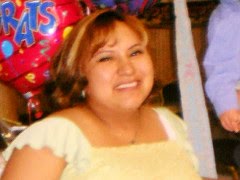
Nadine DuPont underwent an abortion in January of 1983. No complications were noted at the time, but Nadine had no idea of the fight for her life that she would endure for the next year.

Because of the abortion, Nadine was developing a condition that normally would have been quite rare: gestational choriocarcinoma. This occurred when the abortionist left tissue fragments in her uterus, which eventually grew into cancerous tumors. Her life was in danger even when she didn’t know it.

Almost a year later, Nadine went to Harper Hospital. The malignant tumors were no longer asymptomatic and she didn’t know what was happening to her. She was told she had a “probable molar pregnancy” and the hospital attempted to surgically remove it via suction. Nadine’s uterus was torn during this attempt and she had to be rushed back into the operating room. The internal damage was so severe that doctors performed an emergency hysterectomy, but even this did not save her life. Despite all attempts at treatment, she died at Harper Hospital in January of 1984.

Autopsy finally confirmed a final diagnosis; internal injury during the attempted treatment of what was now finally identified as gestational choriocarcinoma. Unlike most other gestational trophoblastic neoplasms or GTN (including most molar pregnancy, which was the hospital’s initial guess), GCC is highly malignant and metastasizes rapidly. Due to the way it grows, suction curettage alone was very unlikely to be effective.

It’s estimated that 1/4 to 1/3 of cases of gestational choriocarcinoma after previous non-molar pregnancies are caused by abortion or miscarriage. GTN in general is about 10 times more common after abortion or miscarriage than after birth. Nadine’s “safe and legal” abortion caused her slow, horrible death at the age of 23— one that would have been less than 10% as likely with live birth. While Harper Hospital was at fault for not treating her condition properly, the abortion caused the condition in the first place.

The CDC would not have counted Nadine’s death in abortion mortality statistics because she died a year after the abortion that triggered her fatal complications.

Wayne County Circuit Court case #85-507691 NM

The Scarlet Survey, mortality data for 1984 (see “Nadine AKA Jane Roe of Oakland County”)

January 21, 1982: Scanty Information From Georgia.

Grok AI Illustration
"Michelle Taylor" was a 20-year-old Black woman living in a populous county in Georgia that winter. She learned that she was pregnant and made a choice that led to her death on January 21, 1982 in a hospital in Augusta Georgia. 

Her cause of death was abortion complications. 

Michelle was a graduate of both high school and vocational school. It's unclear why, when, or where she underwent the abortion that cut short her life. 

Tuesday, January 20, 2026

January 20, 1909: Yet Another Death Attributed to Dr. Achtenberg

On January 12, 1909, Florence Wright, a 34-year-old Black woman born in Kentucky, died at Wesley Hospital in Chicago from nitrous oxide asphyxiation while being treated for complications of an illegal abortion perpetrated on January 3, 1909.

Midwife Louisa Achtenberg, a white woman, was held without bail for the crime of murder by abortion. She was indicted for murder but the source document doesn't indicate that there was a trial.

Achtenberg appears to have been implicated as well in the abortion deaths of Dora Swan in 1907, Violet McCormick in 1921, and Madelyn Anderson in 1924.

Sources: 

Monday, January 19, 2026

January 19, 2008: Perforated Uterus, Failure to Resuscitate

Dr. Reginald Sharpe has a history of malpractice, including the death of a 26-year-old patient on January 19, 2008. After poking around online I learned that her name was Chloe Mamell Colts.

Chloe went to Sharpe's clinic, Sharpe Family Planning in Detroit for an abortion on January 11, 2008. Sharpe performed an ultrasound and determined a gestational age of 15 weeks and 2 days.

To sedate Chloe for the abortion, Sharpe administered 5 mg of Midazolam and 10 mg of Nubain intravenously at 11:25 am. He also numbed Chloe's cervix with lidocaine. He then started the abortion.

Shortly after Sharpe started, Chloe started having a seizure. To his credit, Sharpe stopped the procedure. Chloe started showing signs of respiratory arrest. Again, I do have to give Sharpe credit for calling 911 rather than delaying.

However, Sharpe's appropriate actions did not spill over into other areas of his care of Chloe. When interviewed by the medical board on August 28, 2014 -- more than 6 years after Chole's death -- Sharpe admitted that during the abortion he had perforated Chloe's uterus, causing internal bleeding. He also failed to properly resuscitate Chloe while waiting for EMS to arrive. When they did arrive, Sharpe only provided them with scanty and incomplete information, which would hinder emergency physicians seeking to provide appropriate care. 

The medics took Chloe to St. Joseph's Hospital and Medical Center. She went into cardiac arrest during the ride, but the medics were able to resuscitate her. However, the damage had been done. Chloe died on January 19. An autopsy found her cause of death to be complications of uterine perforation during her safe, legal abortion.

Sources: 


Sunday, January 18, 2026

A Better Script for When an Abortion Clinic Calls an Ambulance

One bone I have to pick with some prolife groups is the way they immediately criticize any abortion facility any time they send a patient to the hospital in an ambulance. I find this short-sighted and ultimately dangerous. We want prochoice people to seriously look at claims that abortions are being performed safely, and do the women a disservice when actions might make facilities hesitate to call emergency services promptly.

I took my concerns to Grok, and ended up with this recommended template for dealing with these situations in a way that might actually get prochoice people to ask questions instead of just dismissing the story as hyperbole or hysteria:

"We commend Acme Reproductive Services for prioritizing patient safety by calling an ambulance for this unnamed woman experiencing complications. In a field where delays can be fatal, this quick action likely saved her life—contrast it with cases like Lexi Arguello, who died in 2025 when Planned Parenthood delayed care for an amniotic fluid embolism. 
However, we do have legitimate concerns about the facility's overall safety record. According to the Guttmacher Institute (a pro-choice research organization), serious complications requiring hospitalization occur in only about 0.3% of abortions. Acme Reproductive, based on state health department inspection reports, performs approximately 1,200 abortions per year. If Guttmacher's estimates hold, that should mean just 3-4 ambulance transports annually—yet this is already their third reported incident in the first three months of the year.
This discrepancy raises important questions: Are the low complication rates cited by advocates like the Alan Guttmacher Institute understated, or does Acme need to address underlying issues in training, protocols, or oversight? Women deserve transparency and real safety, not just access."
Let's put forth our assertions in a way that are most likely to lead to a healthy skepticism about American abortion practice rather than in a way that makes us look like we're always going off halfcocked.

1968: Legal “Therapeutic” NY Abortion Kills Rheumatic Heart Patient

28-year-old “Rita” was in the state of New York (but outside of New York City) when she underwent her legal but fatal abortion.

Rita was told to have an abortion because of a medical condition— rheumatic heart disease. She was three months pregnant when the “therapeutic” abortion was carried out.

Even before Roe v. Wade, “life of the mother” abortions were legal in every state. However, killing Rita’s baby was in no way a guarantee of her safety. As a side effect of the abortion, she suffered multiple pulmonary emboli and died.

The deaths of Rita and her baby are made even more tragic with the knowledge that the abortion wasn’t just lethal but unnecessary. Today, it is well-known in the field of medicine that cardiac patients are at a higher risk from an abortion than a healthy woman, and that the vast majority of pregnant patients with cardiac conditions will have a safe pregnancy and delivery with proper care. In fact, during pregnancy, stem cells from the unborn baby will migrate throughout the mother’s body and repair damage to the heart when necessary. Rita needed real medical care, not abortion.

New York State Journal of Medicine, January 1979 Edition (page 49–52)

Tuesday, January 13, 2026

Planned Parenthood: Bring Out Your Dead!

I wonder if so many people who be supportive of Planned Parenthood if they knew that when they stood with Planned Parenthood, they were standing on women's graves.

Click on the caption below each AI image for that woman's story.

Alexis "Lexi" Arguello


Alyona Dixon


Bonnie Hunt


Cree Erwin-Shephard


Diana Lopez


Diane Boyd


Edrica Goode


Elise Kalat


"Ella"


Hoa Thuy "Vivian" Tran


Holly Patterson


Irene Stevenson


"Luanne"


"Lucy"


Nichole Williams


Roselle Owens


Monday, January 12, 2026

January 12, 1900: One of Many Deaths Linked to Paulina Bechtel

On January 12, 1900, Ida Henry, age 26, died at the home she shared with Dr. Paulina Bechtel, from complications of an abortion Bechtel had performed on her there that day. Bechtel, who said that she'd been practicing medicine for 18 years, was held by the Coroner's Jury. An undertaker had embalmed Ida's body prior to a post-mortem examination. He was censured for this compromising of evidence that would be found in the body, but was not charged with any crime. 

Bechtel had been tried in the October 3, 1895 abortion death of Mrs. Kittie Bassett. She was also implicated in the death of Barbara Shelgren shortly after Ida's death, but was identified as a midwife in that case. According to Leslie Reagan, author of When Abortion Was a Crime, it was common for female physicians to be misidentified as midwives, particularly if they practiced obstetrics. 

Bechtel went on to perform a fatal abortion on Mary Thorning in 1911. 

While looking for any additional information on the death of Ida Henry, I found two other deaths attributed to Dr. Bechtel: Carrie Marskl (September of 1904) and Mary Orning (December of 1911).

I've been unable to determine why Bechtel wasn't incarcerated after these deaths.

Saturday, January 10, 2026

The 1970s: Two Wrongheaded Abortion Attempts and a Fatal Misdiagnosis

Sometime in the 1970s, “Tanya” underwent the first of two first-trimester suction abortion procedures. From there, she would have twenty-five days to live.

After the first attempt, Tanya was discovered to still be pregnant. A second suction abortion was attempted and she was sent on her way again. Both times, all opportunities to save her life were wasted.

Just a few weeks after the first abortion attempt, Tanya was bleeding internally and underwent surgery in an attempt to save her life. It was discovered that she had an ectopic pregnancy in her left fallopian tube, which was surgically removed to try to stop the internal bleeding. All attempts at treatment came too late and Tanya died.

Upon autopsy, the rest of the damage to Tanya’s body was found. Her reproductive system was so severely scarred that both ovaries were “bound down” by scar tissue. Her uterus was noted to be enlarged, and the pathologist determined that she probably had a rare condition: she was the mother of heterotopic twins. One twin had been in her left fallopian tube.

The gold standard for diagnosing a heterotopic pregnancy is an ultrasound. Had Tanya received an adequate pre-op exam and ultrasound before either of the abortion attempts, her condition should have been diagnosed. When she was still pregnant after the first attempt, that was a red flag that she needed to be screened for a possible ectopic pregnancy. Rare or not, Tanya’s condition should have been detected fairly easily before or after either of the abortion procedures.

It is also worth noting that Tanya had previously had two abortions. This may have caused or contributed to one of the twins being ectopic, especially because her organs were so scarred that her ovaries were bound down. It has long been known that past abortion is a risk factor for future ectopic pregnancy, most likely due to internal scarring like Tanya had. (One study even found that half of ectopic pregnancies in the studied region may have been attributable to past abortions.)

Studies have shown that the death-to-case rate for ectopic pregnancies concurrent with induced abortion is actually higher than for women not undergoing abortion. This is because of the all-too-common negligence these women experience at the hands of the abortion industry.


(“Tanya” is Patient 8)


Friday, January 09, 2026

January 9, 1986: Death in Puerto Rico

Rosael Rodriguez, age 27, died on January 9, 1986 after an abortion performed by Angel Acevado Montalvo in the U.S. Virgin Islands.

The only information I originally had on Rosael came from pro-life web sites and the Social Security Death RecordsPriests for Life posts a list of women who have died from legal abortions, including Rosael Rodriguez, who died in January of 1986 at the age of 27, according to Social Security. She had been born on April 2, 1958. Priests for Life cite a March 5, 1992 article in the Virgin Islands Daily News.

Human Life International mentions that abortionist Angel Acevado Montalvo was charged with manslaughter in two cases of maternal deaths from safe, legal abortion.

HLI also notes that after his conviction, Montalvo went right back to business doing abortions.
Priests for Life also cites one other death, that of Diane Adams, from that article. 

I later found a United Press International snippet, published in the York Dispatch, noting that Montalvo had performed the abortion knowing that Rosael had only believed herself to be pregnant.

But then Keely, my research department, found the death certificate. This confirms the death date -- January 9. Rosael's full name was Rosael Rodriguez Rosado. She was born April 3, 1958 and left behind her husband, Israel Falcon Lopez. She had worked as a secretary. Her father was Victor Rodriguez Baez, and her mother Providencia Rosado. She died of respiratory failure due to shock. 


Thursday, January 08, 2026

January 8, 2025: Post-abortion suicide

 “Jessica” took mifepristone and misoprostol for a chemical abortion. On January 8, 2025, she committed suicide by gunshot wound to the head. She was 35.

An anonymous healthcare professional reported her death to the FDA.


FAERS Case ID 25211134

January 8, 2004: Abuser's Sister Arranges Fatal Abortion

Taisha Glenn, the sister of 15-year-old Tamiia Russell's 24-year-old "boyfriend", Stacy Glenn, arranged an abortion in early 2004 without notifying Tamiia's family. Stacy Glenn, according to Frances Russell, Tamiia's mother, is a reputed drug dealer who has not been located since Tamiia's death. He paid the $2000 for the abortion.

Taisha took the girl to five different Detroit area abortion facilities, and was turned away from all five because of how far advanced Tamiia's pregnancy was. She was at least six months pregnant. One facility reportedly even offered prenatal care and vitamins. Finally Taisha found an abortionist willing to proceed -- WomanCare, a Winthorop Village abortion facility run by abortionist Abraham Alberto Hodari

Despite the fact that the pregnancy was the result of statutory rape, and despite the fact that he had no permission from Tamiia's parents or guardian, as required by Michigan law, the clinic agreed to take the case. Tamiia used an identification card with another woman's picture to claim that she was 19, but according to Tamiia's cousin, the woman in the picture ID looked nothing like Tamiia.

Tamiia's presumably safe and legal abortion was begun on January 7, when laminaria was inserted. Laminaria are sticks of seaweed used to dilate the cervix. Once home, Tamiia confessed to her aunt and mother that she was pregnant and she had begun the abortion. Tamiia's mother said that she called the clinic, and staff told her that the abortion must be carried out once the laminaria are inserted. This is not true; laminaria can be removed and the pregnancy continued successfully to term with medical supervision.

Based on the false claim that Tamiia had no choice but to go through with the abortion, her mother drove her to WomanCare on January 8 for the actual procedure. Tamiia bled heavily after coming home from the abortion -- so heavily that the blood soaked a mattress. Tamiia's mother called WomanCare, where staff told her that such bleeding was normal and instructed them not to bring Tamiia to a hospital. Her family ignored this advice and called an ambulance, which rushed the girl to Sinai-Grace Hospital, where she was dead on arrival.

Dr. Leigh Hlavaty, who performed the autopsy on Tamiia, said that her death was caused by "uterine infarction with sepsis due to status second trimester abortion." Hlavaty said, "I ruled it normal because these complications are expected with this type of abortion."

Dr. Miller, director of Citizens for a Pro-life Society, reports that there have been 23 lawsuits in the past 20 years against WomanCare facilities and Alberto Hodari for abortion injuries including complications resulting on hysterectomies on 19, 22, and 23-year-old women. All were dismissed, with many referring to undisclosed settlements. Hodari was also implicated in the deaths of Chivon Williams and Regina Johnson.

At the time of Tamiia's death, Womancare was a member of the National Abortion Federation.

Watch A License to Lie on YouTube.

Sources:

Wednesday, January 07, 2026

January 7, 2023: Two Anonymous Whistleblowers Report Chemical Abortion Death

Grok AI illustration
The unidentified woman known only as “Alina Roe” or FDA Adverse Event case 22147816 was killed by the use of the “safe and legal” abortion pill. Her case was reported to the FDA by an anonymous healthcare professional.

Alina was 31 when she underwent a chemical abortion using mifepristone and misoprostol. She suffered hypotension, bleeding, uterine enlargement, nausea, metabolic acidosis and an elevated white blood cell count before dying what was probably an excruciatingly painful death on January 7, 2023.

Another source separately reported a death to the FDA (21922968) that appears to be a duplicate of Alina’s case. Because of the highly ineffective report system, it’s hard to confirm if this is Alina or not. However, unless another 31-year-old woman was killed by chemical abortion using the same drugs on the exact same date, it can be concluded that this is probably another report of the same maternal death. If not for these whistleblowers, Alina’s case could have easily gone entirely unreported.

Source: FDA Adverse Event Report case 22147816 (see also case 21922968)

January 7, 1951: A Lay Abortionist in Atlantic City

SUMMARY: Velma Callahan, age 23, died on January 7, 1951, from complications of an abortion perpetrated by a lay abortionist, either Tess Truitt or John Rudick, in Atlantic City, NJ.

Velma Callahan
, a 23-year-old waitress, died in her Atlantic City, New Jersey apartment on January 7, 1951, from complications of a criminal abortion.

Velma was a 1946 graduate of Montoursville High School in Montoursville, Pennsylvania. She was active in the Tri-Yi-Y, Home Economics Club, Glee Club, and Girls' Athletic Association. She acted in her school productions of You're Young Only Twice and was on the staff of the Blue and Gold, the school yearbook.

Investigating her death led to the breakup of a large-scale abortion mill in Atlantic City on January 19. Detectives found evidence that at during 1950 least 45 abortions had been perpetrated in a house connected with the ring. The couple charged about $400 for an abortion.

Police arrested a middle-aged couple, Tess Truitt and John Rudick, for running the abortion ring. The couple kept abortion records that went back to 1945.

Somehow the pair had also managed to compile a list of every pregnant woman in southern New Jersey. Police did not reveal how the couple got the names.

Source:

Tuesday, January 06, 2026

January 6, 1924: Dumps Lover and Dies from Abortion

Chauffeur Harry Morse was known by his fellow drivers as "one square guy." As he later testified before a Coroner's Jury, the 28-year-old man sobbed that he had been in love with 26-year-old office worker Helen Koss for three years. They went on car rides and to the movies. They went dancing and had summer picnics. Again and again he asked her to marry him, but she always refused. Helen told him that although she loved him, her ambitions were a bit higher than to marry a chauffeur.

Helen was the daughter of German immigrants Carl and Rose Koss. She lived with her widowed mother and three grown siblings.

On December 15 of 1923, Helen tearfully confided to Harry that she believed that she was pregnant. He took her to a physician, who verified her fears. Once more Harry pleaded with Helen to marry him. Again she refused. She told him, "I don't ever want to see you again," and walked out of his life. When he went to see her or tried to call her on the phone, her relatives rebuffed him. 

Broken hearted, Harry went to the Koss home on January 2, sat on the front steps, and drank a bottle of iodine. Somebody found him and took him to Alexian Brothers Hospital, where physicians were able to save his life.

What Harry hadn't known would have made him even more despondent: On December 30, Helen had undergone a criminal abortion. She herself lay dying at Norwegian American Hospital. She named midwife Emma Morck of Fullerton Avenue as her abortionist before dying on January 6.

The police arrested Morck and she was indicted for homicide by the grand jury.  The case was stricken off on October 6, 1925. 

Morck doesn't have a particularly grim history as far as I can tell. She'd been tried and acquitted in 1908 for the abortion death of Christine Gorss.

Watch "One Square Guy" on YouTube.

Sources: 

Monday, January 05, 2026

CDC 1985

Today I'll look at deaths in 1985. They count 11 legal, 1 illegal, and 1 "unknown". Keep in mind that an "illegal" death, by the CDC's definitions, can seem like a safe and legal abortion to the woman in question. If the doctor's license has been suspended or revoked but he keeps working at an apparently legal clinic anyway, the CDC counts the woman's death as illegal because it wasn't performed by somebody legally permitted to perform abortions in that state. Myrta Baptiste is an example of this trick to disguise the deaths from legalized abortion. That said, we can look at the deaths I know of. I have 15 deaths(plus 4 from TSS I’m still working on—see notes), including 2 that were definitely not counted by the CDC:


  • Mary Bradley, 41, was one of two women who died under the dubious care of abortionist George Wayne Patterson, treated as a martyr by the abortion lobby because he was gunned down outside a porn theater in an apparent gangland slaying that police confirmed had nothing to do with his career as an abortionist.

  • Joan Camp, 22, is the death classified as "unknown" by the CDC because it could not be determined who performed the fatal abortion.

  • Josefina Garcia, 37, wasn't counted as an abortion death by the CDC because her abortionist let her die by failing to diagnose her ectopic pregnancy. The CDC refuses to place the blame for these deaths on abortionists, even slovenly abortionists like Family Planning Associates Medical Group, the chain of seedy NAF-affiliated abortion mills that killed Josephina and at least 11 other young women.

  • Kathleen Gilbert bled to death at 29 years old from internal injuries.

  • Gaylene Golden, 21, died of an embolism caused by a tear in her uterus. Her killer was later convicted of the homicide of his wife. The CDC actually did count a case that appears to match hers.

  • Arnetta Hardaway, 18, hemorrhaged and developed infection that killed her after her safe, legal abortion.

  • Debra Ann “Debbi” Lozinski went into a fatal coma after her abortion and died of her injuries 12 days after her 17th birthday.

  • Yvonne Mesteth, 18, was the second of two women to die of septic, incomplete abortions performed by erstwhile criminal abortionist Benjamin Munson.

  • 26-year-old Yvette Poteat was also not counted by the CDC because she died when her abortionist failed to diagnose her ectopic pregnancy.

  • Dawndalea Ravenell was only 13 years old when she was left unattended to drown in her own vomit with pieces of her dead baby still inside her from an abortion arranged without parental knowledge or consent.

  • Ellen Williams, 38, returned to the abortion facility seeking care for raging peritonitis after her abortion; they gave her tea and sympathy, a bottle of oral antibiotics and a blood test that they contaminated to the point of being worthless.
  • Maria Soto, 32, was the first of at least four maternal deaths at Her Medical Clinic in California. After being heavily drugged and left alone, she fell from a table, had a seizure, vomited, hyperventilated, passed out, suffered an aneurysm with severe cerebral hemorrhage and went into a coma— all before anyone noticed. She died that same day.
  • 38 Black February 19 (TSS JR of Brooklyn 1985A)
  •  “Patty Roe” (no real name/first name/initials given) was 13 years old and died in New York on March 17. She was white, so she’s NOT Dawndalea Ravenell. I don’t know if Patty died without knowing no baby had been killed— what she actually had was a blighted ovum or molar pregnancy. (TSS JR of Brooklyn 1985B)
  • 20 Black September 6 (TSS JR of Brooklyn 1985C)

  • The Scarlet Survey:
  • Cheryl Edgar, 39, died in California from sepsis and shock after a septic abortion that was specified by the coroner as induced.
  • Linda Parlin, 30, died in Boston from sepsis. (Working on independent confirmation—need certificate)
  • Marcela Gallardo, 30, died of meningitis from a septic abortion on December 18 (note: death certificate confirms this but I couldn’t find anything to specify induced or miscarriage)
  • 20-year-old Sonya Hardeman died in Georgia on December 10 (working on independent confirmation)
  • (Note: The New York deaths come directly from New York Health City Department data and were fully confirmed. The other TSS deaths are in different stages of ongoing confirmation.)

    January 5, 1876: From Cheerful to Dead in Moments

    January 3d, 1876
    Mother: This bright morning will I write what my mind contains. It will be but a short time, perhaps, till my eyes will be closed in death; perhaps my time would come sooner had I prepared myself. Put me beneath the old oak tree in Bethel grave yard, where the boughs will wave o'er me when the winter winds come, and will disturb not my slumber. You will put on my brown dress; I will put the clothes I want on, all in place in my trunk, where you may find them. I can write this without a tear in my eye, or bit of nervousness, for I know my time has nearly come.

    Alphia Robinson, age 18, was evidently known locally as Alfi or Effy. Most news coverage identifies her as Effy so that's the name I'll use.

    Effy had been living with a man named Amos Kimberly for about two years in Iowa Township, Iowa, apparently as a domestic servant. This was not her first such job. Census records show her at the age of 13, in 1870, living as a domestic servant in the home of Mr. and Mrs. Savage and their two children, ages 3 and 11.

    Some time in mid-November of 1876, Effy returned to the home of her mother and stepfather in Des Moines. She'd stayed about two weeks. Then on November 28 she went to the area of Springdale to visit her 17-year-old sister, Lilly May Southwick, and Lilly's husband, Mark. It was then that some of her family members learned that all was not well with the young woman.

    Effy had been accompanied to the Southwick home by a Dr. J. T. Houser.

    It took a while for Effy to tell her sister anything about why she was being seen by Dr. Houser, and then she only said "it was inflammation of some part of her," Lilly May said. Dr. Houser had instructed Effy to take "injections" -- by which she seemed to mean douches -- of water "as warm as she could bear." 

    On December 2, Dr. Houser came to check on his patient, making what Lilly May characterized as "a thorough examination of her." He told Lilly May nothing about why he was treating her sister. Lilly May said that her sister seemed to feel better after taking the medicine Dr. Houser provided on this visit. The second visit was a little more than a week later. The third visit was around December 21. Effy didn't seem to be feeling very well after taking the last medicine Dr. Houser provided. This medicine Lilly May described as "the dark medicine in a square bottle," which Effy was supposed to take three times a day. 

    At no time during that visit did Effy say she thought she would die. However, Lilly May was present during one of Dr. Houser's examinations and thus did know that Effy was pregnant and that this was why she was being seen by a doctor.

    Though Lilly May said nothing about Effy being pregnant, both she and her husband clearly knew. Mark testified that Houser had not brought the medicine with him to the house but had mailed it in a sealed box. Mark testified to overhearing a conversation Effy had with Lilly May: "I heard her tell my wife that he said it would bring water from the womb, and that it did so and she felt better."

    He also testified about conversations he'd had with Dr. Houser, particularly the one they'd had on January 1 -- the Sunday before Effy died, though the testimony reveals little beyond Mark confirming that his sister-in-law was pregnant and that her visits from Dr. Houser were related to the pregnancy.

    "I asked him if he had heard the reports about the girl; he said he heard them before he came to see her. I asked if he could tell whether there was anything wrong; he said he could not say -- there were some things to show she was, and others to show she was not. I asked him about internal examination; he said he did not examine very thoroughly. He then stated that if there was anything wrong, that his examination would be very likely to cause death of the child, or her, or both. I then asked the same question I asked at first in another way -- I told him he said he had examined her thoroughly. He then said he did examine further than he ought. Then after that he told me that there were probably other parties who knew about this, and that if she would come to him he would send her to Chicago to a lying-in hospital."

    After Effie's death, Mark said, he spoke to Dr. Houser again. "He told me further that he thought Kimberly ought to be brought to justice and ought to stand the expense all the way round." 

    According to the February 16, 1876 Waterloo (IA) Courier, several of the neighbors were suspicious after Effy's burial and created enough of a stir that the authorities ordered Effy's body exhumed for an autopsy and the convening of a coroner's jury. "It has since come to light that the fiend who accomplished her ruin is a wealthy cattle buyer with a large and respected family."

    She had laid out burial clothing and left a letter for her mother saying that she had a premonition that she might die suddenly. 

    On January 5, 1876, she went up to her room "in a cheerful manner, and in apparent good health," but a few moments later her mother went up and found her dead. 

    The following snippets of information come from news coverage of the inquest:

    Mary F. Doty said that she'd seen Alphia's body about half an hour after her death. Alphia's face was purplish and her lips were blue. She had a bruise on her forehead from a fall. Nobody told her why Alphia had died. Mary didn't look around and take note of the room or its contents. Isabella Carney, who had accompanied Mary, gave similar testimony.

    Susanhah Lightfoot said that she'd arrived about half an hour after Mary and Isabella and stayed overnight at the home. She'd known Alphia about four or five years and had known her to be in good health. Otherwise her testimony was similar to that given by Mary and Isabella.

    Daniel D. Doty gave hearsay testimony. He said that Alphia's stepfather, John Lucenea, told him that Alphia "had not been complaining, but had been doctoring for three months." He hadn't known who the doctor was but believed the "doctoring" was for "female disease." Mr. Doty said he'd asked Alphia's mother if it had seemed very sudden and she'd said yes but hadn't elaborated.

    John Lucenea, Abbia's stepfather, said that she had returned to the family home a week or ten days prior to her death. "I knew she was doctoring, but did not know what for. I only knew from hearsay with whom she doctored. I saw some medicine in bottles [shown to him and identified during his testimony] but have no knowledge of instruments being used." He'd last seen her about 25 minutes before her death. She'd gone upstairs at 5 or 6 pm. "My son first told me of her death. I was never more surprised and shocked in my life. She was working at Amos Kimberly's before she came home; had been there about two years. She was on the floor when I came up stairs, and breathed but a few times, and gasped, and then we put her on the bed. Didn't notice any blood. She was lying on her back, her hands lying loose naturally. Did not see any bottle or instrument. Saw a bruise on the right side of her face after light was brought. Her face when I first saw it looked flushed and natural. Breathed as any person would in last struggles. No muscular convulsion; she was limber. When after the women, and when I came in with them she looked pale. Could not see any great difference in her face."

    Lucinda Lucernea, Abbia's mother, said that she'd come home from Amos Kimberly's place about 7 1/2 weeks earlier. She'd stayed two weeks with her mother and stepfather, then went to her sister's home near Springdale for four weeks before returning home. Abbia had attended a party in Centerdale on Christmas. "Her usual health was not good, although she looked rugged. She seemed to lack strength, but she did not complain much. She first complained of a cold or the effects of a cold -- pain in the side and weakness across the kidneys." Alphia "said she had been doctoring ever since she caught cold in September. She made such statements in relation to the cold that I employed Dr. Houser, of West Branch, by her consent. I was not present at any time he prescribed for her, but talked with him prior. There was suspension of menses; on being questioned by me she said there was nothing but a cold to cause this. I told the doctor, but did not consult him in reference to it arising from any other cause by a cold. I made no censures. I raised the child and had found her faithful. Dr. Houser was not our family physician; I employed him because I had heard him recommended in female diseases. I only had one interview with him, and it was then left to the girl's consent to be treated or not. The doctor said she would have to go through a thorough examination. Heard him make no remarks as to its arising from any other cause than a cold. The deceased told me that Dr. Houser said it was inflammation of some internal female organ -- she could not remember the name he gave to it. She said he was treating her for that disease, both by administration of medicine and by injections. She was following his advice, but not punctually." Upon being shown some bottles, Alphia's mother continued, "The bottle marked, 'Use as you did the last,' was to be worn on saturated cotton during the night in the vagina, to be followed in the morning by an injection of as hot water as could be borne. Don't know that she used cold water unless it was the evening she died. I went out to milk and she prepared the water in my absence. The first I heard on coming in was the noise of the injecting instrument against the dish, and almost immediately heard her falling. I found her lying on her back with hands over hear head. Her face was frightfully dark. She seemed unconscious and was dead from anything we could see. She only breathed three times, did not seem to struggle. She ironed clothes during the day and did not complain unusually. The light colored medicine was to be used three times a day in the dark fluid contained in the other round bottle. I think she used these a week before she went to the physician. According to her statement, they were obtained at King's drug store in Wester Liberty, the prescriptions being taken from Dr. Gunn's medical work." Alphia's mother was shown a letter than had been published the previous week. "She destroyed her other letters. Dr. Houser proposed that she should come to West Branch to be treated, but the expense was too great. I heard her state no more in regard to her condition than I have already given. She said it was nearly five months since menses were suspended. She did not talk of death, only to say in conversing of the future, 'If she lived and was able, et.' In case of excitement she complained of a fluttering of the heart, which Dr. Houser told her was the effect of the disease. She said that Kimberlys got her round bottles of medicine and the syringe. Did not complain of any unpleasant symptoms after the use of the syringe, but thought it beneficial.

    Dr. H. H. Maynard testified that an examination was done 23 days after Alphia's death. She had a slight contusion over her right eye. Her lower abdomen showed discoloration. She had excess fatty tissue. Her brain, spinal cord, brain, and heart were normal. Her lungs were congested. Her abdominal organs were generally normal. Her uterus was enlarged and contained a three-month male fetus. "The peritoneum was injected over the body of the womb, and the foetal membranes also bore an injected spot about one inch in diameter."

    The coroner's jury declared that Alphia "came to her death by the use of medicines and applications and instruments prescribed, used and administered by Dr. J. T. Houser for the purpose of producing the miscarriage of the said deceased, she being then pregnant."

    If Houser was prosecuted, he either was acquitted or got a light sentence because the 1880 census shows him living at home with his wife and children.

    Sources: