Showing posts with label abortionists. Show all posts

Sunday, November 03, 2019

Five Deaths: 1878 - 1983

Of the five women from the Cemetery of Choice whose deaths took place on this date, only one had an abortion perpetrated by somebody other than a physician. 

Ann E. Roberts, 25 years old, submitted to an abortion November 29, 1878 in Saint Louis, Missouri. She died of peritonitis on December 3. She was attended to by William Stapp and Stephen L. Metcalf, neither of whom was a doctor. Before her death, Ann identified Stapp as her abortionist. Metcalf was arrested as an accessory.

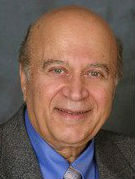
Grace Wolf, a young married woman, traveled from her home in Lansing, Iowa to the office of Dr. C. Allen Snyder (pictured) in Dubuque on November 19, 1917. Shortly after leaving Snyder's practice, she took ill. By November 29 she was in the hospital, and her condition deteriorated until her death on December 3. The autopsy had found evidence of recent pregnancy and a puncture in Grace's uterus. Dr. Snyder was convicted of manslaughter and sentenced to ten years at hard labor. His conviction was overturned on appeal. He was also charged with murder in the 1918 abortion death of Mrs. Frank Gagne of East Dubuque, Illinois. 

On December 2, 1977, 29-year-old Jacqueline Bailey was injected with saline by Dr. Eboreime (Possibly Babatunde Eboreime. I am trying to verify this.) for an instillation abortion at Pacific Glen Hospital in Los Angeles County. This kind of abortion worked because the baby would swallow and inhale the extremely salty fluid which would cause massive internal hemorrhage and fatal organ damage. Five hours after Jackie expelled the dead baby, her condition appeared grave. Shortly after midnight, she was transferred to Memorial Hospital of Glendale. Doctors at Memorial suspected a uterine laceration, so they performed exploratory surgery. The bleeding was so profuse that they then performed a hysterectomy in a last-ditch attempt to save her life. Jackie died just before sunrise on December 3. The autopsy report found that Jackie's uterus had ruptured during the abortion, and that her uterine artery had been lacerated. She had bled to death from her injuries. Two years earlier, Cheryl Tubbs also bled to death from a ruptured uterus caused by a saline abortion at Pacific Glen.

Cora Lewis is one of six abortion deaths currently attributed to Inglewood Women's Hospital (aka Inglewood Women's Clinic) in Los Angeles County. Twenty-three-year-old Cora had her safe and legal abortion at Inglewood on November 4, 1983. She had gonorrhea at the time of the abortion, which led to inflammation of the cervix and uterus. Cora developed fever and chills after her abortion, and was finally admitted to a hospital on November 11. She was aggressively treated for pneumonia, including surgery, but died December 3. The coroner attributed her death to pneumonia and lung abscess contributed to by the uterine and cervical inflammation. Other abortion deaths at Inglewood include Kathy Murphy (September, 1973), Lynette Wallace (September, 1975), Elizabeth Tsuji (February, 1978), Yvonne Tanner (August, 1984), and Belinda Byrd (January, 1987),

Headshot of a balld, middle-aged white man
Andre Nehorayoff
Dr. Andre Nehorayoff performed a safe and legal abortion on "Ellen" on November 29, 1983. She was 18 years old and in the second trimester of pregnancy. After the abortion, Nehorayoff discharged Ellen from his facility. He had not removed or identified all fetal parts. Nehorayoff entered the following note in Ellen's chart: "Pt. is advised that she might pass some tissue, contact me at any time or if she bleeds heavily." He was clearly aware that he'd preformed an incomplete abortion. At 5:10 AM on December 3, Ellen was rushed to an emergency room. She was already in a coma upon admission. An hour and 10 minutes later, she was pronounced dead. At autopsy there was a portion of the fetal left leg protruding from the uterus, and the cause of death was determined to be from hemorrhaging due to the incomplete abortion. Nehorayoff was also disciplined regarding Patient F, whom he left unattended in a recovery room following her abortion on December 15, 1979, without any monitoring. She turned blue and no pulse could be detected. She was pronounced dead at a hospital.

Monday, February 18, 2019

Illegal Abortions: Doctors at Work

Introducing video commentary! Subscribe to the Cemetery of Choice YouTube channel to learn more about what we can learn from abortion deaths.


Injured While Her Abortionist Was Awaiting Trial

On February 18, 1916, Beulah Hatch, age 24, died at Mercy Hospital in Denver. Dr. Bennett Graff, already out on bond while awaiting trial for the February 2 abortion death of Ruth Camp, was believed to have perpetrated the abortion that likely killed Beulah. Both women, in fact, were in Mercy Hospital at the same time, which means that Beulah's abortion must have been perpetrated prior to Ruth's death.

Beulah had gone to Denver about six weeks prior to her death, installing herself in a rooming house and then entering Graff's care. He had her removed to the Panama rooming house, where he had offices. She remained there at the rooming house until her condition deteriorated to the point where somebody sent for her husband. Mr. Hatch summoned the family physician, Dr. Andrews, who came to Denver from Longmont. He examined Beulah and had her transferred to the hospital. Once she was there, Andrews transferred her to the care of a local physician, T. Mitchell Burns, who attended her until her death.

The Physician-Fiance

A Victorian-era portrait of a beautiful, elagant-looking young white woman with dark hair, pearl drop earrings, and a lace collar
Kittie O'Toole
At about 2:00 p.m. on February 18, 1883, 28-year-old Irish immigrant Kittie O'Toole died at the office of Dr. C. H. Orton, her betrothed, in Milwaukee.

Orton attributed Kittie's death to an epileptic seizure. Orton's neighbors, however, found the death suspicious and demanded an investigation.

The coroner's jury found Orton culpable for two murders -- of Kittie and of her unborn baby -- for having perpetrated a fatal abortion.

Orton, a widower more than 60 years of age, was a prominent politician and a doctor of longstanding in the community, which makes it interesting that in late April a municipal court judge suddenly dismissed all of the charges against Orton.

Saturday, May 06, 2017

Chicago Doctors in the Early 20th Century

The most common profession of abortionists in the illegal era were physicians. Chicago was a particularly genial place for these practitioners in the late 19th and early 20th centuries due to police corruption. Even multiple dead patients were not enough to take a physician-abortionist permanently off the streets. We will see this in the cases we remember today.

Dr. Louise Achtenberg

On May 6, 1924, 24-year-old Madelyn Anderson died at Chicago's Washington Park Hospital from a criminal abortion perpetrated that day. On May 13, Dr. Louise Achtenberg was arrested for Madelyn's death. Achtenberg was indicted for felony murder on May 15.

Achtenberg already had a bad record as a criminal abortionist. In 1907, Dora Swan had died in a Chicago hospital after an abortion by Louise Achtenberg. "Louisa Achtenberg," identified as a midwife, had been implicated in the 1909 abortion death of Florence Wright. An abortionist identified only as Achtenberg was implicated in the 1921 abortion death of Violet McCormick.

It would seem that the same woman, Louise Achtenberg, was responsible for all four deaths. She was identified as a midwife in 1909 -- a term commonly used to describe obstetricians, particularly if they were female.

Dr. Warner

The year was 1920. Frances Collins was a 34-year-old homemaker mother of a 16-year-old and a 6-year-old when she discovered that she was pregnant. She informed her husband, Jerome, then asked a friend where to go to procure an abortion. The friend recommended Dr. Warner, telling her, “Go over and see him. He might be able to fix you up.” Frances went to Warner's office on West Polk Street in Chicago some time in early April, where he did something with an instrument to have “her womb opened up.”

After returning home, Frances summoned Jerome from his job as a printer and told him she was “unwell.” She must have indicated that the illness must have something to do with her pregnancy, because Jerome later testified that he asked her, “Natural?” She told him no, which Jerome knew meant that she had undergone an abortion, as she had, by her own admission, “done many times” before.

Frances rested afterward, and seemed to have recovered, but by the end of the month she was bleeding vaginally, “pretty hard,” as Jerome put it. He called her mother to come and care for his wife. Her condition continued to deteriorate, with Frances developing vomiting and chills.

Jerome testified that Frances never gave him any details about the abortion – but nevertheless was able to summon Warner as the doctor who had performed the abortion. Warner came to the Collins home two or three times to look after his patient, with no improvement in her condition. Finally, at the end of April, somebody summoned Joseph T. Woof, the family doctor, who hospitalized her. He testified that he knew that she'd sought abortions in the past, against his advice.

Frances died on May 6. During the autopsy, it was discovered that Frances actually had an ectopic pregnancy. Her "many" prior abortions made her high-risk for this dangerous condition, so in a way the previous abortions probably contributed to her death as much as the final one. Given the state of medicine at the time, it's unclear how likely France was to survive an ectopic pregnancy had she sought obstetric care rather than an abortion, but her efforts to have her already doomed baby killed certainly hastened her death.

Dr. Lucy Hagenow
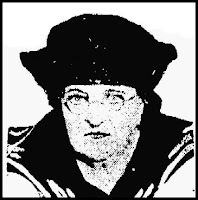
A poor-quality picture of a middle-aged white woman wearing a sailor-style dark hat and blouse. She has small facial features and is wearing small wire-rimmed eyeglasses.
Dr. Lucy Hagenow
At 6:30 on the evening of May 2, 1907, 26-year-old Austrian immigrant Annie Horvatich asked her new husband, Michael, to accompany her to the home of Dr. Louise Hagenow. It was late by the time they arrived. Though she didn't bring a change of clothes or any type of overnight bag, she asked Mike to look after her children (She had three from a previous marriage.) and to come and see her on Saturday.

Mike, who told his story through a translator, said that he didn't know Hagenow and didn't know what his wife's purpose was in the visit -- a claim that isn't held up by the letter he says he got from her the next day assuring him that there would be no "serious happenings" during her stay.

Annie Sickens and Dies

Mike went to Hagenow's home on Saturday afternoon and found his wife sitting up in bed. She told him she was unwell and sent him home, saying she would not be returning home until Monday.

On Sunday, Mike got a phone call to go to Hagenow's place. He arrived at 10 p.m. to find his wife very sick. A Dr. Rasmussen was also present. Mike remained at Annie's side during the night, noting that by morning she appeared to be much worse. He went to the home of Mary Galavitch, who could speak English and thus serve as a translator. When Mike and Mary arrived, Hagenow met them and told them that Annie had died at 5 a.m.

The Business With the Undertaker

Hagenow gave Mike a business card for a neighborhood undertaker. Mike indicated that he'd prefer an undertaker that he knew. He sought out W.J. Freckleton, who went to Hagenow's home to pick up Annie's body at around 5 p.m. He said that Hagenow told him that he should return after dark to take Annie's body out the back way. He returned at about 9 p.m. with an assistant, and found it very difficult to get Annie's body down the narrow staircase. He said that Hagenow told him that her regular undertaker never reported any trouble getting bodies out down that staircase.

The Truth Comes Out

The funeral was held, Annie buried, and it seemed as if Mike and the children would be getting on with their lives as best they could. That changed on May 13. The Cook County coroner, attended by Annie's brother, John Sneller, exhumed Annie's body. A post-mortem examination revealed that although Annie's death had been attributed to pneumonia, her lungs had been quite healthy and normal -- as were most of her internal organs. It was in her pelvis that the true cause of death was found. Her uterus was lacerated, with the top of the uterus torn nearly off, causing fatal peritonitis. From the condition of her uterus, the doctors gauged that she had been about four months pregnant, but there was no sign of the fetus, which evidently had been successfully killed, removed, and disposed of.

Hagenow's Claims Ring Hollow

Hagenow admitted that Annie had come to her place on the 2nd and died on the 6th, but insisted that Annie had been bleeding vaginally upon her arrival. She insisted that Annie told her she had seen a doctor on the South Side who had "brought her around" (i.e. done an abortion). Hagenow's claim that she hadn't performed an abortion on Annie wasn't very credible, given her history. She advertised consistently in Chicago daily papers, ads reading, "Dr. Louise Hagenow; licensed physician; expert; twenty seven years; female diseases; a new scientific, painless method; no operation; good results...." " In short, she was an open and known abortionist.

Also entered into evidence in the trial was the dying declaration of Marie Hecht, who died from one of Hagenow's "scientific, painless" abortions in 1899, as testified to by the police officer who had taken the statement. Likewise entered into evidence was the testimony of a doctor who Hagenow had brought in to help try to save the life of a young woman Hagenow had disemboweled in the process of an abortion sometime ten or fifteen years prior to the trial over Annie's death -- which would mean this woman could have been Minnie Deering (1891), Sophia Kuhn or Emily Anderson (1892), Hannah Carlson (1896), or another as of yet unidentified woman. A police officer also testified about taking the dying declaration of Lola Madison. To top it off, during cross-examination, Hagenow admitted involvement in the abortion death of Hannah Carlson.

An Appeal Denied, a Sentence Pronounced

The appeals court noted, "had the evidence shown that Annie Horavitch was the only pregnant woman whom [Hagenow] had caused to miscarry or abort, it might not have been unreasonable to presume that she did so in good faith and for the purpose of saving the woman's life. .... [but for] 27 years [Hagenow] had been constantly engaged in producing miscarriages and causing abortions... [and] she kept a place for the treatment and care of women upon whom miscarriages and abortions had been caused and performed; ... she was surrounded at her house by men and women engaged in the business of causing and producing criminal miscarriages and abortions, and ... she had caused the death of several women upon whom she had caused miscarriages and produced abortions within a few years prior to her indictment for causing the death of Annie Horvatich ...."

Hagenow, nearly 60 years old at the time of her trial, was sentenced to 20 years in prison for Annie's death.

Hagenow, who had already been implicated of the abortion deaths of Louise Derchow, Annie Dorris, Abbia Richards, and Emma Dep in San Francisco, would be released from prison to be implicated in the abortion deaths of Lottie Lowy, Nina H. Pierce, Jean Cohen, Bridget Masterson, Elizabeth Welter, and Mary Moorehead.

Monday, April 24, 2017

Doctors, a Midwife, and "Uncle Billy"

Oklahoma, 1937: A Midwife's Fatal Handiwork

A glamorous headshot of a beautiful young woman with short, dark hair looking over her shoulder into the camera with her large, wide-set eyes
Merl Williams
On April 24, 1937, Merl Williams of Watonga, Oklahoma, died of peritonitis. She was 21 years old, a worker in a poultry packing plant. Her death was attributed to a botched abortion.

A midwife, 57-year-old. Cordelia Moore, was charged with abortion murder. An investigation found evidence that Moore, formerly a registered nurse, had perpetrated hundreds of abortions in her home in Longdale, Oklahoma.

After her arrest, Moore "unworriedly set her glasses on the end of her nose and continued her quilting in the county jail." Her husband, John, actually got up in his cell and jigged when a jaunty tune came on the radio.

W. C. Mouse, a railroad engineer, testified that he had taken Merl to Moore's 3-room farm house on April 11, not knowing the reason for the visit. He said only that he had heard Merl ask Moore, "Will it be dangerous?" The state also gathered 14 additional witnesses in the case against Moore, including women swearing under oath that Moore had done abortions on them. The prosecutors were also investigating the possible abortion death of a married woman a few years previously.

Cordelia Moore was tried for the crime; her husband, John, was arrested but released. I have been unable to determine that outcome of any trial in Merl's death.


Oklahoma City, 1932: Two Docs' Deadly Spree

Poor qualilty profile shot of a middle-aged white man with eyeglasses.
Dr. J. W. Eisiminger
Virginia Lee Wyckoff, a University of Oklahoma student, age 21, died from complications of an abortion on April 24, 1932 Hers was one of a string of deaths in the city that year. Dr. J.W. Eisiminger, an osteopath, was tried and convicted of murder in Virginia's death. He admitted to having treated her in his office on April 3, but said that he didn't believe she was pregnant. Nevertheless, Virginia spent several days in a private home where Eisiminger kept recovering abortion patients under the care of Mrs. Luther Bryant Price. Dr. Richard Thacker, who had an abortion patient of his own die on April 24, 1932, also used Mrs. Price's home as a recovery center for his abortion patients.

Virginia was transferred from Mrs. Prices's home to Oklahoma City General Hospital, where she died of septicemia, first having told doctors there that Eisiminger had performed the fatal abortion.. A deathbed statement absolving Eisiminger was proven to be a forgery.

Eisiminger was sentenced to life in prison after pleading guilty to murder in her abortion death. The sentence was later reduced to 15 years.
A white man of about 60 years of age, with a very high forehead, large nose, and grim facial expression
Dr. Richard Thacker
Thacker's trial for the April 15, 1932 abortion death of Ruth Hall brought out testimony concerning the death April 24 death of 25-year-old Lennis May Roach and of other patients, including Robbie Lou Thompson, and Nancy Lee.

Mrs. Roach had come to Thacker's office several times, he admitted. Thacker said that she had been in poor health and emaciated, and had a white discharge, indicative of infection, from her vagina. She also, Thacker said, had pains in her abdomen. Thacker said that he treated her with a tonic and with antiseptic tampons.

He adamantly denied that he had performed an abortion on her. However, other witnesses, including Mrs. Roach's husband, testified that Thacker had indeed performed an abortion on Mrs. Roach, causing her death. Thacker was only prosecuted for Ruth Hall's death and was sentenced to life in prison. This is probably why he wasn't prosecuted for any of the other deaths. He died in prison in 1937.


Chicago, 1920: An Unidentified Perpetrator

On April 24, 1920, Emma Shanahan died at Chicago's St. Anthony Hospital from an abortion perpetrated by a person who was not identified. Most abortionists in Chicago in that era were doctors or midwives, which makes it likely that Emma availed herself of one of these trained medical professionals.


 Hannibal, Illinois, 1893: Racist Coverage of an Abortion Death

An article on the death of 19-year-old Emma Hub underscores the racism of the time. It begins, "Uncle Billy Nickens, a well-known colored character of Hannibal [Illinois], was arrested there yesterday charged with causing the death of Emmy Hub by a criminal operation."

Emma was the daughter of Jacob Hub, a German shoemaker living just south of the Hannibal city limits. Jacob had expelled his daughter from the house due to "her wild habits", so she had moved in with a painter named Mathew Seoville.  Around April 15 of 1893, Emma took ill, and was tended by a Dr. Ebbits. Ebbits suspected an abortion and refused to treat Emma until she admitted to it. "She continued to grow worse until death relieved her suffering at 1 a.m. yesterday" -- that being April 24.

Emma had told Mathew Seoville and his wife that she had gone to Nickens' house, where he had used instruments on her to cause an abortion. She said that a girl from Illinois was also there for an abortion. Mathew had pressed Emma to write up a declaration.

The fatal abortion was reportedly Emma's second; the previous had been performed the previous October. She also had given birth to a child about two years earlier.  The article notes that Nickens was arrested, adding, "The negro has been brought up on similar charges before, but always managed to clear himself."

Thursday, April 20, 2017

Doctors and a Pharmacy Clerk

One of Three Deaths at Chicago Abortion Mill

A middle-aged white man wearing large eyeglasses
Dr. Dusan Zivkovic
Brenda Benton's survivors sued Biogenetics after her death, claiming that Dusan Zivkovic and/or V. Perez had performed a safe and legal abortion on her on March 13, 1987. She was placed under general anesthesia for the abortion. After she was discharged, Brenda developed fever, chills, and back pain.

The suit says that 35-year-old Brenda returned to Biogenetics to report these symptoms on March 27, and that Zivkovic examined Brenda and performed a D&C before transferring her to Martha Washington Hospital. There, Brenda's survivors say, Zivkovic called in other doctors for a consult. They then transferred Brenda to Rush-Presbyterian St. Luke's hospital on April 6. She died there on April 20.

Her death was due to infection and "overwhelming septicemia." Brenda's family said that Zivkovic failed to failed to determine that Brenda had had an adverse reaction to drugs he'd given her, and failed to detect and respond to her medical emergency. An expert opinion on the case attributes Brenda's death to inappropriate follow-up, and septicemia leading to fatal complications. Brenda's death certificate attributed death to hepatic necrosis due to toxicity reaction to abortion anesthesia.

"Susanna Chisolm" (1975) and Synthia Dennard (1989) also died after abortions at Biogenetics.


Dillinger's Doc Does Fatal Abortion

Poor-quality newspaper photograph of a mostly bald, middle-aged white man, in profile
Dr. Clinton E. May
Dr. Clinton E. May had crossed paths with the law when he harbored John Dillinger. In an apparent attempt to keep a low profile, he relocated to California after his release and didn't bother to get licensed to practice medicine, but rather set up housekeeping, and an abortion practice, with a woman in San Francisco using the aliases Cy Dalton and Miss Ralston,

On April 12, 1939, a woman called St. Joseph's Hospital and anonymously told a doctor there that a woman had suffered uterine damage in an abortion. The doctor said to send the woman to the hospital immediately.

The woman, 30-year-old Doris Alexander, arrived at the hospital in a taxi. She was in critical condition. There, she told hospital staff, her husband, and the police about the abortion. Based on the information Doris had provided, police raided Clinton May's apartment the following day, finding a makeshift operating table, abundant surgical instruments typically used in abortions, and parts of a human fetus of about three or four months of gestation that was not Doris' fetus.

May was arrested and taken to the hospital, where Doris tentatively identified him. She never mentioned a woman being involved in the abortion. Doris died on April 20, and police arrested a woman named Frances Zoffel, whom they said was the mysterious "Miss Ralston."

May and Zoffel were charged with murder and conspiracy. May was convicted of second-degree murder, Zoffel of conspiracy. Zoffel was able to get a new trial on the grounds that she was not "Miss Ralston" and that there was no evidence linking her to May's practice, although she had been implicated in abortion rings in the past and would be implicated again in the future.


A Doctor When the Pills Didn't Work

In Seattle, Washington in February of 1933, Mary Agnes McNeil, a 22-year-old unmarried grocery store clerk, discovered that she was pregnant. Mary informed her boyfriend of the pregnancy, and he got her some pills supposed to cause an abortion, but they didn't work. She tried another round of different pills in March.

On April 8, Mary went to a nursing home operated by a nurse to ask about an abortion. The nurse informed the woman and her lover that Dr. E. T. Martin or another doctor would be able to perform an abortion.

On April 11, Mary's boyfriend went to Dr. Martin's office and consulted with him. On Dr. Martin's instructions, Mary's boyfriend brought her back the next morning, a Wednesday, for an examination. Mary was in Dr. Martin's office for about half an hour. Dr. Martin then told Mary's boyfriend that the total fee, including a stay at the nursing home until Saturday night, would be $75. He then instructed the boyfriend to take Mary to the nursing home, which he did that afternoon.

On Friday the 14th, Dr. Martin performed a curettage on Mary to remove the fetus. The nurse claimed that she had no idea what Dr. Martin was planning to do.

After the D&C, Mary became alarmingly ill. Dr. Martin said that he himself was not in proper physical condition to care for the patient, so he summoned a Dr. Templeton. Dr. Templeton evidently cared for Mary at the nursing home until April 19, a Wednesday, when he advised staff to transfer Mary to Virginia Mason hospital. She died the following morning.

Dr. Martin, with some corroboration from the nurse, said that Mary already had a rapid pulse and fever when she first consulted with him. He also said that she was bleeding vaginally already. Dr. Martin said that Mary had told him she'd missed three periods, taken abortifacients, had fallen, and had a chronic bowel condition.

Dr. Martin testified that he'd recommended hospitalization, but that Mary wanted to avoid the possible publicity surrounding a hospitalization. It was then that he'd decided to send her to the nursing home instead. He also testified that she'd been bleeding from the 12th until the 14th, when he'd performed a curretage. He said that this curretage was necessary to treat her fever and bleeding.

Dr. Martin was convicted of manslaughter in Mary's death, but the nurse was acquitted.


A Pharmacy Clerk's Fatal Work

On April 20, 1912, 19-year-old actress and newlywed Ruth Fox died at her Chicago residence from septic peritonitis caused by an abortion perpetrated, possibly there and on that day, by Frank J. Schwartz, a pharmacy clerk. He was arrested and held by the Coroner on May 2, and indicted by a Grand Jury on November 25, but the case never went to trial. Dr. Samuel T. Baldridge was arrested but exonerated after testimony at the coroner's inquest. It is unclear why, with all the physicians and midwives running thinly-veiled ads for abortion practices, Ruth instead went to somebody who had only marginal training in a medical field.

Saturday, April 15, 2017

Dr. Thacker's Bad Month and Other Cases

Safe and Legal in Texas, 1997

Sixteen-year-old Maureen Espinoza underwent a safe, legal abortion at a doctor's office in San Antonio on March 28, 1997. During the abortion, the doctor punctured Maureen's uterus, but didn't note this in her medical records or say anything to her about it, indicating that he simply didn't notice. Maureen was sent home. On April 3, she went to the emergency room at Northeast Baptist Hospital. Over the ensuing days, doctors there performed two surgeries to try to save her life, but to no avail. She died on April 15, 1997.


The Case that Sent Thacker to Prison, 1932

Headshot of a middle-aged white man with a high forehead, large nose, and grim facial expression
Dr. Richard Thacker
Dr. Richard E. Thacker maintained an office and operating rooms in the Terminal Building in Oklahoma City, Oklahoma. In the early part of April, 1932, 21-year-old Ruth Hall went with her friends, Helen Wright and Margy Brown, to Thacker's practice. Ruth's friends stayed in the waiting room while Thacker took Ruth back into his exam room for five or ten minutes. Thacker told Ruth to return at noon the following day, April 6, a Wednesday.

Ruth, Margy, and Helen returned as instructed, bringing Ruth's roommate, Elma Benne, with them. Helen went into the procedure room with Ruth. Helen said she saw Ruth give Thacker money. Ruth then got onto the table as instructed by Thacker, Helen said, then he used a long, slender instrument and packed her with gauze.

Helen and Ruth collected their friends and went back to the boarding house where Ruth lived. Helen remained with her friend for four hours, leaving her in the care of her roommate. Helen returned to the boarding house on Thursday, and spent the night with Ruth and Elma. Ruth took ill in the night. Elma said that her friend "suffered quite a bit." Both Helen and Elma observed blood on the bed at the time. Helen said goodbye to Ruth at 10:00 Friday morning. She never saw her friend again.

On Saturday, Ruth's brother came to bring his sister to their parents' house, as was their routine. Mrs. Hall wept on the witness stand as she told the story of her daughter's death. She reported that Ruth was sick when she arrived at about 4 or 5 p.m. It wasn't until roughly 11:00 that Ruth finally told her mother why she was ill. Mrs. Hall called Thacker and scolded him into coming to her home to care for Ruth. Once he was there, she also had to scold him into sterilizing his instruments and washing his hands before performing a follow-up procedure.

Mrs. Hall reported that Thacker told her, "This is something I certainly do not approve of; I told the girl this when she came to the office and wanted help, but I could not turn her down. It seems like the more I try to help people lately the most of them get into worse trouble." He also said that if his wife knew he was performing abortions "she would kill me. I feel like sometimes going and jumping in the river, and if I had I would be better off."

Ruth's mother called Thacker again on Friday, April 15, but by the time he arrived, it was too late.

After Ruth's death, Thacker fled to his brother-in-law's ranch near Amarillo, Texas. He then relocated to Springdale, Arkansas, where he was finally apprehended.

Over Thacker's understandable, albeit unsustainable, objections, the court permitted a number of witnesses to testify that after Ruth's visit to his practice, Thacker had performed fatal abortions on Robbie Lou Thompson, Lennis May Roach, and Nancy Joe Lee.

It took the jury of twelve men, eight of them fathers, only a little more than one hour and only four ballots to find Thacker guilty of murder. He appealed the conviction, but the appeal was denied, and Thacker, age 60, was sentenced to life imprisonment at hard labor. He died of a heart attack shortly after midnight on April 1, 1937.


Mystery Abortion in Chicago, 1916

Homemaker Margaret Waldon, age 33, of Burley Avenue, Chicago died in South Chicago Hospital on April 15, 1916. She had been brought there by private ambulance the previous week. Her death was attributed to an illegal abortion.

Friday, April 14, 2017

A String of Deaths in Oklahoma, and Possible Corruption in Chicago

The Beginning of a Tragic Series of Deaths

A middle-aged white man with a very high forehead, large nose, and stern facial expression
Dr. Richard Thacker
On April 14, 1932, 21-year-old Mrs. Isabelle Ferguson died of suspected abortion complications. Two physicians in the University of Oklahoma area, J. W. Eisiminger and Richard E. Thacker, were suspected in the case. Isabelle's husband, S. E. Ferguson, sued Thacker for $10,000 in damages, indicating that Thacker was probably the perpetrator. Thacker was also implicated other abortion cases:
Thacker was sentenced to life in prison for Ruth Hall's death. His attorney announced an immediate motion for an appeal, on the grounds that Thacker's other abortions should not have been admitted as testimony.


Possible Corruption in Chicago

Mamie Ethel Crowell, age 20, died on April 14, 1930, in the Chicago office of Dr. Hans Paulsen, from an abortion performed on her that day. Two days later, Paulsen was booked for manslaughter by abortion. The father of the baby, Uriah Denniston, was booked as accessory. Paulson was held by the Coroner for murder by abortion. Denniston wasn't mentioned in the verdict. On September 1, the indictment was quashed. The source notes "Circumstances suggesting judicial corruption."

Tuesday, April 11, 2017

Deadly Doctors, 1991, 1984, and 1935

Safe and Legal in New Jersey, 1991

On April 6, 1991, "Terri," age 34, had an abortion at a doctor's office in the 1100 block of Summit Avenue in Union City, New Jersey. A nurse called the police saying that they needed emergency help for an unconscious patient. According to the police report, the doctor had already left the facility when the nurse called for help. Terri was taken to the hospital and placed on life support. She was pronounced dead on April 11, 1991.

Delayed Transport Leads to Death in Texas, 1984
A slightly overweight middle-aged white man with dark hair, wearing a suit and tie and enormous aviator-style sunglasses
Dr. Raymond Showery

Abortionist Raymond E. Showery was out on bail appealing a murder conviction when he performed the safe, legal abortion that killed 28-year-old Mickey Apodaca on April 11, 1984.

Mickey, a divorced mother of four, went to Showery's Southside Medical Center in El Paso for an abortion on April 11, 1984. She was about 19 weeks pregnant. During the abortion, Showery tore a hole in Mickey's uterus and severed a uterine artery. Mickey hemorrhaged for two hours before she was transferred to a hospital, where she died during an emergency hysterectomy.  Showery was held pending $1 million dollars bail while awaiting trial for manslaughter in Mickey's death. While he was in prison, local pro-choicers rallied outside with signs asserting that Showery was "a good man" and that he "helps the poor." The fact that he helped Mickey Apodaca straight into an early grave was lost on them.


Benevolence To Young Men, Death to Young Women

A bald, middle-aged white man wearing dark-rimmed round eyeglasses and a grim facial expression
Dr. Guy E. Brewer
Doris Jones, a 20-year-old mother of two, died April 11, 1935, from complications of a criminal abortion perpetrated on April 3. Dr. Guy E. Brewer, a 53-year-old bachelor known for his benevolence toward college students, was fingered as the culprit by Doris' husband, Victor. Brewer was a quiet, small-town doctor in Garber, Oklahoma and immensely popular for his benevolence in putting local young men through college.

Doris' 22-year-old husband, Victor, a grocery clerk, had not known about the abortion until after Doris took ill. He reported the deadly abortion to police, whereupon his employer retaliated by firing him.

Victor at least had the company of other bereaved families whose loved ones had died from abortions perpetrated by Brewer. Hermoine Fowler, a 20-year-old college student,Wanda Lee Gray, age 20, Myrtle Rose, age 21, and Elizabeth Shaw, age 23, evidently died in early June of 1935.

Brewer pleaded guilty to all six deaths but only got a slap on the wrist -- six four-year sentences, to run concurrently.

Friday, April 07, 2017

Three Abortions, Over a Century Ago

Mystery Abortion in Chicago, 1915

Katherine McFarland, a 25-year-old homemaker in Chicago, died on April 7, 1915 from peritonitis caused by an abortion. I have been unable to find any other information about her death.


A Cry in the Night, 1896

On the evening of Monday, April 6, 1896, Tillie Karcher heard moaning in the flat of seamstress Millie Meyers, just upstairs of her at 415 Bushwick Avenue in Brooklyn. She listened again and heard a young female voice crying out, "Oh, let me go home to my mama!"

Alarmed, Mrs. Karchner sought out a policeman on his rounds, who went to the apartment and found a young woman there, ailing and alone. The girl gave her name as Mrs. Emily Scott and said that her husband, Ollie Scott, was a fireman on a Fulton ferry.

The policeman found prescription bottles in the room, so he copied the information from them and went to the pharmacy that had prepared them. The pharmacist said that the medicines were common ones used in treating fevers.

The policeman considered all these goings-on to be fishy, so he reported the situation to the precinct captain, who began an investigation to identify and round up everybody involved in the young woman's suspicious illness.

Around 5:30 on Tuesday afternoon, April 7, the young woman said that she was going to die soon, told the police that her real name was Emily Binney and gave them her address on Rutledge Street in Williamsburg, Brooklyn.

Emily's turn for the worse sent the police rushing for the coroner, leaving the ailing girl in the care of Minnie Meyer. The coroner arrived to find that Miss Meyer had abandoned Emily, leaving her to die alone in the intervening half hour.

Meyer was eventually apprehended and admitted that she'd helped 20-year-old Emily to seek out the abortion services of 33-year-old midwife Mary Schott and had herself been engaged to look after the patient.

A police officer went to the Fulton ferry house and managed to identify "Ollie Scott" as Arthur Robbins, who was arrested when he showed up at Meyer's flat to look for Emily at 10:00 that evening.

While the suspects were being questioned, Minnie said that Emily's baby had been born alive on March 21. Upon hearing that, Robbins burst into tears and told police that about four hours after the child's birth he had wrapped the baby in newspapers weighted down with a piece of iron and thrown it out a porthole in the ferry. He couldn't say if the baby had still been alive when it was tossed into the river.

Arthur Robbins then admitted that he had gone with Emily and Minnie to arrange for Mrs. Schott to perform an abortion.

Minnie Meyer was found guilty of manslaughter. I've been unable to determine the outcome of the case against the midwife.


Fatal in Minneapolis, 1889

Minnie Broderick, age 25, died in Minneapolis on April 7, 1889 from complications of a recent criminal abortion.

Dr. Irvine testified that Minnie had come to his practice about ten days prior to her death, saying that she had been unwell since miscarrying. He said that he examined her and found no signs of pregnancy. The three doctors who performed the postmortem examination indicated that she had clearly died from an abortion performed a few days earlier.

Wednesday, April 05, 2017

Another Chicago Doctor's Abortion Business, 1927

On the morning of April 5, 1927, Arhne Reynolds died at the Chicago office of Dr. Louis Ginsburg from an abortion performed on her there that day. Ginsburg was arrested on April 18, and indicted for felony murder on May 15.

So far I have been unable to determine the outcome of the case.

Arhne's abortion was typical of illegal abortions in that it was performed by a physician.

Keep in mind that things that things we take for granted, like antibiotics and blood banks, were still in the future. For more about abortion in this era, see Abortion in the 1920s

During the first two thirds of the 20th Century, while abortion was still illegal, there was a massive drop in maternal mortality, including mortality from abortion. Most researches attribute this plunge to improvements in public health and hygiene, the development of blood transfusion techniques, and the introduction of antibiotics. Learn more here.


Graph showing the maternal mortality rate at about 850 in 1800, dropping to 700 around 1910, jumping to around 800 in 1920, falling at about a 45 degree angle until 1940, then plummeting sharply until 1950, where it begins to level off before sitting just above 0 from around 1978 onward


Monday, April 03, 2017

Two Busy Abortionists and Other Sad Cases

Safe and Legal in Texas

Sixteen-year-old Maureen Espinoza underwent a safe, legal abortion at a doctor's office in San Antonio on March 28, 1997. During the abortion, the doctor punctured Maureen's uterus, but didn't note this in her medical records or say anything to her about it, indicating that he simply didn't notice. Maureen was sent home. On April 3, she went to the emergency room at Northeast Baptist Hospital. Over the ensuing days, doctors there performed two surgeries to try to save her life, but to no avail. She died on April 15, 1997.


Nearing the End for Dr. Justin Mitchell
 
A youngish white man with a high forehead and dark hair, facing the camera, with a pale colored jacket and dark necktie
Dr. Justin Mitchell
On February 12, 1936, Dr. Justin Mitchell, age 57, of Chicago was convicted of manslaughter in the April 3, 1935 abortion death of 32-year-old Mary Nowalowski.  Eleven days before his conviction, another of Mitchell's patients, Alice Haggin, died from abortion complications. Two years earlier, Mitchell had been implicated in the abortion death of Mary Schwartz.

The prime witness in the case was milk wagon driver Stephen Zakes. He and Mary were planning a wedding for the upcoming May.  On March 27, Stephen brought Mary to the Chicago office of Dr. Victor J. Neale. He then met with the couple together, telling them that Mary was between two and two and a half months pregnant. Mary began to cry and ask Neale, "What will I do?"

Stephen testified that Neale had referred them to Dr. Justin Mitchell; Neale insisted that he had simply told them they could go to some busy corner and find an abortionist.

Stephen and Mary went to Mitchell's office on the evening of Friday, March 29. Mitchell examined Mary and confirmed that she was pregnant. She was at least eight weeks along, Mitchell said, and if she returned the following morning at 8:00 he would perform an abortion. The fee would be $50. He assured them that there was no danger for Mary to undergo the procedure.

Stephen Zakes went to Mitchell's office at around 11:00 the morning of Saturday, March 30 to see how Mary was doing after the abortion. "She will be all right, she is in a little pain right now." Stephen went to see Mary himself and found her to be in excruciating pain, unable to even sit up. Mitchell insisted to him, "They are all weak after an operation of that kind."

Stephen escorted Mary home. She was weak and chilly. They stopped at a drug store for coffee and toast, then walked to a cab stand where Mary became violently ill. After Stephen took Mary home, she immediately took to her bed. Dr. Neale was summoned to examine her. Neale provided morphine for Mary's pain before leaving. Stephen remained with her until about 1:00 in the morning on Sunday, March 31.

Somebody brought Dr. G. M. Redman to Mary's home between 4:00 and 5:00 that morning. He found Mary in such grave shape that he immediately took her to his car and drove her to the hospital.

Mary was given medicine to contract her uterus but she continued to bleed so Redman contacted the coroner's office then performed a curretage of Mary's uterus. Her cervix had already been damaged, showing tearing and pus. During the curretage, Redman retrieved the head of Mary's fetus along with retained portions of the placenta.

Redman's care notwithstanding, Mary died on Wednesday, April 3. A postmortem examination concluded that Mary's uterus had developed gangrene due to the abortion, and that she had died of hemorrhage and septic shock.


One of Dr. Thacker's Cluster of Victims

Headshot of a middle-aged white man with a very high forehead, large nose, and dour expression
Dr. Richard Thacker
Ethel Hestland, age 30, died on April 3, 1932, in the Oklahoma City area from a criminal abortion. Her death certificate was signed by Dr. Richard E. Thacker. Thacker had been implicated for a string of other abortion deaths, including:
  • Marie Epperson, February, 1929, Thacker suspected
  • Isobel F. Ferguson, April, 1932, Thacker suspected, sued by widower
  • Ruth Hall, April, 1932: Thacker convicted of murder
  • Lennis May Roach, April, 1932: Thacker implicated by multiple witnesses; outcome of case unknown to me
  • Nancy Joe Lee, April, 1932: Thacker implicated by multiple witnesses; outcome of case unknown to me
  • Robbie Lou Thompson, April, 1932: Thacker implicated by multiple witnesses; outcome of case unknown to me
I believe that Thacker wasn't prosecuted for the other deaths because the successful conviction for Ruth Hall's death took him off the streets.


A Chicago Midwife

On April 3, 1928, 30-year-old homemaker Stefania Kwit, a native of Poland, died from complications of a criminal abortion believed to have been performed that day by 45-year-old midwife Pauline Majerczyk. On May 3, Mauerczyk was held by the coroner for murder by abortion, and indicted for felony murder on May 15. Evidently she remained free, because she is still listed as a midwife living in Chicago in the 1930 Federal census. She would have blended in well in Chicago, where midwife-abortionists were common in that era.


An Unknown Perpetrator

On April 3, 1919, 22-year-old homemaker Mary Kizior, a native of Poland, died at Chicago's Jefferson Park Hospital from an abortion perpetrated by an unknown suspect.

Saturday, April 01, 2017

Deaths in the First Third of the 20th Century

One of Six Clustered Victims of Dr. Guy E. Brewer

B&W 1/4 profile of a stern-faced, bald, middle-aged white man with round, dark eyeglasses
Dr. Guy E. Brewer
Ruby Ford, a 26-year-old homemaker, died on April 1, 1934, 11 days after an abortion committed on March 20 "at the combination bachelor dwelling and office" of Dr. Guy E. Brewer, a beloved philanthropist in the small town of Graber, Oklahoma. So popular was Brewer that the husband of one of his six abortion victims was fired from his job in retaliation for reporting the death to the police.

Brewer had graduated from the University of Louisville in 1906 and had been practicing medicine in Garber for 21 of the 29 years he had been a physician. He supported young men during their university studies, maintaining houses for them to live in. Those he had educated over the years rushed immediately to his defense. Though Brewer had spent many long years helping boys and young men, his impact on women's lives was evidently lightning-fast.

Hermoine Fowler, a 20-year-old coed, died in June of 1934, nine days after an abortion perpetrated by Brewer. Doris Jones, a 20-year-old mother of two, died in April of 1935. Wanda Lee Gray, age 20, Myrtle Rose, age 21, and Elizabeth Shaw, 23, of Roxanna.

Brewer entered guilty pleas and was sentenced to six four-year sentences, to run concurrently, for the six abortion deaths.


A Death and a Pardon

On March 29, 1921, 57-year-old Dr. Simeon B. Minden performed an abortion in his New York City office on 32-year-old Mrs. Catherine Riga. Catherine died three days later at Lincoln Hospital. It took only two days for his trial, which ended in a conviction. Minden collapsed upon hearing the verdict.  Minden was granted a new trial on May 18, 1922, and was pardoned by the governor after serving one year and four months of a 2.5 to 10-year sentence in Sing-Sing on December 12, 1924.

A Midwife Suspected

On April 1, 1911, 23-year-old Chicago homemaker Annie Murphy died from an abortion perpetrated by a midwife (or possibly obstetrician) named Carolina Adams. Adams, age about 63, was held by the Coroner's Jury but the case never went to trial.


A Grim Delivery

On the morning of April 1, 1904, a body was hastily shipped from Old Orchard Sanitarium, aka Eastman's Women Sanitarium, run by Dr. Charles A Eastman. A death certificate was filed in the town clerk's office by Eastman stating that the deceased was 24-year-old Edith McIntyre, a schoolteacher from Boothbay Harbor, Maine. She had died at the sanitarium at 3:00 that morning. The body, Eastman said, had been shipped on the early train of that day to Boothbay Harbor in charge of Edith's brother, Capt. Albert McIntyre. The cause of the death was given as gastritis resulting from the taking of oxalic acid salts by the deceased sometime in February. Edith had been at the sanitarium for two weeks.

This all seemed a tad fishy, so the case was quickly referred to county attorney George L Emery, who examined the documents then hurried off to Boothbay Harbor to speak with Edith's brother. Emery learned that Edith had been buried early on Saturday, April 2, and that no viewing of the body by family or friends had been permitted. Edith's body was exhumed for an autopsy, which revealed that she had died from a criminal abortion.

Eastman, realizing that the authorities were on to him, fled his sanitarium by the time Emery got back to question him.  Eastman was traced to Lowell, MA, where he was arrested. He was arraigned on a murder charge, to which he plead not guilty.

The prosecution presented evidence that Eastman had performed an abortion on Edith some time in March, and that she developed septicemia and died as a result. Eastman's defense argued that Edith had just miscarried and died from a bad gastric reaction to the oxalic acid salts she had been taken. Since oxalic acid is a toxin found naturally occurring in many plants, Eastman seemed to be arguing that Edith had taken the salts as a self-abortion attempt in February, prior to coming to his sanitarium.

John Morrill, who had arrested Eastman, presented letters written by Eastman to his wife while he was a fugitive, along with letters from Edith's brother. Expert testimony was presented by two doctors, Alfred King of Portland and George Gregory of Boothbay Harbor.

On July 12, the jury returned a verdict of guilty of manslaughter.

Sunday, March 19, 2017

March 19: Scant Info in the Early 20th Century

Another Victim of Eisiminger or Thacker?

Geraldine Easley, age 19, admitted before her death on March 19, 1932*, that she had undergone a criminal abortion. Since Dr. James W. Eisiminger and Dr. Richard E. Thacker had been responsible for a string of other criminal abortion deaths in the Oklahoma City area, suspicion in Geraldine's death naturally leaned toward the two known quack abortionists. However, to my knowledge the specific perpetrator was not identified. (*Her headstone indicates she died in 1931.) Source: "Probe May Show Many Deaths Due to Malpractice," The Fresno Bee-Republican, April 29, 1932


Scant Info on Chicago Deaths

On March 19, 1916, 30-year-old Carolina Petritz died at the Chicago office of midwife Paulina Erlomus, who had perpetrated the fatal abortion there that day. Erlomus was held by the Coroner but the case never went to trial. (Homicide in Chicago Interactive Database)

Olivia Becker, a 34-year-old homemaker and mother of two, died in Chicago from abortion complications on March 19, 1915.  I have been unable to gain any other information about Olivia's death. (Homicide in Chicago Interactive Database)

A Tad More Information in Chicago

At about 4:00 p.m. on March 19, 1907, homemaker Bessie Ruby Simmons, age 30, died at her Chicago home. She left her husband to care for their two young children.

A coroner's jury found that she had died from blood poisoning caused by a criminal abortion perpetrated on February 22. They assigned blame to Dr. Charles D. Hughes (or Hews), who was arrested in the death. Hughes admitted that he had treated Bessie but denied any responsibility for her death. A second doctor, H. Doyle, had been called to attend to Bessie but was cleared of blame by the jury. I can't find any evidence that the case ever went to trial.

Sources: