Showing posts with label botched abortion. Show all posts

Saturday, December 05, 2015

Christi Stile of "Christi's Choice" Died in 2015

Planned Parenthood referred 17-year-old Christi to an unsafe clinic for an abortion that left her brain damaged. It took her nearly 22 years to die.
It took her 21 years, 8 months, and 28 days to die.

Christi Stile was only 17 when she came home from roller skating with a friend. She looked shaken and distressed, but when her parents asked her what was wrong, she said that she had just had harsh words with somebody and didn't want to talk about it. Kay and Fred Stile gave the incident no more thought for a long, long time.

Four months later, Christi came to her mother and said that she was pregnant. She was crying, saying that she just couldn't have this baby; it would kill her. In retrospect, Kay said that this is what one should expect from a 17-year-old girl. But at the time, although Fred and Kay disapproved of abortion, Kay agreed to drive Christi to her abortion appointment at Aurora's Mayfair Women's Center.

To make a sad situation even sadder, the abortion was scheduled for the day after Christi's 18th birthday, July 1, 1993. Even though they'd been referred to Mayfair by a Planned Parenthood, Kay and Christi were nervous. Was abortion really safe? Kay went with Christi for the informed consent session and asked about safety. She was reassured that the only risk was of heavy bleeding, and that the clinic had everything on hand to deal with that situation should it arise. Kay felt reassured.

Kay stayed in the waiting area as Christi went back for her abortion. Suddenly, the demeanor of the staff changed. There was something wrong, Kay was sure. She was also sure that Christi was the patient who was in some sort of trouble. Kay questioned a staffer, who told her that Christi had experienced a minor complication and that she was being taken to the hospital for observation. Purely routine -- she would be discharged tomorrow. There was no cause for alarm, Kay was assured. Christi was fine; they were just being cautious.

Kay rushed to the hospital in a near panic. When she was arrived, staff told her that she couldn't see Christi until she calmed herself. Steeling her nerve, Kay steadied herself and was led to a patient's bedside.

The girl in the bed was unconscious, stuck full of tubes. Her face was swollen and distorted.

"That's not my daughter," Kay told them. But a nurse handed her a plastic bag containing Christi's jewelry. The girl in the bed was Christi.

Kay had to do the hardest thing she'd ever done in her life: call her husband and tell him he didn't have his daughter any more. She was alive, but she was no longer the same Christi.

Fred and Kay later learned what had happened at Mayfair. Abortionist Ronald Kuseski, not an anesthesiologist, had administered sedatives to Christi through her IV. After the abortion, he looked up to find Christi pale, with bluish lips, and no pulse or respiration. Her heart had stopped. Paramedics were summoned, who managed to restore Christi's pulse and respiration before rushing her to the hospital.


A thin, middle-aged white man sits at the bedside of a disabled young woman, looking into her face and holding her hand
Fred and Kay provided care for 22 years
The clinic had no record of Christi's vital signs being recorded during the abortion. Although Kuseski's attorney insisted that the clinic had a "crash cart" to deal with cardiorespiratory arrest, Kay says that Kuseski had told her that the clinic had no "crash cart." The medical board investigation found that Kuseski didn't have pulse oximetery equipment in place for Christi's abortion. Kuseski denied any misconduct during Christi's abortion. The Medical Board sent him a "Letter of Admonition" telling him to adhere to "Anesthesia Monitoring Guidelines" in the future, and to attend CPR and Advanced Cardiac Life Support training.

Perhaps out of concern that Fred and Kay might blame Christi's boyfriend for what had happened to her, Christi's friend told them what had really happened the night she and Christi had gone skating. Christi had been so upset not because she'd had a tiff with a friend, but because an acquaintance had raped her behind the rink.


Standing at Christi's bedside during the filming of Christi's Choice, a documentary video about the family's ordeal, Fred Stile commented that had Christi had her baby instead of having the abortion, he'd be changing diapers on his grandchild instead of on his incapacitated daughter. The baby, of course, would have long since been out of diapers by the time the video was released.

Christi finally died of her lingering complications on March 29, 2015, at the age of 39. Her baby would have been 21 years old. 
 

Sunday, December 21, 2014

"After Tiller" Hero's 35-Week Fiasco

HT: Operation Rescue

Source: New Mexico Medical Board document regarding late-term abortion practitioner Shelley Sella, former colleague of late-term abortion practitioner George Tiller.

The New Mexico Medical board was called on to determine if Shelley Sella's care of Patient M.L. (I will refer to her as "Madison" to avoid the dehumanizing use of initials.) constituted negligence.

Sella's Practice

Sella's abortion clinic, Southwest Women's Options, provides outpatient abortions only. For serious complications, the protocol is to call 911 and have an ambulance take the patient to the University of New Mexico Hospital. Sella's treatment of the injured patient was standard protocol for third trimester abortions at her clinic.

Madison's Abortion

The Pregnancy

Madison had traveled to New Mexico from New York specifically for the purpose of a late abortion. This was an elective abortion of a viable fetus.

At the time she made the appointment, Madison informed clinic staff that she had a history of a previous c-section. Of all the patients Sella had seen with a previous c-section, Madison, at an estimated 35 weeks at the time of the appointment, would be the most advanced in pregnancy.
As was the routine for late abortions, Madison was to stay at a nearby hotel during the abortion process.

During Madison's first visit to Sella's clinic on May 2, 2011, an ultrasound was performed. One measurement of the fetal head was consistent with a fetal age of 39 weeks 2 days, and the other measurement was consistent with a fetal age of 40 weeks 4 days. This, Madison was full term in her pregnancy.

Day One

Madison was first seen by Sella at her abortion clinic on May 10, 2011. That day, Sella administered two drugs vaginally: misoprostal to soften and shorten the cervix in preparation for delivery, and digoxin to cause fetal demise. Sella also inserted laminaria into Madison's cervix. These are matchstick-sized pieces of sterilized and dried seaweed which absorb fluid and expand, thus dilating the cervix.

Day Two

Madison returned on May 11. Sella administered a second dose of misoprostal and changed the expanded laminaria with fresh ones. A second ultrasound was performed to verify that the fetus was dead. Madison was sent back to her hotel with a third dose of misoprostal which she was to self-administer. Madison followed instructions and late in the evening she went into labor. She returned to the clinic. Sella started an IV and began administering pitocin, a drug to induce and speed labor.

Shortly after midnight on the morning of May 12, Sella administered additional misoprostal.

At around 7:00 a.m. on May 12, Sella increased the dose of pitocin and administered more misoprostal.

Catastrophic Consequences

At around 1:17 p.m., Sella stopped the pitocin drip because she suspected that Madison's uterus had ruptured. Approximately 45 minutes later, Madison was taken to the hospital. Her uterus had indeed ruptured due to the strength of the contractions.

Standards of care

The typical measure for standards of care in medical treatment is the "local community standard," meaning what is typical among other physicians in the area. For specialists, however, whose local communities have no similar practitioners, a "community standard" could refer to the "community" of other experts in the same specialty. However, the medical board in the Sella late-abortion case determined that there is no standard of care for late abortions. They opted, therefore, to use a standard of care for obstetric care since the abortion method Sella used is a labor-induction method and thus comparable to inducing labor in obstetric patients.

Sella's Care of Madison

The abortion performed on Madison would be analogous to induction of labor of a full-term infant after a previous c-section. Use of misoprostol and pitocin to induce labor in a term-pregnancy after c-section is specifically proscribed by the American College of Obstetrics and Gynecology due to the risk of uterine rupture, which can cause catastrophic hemorrhage.

The amount of misoprostal administered to Madison was double the amount appropriate for induction of labor at that state of pregnancy. Again, inducing labor with misoprostal and pitocin would only be appropriate if the patient did not have a previous c-section.

An expert obstetrician testified that he would  never induce labor with misoprostal on an outpatient basis, or on a patient with a previous c-section, because "the contraction patter of misoprostol is unpredictable and quite often very powerful." Though he did sometimes perform third-trimester abortions, he only did so in a hospital. He did not leave patients in a hotel without medical supervision.

A previous c-section is a known risk factor for uterine rupture in future vaginal deliveries. The larger the fetus, the higher the risk. The full-term size of the fetus Madison was aborting would make the risk of uterine rupture equal to that of a full-term delivery.

The fact that the fetus had been dead for some time prior to labor would reduce the risk of rupture because decomposition of the fetal tissue would cause it to soften. The use of instruments to reduce the size of the fetal head prior to delivery would also reduce the risk of rupture; however, Sella did not use any means to reduce the size of the fetal head. [N.B. those methods could involve crushing of the skull or use of suction to remove the brain, thus allowing the skull to collapse without use of external pressure from instruments.]

Sella could not be unaware that her protocol was subjecting Madison to a high risk of catastrophic uterine rupture.

Questions

Why is Dr. Shelley Sella, who played Russian roulette with her patient's lives, considered a hero by the abortion-rights movement?

The Medical Board noted that Madison's abortion, be it at 35 or 40 weeks, was an elective abortion but nevertheless legal under New Mexico law. Roe vs. Wade gives states the option to permit or ban elective third-trimester abortions. Should we view New Mexico as a forward-thinking state with a high dedication to reproductive choice, or as a barbaric state that allows term infants to be aborted when they could just as easily be delivered alive?

During the brouhaha over the "Partial Birth Abortion" ban, Ron Fitzsimmons of the National Coalition of Abortion Providers admitted,  and independent journalists verified, that the bulk of abortions past 20 weeks are elective, performed on healthy women to abort healthy fetuses. Should the abortion-rights movement be held accountable for dogged efforts to mislead the public about the real reasons late abortions are being performed?


Thursday, May 08, 2014

The Gosnell Patient Who Barely Escaped With Her Life

Kermit Gosnell
Kermit Gosnell
The story of how 38-year-old Dana Haynes nearly lost her life is taken from the Grand Jury Report on Dr. Kermit Gosnell.

Dana went to Gosnell for an abortion in November of 2006. She was nearly 17 weeks pregnant. She said that no one counseled her about the abortion – and that no one had counseled her before three other abortions performed at Gosnell’s clinic

This lack of counseling was a violation of the Pennsylvania Abortion Control Act, which requires that a doctor give information about risks and alternatives to a woman at least 24 hours prior to her abortion. This is that she will have time to reflect on what that information means for her without the pressure of already being expected to follow through with the procedure that same day.

Gosnell inserted laminaria dilators into Dana's cervix on November 10, 2006. These dilators absorb fluid and expand overnight. 

Dana arrived at the clinic the next afternoon and was given some Valium and medicine to help her cervix to further dilate. At 7:45 p.m., when she was taken to the procedure room, she called a cousin to tell her that she would be ready to leave soon.


Torn procedure table and dirty, dusty equipment in Kermit Gosnell's procedure room
Medical equipment in Gosnell's
procedure room
In the procedure room, one of Gosnell’s sons inserted an IV and administered anesthesia. Dana said she remembered Gosnell entering the room and talking to his son, but after that, she said, "everything else is a blur." When she woke up, she was in the hospital with her family around her. 

What had happened?

Dana's cousins said that when they first arrived to pick her up at 8:00 p.m., they rang the buzzer on the clinic’s front door, but were told that Dana was not ready and that they could not come inside to wait. The cousins went across the street to get pizza and returned an hour later. Again, the clinic staff refused to admit them. This went on for several hours as the cousins watched a continuous flow of people enter and leave the building.

Finally, sometime after midnight, the cousins threatened to call the police if they were not allowed into the building. A clinic employee then told them to wait a minute and eventually let them in.

Once inside, the cousins demanded to see Dana right away rather than wait until Gosnell would be available to talk to them. The worker who had admitted them escorted them to the back of the building where they found Dana alone, lying on a recliner, with no supervision, no monitoring equipment, and no pants. She was covered with a throw blanket and there was blood on the floor around her. She was slumped over and was completely unresponsive when they tried to arouse her.


Custom: 75mg Dem - 12.5mg Prom. 10mg Diaz. Twilight: 75mg Dem - 12.5mg Prom 7.5mg Diazz. Heavy: 50mg Dem - 12.5mg Prom. 5mg Diaz. Local: 10nalb - 12.5mg Prom
Drug dosage chart created by 15-year-old
Ashley Baldwin for use by other staff
at Gosnell's clinic.
Gosnell appeared about five minutes later. He told them she was heavily sedated because she had just had the abortion – which they knew was false because she had called them at 7:45, when the procedure was about to start. He told them that there had been complications and that he had been unable to remove the entire fetus. He insisted there was no need to call an ambulance, but they demanded that he do so.

Gosnell employee Kareema Cross testified that, after having problems performing Dana's abortion, Gosnell had placed her in the recovery room while he performed abortions on other patients. He had kept Dana waiting for hours because he wanted to try to treat the complication himself. By the time Dana's cousins rescued her from the recovery room, Gosnell had tried at least twice, unsuccessfully, to complete the abortion.

Dana was transported to the Hospital of the University of Pennsylvania. There, doctors discovered that Gosnell had left most of the fetus inside her uterus and had perforated her cervix and bowel. She required surgery to remove five inches of bowel, needed a large blood transfusion, and remained hospitalized for five days.

Karnamaya Mongar
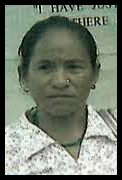
Karnamaya Mongar
As horrible as Dana's experience was, she was fortunate. Semika Shaw had entrusted her life to Kermit Gosnell six years earlier and had died in agony after being sent home with untreated injuries. Three years after Dana's abortion, Karnamaya Mongar entrusted her life to Gosnell and instead of being just doped into a stupor, she was drugged to death.

The kind of butchery that went on in Gosnell's clinic went on for decades because people in authority, who could have closed the place down, made a political decision to turn a blind eye in the name of "abortion access."

We need to awaken this country to the reality of what is done behind closed doors in the name of "reproductive health care." A contribution to GosnellMovie.com will help to make a TV movie about Gosnell's crimes -- and the complicity that allowed Gosnell to thrive while women and children suffered and died. This venue can present the story to the maximum number of people.
Funding need not set you back any more than $1 -- less than the cost of a cup of coffee or a bottle of water. If you can't contribute, or have already contributed funding, keep in mind that both prayer and spreading the word about the project are also vital contributions to the efforts. Together we can wake up a sleeping nation.


For more about why it's vital that the Gosnell movie be made, read: