Thursday, November 18, 2021

November 18: Betty McGeehan new materials need updated

Summary: On November 18, 1942, 26-year-old Madylon "Betty" McGeehan, an OPA stenographer who had been living in Washington DC., died at Prospect Hospital in New York of peritonitis after an illegal abortion. Dr. Joseph Nisonoff was ultimately convicted of manslaughter in her death and sentenced to 5 to 15 years in prison.

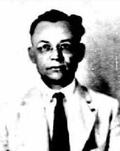
Betty McGeehan

Madylon "Betty" McGeehan was a Pennsylvania girl, born to Robert and Rita McGeehan in 1916 in the city of Hazleton, not far from Allentown. She and her younger siblings, Robert and Mary, were raised by their mother.

Betty was active on the high school yearbook staff and in the oratory club. She graduated from Hazleton High School in 1934.

In 1940 she was lodging with the Falwells family and working as a senior clerk typist at the DPA office in Hazleton. 

She left Hazleton in May of 1942 to take a job as a stenographer with the War Production Board in Washington, DC. She lived there with her sister, Mary. Her brother, Robert, was a Lieutenant in the Army stationed in Columbia, South Carolina. Her mother remained behind in their Maple Avenue home in Hazleton.

Harry Takes Charge

Henry Elters was a 28-year-old unemployed accountant from Hazelton. He and Betty, then age 26, had known each other for about seven years and had come to be known as sweethearts in their community. Though they'd sometimes checked into hotels together as husband and wife, he denied being responsible for Betty's pregnancy.

Elters testified that he had contacted Dr. Max J. Weinstein, age 37, on or about October 15. The young couple had known Weinstein socially for about four years through mutual friends. Elters told Weinstein that Betty was pregnant and they wanted to know "what might be done about it." Betty made the trip about a week later to keep the appointment. Weinstein confirmed that Betty was pregnant. Elters and Weinstein consulted by phone over the ensuing days about an abortion. Weinstein told Elters that  an abortion could be arranged and would cost about $150.

On October 23, Betty went to Dr. Kushner in Washington, DC. Kushner, a reputable OB/GYN and clinical professor at Georgetown University. She gave her name as Mrs. Betty Elters and said that she'd come for prenatal care. Kushner found her to be about two and a half to three months pregnant and in good health. She paid him $20, which was  part of his fee for full obstetrical care.

Meanwhile Harry continued to make other appointments. That very day, Weinstein referred Elters and Betty to Dr. Lassman in Manhattan. The couple visited Lassman the next day but he refused to perform an abortion. Elters telephoned Weinstein to let him know. It was then that Weinstein referred the pair to 58-year-old Dr. Joseph Nisonoff. He provided Elters with the address of Nisonoff's 71st Street office, so they pair went there. The nurse told them that since Betty didn't have an appointment, Nisonoff couldn't see her. Elters went back to Hazleton and Betty returned home to DC.

Harry's Persistence, Betty's Reluctance

Elters didn't take any more action until November 7, when he called Weinstein to say that Betty "still wanted the abortion to be done" and asked Weinstein to see what he could do. He called again the next day and Weinstein gave him the address of Nisonoff's office in Queens and said that the abortion would cost $600.

Evidently Weinstein had told Elters that he'd make the arrangements, because it was he who called the Queens office and made the arrangements. He called at about 10:00 on the morning of November 10 and spoke to Nisonoff's nurse, Camille Ewald. Though not a registered nurse, Ewald had worked at the offices of Dr. Henschel and Dr. Lassman -- likely the same Dr. Lassman Betty and Elters had originally visited -- before going to work for Nisonoff. Weinstein said that he wanted to arrange an abortion and that the patient could pay $600. He also told Ewald that since Betty had been treated rudely by the nurse at the 71st Street office, he preferred that she be seen in Queens. Ewald told Weinstein that she'd have to consult with Nisonoff and to call back at noon. Weinstein did, and Ewald told him that Betty could be seen that afternoon. 

Betty and Elters went to Nisonoff's office as planned. He confirmed a healthy 10 or 11 week pregnancy. At that time, Betty balked at an abortion so Nisonoff referred her back to Weinstein. Weinstein called Nisonoff's office to commiserate, saying, "It is a shame to lose the patient. It was a nice fee."

Elters and Weinstein also spoke by phone, lamenting the fact that Betty hadn't gone through with the abortion. When the two spoke again on November 11, Weinstein said that he'd made another appointment for Betty to have the abortion at 2:00 on the afternoon of November 13. He told Elters to bring Betty to his office first. 

The next day, November 12, Elters drove to DC in the afternoon and met Betty. He dropped her off at the railroad station at about 9:00 that evening, telling her that he'd meet her in New York the following day. He returned to Hazleton. 

The Abortion

On November 13, Elters drove from Hazleton to New York, picked Betty up at Pennsylvania Station, and drove her to Weinstein's office in the Bronx. He later testified that Betty told him that she'd had some bleeding and nausea and that she'd seen a doctor in Washington -- presumably about an abortion. It's entirely possible that even at this point in time, Betty still wanted to have her baby and was hoping she could convince Elters that she'd already gone through with one so that she could back out.

The trio drove from Weinstein's office to Nisonoff's office, arriving there at around 3:00 p.m. Weinstein told Ewald that Elters had the fee. Elters counted out the $600 to the nurse, and she handed it off to Nisonoff. She then told both men to return in about an hour and a half. Weinstein retreated to the waiting room, while Elters went out for a walk.

Camille Ewald helped Betty onto the procedure table, clipped her pubic hair, and administered a vaginal douche. Ewald said that the douche water came out clear, with no sign of blood.

Nisonoff came in and administered gas to put Betty to sleep. He inserted a speculum, which Ewald held down with her right hand. Nisonoff dilated Betty's cervix with instruments. He used an instrument to draw the uterus towards him, then used curettes and forceps for fifteen or twenty minutes as Ewald observed. She testified that he pulled out "meat and little bones and things like that, like bones from the hand and bones from the feet." 

During the abortion Weinstein poked his head in to check on the progress of the procedure. Nisonoff assured him that all was well. Then suddenly Nisonoff broke out in a sweat and blood spurted from Betty's vagina onto his eyeglasses. He asked Ewald to clean them and wipe his face, which she did. He seemed nervous, with his hand trembling. He quickly asked for iodoform packing so that he could pack Betty's uterus and vagina. Ewald brought the packing, Nisonoff packed the patient, and then Ewald helped Betty to get down off the table and walk to a couch to rest. 

The Aftercare Plan

Betty complained of abdominal cramping. Nisonoff asked Ewald to take Betty with her to the home she shared with her two sisters on 42nd Street in Long Island. Ewald protested that there was no room for Betty in the three-room apartment, but Nisonoff persisted. Ewald eventually agreed.

Elters returned to the office about 45 minutes after he'd left. He encountered Weinstein in the waiting room and asked how things had gone. Weinstein assured him that all had gone well. Elters went into the office and saw Betty lying on a couch, attended by Ewald. Weinstein told Elters that Betty was going to be taken someplace for aftercare. Elters stayed with Betty for about fifteen minutes then met Weinstein outside and drove him back to his office.

At around 5:00, Camille Ewald took Betty to her home in a taxi.

At around 7:30, Betty said that she was in pain. Ewald called around to find Nisonoff, finally getting in touch with him at around 8:00. She told him about Betty's pain and cramps. He told her to remove the packing, which she did.

Nisonoff called Ewald between 11:00 and midnight to ask how Betty was doing. Ewald said that she was still in pain, but her temperature and pulse were normal.

Saturday

On the morning of Saturday, November 14, Ewald went to Nisonoff's office in Queens to report that Betty was still unwell and had spent a very restless night. She asked him to come and check on the young woman. They went to Ewald's apartment together. Betty was unable to pass urine so Nisonoff inserted a catheter. Ewald said that the urine contained blood and little clots.

The doctor and nurse went back to the office. Nisonoff called Dr. Spielman, saying that he'd operated on Betty, describing her condition, and asking why she was bleeding so much. He wondered if he had perforated her bladder. Nisonoff conveyed to Ewald that Spielman didn't think Betty's bladder was perforated because such an injury would have left her unable to get off the table. He asked Spielman to examine Betty, but he refused.

At around 2:00 that afternoon, Nisonoff went to Ewald's apartment to check on Betty. He noted that her temperature and pulse seemed normal and wrote out a prescription for some medications, including morphine. Though he knew his patient as either Madylon McGeehan or Betty McGee, he wrote the prescription for "Ca. Ewald." He put Betty's correct age of 26, not Camille Ewald's age of 36, as the age of the patient.

Later that night Nisonoff called Ewald to check on Betty. Ewald told him that there had been no improvement in the young woman's condition.

Hospitalized

On Sunday morning, November 15, Nisonoff called Ewald again for an update. She said that Betty's condition was deteriorating and asked him to come check on her. When he arrived he found that she had a fever and a rapid pulse. He told Ewald that they'd have to transport Betty to Prospect Hospital by ambulance. He called the hospital's owner to arrange for her to be admitted under the name "Betty McGee" and to receive blood transfusions.

Ewald called an ambulance that afternoon. Nisonoff agreed to reimburse her the $14 ambulance fee. Betty was removed from Ewald's apartment on a stretcher by John Myers, the owner and driver of Forest Hills Ambulance Service, and his assistant. Camille Ewald rode in the back of the ambulance with Betty. She was admitted at 3:10 p.m.

Nisonoff wrote the following admission note:

November 15, name Betty, 26 years old, married, family and personal history negative -- except for a sacroiliac -- last menstruation two months ago. Present complaint, bleeding from the vagina and pain. Examination of the abdomen tender and rigid. Temperature 100.2, pulse 116. Respiration 20. Examination: external os open and bleeding. Uterus size 10 weeks, diagnosis incomplete abortion, probably peritonitis. Patient denies criminal interference.

A diagnosis of an "incomplete abortion" could apply equally to a miscarriage or an induced abortion. He arranged for Betty to have a day nurse and a night nurse to look after her. Camille Ewald remained with Betty until she'd received a transfusion.

Somebody contacted Elters and let him know that Betty had been hospitalized.

Consultation

On Monday, November 16, Betty received two more blood transfusions. Nisonoff phoned Dr. Alfred M. Hellman, a highly reputable ob/gyn Nisonoff had known for about twenty years. Nisonoff asked him to assist in Betty's care. He then called Weinstein and asked him to meet him outside the hospital at 3:00 because Hellman was going to examine Betty. 

Nisonoff and Camille Ewald picked Dr. Hellman up at his office at around 3:00 p.m. and drove to the hospital, where they found Weinstein waiting outside. Ewald and Weinstein remained in a waiting area for about twenty minutes while Hellman and Nisonoff went to see Betty.

During his trial Nisonoff testified that he'd told Hellman that Betty had come to his office on November 13 already in the process of expelling a fetus, which was partially protruding from her vagina. He asserted that he'd told Hellman that he had removed the remains of the fetus, and explored Betty's uterus to ensure that there were no retained tissues. Hellman, however, said that Nisonoff had not given him any medical history on his patient. Hellman found Betty to be " a desperately ill woman," clearly suffering from peritonitis and moribund.

Nisonoff dictated a letter to the Board of Health:

Joseph Nisonoff, 145 West 71st Street, New York, Phone, Susquehanna 7-4457

November 16, 1942.

Gentlemen:

This is to inform you that Mrs. Betty McGeehan is under my care at the Prospect Hospital, 730 Kelly Street, diagnosis, incomplete abortion and probable pelvic peritonitis or double salpingitis.

Respectfully yours,

J. Nisonoff

The End Draws Near

On the morning of Tuesday, November 17, Betty received last rites.

Elters called Nisonoff later that day to ask if he could see Betty. Nisonoff told him to come by the office and he could go to the hospital with Ewald. While Elters waited for the nurse to come to the office, Nisonoff told him to make sure he told Betty to say that she'd had the abortion performed somewhere else and to say that Nisonoff had not performed it.

Ewald arrived at the office and she and Elters drove to the hospital together. They spent about half an hour with Betty. As Elters and Ewald left the hospital they met Nisonoff outside on the sidewalk. Elters asked for a prognosis and Nisonoff told him that Betty was going to die. He stressed to Elters that it was very important that he not talk about the matter.  He urged Elters to go back to Hazleton and act normally and say that he'd not seen or heard from Betty for about a year. Camille Ewald testified that Nisonoff also told Elters to deny ever having seen any of the parties involved in the abortion -- not Weinstein, not Nisonoff, and not Ewald -- or they would all go to jail. He had Ewald get the phone number for Betty's mother.

Ewald went to Weinstein's office, where Weinstein told him not to say that he'd accompanied the young couple to Nisonoff's office.

Rather than returning to Hazleton, Elters left for Baltimore.

Meanwhile Nisonoff and Ewald returned to the office. Nisonoff called Rita McGeehan, telling her that her daughter was very ill at Prospect Maternity Hospital and that she should meet him at his office and they'd go to the hospital together.

Betty's Death

Betty breathed her last at 7:05 on the morning of Wednesday, November 18, 1942. Nisonoff wrote out the death certificate in the name of Betty McGee:

I hereby certify that I attended the deceased from November 15, 1942 to November 18, 1942 and last saw her alive at 6 A.M. on November 18, 1942. Statement of cause of death is based upon - principal cause of death: general peritonitis. Date of onset: November 16th; contributory cause of death: incomplete abortion.

Later that morning Nisonoff told Camille Ewald that Mrs. McGeehan had gone to the hospital and that Betty had died. She said that Nisonoff also told her to say that Weinstein had done the abortion in his office then called Nisonoff, who had arranged for hospitalization. She said she was also to say that she lived on 61st Street, with Nisonoff's niece, Pearl Davis Tense, who was also his nurse at the 71st Street office.

The Investigation Begins

Detective Thomas M. Farrell went to the hospital to investigate Betty's death. Noting that Nisonoff had signed the death certificate he phoned him and asked him about the circumstances. Nisonoff told him that he'd been called in by Weinstein for a consultation and provided Weinstein's address at 1684 Macombs Road in the Bronx. Detective Farrell then went to the Fordham Morgue and observed the autopsy performed by Dr. Louis Lefkowitz, Assistant Medical Examiner. (Lefkowitz died suddenly and unexpectedly on March 6, 1943, a few days before Nisonoff's trial began.)

Dr. Lefkowitz noted in the autopsy:

Lying at the brim of the pelvis, free in the peritoneal cavity, between two coils of intestine is a portion of a foetus, which consists of the lower three cervical vertebrae, all the thoracic and lumbar vertebrae, the ribs of the left side, and some loose tissue. The ribs on the other side, and the head, are absent. This specimen measures about 3 inches in length and is mangled. 

On the anterior surface of the uterus about 1/2 inch below the uppermost portion of the fundus is an irregular perforation, which readily admits the index finger; measures about 1/2 to 3/4 inches in diameter. It is roughly round in shape; the edges are necrotic, and ragged and from there protrudes some blood-clot. The perforation above-described penetrates the entire thickness of the anterior uterine wall, and there is some adherent placenta and membranes at the right fornix of the uterus. The remaining portion of the fundus of the uterus seems to be denuded of endometrium. There is some subendometrial haemorrhage in the internal os, which is dilated and readily admits a finger-tip. The walls of the uterus are soft and oedematous.

After observing the autopsy Detective Farrell went to Weinstein's office to question him about the first time he'd seen Madylon McGeehan. Weinstein gave the detective a card that read "Betty McGeehan -- November 15, 1942, vaginal bleeding, abdominal pain, rapid pulse, Dr. Nisonoff called on consultation, admitted to Prospect Hospital."

Weinstein told Farrell that he'd gotten a phone call from Betty on November 15, requesting a consult for vaginal bleeding. He had told her that he didn't have Sunday office hours, but she insisted on being seen so he told her to meet him at his office at 11:30 that morning. When Betty arrived she was accompanied by "Henry Eltus," a man Weinstein had known for about four years. Weinstein said that due to the bleeding he did not do a vaginal examination but did take her vital signs before recommending that she see a gynecologist. He suggested Nisonoff. Nisonoff was at the wedding of his niece, Pearl Davis, who also worked as his receptionist. Weinstein managed to get hold of him and arrange for him to come and examine Betty. Nisonoff arrived at around 1:00 that afternoon, preformed a thorough examination, and recommended that Betty be hospitalized. Weinstein said that Nisonoff took Betty to Prospect Hospital in a tax

Weinstein told Farrell that he'd gone to the hospital on the 16th to consult with Nisonoff , who had told him that Betty was very ill. Weinstein said that the next time he'd gone to the hospital was Wednesday morning, only to learn that Betty had died.

Arrests

At the time of Madylon's death, Nisonoff was out on $2,500 bail after being charged with performing another abortion, which the woman had survived. He had been arrested and freed on another abortion charge in 1930. During six hours of questioning, he denied any knowledge of Madylon's death. Nevertheless, he was arrested for homicide. The Assistant District Attorney asked that Nisonoff's bail be set at $150,000 because he was considered a flight risk. 

Pearl Tense, age 22, had fled to Texas but was tracked down, arrested, and held on $2,500 bail. 

Ewald was harder to track down. He was eventually located, arrested, and held on $15,000 bail. 

The manslaughter charge against Ewald was dropped and she was held as a material witness on $10,000 bail. 

NOTE: At this point I became confused by the timeline and conflicting testimony and gave up. Below are my notes. I'll catch this up next year on the anniversary of Betty's death.


On November 15, Elters was told that Madylon needed a blood transfusion. She was admitted to Prospect Hospital as Betty McGee. The admitting diagnosis was "incomplete abortion, probably peritonitis." Nisonoff sent a letter to the New York City Board of Health to that effect the following day. Somebody had called Nisonoff, who said that he guessed Madylon was "okay," and stayed at the wedding rather than come to attend to her himself. Madylon received three blood transfusions at the hospital.


A primary grounds for the appeal was that the Medical Examiner who had performed the autopsy and signed off on the report, Dr. Louis L. Lefkowitz, had died before the trial and thus could not be cross-examined by the defense. The city's Chief Medical Examiner, Dr. Thomas A. Gonzales, testified based on the autopsy report.

Camille Ewald arrested November 24 with Nisonoff.

After her death there, she was correctly identified by her sister, Mary, who had come came from the family home at Hazleton, PA, to claim Madylon's body.

Nisonoff was sentenced to 5 years in state prison, and Weinstein was sentenced to the city penitentiary.

As a result of the McGeehan case, the New York District Attorney's office began investigating other possible abortion rings in the city.

Nisonoff was prosecuted by Assistant District Attorney James Carney. He and Camille Ewals were arrested at his apartment at 110 Riverside Drive on November 25. 

The indictment charged that Nisonoff, Weinstein, Pear Davis Tense, and Camille Ewald committed an abortion on Madylon on November 13, 1942. At the beginning of the trial charges against Pearl Tense were dismissed at the request of the District Attorney. 

Assistant District Attorney Francis X. O'Brien asserted that Nisonoff failed to provide any care to Madylon as she lay dying because he was attending the wedding of his niece, who was also his secretary.

Camille Ewald told the authorities that her boss was a professional abortionist who perpetrated between 20 and 25 abortions per week, which earned him $2,500 to $3,000. This seems a bit off, as Elters reportedly paid $600 for Madylon's abortion while if Camille was telling the truth Nisonoff would have been charging an average of about $125 for an abortion.

Joseph Nisonoff was sentenced to 5 - 15 years in state prison. Max J. Weinstein was sentenced to New York City Penitentiary for an indefinite term. On May 21, 1943 New York Supreme Court Justice Louis A. Valente granted a Certificate of Reasonable Doubt and Nisonoff and Weinstein were released on bail. His appeal ultimately failed.

Madylon's death and the subsequent investigation were covered extensively in New York, but not in her hometown newspaper. In fact, one obituary indicates that she died in Washington, D.C. of pneumonia rather than in New York. Buried in Saint Gabriel Roman Catholic Cemetery in Hazleton.

Sources:

Monday, November 08, 2021

November 8: "A Rather Mysterious Sort of Rookery"


Mr. and Mrs. William J.F. Bullerman ran "a rather mysterious sort of rookery" in Chicago. On November 5, 1879 police discovered a woman named Elizabeth Foley, aka Sarah Monshan, seriously ill with septicemia at that "rookery."


Police suspected that the abortion had probably been perpetrated by Dr. Franklin Brooks, "who, a few years ago, was awarded six years at Joliet for abortion." Elizabeth's sister, Mary Monshan, was also held as an accessory. 

They took Mrs. Foley to Cook County Hospital, where she died on November 8. To the end, Elizabeth denied having undergone an abortion. She insisted that she'd given birth and that her sister, Mary, and taken the child to their mother's home in Greenbaugh, Wisconsin. Mary denied this, and her employer told police that she'd not been out of town at all.

The post-mortem examination showed that Elizabeth had indeed died from an abortion. The Bullermans were easy enough to find and charge with a crime, since they were in the county lock-up for stealing $250 in gas.

As for Brooks, even after getting out of Joliet for abortion, and after Elizabeth's death, continued to practice in Chicago. On December 22, 1891, a Swedish girl named Tillie Thom was found dead from an abortion at Brooks' office.

Sources:

Saturday, November 06, 2021

November 6: The Damage Had Been Done

Unable to Undo the Damage

On November 6, 1919, 28-year-old Ms. Anna "Annie" Merriman died in Union Hospital in New Philadelphia, Ohio.  

Dr. C. L. Tinker testified that a man had come to his office on November 2 asking him to come quickly to Annie's bedside. Dr. Tinker found her deathly ill, with her heart racing at a staggering pulse rate of 190. Annie told him that she was ailing because of an abortion that had been performed by 66-year-old Dr. L. H. Hughes at his practice in Dennison, Ohio.

Dr. Tinker told Annie that her only hope of survival was to be hospitalized, and she consented. She was admitted to Union Hospital in Tuscarawas County. The next day she told a hospital employee that she'd gotten pregnant by a friend, rather than by her husband, Roy, from whom she had been separated for about two years. She had only been 16 years old when they had married.

Annie also told this woman, in front of two other witnesses, about the abortion, saying that he had been performed on October 25.

Annie's condition never improved, and she died at 7 p.m. on November 6. She left behind three children. Two physicians who performed a post-mortem examination concluded that Annie had died of general septic peritonitis from the abortion. Hughes was arrested in her death and released on $2,000 bail. He was able to get trial postponements due to difficulty in locating witnesses. I've been unable to determine the outcome of the case.

See newly added sources below.

An Unknown Perpetrator

On November 6, 1914, 25-year-old Genevieve Tatar died at Cook County Hospital in Chicago from complications of an abortion performed by an unknown perpetrator.

*****

Watch the YouTube video.

New sources on Annie's death:

Friday, November 05, 2021

November 5: Scant Information From Death Record

On November 5, 1939, 22-year-old Jean Johnson of Bristow St., New York, died at Fordham Hospital in the Bronx.

Jean died from septic endometritis, perforation of the uterus, and pelvic peritonitis due to a criminal abortion.

I've been unable to learn any more information about this young woman's tragic death.

Thursday, November 04, 2021

November 4: Hail Mary Attempt Fails to Save Young Black Woman

Newspaper clipping showing headwhot of a middle aged white man with a receeding hairline, wearing a suit

Louchrisser Jackson, a 23-year-old married homemaker and mother of five, was 12 weeks pregnant when she went to Dr. Robert L. Gardner for a safe and legal abortion at Reproductive Services in Dallas on November 4, 1977.

Louchrisser began hemorrhaging. Gardner said that he ordered blood for a transfusion, but it didn't arrive so about an hour before her death he attempted to give her a transfusion with his own blood -- which turned out to be an incompatible type.

A private ambulance was called but was not informed of the nature of the transport. In that jurisdiction, private ambulances are only permitted to transport stable patients; they are prohibited from responding to emergency calls. Because the ambulance service had no reason to expect an emergency, they did not respond promptly, nor did they refer the transport to the fire department's ambulance service.

When the ambulance crew arrived, Louchrisser had gone into cardiac arrest. The crew, upon discovering that they'd been called for an emergency transport, rushed Louchrisser to the hospital immediately rather than calling for a fire department ambulance.

Louchrisser was transferred to Oak Cliff Medical and Surgical Hospital, where she died that day. Gardner requested that the body be released without an inquiry. Another physician at the hospital learned of the case and requested an inquiry.

The autopsy found massive hemorrhage of at least two liters of blood, and a "1.8 x 2 cm. ragged perforation in the right lateral wall just above the internal os of the cervical canal. This perforation communicates freely with the retroperitoneal space on the right side. The endometrial surface of the uterus is ragged and hemorrhagic." Death was attributed to "massive retroperitoneal hemorrhage due to perforation of the uterus during a therapeutic abortion."

After another patient, 21-year-old Claudia L., petitioned the state to close the clinic, it was revealed that:
  • The clinic was allowing counselors with no medical degree to give medical advice and perform medical procedures.
  • Staff were not informing patients of risks.
  • There was not emergency equipment on hand.
Gardner himself testified against the clinic, stating that they ran "an assembly-line operation." "Gardner admitted the clinic took only one or two minutes between operations, and used black-tarnished surgical instruments and 'switched sterile gloves between operations but never scrubbed down.'"

Sources:
  • Death certificate
  • Dallas Times Herald June 20, 1978; Dallas Morning News June 20, 1978, June 23, 1978, and July 28, 1978; Texas Autopsy Report No. 2262-77-1103

Watch the YouTube video.


November 4: The Third of Six for Dr. Davis

On November 4, 1928, 22-year-old Norwegian immigrant Anna Borndal died at the office of Dr. Lou E. Davis of Chicago, from complications of an abortion performed there that day. Davis was held by the coroner for unintentional manslaughter. She was indicted by a grand jury for homicide.

Anna's abortion was typical of illegal abortions in that it was performed by a physician.

Anna was not the only women to have died at the hands of Dr. Davis. 

News clipping photo of an elderly white woman in profile, dated April 2, 1937
Dr. Lou Davis
Davis had already been implicated in the 1913 abortion death of 27-year-old Anna Adler and the 1924 abortion death of 26-year-old homemaker Mary Whitney. 

On December 1, 1928, yet another Davis patient, 23-year-old Esther V. Wahlstrom died from an abortion. This time Davis was at last convicted for her crime. he was free before long, however, and on May 19, 1932, 24-year-old Irene Kirschner died after an abortion perpetrated by Davis, who later faced three trials in three years over the February 7, 1934 abortion death of Gertrude Gaesswitz.

Keep in mind that things that things we take for granted, like antibiotics and blood banks, were still in the future. 

During the first two thirds of the 20th Century, while abortion was still illegal, there was a massive drop in maternal mortality, including mortality from abortion. Most researches attribute this plunge to improvements in public health and hygiene, the development of blood transfusion techniques, and the introduction of antibiotics. Learn more here.

Wednesday, November 03, 2021

November 3: A Woman's Death, a Doctor's Denial

Twenty-six-year-old Moris Helen Herron went to Bakersfield, California Dr. William D. Stanley for a tubal ligation in October of 1983. When Stanley examined Helen, he informed her that she was pregnant and asked if she wanted him to perform a safe, legal abortion when he did the tubal ligation.

Helen consented, and on October 23, Stanley operated on her. After Helen went home, she suffered weakness, vomiting, and severe pain. She called Stanley, who instructed her to take a laxative.

Helen developed a high fever, and died on November 3. An autopsy found feces and feculent fluid in Helen's abdominal cavity from a hole in her intestines. Helen's mother, Inez Herron, sued Stanley on behalf of her two surviving children, and Stanley settled out of court for $200,000.

When a local pro-life group wrote to Stanley to chastise him for his treatment of Helen, he wrote back, saying, "Elective abortion refers to termination of a live viable pregnancy upon the request of the mother. I have never performed this service or even offered it." He asserted that he was merely performing a D&C on Helen after a miscarriage.

Watch the YouTube video.

Tuesday, November 02, 2021

November 2: The Girl They Didn't Bother to Count

Claims about the safety of legal abortions rest upon the presumption that the Centers for Disease Control keep track of abortion deaths. The case of Latachie Veal should lay that presumption to rest.
Latachie was 17 years old, and 22 weeks pregnant, when Robert Dale Crist (pictured) performed an abortion on her at Houston's West Loop Clinic November 2, 1991.

According to Latachie's family, she bled heavily at the clinic, and cried out to the staff for help. They told her that her symptoms were normal, and sent her home. Several hours later, Latachie stopped breathing. Her brother-in-law called 911 while her sister did CPR, to no avail. Latachie was dead on arrival at Ben Taub Hospital.

If Latachie's death certificate had been filled out properly, with the notation of the abortion in the proper box, using the proper ICD-9 code, then theoretically the National Center for Health Statistics would spot the abortion code and report it. But most states send only a statistical sample of their death certificate data to the NCHS. So the CDC would be notified of Latachie's death through the NCHS only if the death certificate was properly filled out, and Latachie's death certificate was among those abstracted and sent to the NCHS.

But still, according to abortion defenders, Latachie's death would nevertheless be automatically reported to the Centers for Disease Control. They're not clear on who is supposed to report the death. Was West Loop Clinic supposed to report it? Was Crist supposed to report it? Was Ben Taub Hospital supposed to report it? Was the medical examiner supposed to report it? Was the Texas Department of Health supposed to report it? The CDC says it gets abortion death information from abortionists, abortion facilities, hospitals, and state health departments, but it does not mention that the reporting is not mandatory.

This does not mean that Latachie's death went utterly unnoticed.

Latachie's family filed suit, retaining the flamboyant "Racehorse" Haynes as their attorney. The case was highly publicized, both in Texas and in Missouri, where Crist had performed a fatal abortion on Diane Boyd, a 19-year-old developmentally disabled woman who had been raped in the institution where she'd lived.

The mainstream publicity went beyond the usual newspaper articles, with Crist giving television interviews calling the publicity "media hype" and "a political event." Haynes retorted, "I wish he would have a copy of the 911 tape.... If he would talk to the parents, if he would talk to the sister as she gave her CPR or talk to the brother-in-law as she was breathing her last breath and see then if he thinks it's a media event."

With all this mainstream publicity in two states, prolife organizations picked up the story, and it was reported in prolife newsletters around the nation.

A lot of people very quickly found out about the abortion death of 17-year-old Latachie Veal. But did the CDC?

Top half of square has blue background and "naf" in italic white. Bottom half is whie and says "NATIONAL ABORTION FEDERATION" in all caps.At the 1992 National Abortion Federation Risk Management Seminar in Dallas, Crist spoke openly of Latachie's death. (He did not, of course, mention her name; I've concluded that he's discussing Latachie's death, since there's been no evidence of any another 17-year-old abortion patient of his who died in 1991.) Crist blamed the death not on malpractice, but on disseminated intravascular coagulopathy, a clotting disorder sometimes triggered by injury or infection.

Present at that Risk Management Seminar, where Crist chattered about Latachie's death, were two -- count 'em -- two-- staffers from the Centers for Disease Control's abortion surveillance activities area: Stanley Henshaw and Lisa Koonin.

Henshaw's presence isn't quite as remarkable as Koonin's. It was Lisa Koonin, specifically, whose job it was to "verify" abortion deaths, and obtain copies of death certificates. These she was to pass on to a research fellow, Clarice Green, who would then gather the full information about the case.

a plump middle-aged white woman with fluffy permed black hair and wire rimmed glasses stands next to a sign for the Centers for Disease Control
Lisa Koonin does what they pay her to do.
In spite of all the publicity, in spite of the lawsuit, in spite of the prolifers shouting from the rooftops, in spite of the abortionist discussing the death at an event attended by the very woman whose job it was to notice abortion deaths, the Centers for Disease Control did not notice Latachie's death. Their 1991 Abortion Surveillance Report, published in May of 1995, did not even make any mention of abortion mortality. And when we at Life Dynamics filed a request for information about abortion deaths, we found that the CDC counted zero -- count 'em -- zero -- abortion deaths among women of Latachie's race in the 15 - 19 age range. In other words, they didn't even notice.

Not to put too fine a point on it, but if the CDC failed to notice this highly-publicized death, discussed openly at an event attended by two of their abortion surveillance staffers, exactly what does it take to get them to notice an abortion death? And how can we even pretend to believe that any serious attempt to accurately count abortion deaths was being made?

Watch "The Girl They Didn't Count" on YouTube.

Sources:

Monday, November 01, 2021

November 1: The Mystery of "Susan"

"Susan" Roe is one of the women Life Dynamics notes on their "Blackmun Wall" of women killed by legalized abortion. 

According to Life Dynamics, they obtained confidential information from the CDC and state health officials about this 21-year-old Caucasian woman who died November 1, 1992, after a safe and legal abortion performed in Maine. 

 I have a tentative identity which adds to the mystery. If I have accurately identified the woman, her family might not even be aware that her death was due to an abortion. I will continue to seek information.

Sunday, October 31, 2021

October 31: Scant Information on Young Woman from Puerto Rico

On October 31, 1946, a 24-year-old Puerto Rican woman named Aurora Cruz died at Lincoln Hospital in The Bronx, New York, from a septic abortion. This criminal abortion had caused an abscess and general peritonitis.

Aurora might have sought the abortion because she was unmarried. She had worked as an embroider and lived with her parents, Jose and Maria at 168 Brook Avenue in New York.

I've been unable to find any more information about this unfortunate young woman.

Saturday, October 16, 2021

October 16: New Info on Old Chicago Death

Based on the Homicide in Chicago Interactive Database, I'd previously posted that on October 30, 1923,  19-year-old  Mrs. Lydia Nelson died at Chicago's Englewood Hospital from an abortion performed there that day, evidently by Dr. Charles Klinetop. However, my follow up research found that Lydia had died on October 16.

However, a newspaper indicates that Klinetop was actually held to a grand jury on October 30, and that Lydia had died three weeks earlier. She had entered the hospital on October 14 when her husband had become alarmed at her condition. Prior to her death she had signed a statement that Klinetop had perpetrated the abortion at his office on October 8.

A woman named Emma Sales came to the inquest and smacked Klinetop in the face, saying that about a year earlier her daughter, Harriet Grimm, had died from an abortion perpetrated by Klinetop.

Klinetop maintained his innocence, saying that he had treated Lydia once, in her home, and had done nothing unethical.

On January 15, 1924, Klinetop was indicted by a grand jury for felony murder in Lydia's death. He had also been implicated in the 1917 death of Edna Lamb and the 1912 death of Minnie Miller.

Newly added sources:


Friday, October 15, 2021

October 15: Post Abortion Suicide

A woman I used to picket with in Harrisburg, Pennsylvania, told me of a day she was outside one of Harrisburg's two safe and legal abortion facilities. The clinic was set back from the street by an expanse of lawn, with a parking lot to the side and back. Sidewalk counselors would stand in the alley, where they could call to the women as they got out of their cars. The picketers would stand on the sidewalk in front, where patients could see their signs from the waiting room. 

The woman saw a middle-aged couple get out of a car. They opened the back door and pulled out a teenage girl who appeared to be Filipino. The girl was crying. The sidewalk counselors called out to her, and she tried to move toward them, the picketer said, but the middle-aged white couple took the girl by the arms and led her toward the front of the building. The picketer called out to the clinic escort. "Can't you see she doesn't want to do this? I can't step on your property, but you can help her. You're pro-choice, right? Can't you help her?" According to the picketer, the escort smirked at her, then held the facility door open, to make it easier for the couple to propel the girl into the clinic. 

The next time she saw that girl's face, the picketer told me, was on the news. It was October of 1992, and the news story was about the suicide of 19-year-old Arlin Della Cruz. She had disappeared from her home. A search found her hanging from a tree in a nearby woods on October 15. "Under her shirt, the coroner found Arlin's favorite stuffed animal -- a rabbit." Arlin's mother said that Arlin had left a suicide note saying that she wanted to go be with her baby. 

One of Arlin's friends reported that Arlin wanted the baby, but chose abortion to try to salvage her relationship with her boyfriend. If the picketer's observations are correct, Arlin had serious second thoughts the day of the abortion.

Monday, September 27, 2021

September 27: The Tragic Bride

In early September of 1931, Jane Coult, the daughter of a Newark, New Jersey judge, secretly married John Merrill. The couple had a public wedding at the bride's home on September 22.

Five days later, Jane was dead.

She had been under the care of  Dr. Aloysius Mulholland, age 35, from September 24 through 26th before being admitted to Polyclinic Hospital in New York. Police said that Jane had paid Mulholland $500 of a $600 abortion fee. An autopsy confirmed that her death was due to a criminal abortion.

Both Mulholland and Jane's new husband were charged with murder. Each was released on $7,500 bond. Mulholland made no statement on the advice of his attorney. This turned out to be very good advice, because the case didn't end up going forward.

Mulholland was later charged with the abortion death of Katherine DiDonato and again remained free. He was finally imprisoned in 1943 after being charged with several abortions which were not fatal to the mothers.

Sources:

Friday, September 17, 2021

September 17: Schoolgirl, Rape Victim, Dies After Abortion

SUMMARY: Phyllis Brown, a 16-year-old Riverside High schoolgirl, died at Grant Hospital in Chicago on September 17, 1937 after an abortion performed by Dr. C. Harold Edmunds (pictured, right).

On June 17, 1937, 16-year-old Riverside High schoolgirl Phyllis Brown was attacked and raped by an acquaintance near Villa Park in Chicago. 

She kept the assault a secret from her parents even after learning that the assault had resulted in a pregnancy. Instead, Phyllis confided in her friend, 17-year-old Lillian Pernicka. 

Lillian (pictured, left) told Phyllis that she herself had undergone an abortion on March 8 at the hands of Dr. Clarence Harold Edmunds in Oak Park. The girls went to Edmunds's office in Oak Park on September 1. There, Edmunds performed an abortion. 

When Phyllis took ill afterwards, her parents summoned Dr. S. A. Sugar. He examined her on September 13 and admitted her to Grant Hospital. He believed that she might be suffering from abortion complications so he notified the police.

On September 18, Edmunds, age 48, and his secretary, Marie Trampush, age 27, were arrested. Edwards was released on $25,000 bond and Trampush on $3,000.

Phyllis's father, Samuel, put all the blame on the boy who had raped his daughter. "You don't need police to run down the boy," he said at the inquest. "He murdered my daughter and wherever he is, I'll find him and take care of him in my own way."

Both Edmunds and Trampush (pictured, right) denied having any knowledge of an abortion performed on Phyllis.

Edwards was originally licensed in Saskatchewan, Canada, in 1913. He moved to North Dakota and practiced there before relocating first to Florida and then to Oak Park, where he set up practice in 1931.

The case had originally been struck off because there were legal issues with Phyllis's dying declaration. The charges were filed again and both Edmunds and Trampush were indicted. However, in January of 1938 the charges were dropped for reasons I've been unable to determine.

Sources:


Saturday, August 21, 2021

August 21: The First Known Victim of the Notorious Dr. Hagenow

Louise Derchow
, age 23, is the first known victim of notorious criminal abortionist Dr. Louisa "Lucy" Hagenow
. 

Louise had been born in a village near Hamburg, Germany. Some time in the mid 1880s she moved to San Francisco and took work as a domestic servant in the home of Mrs. Steinhart at 1090 Post Street. She was courted by another German immigrant, a barkeep named Henry Peckelhoff. Those who knew the couple anticipated that they'd marry soon.

In early August of 1887, Louise moved in with Henry and began using his surname. 

On August 9, 1887 Louise told Peckelhoff that she was pregnant, and he told her to go to Dr. Hagenow's “maternity hospital” at 19 Twelfth Street in San Francisco to be examined. She was admitted, and Peckelhoff later said that she seemed well when he visited her there until but something went wrong. Louise died at about 1 a.m. on Monday, August 21.

Peckelhoff went to an undertaker named Suhr at about 2 a.m., saying that he needed a burial for his wife. The undertaker's assistant removed Louise's body from Hagenow's establishment at about 3 a.m., then went to get a death certificate from Hagenow. The Assistant Secretary of the Health Department refused to issue a burial permit with a death certificate signed by Hagenow because she was on a list of "illegal practitioners." The clerk said that Dr. S. S. Kahn was authorized to examine the body and issue a death certificate if no qualified doctor could sign one. Mr. Suhr said that he could get a new certificate signed by a properly qualified physician.

The undertaker's assistant and Hagenow went looking for Dr. F. F. DeDerky, who had also attended Louise. They couldn't find him, so Hagenow's cook forged DeDerky's signature on a death certificate identifying the woman as Louise I. Peckelshoff  in order to get the health department to accept the death certificate and issue the burial permit, which was finally released at 3 p.m. 

The funeral was held an hour later. 

Because of the suspicious circumstances surrounding Louise's death, the City Physician disinterred Louise's remains and performed an autopsy at the Odd Fellow's Cemetery on September 1. He found what was termed “conclusive evidence” of an abortion, with inflammation caused by an instrument. 


Hagenow insisted that Louise had shown up at her door already seriously ill and bleeding heavily. Prior to her death, Hagenow admitted, Louise was delivered of a four-month fetus. She also admitted that the young woman had died of peritonitis.

All told, Hagenow was tried three times in Louise's death, and acquitted in the third trial, just around the time she was being investigated in the abortion deaths of Annie Dorris and Abbia Richards, as well as for the suspicious death of Emma Dep shortly after discharge from Hagenow's maternity home. The third acquittal was largely attributed to the death of the state's star witness, a journalist who had originally broken the story. 

One of Peckelhoff's friends helped him to go through the young woman's possessions and found the necessary addresses to write to her friends back home in Germany about her death.

Hagenow relocated to Chicago and began piling up dead bodies there as well. She was implicated in numerous abortion deaths, including Minnie Deering, Sophia Kuhn , Emily Anderson, Hannah Carlson, Marie Hecht, May Putnam, Lola Madison, Annie Horvatich, Lottie Lowy, Nina Pierce, Jean Cohen, Bridget Masterson, Elizabeth Welter, and Mary Moorehead.

Sources:

Sunday, August 08, 2021

August 8: Abortifacient Proves Fatal

Norman Schaeffer, a 40-year-old railroad worker, was arrested on allegations that he had provided abortifacients to 20-year-old Jennie L. Young of Washington, PA. Jennie had made a formal deathbed statement to that effect a few days before she died on August 8, 1905. During her final days she was attended by Dr. Crawford and Dr. Dunning.

Jennie's father, Franklin Young, testified at the inquest that Jennie had told him that Schaeffer had gotten him the drugs. A neighbor, Mary Snultz, testified that Jennie had indicated that she was about four months pregnant and that a man had provided her with abortifacient drugs.

Source:
  • "Charged With Abortion," Lancaster (PA) Inquirer, August 12, 1905

Thursday, July 22, 2021

July 22: Teen Found Dead in Grandma's House

On July 22, 1949, at around 10:40 p.m., Alma Deery, age 16,  was found dead on the floor of her bedroom in her grandmother's home in Sheeder, Pennsylvania

Alma's father Earl W. Deery, age 46, was arrested along with his wife, Mary Gladys Deery, age 37, and Mary's sister, Myrtle Lahr, age 31. Earl and Mary Gladys were charge with attempted abortion causing death, aiding and abetting an abortion, and conspiracy to do an unlawful act. Myrtle was charge with aiding and abetting an abortion, conspiracy to do an unlawful act, and accessory before and after the fact. Each was held on $3,000 bail

Alma's boyfriend, James Souch, age 21, was arrested for aiding and abetting an attempt to commit an abortion but the charge was dropped and he signed out on a $500 bond as a material witness.

Alma's death certificate says "Causes unknown at this time pending further investigation."

Sources:

Friday, July 02, 2021

July 2, 1896: A Victim of the Prolific Lucy Hagenow

SUMMARY: On July 2, 1896, 20-year-old Hanna Carlson died at Chicago's Emergency Hospital after an abortion she blamed on Dr. Lucy Hagenow and Dr. Ida Von Schultz.

On July 2, 1896, 20-year-old Hanna Carlson died at Chicago's Emergency Hospital at about 5 p.m. Her brother, A. O. Carlson, swore out a complaint against Dr. Lucy Hagenow and Dr. Ida Von Schultz. Both women, who said that they were originally licensed to practice medicine in Switzerland, were charged with murder.

A man named Emil Olson, identified as "the man who secured their services," was also arrested.

Hagenow and Von Schultz asserted that Hannah had come to them after a self-induced abortion and that they were merely trying to save her life. The jury evidently found the evidence against the known abortionists to be insufficient, since they acquitted both defendants after deliberating for two hours.

HagenowTribunePicture.jpg
Dr. Lucy Hagenow

Hagenow, who had already been implicated of the abortion deaths of Louise Derchow, Annie Dorris, Abbia Richards, and Emma Dep in San Francisco, would go on to be linked to over a dozen Chicago abortion deaths:

Sources:

Thursday, June 24, 2021

June 24: "Annie" is Edith Clark

 "Annie" is Edith Clark. Edith traveled from her home in Newark, New Jersey to the Sparkhill, New York office of Dr. Robert Livingston to avail herself of the new law, for a first-trimester abortion on June 24, 1971.

Shortly after she was given an injection of Innovar for anesthesia, Edith went into cardiac arrest, and attempts to revive her failed. She left behind three children.

Edith was the first woman to die in New York's Rockland County from a newly legalized abortion. The second, 18-year-old Pamela Modugno, died in May of 1972 after an abortion in one of the many freestanding abortion facilities that opened immediately after New York decided to permit outpatient abortion-on-demand up to 24 weeks.

Thursday, May 27, 2021

May 27: "Hollywood Play-Girl" Found Dead in an Alley

Patricia Steele, age 34, "Hollywood Play-Girl" found in a Los Angeles alley on May 27, 1952. Victor Cefalu, who performed the autopsy, said that she'd died from either hemorrhage or infection caused by an abortion that had taken place 24 to 48 hours before her death.

Patricia's physician, Dr. Louis J. Klingbell, reportedly told the police that Patricia had been four months into her pregnancy and had told him, "I'm going to do something about it."

Patricia was the daughter of financier Victor Steel and his wife, Jane. She had a "richly-furnished" apartment and travelled to Honolulu two months before her death. Her expensive convertible was still in her garage.

Victor said that he'd talked to Patricia on the telephone the morning of May 26 and she'd told him that she felt sick. He called back later but got no answer.

Source:


Tuesday, May 25, 2021

Family Planning Associates Death Count Up by One

Today I opened my mailbox to find the story of the seventeenth young woman I know of now to have died after an abortion at that National Abortion Federation flagship: Family Planning Associates Medical Group.

To preserve her confidentiality, I have given her the pseudonym "Kyla Ellis."

Kyla was 23 years old and about 11 weeks pregnant when she went to Family Planning Associate Medical Group at 601 S. Westmoreland Avenue in Los Angeles for an abortion on May 14, 2014. Like other young Black women, she was at higher risk of death than a white woman would be.

The day after the abortion, Kyla suffered agonizing abdominal pain. Her partner, whom I will call "Benjamin," called an ambulance, which rushed her to Centinela Hospital. She arrived at around 3:30 that afternoon. Kyla rated her pain at 10 on a scale of 10. Bright, fresh blood was flowing from her vagina. She couldn't pass urine at all. Hospital staff used a catheter to drain her bladder of about 200 cc of bloody urine.

Doctors decided that Kyla needed more intensive care than Centinela was able to provide. Kyla rode by ambulance to Kaiser West Los Angeles. She arrived shortly after midnight on May 16. At first she was awake, but at around 1:40 a.m. her gaze turned glassy and she became unresponsive. Staff took her to the lab for a CT scan, but on arrival Kyla went into cardio respiratory arrest. All efforts to revive her failed and she was pronounced dead at 2:45 a.m.

The autopsy found her uterus boggy and enlarged. The endometrium (lining) had been scraped away. 

Kyla had bled to death.

She's the seventeenth woman I'm aware of to have died after abortions at FPA. The others are: 

  • 1970: Denise Holmes
  • 1984: Patricia Chacon and Mary Pena
  • 1985: Josefina Garcia
  • 1986: Laniece Dorsey
  • 1988: Joyce Ortenzio and Tami Suematsu
  • 1992: Deanna Bell and Susan Levy
  • 1994: Christina Mora
  • 1995: TaTanisha Wesson
  • 1998: Nakia Jorden
  • 1999: Maria Leho
  • 2000: Kimberly Neil and Maria Rodriguez
  • 2004: Chanelle Bryant
Watch 17th Known Abortion Death at YouTube.

Autopsy pages 1, 2, 3, 4, 5, 6, 7, 8, 9, 10, 11, 12, 13, 14, 15


Sunday, May 23, 2021

May 23: Three Deaths in Different Eras

Dr. Amante Rongetti
On May 23, 1929, 24-year-old Elizabeth Palumbo died at West End Hospital in Chicago. Dr. Amante Rongetti signed a death certificate attributing her death to appendicitis. However, upon autopsy the coroner's physician, Dr. Thomas Dwyer, determined that her death had actually been caused by an abortion. 

Rongetti was held by the coroner on June 12 for having perpetrated the fatal abortion on May 10. However, he was acquitted.

All of these goings-on surrounding Elizabeth's death took place while Rongetti was out on bail pending a new trial in the abortion death of Loretta Enders, for which he'd been sentenced to die in the electric chair.

Newly-added source: "Rongetti Held Again on Serious Charge," Journal Gazette, May 27, 1929

Life Dynamics lists 29-year-old Rhonda Ruggiero on their "Blackmun Wallsafe and legal abortions. According to the information LDI put together, Rhonda underwent an abortion in May of 1982. She suddenly died of an abortion-related pulmonary embolism on May 23. An embolism is a flukey thing that can kill regardless of the doctor's skill, so Rhonda probably would have died regardless of whether abortion was legal or not.

Documents indicate that Josefina Garcia, age 37, mother of 2, died after abortion at a Family Planning Associates Medical Group (FPA) facility. Josefina's survivors filed suit against FPA owner Edward Campbell Allred, and 5 other doctors: Kenneth Wright, Leslie S. Orleans, Earl Baxter, Soon Sohn, and Thomas Grubbs. The family said that staff failed to determine that Josefina had an ectopic pregnancy before proceeding with a routine safe and legal abortion procedure by D&C on May 23, 1985. After her abortion, Josefina was left unattended in a recovery room, where she hemorrhaged. She died the day of her abortion. Regardless of whether or not abortion is legal, an ectopic pregnancy is something any abortionist should have diagnosed, if not before the abortion, then certainly after the abortion was completed and there were not pieces of fetus removed. Either way, there was little excuse for failing to detect the ectopic pregnancy. Whether Josefina lived or died would have depended on the state of medicine at the time, and the ordinary skills of doctors who were not abortionists.


Monday, May 17, 2021

May 18, 1972: A College Student's Fatal Journey

Pamela Modugno, a college student, died Wednesday, May 17, 1972 during an abortion at Monsey Medical Center in New York. She was 18 years old. Cardiac arrest due to air embolism. She was the second death from a safe, legal abortion in the county since New York liberalized the abortion laws effective July 1, 1970. The first had been Edith Clark.

County Medical Examiner Dr. Frederick Zugibe postulated that reverse air pressure from a suction unit might have blown air into Pam's bloodstream.

Monsey Medical Center had opened two days after abortion was legalized. The director, Dr. Lester Lando, was a licensed OB/GYN.

Pam's father, Thomas Modugno sued for negligence in how the abortion was performed and under the theory that the abortion was "assault and trespass" against Pam because at the time of the abortion, no surgery was permitted on an unmarried patient without parental consent except in an emergency.

Pam is identified as "Danielle" in Life Dynamics' list of safe, legal abortion deaths.

Sources:

Wednesday, May 12, 2021

May 12, 1989: Gladyss Estanislao Collapses on Campus

On May 12, 1989, Gladyss P. Delanoche Estanislao, 28-year-old mother of one, was found unresponsive on the floor of the rest room near her college classroom. A doctor who was in the vicinity performed CPR while awaiting an ambulance. Gladyss was taken to Greater Laurel Beltsville Hospital, where she was declared dead on arrival from cardiac arrest due to blood loss from a ruptured ectopic pregnancy.

Gladyss had gone to Dr. Alan J. Ross at Wisconsin Avenue Women's Health Center in Bethesda, Maryland on April 25 for an abortion. Ross diagnosed Gladyss as being 6 - 8 weeks pregnant and performed a suction abortion under local anesthesia. 

The medical board noted, "According to [Ross's] office records, the aspirate tissue obtained was abnormal, consisting of blood clots." He did not send the specimen for a pathological examination. He also did not do an ultrasound to figure out why there was no evident fetal tissue. He also failed to do serial HCG studies to measure pregnancy hormones over time to see if Gladyss was still pregnant.

He merely discharged Gladyss with a prescription for antibiotics.

The fact that the abortion specimen did not contain fetal parts should have indicated that Gladyss had an ectopic pregnancy. This condition is routinely treated by competent doctors, saving the lives of the mothers. But Ross missed his diagnosis and allowed Gladyss to leave his clinic with her life in danger. Because of the sloppiness of abortionists like Ross, women who choose abortion are more likely to die from a ruptured ectopic pregnancy than are women intending to carry to term.

Human Life International reported Gladyss's death to the medical board and they carried out an investigation. "In this inspection, the reviewers found that [Ross's] office records were grossly inadequate." They were hand-written so illegibly that Ross was often unable to read his own handwriting. They lacked detail. None of them showed an adequate medical history or physical examination. 

Inspectors also noted that Ross disposed of everything -- used needles, used gloves, and fetal remains -- in the regular trash.

Ross did all of his own lab testing for things such as RH factor, chlamydia, etc., even though he was not qualified to do so. He defended this on the grounds that he didn't charge patients for these services.

The board characterized Ross's medical services as "careless and inattentive." They suspended his license for one year and fined him $25,000. His license was also placed on probation under specific requirements that he clean up his act.

Gladyss had been born in the Philippines and had come to the United States as a child. She was a 1978 graduate of Oxon Hill High School. Her family sued on behalf of her motherless, who was two years old when the fatal abortion was performed. 

Saturday, May 01, 2021

May 26, 1933: Another Dying Woman Named Dr. Mitchell as Abortionist

A middle-aged white man with dark hair and a high forehead, wearing a light colored suit and dark tie
Dr. Justin Mitchell

While I was looking for more information about the February 2, 1936 abortion death of Alice Haggin, I found an article linking Alice's abortionist, Justin Mitchell, to yet another death. While dying in Chicago's West Side Hospital, Mrs. Florence Falske Jordan named Mitchell as the man who had perpetrated her fatal abortion on May 8, 1933. Florence died on May 26.

According to the 1930 census, Florence and her husband, Edward, lived in the home of Edward's grandmother, Elizabeth Jordan, with their 2-year-old daughter. Edward was a driver for a dry-goods company and Florence was a homemaker. 

Mitchell had been implicated in the 1931 abortion death of Ethel Vaughan. Mitchell was also implicated in the abortion deaths of Florence Jordan in 1933, of Mary Schwartz in 1934, and of Mary Nowalowski in 1936. 

Sources: