Saturday, May 06, 2023

May 6, 1907: The Prolifically Deadly Dr. Hagenow

A poor-quality picture of a middle-aged white woman wearing a sailor-style dark hat and blouse. She has small facial features and is wearing small wire-rimmed eyeglasses.
Dr. Lucy Hagenow
At 6:30 on the evening of May 2, 1907, 26-year-old Austrian immigrant Annie Horvatich asked her new husband, Michael, to accompany her to the home of Dr. Louise Hagenow. It was late by the time they arrived. Though she didn't bring a change of clothes or any type of overnight bag, she asked Mike to look after her children (She had three from a previous marriage.) and to come and see her on Saturday.

Mike, who told his story through a translator, said that he didn't know Hagenow and didn't know what his wife's purpose was in the visit -- a claim that isn't held up by the letter he says he got from her the next day assuring him that there would be no "serious happenings" during her stay.

Annie Sickens and Dies

Mike went to Hagenow's home on Saturday afternoon and found his wife sitting up in bed. She told him she was unwell and sent him home, saying she would not be returning home until Monday.

On Sunday, Mike got a phone call to go to Hagenow's place. He arrived at 10 p.m. to find his wife very sick. A Dr. Rasmussen was also present. Mike remained at Annie's side during the night, noting that by morning she appeared to be much worse. He went to the home of Mary Galavitch, who could speak English and thus serve as a translator. When Mike and Mary arrived, Hagenow met them and told them that Annie had died at 5 a.m.

The Business With the Undertaker

Hagenow gave Mike a business card for a neighborhood undertaker. Mike indicated that he'd prefer an undertaker that he knew. He sought out W.J. Freckleton, who went to Hagenow's home to pick up Annie's body at around 5 p.m. He said that Hagenow told him that he should return after dark to take Annie's body out the back way. He returned at about 9 p.m. with an assistant, and found it very difficult to get Annie's body down the narrow staircase. He said that Hagenow told him that her regular undertaker never reported any trouble getting bodies out down that staircase.

The Truth Comes Out

The funeral was held, Annie buried, and it seemed as if Mike and the children would be getting on with their lives as best they could. That changed on May 13. The Cook County coroner, attended by Annie's brother, John Sneller, exhumed Annie's body. A post-mortem examination revealed that although Annie's death had been attributed to pneumonia, her lungs had been quite healthy and normal -- as were most of her internal organs. It was in her pelvis that the true cause of death was found. Her uterus was lacerated, with the top of the uterus torn nearly off, causing fatal peritonitis. From the condition of her uterus, the doctors gauged that she had been about four months pregnant, but there was no sign of the fetus, which evidently had been successfully killed, removed, and disposed of.

Hagenow's Claims Ring Hollow

Hagenow admitted that Annie had come to her place on the 2nd and died on the 6th, but insisted that Annie had been bleeding vaginally upon her arrival. She insisted that Annie told her she had seen a doctor on the South Side who had "brought her around" (i.e. done an abortion). Hagenow's claim that she hadn't performed an abortion on Annie wasn't very credible, given her history. She advertised consistently in Chicago daily papers, ads reading, "Dr. Louise Hagenow; licensed physician; expert; twenty seven years; female diseases; a new scientific, painless method; no operation; good results...." " In short, she was an open and known abortionist.

Also entered into evidence in the trial was the dying declaration of Marie Hecht, who died from one of Hagenow's "scientific, painless" abortions in 1899, as testified to by the police officer who had taken the statement. Likewise entered into evidence was the testimony of a doctor who Hagenow had brought in to help try to save the life of a young woman Hagenow had disemboweled in the process of an abortion sometime ten or fifteen years prior to the trial over Annie's death -- which would mean this woman could have been Minnie Deering (1891), Sophia Kuhn or Emily Anderson (1892), Hannah Carlson (1896), or another as of yet unidentified woman. A police officer also testified about taking the dying declaration of Lola Madison. To top it off, during cross-examination, Hagenow admitted involvement in the abortion death of Hannah Carlson.

An Appeal Denied, a Sentence Pronounced

The appeals court noted, "had the evidence shown that Annie Horavitch was the only pregnant woman whom [Hagenow] had caused to miscarry or abort, it might not have been unreasonable to presume that she did so in good faith and for the purpose of saving the woman's life. .... [but for] 27 years [Hagenow] had been constantly engaged in producing miscarriages and causing abortions... [and] she kept a place for the treatment and care of women upon whom miscarriages and abortions had been caused and performed; ... she was surrounded at her house by men and women engaged in the business of causing and producing criminal miscarriages and abortions, and ... she had caused the death of several women upon whom she had caused miscarriages and produced abortions within a few years prior to her indictment for causing the death of Annie Horvatich ...."

Hagenow, nearly 60 years old at the time of her trial, was sentenced to 20 years in prison for Annie's death.

A Trail of Death

Hagenow had already been implicated of the abortion deaths of Louise Derchow, Annie Dorris, Abbia Richards, and Emma Dep in San Francisco, then relocated to Chicago. 

Hagenow decided to ply her trade in Chicago. 
Before Annie died she was implicated in the deaths of Minnie Deering in 1891,  Sophia Kuhn and Emily Anderson in 1892, Hannah Carlson in 1896, Marie Hecht in 1899, May Putnam in 1905, and Lola Madison in 1906.

Hagenow was freed from Joliet on October 29, 1917, having served less than half of her sentence. She went straight back to business, landing 22-year-old Pauline Albrecht in the hospital fighting for her life. Pauline, writing in pain in her hospital bed, told police, “I didn’t know what I was doing. A friend told me of her and I went to see her. I just asked for an examination; and she said she must operate.” With no cash on hand, Pauline gave Hagenow a $400 diamond ring.

In her jail cell and pressed by reporters, Hagenow snapped, “I didn’t do anything to her. There wasn’t anything the matter with her. She asked me for advice and I told her to go home and forget it.”

“Yes, I’ve been arrested before — what’s that to you? Yes, I’ve served time in Joliet — why do you blame me for these things? If these fool girls would take care of themselves they wouldn’t have these things done, would they?”

“There’s lot of midwives in Chicago making a living the way I do. I’ve been performing operations for fifty years. Since I got out of prison this last time, though, business is booming. Everybody’s doing it — no one wants babies; they come to us — it’s our business to help them.”

“I didn’t hurt this girl. She went home and caught cold. Then she called me up and told me she had taken some pills. I don’t know anything about that, do I? Why arrest me?”

Perhaps she had been arrested because Pauline’s ring was found in her possession, which certainly corroborated the ailing woman’s story. Fortunately, Pauline survived her ordeal, and Hagenow lay low for a while.

Then, suddenly in 1925, it was as if something snapped and Hagenow began making up for lost time. Five young women lost their lives at Lucy Hagenow’s hands that year:  Nina H. Pierce, Elizabeth Welter, Bridget Masterson, Lottie Lowy, and Jean Cohen. None of these deaths lost Hagenow her freedom, but her luck ran out with the 1926 death of Mary Moorehead. She was sentenced to prison for Mary's death. However, when she appealed the Supreme Court of Illinois ordered a new trial in 1929. The judge, noting that there was no new evidence, dismissed the case, telling Hagenow, “You had better make your peace with God, Lucy Hagenow. I do not think your months on earth are many.”

Hagenow, the Associated Press noted, was nearly deaf and “may not have heard. She muttered something, and shambled laboriously from the room.”

As near as I can determine, Hagenow died September 26, 1933, in Norwood Park, Cook County, Illinois. Her occupation on her death record was given as “midwife.”

May 6, 1920: Doctor Makes Common Later 20-th Century Mistake

The year was 1920. Frances Collins was a 34-year-old homemaker mother of a 16-year-old and a 6-year-old when she discovered that she was pregnant. She informed her husband, Jerome, then asked a friend where to go to procure an abortion. The friend recommended Dr. Warner, telling her, “Go over and see him. He might be able to fix you up.” Frances went to Warner's office on West Polk Street in Chicago some time in early April, where he did something with an instrument to have “her womb opened up.”

After returning home, Frances summoned Jerome from his job as a printer and told him she was “unwell.” She must have indicated that the illness must have something to do with her pregnancy, because Jerome later testified that he asked her, “Natural?” She told him no, which Jerome knew meant that she had undergone an abortion, as she had, by her own admission, “done many times” before.

Frances rested afterward, and seemed to have recovered, but by the end of the month she was bleeding vaginally, “pretty hard,” as Jerome put it. He called her mother to come and care for his wife. Her condition continued to deteriorate, with Frances developing vomiting and chills.

Jerome testified that Frances never gave him any details about the abortion – but nevertheless was able to summon Warner as the doctor who had performed the abortion. Warner came to the Collins home two or three times to look after his patient, with no improvement in her condition. Finally, at the end of April, somebody summoned Joseph T. Woof, the family doctor, who hospitalized her. He testified that he knew that she'd sought abortions in the past, against his advice.

Frances died on May 6. During the autopsy, it was discovered that Frances actually had an ectopic pregnancy. Her "many" prior abortions made her high-risk for this dangerous condition, so in a way the previous abortions probably contributed to her death as much as the final one. Given the state of medicine at the time, it's unclear how likely France was to survive an ectopic pregnancy had she sought obstetric care rather than an abortion, but her efforts to have her already doomed baby killed certainly hastened her death.

May 6, 1924: The Last of Four for Dr. Achtenberg?

On May 6, 1924, 24-year-old Madelyn Anderson died at Chicago's Washington Park Hospital from a criminal abortion perpetrated that day. On May 13, Dr. Louise Achtenberg was arrested for Madelyn's death. Achtenberg was indicted for felony murder on May 15.

Achtenberg already had a bad record as a criminal abortionist. In 1907, Dora Swan had died in a Chicago hospital after an abortion by Louise Achtenberg. "Louisa Achtenberg," identified as a midwife, had been implicated in the 1909 abortion death of Florence Wright. An abortionist identified only as Achtenberg was implicated in the 1921 abortion death of Violet McCormick.

It would seem that the same woman, Louise Achtenberg, was responsible for all four deaths. She was identified as a midwife in 1909 -- a term commonly used to describe obstetricians, particularly if they were female.

Friday, May 05, 2023

May 5, 1941: Mysterious Phone Call Alerts Doc to Dying Woman

Rose Smith, a 23-year-old mother of five, died May 5, 1941 after an abortion perpetrated in Chicago. Midwife Magdaline Motzny-Stegeman was investigated by a grand jury, which despite powerful circumstantial evidence, concluded that there was not sufficient evidence to indict her. 

Rose's husband, Beve, told Assistant State's Attorney Samuel Papanek that he and Rose had gone to Mrs. Stegeman's office at 1041 Noble Street on May 1, but, according to the July 10, 1941 Chicago Tribune, "told the elderly midwife there must be no abortion." Evidently Beve left his wife at Stegeman's practice, because he said that the following Saturday he got a phone call to pick his wife up at Stegeman's. When he arrived he found Rose sitting on the front steps. Somebody called from an upstairs window, "She needs attention." 

A car had evidently been arranged for the couple, and they were transported to St. Mary's of Nazareth Hospital. Rose, Beve relayed, said that they were to ask for Dr. Mix.

Dr. Mix testified that shortly before the Smiths arrived, he had gotten a "mysterious phone call" to expect them.

Bernice Wysocki, of North Oakley Avenue, was one of Rose's friends. She testified that Rose told her of a visit to Mrs. Stegeman's office. Rose's brother Jack Battaglia and his wife, Theresa, testified that Rose had told them she'd undergone an abortion.

Motzny-Stegeman's husband William had been a member of the state's attorney's staff before being promoted to Police Lieutenant. Motzny-Stegeman had already been implicated in the 1926 abortion death of Emily Mueller.

Sources:


May 5, 1939: Exhumation Reveals a Deadly Chiropractor

It was spring of 1939. Martha Anderson was only sixteen years old, but already she was married, and already she was unhappy in her marriage. She was separated from her husband, became sexually involved with a 26-year-old sailor named William P. Bouldin and became pregnant with Bouldin's baby.

On May 3, Bouldin, Mrs. Jacquet Scott, and a man named C.D. Radcliff drove Martha to the San Diego chiropractic office of George Parchen. Martha and Mrs. Scott, who was a friend of hers, went inside, while Bouldin and Radcliff waited in the car. Martha asked for George's brother Frank, who was six months into his chiropractic training. Martha consulted with Frank about an abortion and paid him $50. 

Mrs. Scott left Martha in a room with Frank and waited in the reception area. When Martha and Frank emerged, Frank gave Mrs. Scott a bottle of medicine, telling her ti would bring about an abortion and to give Martha some of it every two hours and to expect the girl to be in pain. 

On the morning of May 5, Mrs. Scott took Martha back to the chiropractic clinic, and Frank took the girl down the hall while Mrs. Scott waited in the reception area. At 2 p.m., Martha came out to the waiting area, very pale, bloody, and so sick she could barely speak. Mrs. Scott demanded to see Frank. He took both women to a small back room where he tried to stop Martha's hemorrhage with packing. At this point George, dressed in a business suit, came in, looked at Martha, and scolded Frank for "taking a case like that." George questioned Frank about what he'd already done to the girl, then set to work helping Frank try to save Martha, including administering artificial respiration. It was to no avail. She died some time between 5 and 5:30.

George removed the packing, and the trio brought Bouldin and Radcliff in to discuss what to do with Martha's body. Bouldin's family was in Texas, so George suggested sending Martha's body there. He himself would sign the death certificate. Frank offered $100 toward expenses. George volunteered to run interference with an undertaker.

At the funeral parlor, George spoke to the undertaker about sending Martha's body to Texas, providing a fee of $205. He told the undertaker that Martha had been suffering from pneumonia and the flu, "and all of a sudden her heart had just went back on her." The undertaker was skeptical when he saw Martha's body; she didn't look like she'd died of pneumonia.

Nevertheless, he arranged for the transport of the body and allowed George to fill out the death certificate, which listed the cause of death as cardiac failure and contributing causes as flu and lobar pneumonia dating from May 1. George fled the San Diego area to Oregon on May 16 with his wife and family.

Somehow the authorities got wise to what had happened and had Martha's body exhumed. Dr. Toomey, who examined Martha's body after exhumation, noted severed cervical arteries and veins, and identified this as the real cause of the girl's death. When the case went to court, each brother blamed the other. Bouldin faulted both, Frank for initiating the abortion and George for attempting to finish it. Bouldin said that Frank "shouldn't ever have taken the case, she was too far along."

Both brothers were convicted of murder and abortion -- Frank for performing it, and George for providing everything Frank needed for his practice and for assisting afterward. They were sentenced to five years to life in San Quentin.

May 5, 1938: Freed to Kill

The Abortionist’s Plea

On May 5, 1938, Mrs. Genevieve Horton, a 38-year-old practical nurse, was being tried in an abortion case in Westchester County, New York. Breaking down, she changed her plea to guilty, admitting that she had performed the abortion on an unmarried young woman from Yonkers, charging her $25. Weeping, Horton asked the judge to grant her time before sentencing to arrange care for her children. The judge granted her request, releasing her on $1,500 bail pending sentencing.

Back to her Grisly Work

At about 10:30 that very evening, Joseph LaRosa arrived at his home on Waverly Place in Yonkers, NY. He found his wife, 30-year-old Asunta, in the kitchen with Horton. His wife suggested that he go to bed since he had to go to work early in the morning. Joseph went into the living room and settled down on the sofa to sleep.

About ten minutes later, Joseph later told police, Horton ran into the living room, calling his name. He went to the kitchen and found his wife lying unconscious on a blanket on the kitchen table. Horton started to run out of the house and Joseph tried to grab her to stop her, but she got away, carrying a rubber tube in her hand but leaving behind her purse.

An ambulance crew arrived and declared Asunta dead on the scene.

Joseph was left widowed to care for three children, ages 10, 8, and 2.

Horton Quickly Arrested

Police arrested Horton in her home at 6:30 the following morning. Her children, 17-year-old John Horton, and 22-year-old Annette Fitzgerald were held as material witnesses, along with a 36-year-old electrician named Neal Vetrana.

I haven't been able to determine if she had young children at home who really did need to have care arranged or if John and Annette, certainly able to make arrangements for themselves as siblings at that age, were the children Horton had been freed to see after.

Horton admitted to performing the abortion, and even signed a statement confessing to the crime, but said that she'd only performed it after Asunta kept pleading for her to do it.

Nurse Horton pleaded guilty to manslaughter in Asunta's death. On October 21, 1938, she was sentenced to 10 to 20 years in prison. She collapsed upon hearing the sentence and had to be caught and revived by courtroom employees. Horton was sentenced to an additional one to two years on the previous abortion case. 

Releasing Abortionists = Repeat Tragedy

Genevieve Horton’s evident inability to stop perpetrating abortions after being released by the judicial system is hardly unique. These repeat offenders have cost women their lives.

  • A poor-quality picture of a middle-aged white woman wearing a sailor-style dark hat and blouse. She has small facial features and is wearing small wire-rimmed eyeglasses.
    Dr. Lucy Hagenow
    Over a period stretching from 1888 to 1926, Dr. Lucy Hagenow was repeatedly released, usually while pending new trials or prior to completing prison sentences, enabling her to have a total of 18 women’s abortion deaths laid on her doorstep.

  • In 1929, while out on bail pending a new trial for the abortion death of Loretta Enders, Dr. Amante Rongetti perpetrated a fatal abortion on Elizabeth Palumbo.

  • In 1942, Dr. Joseph Nisonoff was out on bail pending trial for abortion charges when he perpetrated a fatal abortion on Madlyon McGeehan.

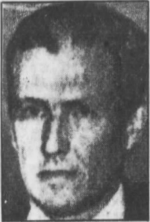
  • Black and white headshot of a middle-aged white man with brushed-back dark hair
    Dr. Jesse Ketchum
    In 1970, criminal abortionist Dr. Jesse Ketchum was released in Michigan. He headed straight to New York, which had just legalized outpatient abortion on demand, and in a six-month period he perpetrated lethal abortions on Margaret Louise Smith and Carole Schaner.

  • In 1984, while out on bail pending a new trial for strangling a live-born infant after an abortion, Dr. Raymond Showery performed a fatal abortion on Mickey Apodaca.

Sources:

May 5, 1914: Another Unknown Chicago Perp

On May 5, 1914, 21-year-old Hazel Johnson, an office worker, died at a Chicago residence from an illegal abortion performed by an unknown perpetrator. It is likely that the perpetrator was one of the many doctors or midwives who operated thinly-disguised abortion practices in Chicago at the time.

Thursday, May 04, 2023

May 4, 1976: Hiding, not Stopping, the Deadly Bleeding

Shortly after noon on May 4, 1976, 29-year-old Maria Gomez underwent a safe and legal vacuum abortion at Atlantic Family Medical Clinic in Los Angeles County. Within an hour and a half she had bled to death.  The coroner report indicates that Dr. John Blodgett claimed that Maria must have bled to death from an "old" cervical cut. The autopsy found otherwise. Maria's lacerated and gashed uterus still contained the severed head of her unborn baby, and more than a quart of blood was pooled in her abdomen. Maria's lacerations had not been sutured, but her vagina had been packed with gauze, thus hiding but not stopping the bleeding. Source: LA County Coroner Report 76-5654

May 4, 1972: An Early Beneficiary of New York's Abortion Progressivism

In February of 1972, 21-year-old "Robin" traveled from Massachusetts to New York for a first trimester abortion. She underwent the procedure and returned home. 

About two weeks later, she started suffering abdominal pain. 

A month later, she was diagnosed with aplastic anemia and hepatitis. 

Three months after her abortion, on May 4, 1972, Robin died, leaving two children motherless. 

Public health officials attributed her death to the abortion.

Source:

May 4, 1921: A Typical Chicago Abortion Death

On May 4, 1921, 37-year-old Hungarian immigrant Katherine Falesch died in Chicago from an abortion perpetrated by 37-year-old midwife Eva Lorch. Lorch was arraigned and held on $3000 bond, but there is no indication that the case went any further. If she were indeed guilty, this would have been typical of Chicago abortionists of the era, since there were an abundance of physicians and midwives plying that trade there at the time.

May 4, 1987: "Like a Haunted House"

Twenty-four-year-old Patricia Ann King went to Dean H. Diment in Tulsa, Oklahoma, for a safe and legal abortion on May 4, 1987. She was a smoker and was obese, two risk factors that Diment should have been taking carefully into account when administering general anesthesia. She was about 10 weeks pregnant.

Patricia went into cardiac arrest after being injected with anesthetic. 

Paramedics arrived at Diment's Statewide Clinic and found the place so unclean that they could have written their names in the dust. Patricia's sister later described the facility as "like a haunted house." 

Diment told the medics that he had injected Neo-Synephrine and sodium bicarbonate into Patricia's heart but no one had performed CPR or made any other attempt to revive her. She had been in arrest for 20 minutes. Paramedics could not revive her. They had trouble merely getting her through the building and out the door -- having to tilt the gurney at a 60-degree angle just to navigate the corridors. 

Patricia never regained consciousness. She was pronounced dead at St. John Medical Center, leaving behind six children ages 2 to 10. Her executor filed suit against the facility on behalf of the children, asserting that Diment had caused "unnecessary delay in providing emergency care and treatment."

Diment's associates at Statewide Clinic had a history of legal troubles. The medical director, Jimmie C. Tooney, had pleaded guilty in 1973 of writing narcotics prescriptions for a convicted drug dealer. Administrator William R. Cloud had been charged with conspiracy to commit illegal abortion in the early 1970's but had the charge dropped after abortion was legalized by Roe v. Wade.

Statewide Clinic advertised that it was "licensed by the state," but at the time of Patricia's death, abortion clinics were not regulated by the state of Oklahoma. Statewide had not been inspected since the attorney general had declared state oversight unconstitutional in 1984. 

Sources:


Wednesday, May 03, 2023

May 3, 1915: Scanty Information From Chicago

Mary Shvernieckas of Western Avenue in Chicago died on May 3, 1915 from complications of an abortion perpetrated by an unidentified person.

Aside from a sidebar in the May 29, 1915 Chicago Tribune including Mary among women who had died in Chicago so far that year, I've been unable to learn anything whatsoever about Mary. She is not even showing up in Chicago or Cook County death records.

May 3, 1961: A Mystery Abortion

Mary Ruth Curry, age 26, of Springfield, South Carolina, was admitted to Aiken County Hospital in Aiken, South Carolina on April 30, 1961. She was attended there by Dr. Miles A. Brooks. Jr.

On May 3, Mary died. Her death certificate indicates that she died form severe septicemia due to generalized peritonitis due to a criminal abortion. An autopsy was performed. However, the autopsy alone was unable to determine when, where, and by whom the abortion was perpetrated.

The coroner held an inquest into Mary's death. Witnesses included Deputy Sheriff W. B. Connelly, Dr. L. S. Connor, Mary's husband, Gus, and Robert Curry, presumably Mary's brother-in-law.

Mary's husband, Gus, testified that she'd asked him and Robert to take her to "an aged, feeble and nearly blind colored woman, Ada Barnes," on April 24. Both of them denied knowing what Mary, who was also Black, planned to do at the Barnes residence. 

Deputy Sheriff Connelly indicated that witnesses, who were not named in the news coverage, had also seen Mary go into the Barnes home, Connelly also said that witnesses claimed that Ada Barnes admitted to using some instrument to perform an abortion.

The coroner's jury concluded "We find that Mary Ruth Curry came to her death by her own means which took place near Neeses, Orangeburg County, about April 24, 1961. 

It's unclear how, if witnesses indicate that Ms. Barnes did an abortion, the coroner's jury concluded that Mary had died "by her own means." No charges were pressed against Ada Barnes.

Sources:


Tuesday, May 02, 2023

May 2, 1985: Hidden Injury, Lingering Death

The survivors of 29-year-old Kathleen Gilbert sued David Turow andWomen's Aid Clinic when she bled to death after her safe and legal abortion. The family accused Turow of performing an incomplete abortion, lacerating Kathleen's uterus, and failing to detect her injuries. She was sent home and continued to bleed and pass clots for a month before her death on May 2, 1985. Kathleen's death certificate confirms that Kathleen's death was due to hemorrhage from a perforated uterus.

Monday, May 01, 2023

May 1, 1928: The Stereotypical Back Alley Doctor

On Saturday, April 14, 1928, Dr. T. D. Goodman was called to see a young woman named Bessie Kouns. He found her in a great deal of pain, with considerable swelling and tenderness of the lower abdomen. He treated her for several days,  but her condition was not improving so on the 17th he had her admitted to Stephenson Hospital in Ashland, Kentucky. 

There, her condition continued to deteriorate. 

On April 24, the peritonitis had caused bowel obstruction, requiring surgery. Prior to the surgery, which Bessie did not expect to survive, she made a deathbed statement to Dr. Stephenson.

The young laundry worker told Stephenson that at 7:00 on a Saturday evening, she had gone to 60-year-old Dr. Henry C. Dorroh's office to keep an appointment for an abortion. Dorroh had been drinking and didn't at first recognize her. She reminded him of the appointment. He cussed and told her to get on the table. He approached her with an instrument that he dropped on the floor, then picked up and used on her. He "nearly killed her", Stephenson testified that Bessie said. Stephenson's testimony was supported by Mr. Watt Prichard, who was present at the time Bessie made her declaration.

Despite the surgery, Bessie died from septic peritonitis on May 1 at the age of 29.

When the case went to trial, Dorroh insisted that he had treated Bessie in February, but only for gonorrhea, and that the treatment might had caused an abortion had Bessie indeed been pregnant. The expert testimony was that the described treatment would indeed be appropriate for gonorrhea, but testimony was divided on whether it would cause an abortion.  

Dorroh was found guilty by a jury that included six women, but his conviction was later set aside and a new trial ordered.

Sources:


May 1, 1925: Another Mystery Abortion in Chicago

On May 1, 1925, 26-year-old Mary Sayers died at a Chicago residence from a criminal abortion performed on her that day. Midwife Edna Marie Dietrich was arrested the following day.

May 1, 1916: The Gruesome Family Secret

A poor-quality portrait from a newspaper showing a young white woman with large eyes and fine features, and thick dark hair
Maud Tabor Virgo

In November of 1915, Maud Tabor of Lawton, Michigan became the fifth wife of undertaker-turned-real estate salesman Joseph Virgo, who reportedly told Maud that he didn't want any children. The two of them had known each other for years and had been romantically involved prior to the wedding. But afterward, Joe and Maud evidently didn't hit it off very well, because on February 1, she returned home to Lawton, leaving her husband and her married name behind.

On May 1, 1916, a few months after the death of her father, 46-year-old Maud vanished. Stories circulated in town that Maud had gone to a western ranch for her health, that Maud was teaching in Salt Lake City, and that she was out west scouting out valuable mining property. Suspicions arose, since Maud had not taken leave of anybody and nobody got a letter or post card from her. Sarah refused to discuss the topic with neighbors, who dismissed this refusal as part of Sarah's eccentric personality.

Eventually her brother Walter began to tell people that Maud had died while out of town.

On November 20, 1919, Maud's sister, Florence, noticed that there was something under a pile of old shingles in the basement of the family home. She moved some shingles aside and saw that the object was a trunk. Grabbing it by the handle, she started to drag it into the middle of the cellar only to have the end pull off. Protruding from the end of the trunk was a human foot.

A sketch from a newspaper showing two white men opening a trunk containing what appears to be crumpled cloth
Opening the trunk
Florence immediately fled to a neighbor's house. The neighbor summoned the police, who opened the trunk and found a dead woman, clad in a white shirtwaist, black skirt, and white stockings. Doctors and undertakers examining the body found it to be in a remarkable state of preservation. It had, in fact, been embalmed. Even though the nose was missing, there was little doubt that the face was that of Maud. 

Both Walter and their mother were arrested. Sarah Tabor gave multiple stories about how Maud had died and about why she had kept the body in a trunk in the basement. The only consistent item was the date of death: May 1, 1916.

Investigators worked at untangling the tales and eventually concluded that either Maud's mother or her estranged husband had perpetrated an abortion on her, using chloroform as an anesthetic, and Maud had died during the process. They also arrested Virgo. 

Eventually Walter Tabor told police that his mother had confessed to him that she had perpetrated the abortion herself.  Eventually, Maud's mother was the only person tried in the case. Her first trial resulted in a hung jury after 36 hours of deliberation. They were stuck at a vote of 8 to 4 in favor of conviction. The second was dismissed due to lack of evidence. She had spent nearly all of her wealth on attorneys in order to keep her freedom. 

Sunday, April 30, 2023

April 30, 1917: Doctor Implicated on Deathbed

Dr. Lillian Hobbs
On April 30, 1917, Mrs. Ruth Lemaire, age 24, died at West Side Hospital in Chicago from complications of a criminal abortion. In her deathbed statement she implicated one of Chicago's many physician/abortionists, 50-year-old Dr. Lillian Hobbs. However, the coroner's jury did not place blame on Hobbs, and the case came to naught. Hobbs was later convicted of murder in the abortion deaths of Alda Christopherson and Ellen Matson.

Watch Would Prosecution Have Prevented Two More Deaths? on YouTube.

April 30, 1923: Physician and Repeat Offender

On April 30, 1923, 29-year-old homemaker Emma Herod died in her home from an abortion performed there that day. Another Chicago many physician/abortionists, Dr. Emma J. Warren, age 53, was arrested for the death. On July 15, Warren was indicted for felony murder in Emma's death. Warren had already been implicated in the 1917 abortion death of 27-year-old Annie DeGroote.

Saturday, April 29, 2023

Leroy Carhart is DEAD!

While searching for the text of Leroy Carhart's testimony about how he can see the fetal heart beating on the ultrasound even as he's dismembering the baby, I found news that shocked me: Leroy Carhart is dead.

I'm not dancing and singing "Ding, Dong! The Witch is Dead!" I want abortionists to repent, not die with no sign that they ever repented. I can't say that Leroy Carhart's position as he stands before his Maker is any worse than mine will be -- all have sinned and fallen short. But the way this man lived his life, the things he devoted himself to, do not bode well for him. Unless the worship he got from abortion supporters enabled him to convince himself that killing babies -- and he, himself, referred to them as babies -- was a good and noble thing.

Life Action did an undercover video of Carhart at his clinic that revealed a lot of how he thought about his life's work killing what he admitted were babies: 


"It's like putting meat in a Crock-Pot, okay?"

Martin Haskell had described the procedure well in his 1992 presentation on D&X (later dubbed "partial birth abortion") to the National Abortion Federation in Dallas, as he put his new and improved abortion method into context:


Two techniques of late second trimester D&E's have been described at previous NAF meetings. The first relies on sterile urea intra-amniotic infusion to cause fetal demise and lysis (or softening) of fetal tissues prior to surgery.

The second technique is to rupture the membranes 24 hours prior to surgery and cut the umbilical cord. Fetal death and ensuing autolysis soften the tissues. ....

In summary, approaches to late second trimester D&Es rely upon some means to induce early fetal demise to soften the fetal tissues making dismemberment easier.

In a nutshell, the abortionist kills the baby on Day One so that it's easier to dismember on Day 2. I had likened this process to putting the baby in a crock pot overnight.

The idea that an abortionist would do such a thing is hardly shocking to me. If you're willing to twist the limbs off a living baby, letting it "cook" overnight in the mother's body heat is a bit of a gross-out bur hardly shocking, especially not when you consider how casually abortionists send patients home with rotting fetal parts inside their bodies. What left me with my jaw on the floor was to hear Carhart himself describe it the same way I would. Okay, he didn't specify a chicken, but my dubbing of the method "crock-pot baby abortion" is creepily vindicated. Where it goes beyond creepy and into the realm of shocking is that Carhart would cavalierly describe the process to a patient this way.

Being so jovial was a bit of a shock, too. Describing his "tool kit" as containing "a pickaxe and a drill bit" is something I'd expect to hear among the staff, not being said to a patient. It was also shocking to hear him refer to the person he was planning to kill not as "the fetus" or "the pregnancy" -- which is typical even when abortionists talk among themselves -- but as "the baby."

Christin Gilbert
The next shock was that he mentioned Christin Gilbert. Abortionists don't tend to bring up patient deaths on their own in any context, much less when meeting with another patient. (Perhaps the woman had mentioned it earlier?) But Carhart slipped me back into my comfort zone when he said that Christin wasn't his patient. Denial of responsibility is par for the course, so one would expect him to blame Christin's death on a dead man. Was Christin Gilbert actually LeRoy Carhart's patient? He was the one performing CPR on her when the medics responded to the 911 call, so that would make her his patient. Though the medics didn't realize that she was Carhart's patient at the time because his attempts at resuscitation were so amateurish that they mistook him for a bystander.

Jennifer
McKenna-Morbelli
We stayed in familiar territory when he denied responsibility for Jennifer McKenna-Morbelli's death. Ditto for his blithe reassurances that he and his staff would be there if the patient called at night from the hotel. Carhart and his staff sure weren't there for Jennifer. But that fact is disgusting, not shocking. Abortionists have been known to shove hemorrhaging women out the door to die, or to abandon moribund patients in the hands of receptionists. Failing to respond to an emergency phone call? That's as surprising as finding out that some frat boy came back from Spring Break with an STD.

I wasn't surprised when Carhart reassured the patient that he saw plenty of other patients as far advanced in pregnancy as she was. It's when he added "Or more-- or more" that surprised me a little. But I guess he wanted to impress upon her that an elective abortion at 26 weeks was no big deal.

It's interesting how he described -- using the simple present tense, which indicates that this is just routine -- the procedure for dealing with delivering the dead baby at the hotel. Why is it okay to use a hotel room as part of your medical practice? Do these hotel managers know that when they rent rooms to Carhart's patients that there's a possibility that she'll go into labor and deliver her dead (or perhaps not dead) baby in one of their rooms? Carhart changes to speaking as if this has only happened once, to one patient, but they'd hardly give every patient a preparation kit for a flukey thing that only ever happened once.

Now we enter the area where I get seriously creeped out, and when it comes to abortion related things, after more than a quarter of a century it's really hard to creep me out.

Carhart makes an abrupt switch from talking about physically collecting the dead baby should it be expelled in the hotel room to telling the patient, "this baby is a part of you forever," and adds "... if you expect it to go away in a week, that's the wrong approach to it, OK?"

What he says next is dogma among some abortion rights supporters, so I don't know why it shocks me to hear him say it, but it does.
I think you'll be affected for the positive. .... I think you can make very difficult, hard decisions that help shape the life -- the rest of your future and make you work harder for the things, you know, that are important. And I think out of respect and love and honor for this baby that you've lost, you will find yourself being a better person.
And again he goes into something that's dogma for many abortion rights supporters but that for some reason the fact that he says it in this context just floors me:
Postpartum depression is really very common, but post abortion depression? I can honestly tell you that I haven't seen one -- one person that way...
Now he shocks me again for a different reason: "We had a 16-year-old girl that was pregnant, and 26 or 7 weeks, that we had -- we did that -- the termination for her. And she tried to kill herself, and she got to the hospital and recovered."

I can't even imagine why he would start talking about this to a patient. It's like when he brought up Christin Gilbert's death. it's inexplicable.

Having broached the topic, though, he explains away the suicide attempt by saying, "she tried to kill herself, not because of the termination, but because of the baby that she had before this. It was already a year old, and she wished she had not had that baby..."

What? I'm too stunned to even try to make sense of that.

And for some reason I'm shocked again at what he says next: "I've not had anybody leave there feeling worse than they came."

I guess it escaped him that one of his  patients killed herself because she couldn't cope with the abortion.

Dr. LeRoy Carhart
This whole cringe-worthy theme of how good his abortions make women feel.... He gave me the impression he was not lying to this woman, but rather that he was lying to himself, building inside his own head a land of happy abortions. Carhart seemed so convinced that his work was a godsend that it's almost surprising that he didn't recommend getting pregnant deliberately in order to have a 26-week elective abortion for the inherent and incomparable enrichment of the experience.

Just when I'd thought Carhart had tapped out his full supply of creeptasticness, suddenly he shocked me again by bringing up Jennifer McKenna-Morbelli. He made up for it, though, when he reassuree the patient (himself?) by saying that Jennifer died "of complications of the pregnancy, but not from the abortion."

Operation Rescue has done a fantastic job pulling together information on Leroy "Meat in the Crock Pot" Carhart. Read it and weep.

And hope for the sake of his soul that he really was as deluded as he seemed in that video.

April 29, 1986: At Least the Receptionist/Anesthetist Isn't Why She Died

Twenty-year-old Gloria Aponte went to National Abortion Federation member Hanan Rotem in Stamford, Connecticut, for a safe and legal abortion on April 29, 1986. She was in the second trimester of her pregnancy. 

A few hours after the abortion, Gloria was declared dead from hemorrhage at St. Joseph's Hospital in Stamford. She had a perforated uterus. 

Gloria, a homemaker and mother of one, was a Colombian national in the US on a work visa. She left her husband, Carlos, to raise their child alone.

Dr. Hanan Rotem
Rotem, who lived in Larchmont, NY and maintained practices in Stamford, New Rochelle, and Poughkeepsie, had no hospital privileges and no emergency patient transfer agreement in place. A graduate of Sackler Medical School at Tel Aviv University, he had completed his residency at Albert Einstein College of Medicine in the Bronx.

An investigation by health officials found that Rotem had failed to perform necessary blood tests, such as hematocrit and Rh factor, failed to properly dilate Gloria's cervix, failed to obtain informed consent, failed to monitor Gloria's vital signs, and had permitted a receptionist with no medical training to administer anesthesia. They also found that he'd failed to perform an ultrasound to properly determine the gestational age prior to the abortion, thus choosing a technique appropriate for a 16-week pregnancy when Gloria was actually 18 or 19 weeks pregnant.

For three of the charges brought before the board, Rotem was fined a total of $2,000. He asserted that Gloria had died from an amniotic fluid embolism and not because of any shortcomings on his part. He also asserted that he had performed more than 15,000 abortions and therefore was more than qualified to practice.

Watch NAF Member's Patient Bleeds to Death on YouTube.

Sources:


Friday, April 28, 2023

April 28, 1990: Successful Career Woman Succumbs to Amateur Abortion

I believe I've identified the young woman previously called "Daisy" at the Cemetery of Choice. To preserve her privacy while making it easier for me to do my annual research, I have given her the pseudonym "Theresa Harper."

Theresa was a 32-year-old systems analyst for a defense contractor in California. She had an appointment scheduled for a safe, legal second-trimester abortion at a local abortion clinic on April 30, 1990.

For some reason Theresa didn't keep her appointment. Instead, she allowed her boyfriend to attempt a home abortion with a piece of aquarium tubing. She died of complications of that abortion on April 28.

Life Dynamics has records on file (https://archive.org/details/lime5exploitedby0000crut) confirming Theresa's death and the surrounding circumstances.

Thursday, April 27, 2023

April 27, 1871: Dead at the Doctor's House

SUMMARY: Elvira Woodward died on April 27, 1871 from an abortion perpetrated by Dr. Charles P. Wood of Manchester, New Hampshire.

The Admission

Dr. Charles P. Wood admitted that Elvira Woodward had come to his house in Manchester, New Hampshire, on April 1 and remained there until her death on April 27, 1871. He said that she’d expelled a dead fetus on April 3, and that she suffered from puerperal fever.

Elvira took ill, languishing. On the morning of April 27, Wood said, Elvira told him that she had a sense of impending death. She died that afternoon at about 2:30. 

Daniel White's Testimony

Daniel K. White testified on Wood’s behalf, saying, “I knew Elvira Woodward; saw her at Dr. Wood’s house the morning of the day she died; found a very large gash in her throat; Dr. Wood stepped to the bed and removed a towel from her throat. I saw Dr. Ferguson there; Dr. Wood went for him about ten minutes after I got there; she looked pale, quite so; apparently recognized me by a nod of the head; I observed nothing else, except that her throat was cut, and there was a good deal of blood upon her bed-clothes; she said she did not expect to live till noon; that she was sorry she didn’t do the deed at once, and go where her mother was; that she would be glad to die; that she didn’t expect to live till noon, and probably shouldn’t.”

White said that only he was present when Elvira made that statement, because Dr. Wood had gone to fetch Dr. Ferguson.

Elvira's Sister Speaks

Elvira’s sister, Florence Woodward, testified in a deposition that she’d seen Elvira at Dr. Wood’s house twice on the day she died.

She made the first visit at around 10 or 11 in the morning. Dr. Wood and his wife were there, and a Mrs. Eaton had accompanied Florence. They stayed with Elvira about an hour. Elvira didn’t speak to them, but seemed to recognize her visitors. A man who Florence believed to be Dr. Ferguson passed through Elvira’s room briefly.

Florence visited her sister again between 2 and 3 in the afternoon, at which time Elvira was unconscious and clearly dying. Florence said that she’d never seen Elvira at Dr. Wood’s house before that day. Florence also indicated that it wasn’t until after Elvira’s death that she knew her sister died from any cause other than fever.

Dr. Ferguson's Statement

Dr. Ferguson was called in Dr. Wood’s defense. He testified that Dr. Wood had summoned him and he found Elvira looking “very pale, worn, emaciated, and desponding.” He removed a cloth from her throat and found it wounded. “I asked her why she had attempted to hasten death by suicide. Told her that her condition was so low already that a few hours would extinguish life. I said to others in her presence and hearing that she would possibly die in the morning, or in the early part of the afternoon. She said she did not much care; that she had no desire to live.”

On cross-examination, Dr. Ferguson said that the cut on Elvira’s throat was superficial. Nevertheless, he didn’t expect her to survive the day. He sutured Elvira’s throat at Dr. Wood’s request. He also noted that Elvira was frequently vomiting.

Dr. Ferguson testified that all he knew of oil of savin is what he’d learned from reading, and that it was supposed to be capable of causing abortion. He thought that oil of savin might be responsible for Elvira’s condition when he saw her.

Another Defense Witness

One of Dr. Wood’s defense witnesses said that on the morning of her death, Elvira said that she’d been operated on previously by a Dr. McCooms for an abortion. Dr. McCooms had operated on her three times at a place in Manchester and once at Suncook. She also reportedly told the witness that Dr. McCoombs had prescribed oil of savin for her, which she ingested. She said that she’d expelled a fetus on April 3.

The Landlady's Testimony

Mrs. Merrill, Elvira’s landlady, testified that she’d accompanied Elvira to Dr. McCoomb’s rooms at the Manchester House on February 8. Elvira spent about an hour with Dr. McCoomb in an inner room. Mrs. Merrill said that she herself only briefly been in the inner room herself, at which time she saw Dr. McCoomb performing an abortion on Elvira.

Joseph Ferrin Chimes In

A man named Joseph Ferrin testified that he’d lent Elvira a shawl on March 29. She told him that she was going to Lowell. When she returned the shawl, Ferrin testified, she said that she’d gone to have an operation performed.

Dr. Webb's Perspective

Dr. Webb of Boston testified that at the request of an attorney, he’d examined Elvira on March 20, 1871. He said her uterus was enlarged and he could feel movement in the womb and he heard a fetal heartbeat. He estimated that she was four or five months pregnant.

Dr. Buck's Point of View

Dr. Buck testified that he performed a post-mortem examination of Elvira’s body at North Troy, Vermont, on May 2. He said that there was no fetus, but that there was evidence that she’d been “delivered by artificial means.” Dr. Buck said that he saw no signs that Elvira’s kidneys or stomach had been damaged by any kind of poison, and that any drug that would cause an abortion that far advanced into a pregnancy would also damage the mother’s organs. A Dr. Gilman Kimball concurred in his testimony.

Mr. Ober's Testimony

A Mr. Ober testified that he’d heard reports prior to the trial that Dr. Wood had once had an office or lying-in hospital in Hollis, and that it was reported that Dr. Wood performed abortions there.

The Outcome

Dr. Wood was convicted of performing the fatal abortion on Elvira. It is unclear how the prosecutor or the jury identified him, from among all the doctors who had attended Elvira, as the guilty party. Still, Elvira’s abortion was typical of pre-legalization abortions in that it was performed by a physician.

Coverage of the trial included a bit of Wood’s history:

Dr. Wood has resided in this city for several years, and, until recently, has been regarded as a good citizen and a respectable man. Some years ago, desiring to make a living more easily, he left a mechanical pursuit, studied dentistry a few months, and opened an office. Meeting with no serious obstacle in this branch of business, he enlarged his sphere of operations, and in a little time became a homeopathic physician and subsequently undertook the allopathic system, and was announced as a Doctor. He opened a hospital in Museum Building and took patients home for treatment, and at first was not suspected of violating the laws of the State. At length it came to be understand that his place was mainly appropriated to the treatment of those unfortunate women who have sought to cover one crime by the commission of another.


Sources: