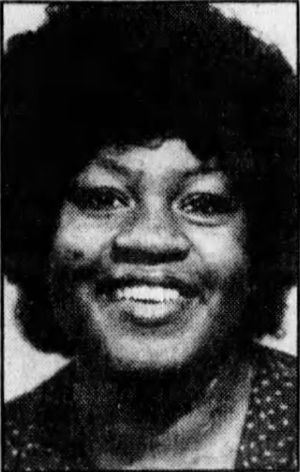
Marie Oganesoff, wife of the Russian Attaché in Washington during WWI, died on July 11, 1919, from complications of a criminal abortion performed on July 5 by Dr. Julius Hammer, father of industrialist Armand Hammer. Hammer was a 1902 graduate of the College of Physicians and Surgeons.
The autopsy performed on Marie's body found that she had been about one month into her pregnancy at the time of the abortion. All of her internal organs were normal except for signs of damage due to the sepsis. Marie's body showed no signs that she had been suffering from influenza. There was also no mention of preexisting heart or kidney problems.
The autopsy performed on Marie's body found that she had been about one month into her pregnancy at the time of the abortion. All of her internal organs were normal except for signs of damage due to the sepsis. Marie's body showed no signs that she had been suffering from influenza. There was also no mention of preexisting heart or kidney problems.

Marie's maid testified that she'd accompanied her employer to Hammer's office on the morning of Saturday, July 5. Upon arriving at Hammer's office, Marie had been in perfectly good health, but she was pale and weak upon leaving, needing help to go downstairs and get into her car. Marie had told her driver to drive very slowly. The chauffeur corroborated this testimony. Upon their return home, the maid helped Marie to bed, and noticed bright red spots of blood on her underwear.
Mr. Oganesoff testified that when he returned from work sometime between 4:00 and 5:00 pm, he found Marie in bed. The next morning he spoke to his ailing wife but was unable to reach Hammer by telephone. He managed to reach Hammer that evening, and reported that Marie was very ill and had a high fever. Hammer, he said, came that evening, peered in Marie's throat, and said "She had grippe and maybe flu." Mr. Oganesoff expressed great anxiety about his wife's condition, whereupon Hammer admitted that he had performed "a little operation", but that Marie was in no danger.
Hammer returned the following day and again on Tuesday, when he performed an internal examination on Marie. Hammer, Mr. Oganesoff said, assured him that Marie was in no danger and was in fact recovering. Mr. Oganesoff wasn't convinced and asked Hammer about getting a second opinion. Mr. Oganesoff said that Hammer told him, "There is nothing dangerous, we can see tomorrow, I can bring my friend doctor." Mr. Oganesoff testified that he also suggested hiring a nurse to attend to Marie, but Hammer responded, "Very sorry, now it is very difficult to get, but when I can get my nurse which was nurse to my baby I bring with me."

By Wednesday evening, Mr. Oganesoff had wearied of Hammer's stalling and called another doctor on his own initiative. He said that Hammer told him, "Don't tell [the new doctor] that I make a little operation." I don't know this second doctor's name so I will call him Doctor A.
Upon arriving at the Oganesoff residence, Doctor A examined Marie and immediately got two nurses to help him. He testified that he called Hammer and told him that Marie showed signs of peritonitis. Hammer, Doctor A said, insisted that Marie had been suffering from "grippe" (influenza) and a sore throat for six days. Had this been true, surely Marie's maid would have noted that her employer had been sick four days earlier when arriving at Hammer's office.
Doctor A said that he insisted to Hammer that he was not seeing any symptoms of influenza, only peritonitis. In Friday morning, Doctor A testified, it was clear that Marie was dying of peritonitis but Hammer kept insisting that she had influenza. Doctor A said that Hammer made it clear even before Marie's death that he, Hammer, wanted to fill out the death certificate as attending physician and list influenza as the cause of death.
Upon arriving at the Oganesoff residence, Doctor A examined Marie and immediately got two nurses to help him. He testified that he called Hammer and told him that Marie showed signs of peritonitis. Hammer, Doctor A said, insisted that Marie had been suffering from "grippe" (influenza) and a sore throat for six days. Had this been true, surely Marie's maid would have noted that her employer had been sick four days earlier when arriving at Hammer's office.
Doctor A said that he insisted to Hammer that he was not seeing any symptoms of influenza, only peritonitis. In Friday morning, Doctor A testified, it was clear that Marie was dying of peritonitis but Hammer kept insisting that she had influenza. Doctor A said that Hammer made it clear even before Marie's death that he, Hammer, wanted to fill out the death certificate as attending physician and list influenza as the cause of death.
Hammer was charged with manslaughter and put on trial.
He said that Marie had called him on July 4, saying that she needed to see him urgently. He said that he'd tried to put her off because he hadn't wanted to come into the city, but he finally agreed to meet her at his office on the morning of Saturday, July 5. Hammer said that he had treated Marie almost exactly one year earlier, performing a curettage on her.
Hammer said that when Marie arrived at around 10:00 a.m., she told him that her period was nine days late and that she'd felt miserably sick for the previous two weeks. He said that she told him that she'd attempted her standard home abortion with a crochet hook cleaned with peroxide, but that this time she hadn't gotten the desired result. The bleeding, she said, was bright red and didn't look like menstrual flow. She said that she had headaches, couldn't keep any food down, and was in a very miserable condition.
Hammer's assertions that Marie was ill and unable to keep any food down doesn't jibe with the maid's testimony that Marie had been healthy prior to the visit to Hammer's office, though both the maid and Marie's husband testified that Marie had been suffering from headaches for a number of days prior to her visit to Hammer's office.
Hammer said that Marie pestered him to finish the abortion she had tried to start with the crochet hook. According to Hammer, she said, "There is no use persuading me to leave it go; you know my history; you know I cannot leave it go; it is a question whether you are going to relieve me or keep me in misery for a few weeks, and then I will go to have it done anyway." He also said that he'd informed her that the crochet hook wouldn't have been sterile from just being washed in peroxide and she might well have introduced germs from her vagina into her uterus.
Hammer said that he told Marie that he didn't want to do the abortion because he wanted to go back to the countryside and rejoin his family. He said that he told her to either go home or to a hospital. Hammer said that Marie scolded him for not attending to her promptly. He testified that she said, "Well, then how can you then talk to me about postponing the case, when you said to me yourself I might have infected myself and in such a case every hour may count."
Hammer testified that at this point "I was in a quandary. I felt that I didn't care for this job; I didn't want that job, but I called in Dr. Diamond."
Hammer testified that at this point "I was in a quandary. I felt that I didn't care for this job; I didn't want that job, but I called in Dr. Diamond."
Diamond, who had been a physician for about 18 months, worked with Hammer and lived with Hammer's family. Hammer said that he explained the situation to Diamond as he washed his hands in preparation for treating Marie. He said that he put on gloves, examined Marie, and showed blood on his fingers to Diamond, asking him, "What would you do under these circumstances?" Hammer said that Diamond said that he would immediately do a curettage.
With no nurse or other doctor present, Hammer said, he proceeded with the curettage then swabbed out Marie's uterus. He said that Marie also reported a mild sore throat, for which he recommended gargling.
Hammer also said that Marie told him that she had been to many doctors in Europe and the United States, all of whom had told her that she had heart and kidney problems such that she shouldn't have any more children.
Diamond testified that he'd spoken with Marie in a mix of English and Russian. She had said that she had used a crochet hook to start an abortion and had been bleeding since the previous day. He testified that she did have a menstrual pad in her underwear and that the pad did have blood on it. Diamond said that Marie had told him that six or eight years earlier, when she'd been in Europe, she'd taken very ill when three or four months into a pregnancy. She told him, Diamond testified, that she ended up in the hospital for this illness, that it was due to kidney trouble and heart trouble and that she needed an abortion to save her life. She said that the abortion was performed at that time and the doctors had told her never to get pregnant again since another pregnancy might kill her.
Diamond testified that Marie told him that she'd become pregnant on numerous occasions since that abortion. Each time she'd either gotten a doctor to perform an abortion or had done one herself with a crochet hook.
Diamond also testified that he had listened to Marie's heart with a stethoscope " for a complete examination" and "for the question as an anesthetic." However, no anesthetic was administered to Marie. He said that he had not tested Marie's urine nor made any examination of her kidneys or throat. Nobody took Marie's temperature. He said that he did believe that Marie had influenza because she said she had a headache and general feeling of being unwell.
Some other doctors testified on Hammer's behalf. One, whom I'll call Doctor B, said that he'd cared for Marie in July of 1917. At that time, Doctor B testified, Marie was about three or four months pregnant and had a heart disease. She'd told him, he testified, that a European doctor had told her she must not bear any more children. He said that she told him that she'd had several curettage abortions performed since that time. Doctor. B said that he didn't bother performing an abortion on Marie since she seemed to be in the process of mismarrying at the time.
Another doctor, whom I'll call Doctor C, testified that Marie had come to him in January of 1918, telling him of her repeated abortions for health reasons, and showing symptoms of uterine disease. She said that she feared she might be pregnant. Doctor C said that he hadn't been able to determine whether or not Marie was pregnant but decided to do a curettage just to be on the safe side.
Two other doctors were called in to give expert testimony. The situation as Hammer had described it was presented to them. They said that if they believed that a patient needed a curettage, they would perform it in a hospital or at least in the woman's home, where she could remain in bed for 24 hours. One of those two doctors also noted that he would never perform such a procedure on a woman in her street clothes and without a nurse or other assistant present. Both physicians indicated that any reputable physician would get a second opinion to verify that it was necessary to preform an abortion to save the life of a pregnant patient.
Both doctors testified that a fever could set in 18 hours after such a procedure but would more typically arise within 24 to 72 hours. This became a sticking point in the trial, since Hammer insisted that Marie had brought the infection on with the crochet hook and that the first signs of fever had an onset too soon after the curettage for this to be the cause of the infection.
The jury was basically considering the following factors in their deliberations:
1. The expert witnesses said that a responsible physician would seek a second opinion before proceeding with an abortion to save a patient's life. They had testimony by Hammer and Diamond that Hammer had asked Diamond's opinion before proceeding with the curettage. However, Diamond didn't actually examine Marie. He only spoke to her briefly and testified to having seen blood on a menstrual pad and on Hammer's glove.
2. The expert witnesses testified that they would not perform such a procedure without a nurse or other assistant present, as Hammer had done.
3. Hammer hadn't even bothered to take Marie's temperature prior to performing a procedure on her. This would have been expected in order to determine whether Marie was suffering from an infection prior to starting the procedure. Thus, Hammer's pre-operative examination of Marie was inadequate and he had no evidence to back his assertion that the curettage was necessary at that time.
4. Hammer had not instructed Marie to take her temperature after returning home and immediately report any fever, as a reasonable physician would have done.
1. The expert witnesses said that a responsible physician would seek a second opinion before proceeding with an abortion to save a patient's life. They had testimony by Hammer and Diamond that Hammer had asked Diamond's opinion before proceeding with the curettage. However, Diamond didn't actually examine Marie. He only spoke to her briefly and testified to having seen blood on a menstrual pad and on Hammer's glove.
2. The expert witnesses testified that they would not perform such a procedure without a nurse or other assistant present, as Hammer had done.
3. Hammer hadn't even bothered to take Marie's temperature prior to performing a procedure on her. This would have been expected in order to determine whether Marie was suffering from an infection prior to starting the procedure. Thus, Hammer's pre-operative examination of Marie was inadequate and he had no evidence to back his assertion that the curettage was necessary at that time.
4. Hammer had not instructed Marie to take her temperature after returning home and immediately report any fever, as a reasonable physician would have done.
5. When Marie was clearly ill and suffering from fever, Hammer had not followed through by procuring nursing care for Marie, nor did he consult with colleagues, as Doctor A had promptly done.
6. Even after Mr. Oganesoff had transferred care of his wife to Doctor A, Hammer continued to show up at the house, insisting that Marie had influenza, and that he had been treating her for influenza and withholding the crucial information that he had performed a presumably medically-indicated curettage upon her.
6. Even after Mr. Oganesoff had transferred care of his wife to Doctor A, Hammer continued to show up at the house, insisting that Marie had influenza, and that he had been treating her for influenza and withholding the crucial information that he had performed a presumably medically-indicated curettage upon her.
7. While Doctor A was treating Marie, Hammer kept pestering Doctor A with requests that he be permitted to complete the death certificate and list influenza as the cause of death.
The jurors clearly didn't think that Hammer's behavior indicated that he had performed the abortion in a good-faith attempt to preserve Marie's life. In fact, Hammer seemed to be more concerned with falsifying Marie's death certificate than in preserving her life even as three other doctors were struggling to save her.
Dr. Hammer was convicted of manslaughter and sentenced to 3 1/2 - 15 years.
Hammer appealed, and with help from a complicit media he drummed up public outrage. Hammer's supporters insisted that he had been prosecuted for trying to save Marie's life. "Fight for a Life Jails Physician Who Broke Law: Court Rules Statutes Higher than Science," screams a headline in the July 20, 1920 Chicago Tribune.
The article opens with clearly false assertions:
The law is the law regardless of physicians or ethics and regardless of life or death.
The law says that certain surgical operations are against the rights of society and therefore they are criminal. Nothing by way of mitigation can enter into a case where such an operation has been performed. Even though the operation were a battle to save a woman's life, says the law, the surgeon who performs it is a malefactor.
That's not what the law says, and any reporter who wanted to report honestly could have found this information easily.

The article then continues to misrepresent the facts of the case.
"A year ago Mrs. Marie Oganesoff, one of Dr. Hammer's wealthy patients, was sent to the hospital. She expected a child."
This sentence implies that Marie arrived at a hospital, pregnant and ailing, and that Hammer had been, from the beginning, dealing with a patient who was clearly in mortal danger.
This sentence implies that Marie arrived at a hospital, pregnant and ailing, and that Hammer had been, from the beginning, dealing with a patient who was clearly in mortal danger.

"Dr. Hammer was convinced that if Mrs. Oganesoff underwent the natural course she would die. The chances were a thousand to one against her recovery. There was but one operation which might save her. But this operation was against the law."
Actually, according to his own testimony, Hammer had wanted to resume his weekend plans with his family but only did the operation because Marie pestered him. Neither Hammer nor Diamond testified as to any sense that Marie was in immediate danger. As for the claim that "the chances were a thousand to one against her recovery," all of the doctors testifying on Hammer's behalf, including himself, said that Marie told them that she routinely dealt with pregnancies with a hasty abortion, either performed by a doctor or of the crochet-hook variety. Nobody, not even Hammer himself, testified that Marie was in some sort of medical crisis.
Actually, according to his own testimony, Hammer had wanted to resume his weekend plans with his family but only did the operation because Marie pestered him. Neither Hammer nor Diamond testified as to any sense that Marie was in immediate danger. As for the claim that "the chances were a thousand to one against her recovery," all of the doctors testifying on Hammer's behalf, including himself, said that Marie told them that she routinely dealt with pregnancies with a hasty abortion, either performed by a doctor or of the crochet-hook variety. Nobody, not even Hammer himself, testified that Marie was in some sort of medical crisis.
"He told his friends that he would perform the operation regardless of the law -- and did so. But he lost the fight with death, for Mrs. Oganesoff succumbed to the shock."
Hammer and his defense witnesses didn't testify to any pre-abortion consultation in which he bravely risked his freedom to save his patient. He just showed Diamond some blood on a glove and then calmly proceeded. This wasn't a case of Hammer bravely forging ahead to save his patient's life. This was a case of Hammer trying to cover his ass while three other doctors struggled to save his patient's life.
Hammer and his defense witnesses didn't testify to any pre-abortion consultation in which he bravely risked his freedom to save his patient. He just showed Diamond some blood on a glove and then calmly proceeded. This wasn't a case of Hammer bravely forging ahead to save his patient's life. This was a case of Hammer trying to cover his ass while three other doctors struggled to save his patient's life.
As icing on the cake, Hammer also tried to claim on appeal that an apparent attempt by the defense to get a juror to take a $10,000 bribe prejudiced the jury against him. This claim fell flat because Hammer's attorney had stated that he was satisfied at the time that the jury had not been tainted by the incident.
Hammer's conviction was upheld on appeal.