Showing posts with label teen abortion. Show all posts

Saturday, November 02, 2019

Latachie: Not Even Noticed

The idea that the abortion researchers at the Centers for Disease Control actually care about women's deaths from safe, legal abortion should be blown out of the water by looking at how they dealt with the death of Latachie Veal.


Latachie was 17 years old, and 22 weeks pregnant, when Robert Dale Crist performed an abortion on her at Houston's West Loop Clinic November 2, 1991. According to Latachie's family, she bled heavily at the clinic, and cried out to the staff for help. They told her that her symptoms were normal, and sent her home. Several hours later, Latachie stopped breathing. Her brother-in-law called 911 while her sister did CPR, to no avail. Latachie was dead on arrival at Ben Taub Hospital.

If Latachie's death certificate had been filled out properly, with the notation of the abortion in the proper box, using the proper ICD-9 code, then theoretically the National Center for Health Statistics would spot the abortion code and report it. But most states send only a statistical sample of their death certificate data to the NCHS. So the CDC would be notified of Latachie's death through the NCHS only if the death certificate was properly filled out, and Latachie's death certificate was among those abstracted and sent to the NCHS.

But still, according to abortion defenders, Latachie's death would nevertheless be automatically reported to the Centers for Disease Control. They're not clear on who is supposed to report the death. Was West Loop Clinic supposed to report it? Was Crist supposed to report it? Was Ben Taub Hospital supposed to report it? Was the medical examiner supposed to report it? Was the Texas Department of Health supposed to report it? The CDC says it gets abortion death information from abortionists, abortion facilities, hospitals, and state health departments, but it does not mention that the reporting is not mandatory.

This does not mean that Latachie's death went utterly unnoticed.

Latachie's family filed suit, retaining the flamboyant "Racehorse" Haynes as their attorney. The case was highly publicized, both in Texas and in Missouri, where Crist had performed a fatal abortion on Diane Boyd, a 19-year-old developmentally disabled woman who had been raped in the institution where she'd lived.

The mainstream publicity went beyond the usual newspaper articles, with Crist giving television interviews calling the publicity "media hype" and "a political event." Haynes retorted, "I wish he would have a copy of the 911 tape.... If he would talk to the parents, if he would talk to the sister as she gave her CPR or talk to the brother-in-law as she was breathing her last breath and see then if he thinks it's a media event."

With all this mainstream publicity in two states, prolife organizations picked up the story, and it was reported in prolife newsletters around the nation.

A lot of people very quickly found out about the abortion death of 17-year-old Latachie Veal. But did the CDC?

At the 1992 National Abortion Federation Risk Management Seminar in Dallas, Crist spoke openly of Latachie's death. (He did not, of course, mention her name; I've concluded that he's discussing Latachie's death, since there's been no evidence of any another 17-year-old abortion patient of his who died in 1991.) Crist blamed the death not on malpractice, but on disseminated intravascular coagulopathy -- a clotting disorder that can be triggered during an abortion.

Present at that Risk Management Seminar, where Crist chattered about Latachie's death, were two -- count 'em -- two-- staffers from the Centers for Disease Control's abortion surveillance activities area: Stanley Henshaw and Lisa Koonin. Henshaw's presence isn't quite as remarkable as Koonin's. It was Lisa Koonin, specifically, whose job it was to "verify" abortion deaths, and obtain copies of death certificates. These she was to pass on to a research fellow, Clarice Green, who would then gather the full information about the case.

In spite of all the publicity, in spite of the lawsuit, in spite of the prolifers shouting from the rooftops, in spite of the abortionist discussing the death at an event attended by the very woman whose job it was to notice abortion deaths, the Centers for Disease Control did not notice Latachie's death. Their 1991 Abortion Surveillance Report, published in May of 1995, did not even make any mention of abortion mortality. And when we at Life Dynamics filed a request for information about abortion deaths, we found that the CDC counted zero -- count 'em -- zero -- abortion deaths among women of Latachie's race in the 15 - 19 age range. In other words, they didn't even notice.

Not to put too fine a point on it, but if the CDC failed to notice this highly-publicized death, discussed openly at an event attended by two of their abortion surveillance staffers, exactly what does it take to get them to notice an abortion death? And how can we even pretend to believe that any serious attempt to accurately count abortion deaths was being made?


Sunday, October 27, 2019

Katrina's death: Medical Board takes pathetic action

Today LiveAction posted a story about an ambulance being called to A Woman's Choice abortion facility in Jacksonville, Florida. The story noted:
There have been previous injuries at this abortion facility; in 2017, another patient had to be taken by ambulance after experiencing seizures they were not equipped to handle. One of the abortionists believed to work there, Deborah Levich, let her medical license lapse in Alabama after claims that she was not checking for viability before committing late-term abortions, falsified medical records, and allowed abortions to take place without a doctor present. Another of the abortionists, Herman Miller, killed a patient after botching an abortion and perforating her uterus.
I followed the link to AbortionDoc's posting of the medical board documents in the case. Clearly, these documents regard the December 6, 1988 death of Katrina P. I already had this write-up based on a 1989 article in the Tampa Bay Times:
Katrina Phalice Poole was conflicted that winter of 1988. She loved her boyfriend, she wanted to have her baby. But the 16-year-old was so young, excelling in English classes at Raines High School in Tampa Bay, Florida. She had told some of her friends about the pregnancy. Some tried to talk her into following her heart and keeping her baby. Others supported her concerns that she was too young.

On December 5, Katrina left school early. Her mother brought her to a Jacksonville doctor's office for her 1:00 abortion appointment and stayed with her through the procedure, then took her straight home. That evening, Katrina kissed her mother goodnight and went to bed. She was dead by morning. During the abortion, the doctor had poked holes in Katrina's uterus and cervix. The bleeding was hidden. Katrina had bled out. 
AbortionDocs thus provided me with not only the name of the doctor and the facility, but details of how Katrina's promising young life was cut so tragically short.

Katrina had a positive pregnancy test on October 31, 1988. On November 4, she went to her family doctor, who confirmed a pregnancy of about 14 or 15 weeks, with a fetal heart rate of 140. No details of the ensuing discussion with the physician are included in the medical board document; it just relays that the doctor referred Katrina to A Woman's Choice, aka A Jacksonville Women's Health Center or Jacksonville Women's Health, because the doctor in question didn't perform second-trimester abortions.

Katrina didn't report to the clinic for a month, which confirms what her friends told reporters about her being conflicted about whether to have her baby or go through with the abortion. On December 5, Katrina entrusted her life to the staff at A Woman's Choice.

Color photo of a small one-story building with a mansard roof. It has one large curtained-off window on each side and a sign between them reading "Jacksonvill Women's Health Center" along with the symbol for female.
A Woman's Choice, aka A Jacksonville Women's Health Center
The clinic records show no evidence that anybody at the clinic took any steps at all to determine how to provide appropriate care for Katrina. There's no evidence of a medical history -- which would have disclosed that Katrina's pregnancy had been estimated at 14 or 15 weeks a full month earlier. Taking a medical history would also have revealed that Katrina had a history of irregular menstrual periods, which would make it even more important to take all possible steps to determine an accurate gestational age. There was no physical examination of any kind noted. There was no ultrasound performed. Dr. Herman Miller simply charged ahead with a routine suction abortion, only suitable for first trimester pregnancies of 12 or fewer weeks.

During the abortion, Miller noted that he had suctioned out far more placental tissue than expected. The medical board noted that Miller failed to take this second opportunity to perform an ultrasound and get a clear idea of what he was doing. Instead he simply kept going, making no notes at all about how he proceeded or any evaluation of the fetal remains other than to estimate that Katrina had actually been 22 weeks pregnant -- far enough along that the baby could potentially have survived if delivered alive. Miller had made no effort to assess the baby's viability.

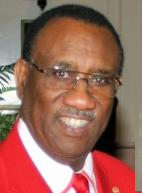
Photo of a middle-aged Black man with half-frame eyeglasses, wearing a red suit coat, red tie, and white shirt with red trim on the collar.
Dr. Herman Miller Jr.
After completing the abortion, Miller had Katrina remain in recovery for 30 minutes before prescribing Stadal (a synthetic opioid), Phenagen #3 (a drug to prevent nausea and vomiting), Metherzine (a drug to control obstetric bleeding), and "TCN Sumycus" (which I can't find any references for).  He then sent her home. She died some time between 2:00 and 6:30 the following morning. Judging by what the news coverage said, Katrina's family probably went to wake her in the morning and found her dead.

Katrina had already been conflicted about the abortion. Would she even have consented had she known that her baby was at the cusp of viability? A simple ultrasound and a moment of honesty would almost certainly have saved Katrina's life, and perhaps spared the life of her possibly viable unborn baby.

The medical board took disciplinary action against Miller, including limiting his scope to perform second trimester abortions, but let him keep his license in spite of his appalling care of Katrina and the staggering lack of judgement he showed in failing to even examine his patient prior to surgery. I'm not sure how they could trust him to limit himself to first-trimester abortions when he didn't even bother to determine gestational age prior to firing up the suction machine.


Wednesday, February 22, 2017

1994: Texas Teen's Gruesome Death

Raise your hand if you've heard about how abortion just has to be legal, or else women would have to face them grisly back-alley abortions.

Of all the justifications for the current state of abortion in the United States, this is the one that probably steams me the most, personally. I've reviewed about 6,000 abortion injury and death cases. I've gone through boxes of nothing but autopsy reports on young women and girls dead for no good reason. The idea that it's okay to kill some women legally in order to prevent other women from being killed illegally gets to me.

We can start with Jammie Garcia.

When the documents for Lime 5 were pouring in, I was an abstracting machine. I had a three to four foot stack of documents in my office on any given day that I had to plow through, skim, highlight, read, summarize. I learned to be very detached and clinical, to just get the words and ideas and not let it get to me. But Jammie Garcia got to me.


The first document I reviewed was a March 1994 report on an inspection done in response to a patient death in a clinic owned by Dr. Moshe Hachamovitch. The report said that the staff were inadequately trained in how to properly sterilize instruments. The administrator, Kristen Hing Fehr, was evidently aware of the fact that the autoclave used to sterilize instruments was not functioning properly. As for the instruments themselves, "two loop forceps, two tenaculums and one curette were found to have small particles of dried brownish-dark red material on them. Three speculums were found to have small particles of dried clear material on them." "The only sterilized abortion tray in the procedure room was found to contain a curette with a loop whose edge was visibly jagged instead of smooth." (Source: Travis County District Court Cause No. 94-07517)

Untrained staff? Dirty instruments? Indifferent administration? That's not enough to even get my attention. I'd read one report in which the inspectors asked the staff to demonstrate that the emergency generator was functioning properly. The generator caught fire. I'd seen reports of dogs in clinics, bloody bare mattresses, drunken abortionists falling on the floor. So Moshe Hachamovitch's little abortion mill didn't stand out for its flaws.

Then there was the case of the patient whose death had brought on the inspection. She was identified as 15-year-old "J.G." That was a bad one. It was always hard to read details on a death, but dead kids get to me. I have a daughter myself.

"J.G." had her abortion performed by John Coleman* at Hachamovitch's A to Z abortion facility on February 18, 1994. Four days later, on February 23, she was admitted to the Intensive Care Unit of a Houston hospital, with spiking fever, chills, nausea, pain, respiratory distress, a distended abdomen, low blood oxygen levels, and foul-smelling discharge. An examination revealed inflammation and a tear in her cervix.

This was all tragic, very sad, but again, typical for what I'd see in an abortion death. I dutifully wrote up the case while Mona tried to get more information.

She got a copy of the autopsy report.

When I hear about how we need legal abortion to prevent those horrible back-alley abortions, I can see Mona and me sitting and reading that autopsy report. Mona came across the hall with Jammie's autopsy report in one hand, and another autopsy report in another. She wanted me to really grasp how swollen and boggy Jammie's organs were. Jammie's liver and lungs weighed twice what they should have weighed.

Then Mona and I sat down together and read the rest of the autopsy report. By the time we were done, we were both crying, telling each other, "She was unconscious by then. She had to have been unconscious."

Please, God, let her have been unconscious.

Jammie's body was wracked with abscesses, spreading infection that had entered her body through the damage the abortion had done to her uterus. Her brain was swollen. As near as Mona and I could figure, Jammie's fetid fluids had made their way up through her damaged bowels and into her lungs.

Nobody's little girl should have to die that way.

I'm sorry, but nobody can convince me that Jammie's death was an improvement on the old back-alley abortions. No drunken, trenchcoat-clad pervert with a rusty coathanger could have done more damage, could have killed her any more horribly.

I will never understand the stubborn instance that when a pregnant woman faces challenges, somebody has to die. Why? Why, with so many adoptive homes for her child, did Jammie have to die? Why, with so many prolife pregnancy centers standing by to help her, did Jammie have to die?

Abortion laws didn't kill Jammie Garcia. An abortionist did. Does the fact that he did it in a legally operating "clinic," with medical instruments instead of with a coathanger, make her any less dead?

Abortion advocate dismiss girls like Jammie. "These things happen," they shrug. "All surgery has risks."

Why does that not comfort me? Or, perhaps more to the point, why would it comfort anybody? Why is that good enough for the self-appointed guardians of girls like Jammie?

Women -- and little girls like Jammie Garcia -- will continue to die, as long as they continue to perceive abortion as an escape. And they will continue to perceive it as an escape as long as there is a multi-million-dollar advertising campaign shouting from the rooftops the wonders and benefits of safe-n-legal abortion.

The way to end the horrible abortion deaths isn't to make excuses for the abortionists who kill girls like Jammie. The way to end the horrible abortion deaths isn't to promote abortion -- it's to end abortion. And the way to end abortion is to start caring about the women more than about politics. Abortion needs to be feared, dreaded, shunned, recoiled from, rejected, not held up as a right and celebrated. And we need to start thinking less about lifestyles of the rich and famous, and more of the life of the mother.

*I have since learned that Coleman was so sickly that he himself died on the day of Jammie's funeral. ("28 lawsuits name abortion clinic owner," Arizona Daily Star, January 18, 1999)

NOTE:
Five other patients are known to have died either under Hachamovitch's direct care or under the care of an employe at one of his clinics.

Tanya Williamson
This young woman was inadequately monitored in recovery and allowed to lapse into respiratory arrest. She died on in September of 1996

Luz Rodriguez
Allowed to bleed to death in 1986 under Hachamovitch's direct care in the Bronx.

Christina Goesswein
Hachamovitch brought her to his office at 4 a.m. to treat grave complications.She died in October of 1990.

Lisa Bardsley
Bled to death on the way home from her safe, legal abortion at one of Hachamovitch's facilities in Arizona in 1995.

Lou Anne Herron
Her pleas for help went unheeded as she bled to death in Hachamovitch's Arizona abortion clinic in 1998.

Thursday, May 30, 2013

Remembering Douglas "Texas Gosnell" Karpen's Teenage Victim

Abortionists Douglas Karpen is currently under investigation after three of his empolyees came forward to assert that they'd seen him, Gosnell-like, routinely murder viable infants born alive during abortions.

But it's not only nameless infants that have fallen victim to Douglas Karpen. Today we remember a teenage victim.

Denise Montoya was fifteen years old when her parents brought her to Women's Pavillion in Houston for an elective abortion on May 13, 1988. Karpan performed an abortion to kill Denise's viable 25.5-week unborn child.

Denise suffered severe bleeding, and was admitted to Ben Taub hospital. Her condition deteriorated, and she died on May 29, 1988.

Her parents filed suit against Karpen and the clinic, saying that they had faied to adequately explain the risks of the procedure, and had not provided consent forms, or had the parents sign any informed consent document, prior to the fatal abortion. They indicated that they never would have subjected their daughter to a highly risky third trimester abortion had they been informed of how dangerous the procedure was.
According to their 1991 Annual Report, Women's Pavillion was a National Abortion Federation member.

Operation Rescue has made the complaint by Denise's parents available here.

Karpen also owned and operated the facility where Glenda Davis suffered multiple internal lacerations before being loaded into an employee's car rather than an ambulance for transport to the hospital where she died.

Abortionist Showery
In a Post-Roe Texas, it would likely be easier to take a quack like Karpen out of circulation -- provided, of course, the authorities actually cared enough about women to want to do so. So far the authorities in Texas are moving at an utterly glacial speed regarding the allegations his former employees have brought forth -- and what they have provided already far surpassed what was sufficient to convict Raymond Showery of murdering a live-born infant in 1979. But were the law that Norma McCorvey challenged as Jane Roe once again in effect, there would be no dancing around how many ultrasounds Karpen did or didn't perform, or whether he killed the baby with digoxin before ripping its throat out, or even whether the baby was in or out of the womb when the deed was done. Such niceties of law might determine precisely which laws he could be prosecuted for breaking, but "So what? Abortions are ugly and brutal." wouldn't provide any legal coverage.

As we move closer to a Post-Roe America, prolifes in individual states need to do an in-depth legal analysis of the laws that are currently enjoined by Roe and Doe, along with laws that have been  passed since then, and immediately move to close up any loopholes the likes of Douglas Karpen will be looking to wriggle through. The laws need to be tightened up to make it clear that killing a baby is killing a baby, and where that baby was when you ripped through its fragile flesh with your Bierers' forceps should have zero effect on how accountable an abortionist is held.