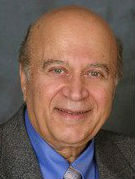
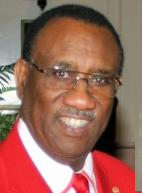
On November 17, 1935, Georgia Marie McGill, 21-year-old daughter of oil
company superintendent George McGill, died from an apparent criminal
abortion in Pawhuska, Oklahoma.
Marie's father identified Dr. W. R. Mitchell as the perpetrator.
Mitchell was already a reputed abortionist, and police had already
gotten many complaints about him prior to Marie's death. He was
implicated in about half a dozen other abortion deaths, but I have been
unable to get more details about those cases.
Mitchell was arrested and tried but the case ended with a hung jury.
After the trial, Mitchell resumed his abortion business and was arrested
again for his practice.
Keep in mind that things that things we take for granted, like
antibiotics and blood banks, were still in the future. For more about
abortion in this era, see Abortion in the 1930s.
Dr. Mi Yong Kim had a troubled past. She had voluntarily surrendered her New York license in 2000 when threatened with revocation for her grotesque mishandling of a 1997 abortion patient. Kim had told the patient that she was 8 weeks pregnant, but upon starting the procedure realized from the massive amount of amniotic fluid that the patient was far more advanced in her pregnancy. Kim instructed the mother to go to the hospital. There, at the urging of a nurse, Kim asked for an ultrasound scan to determine the size of the baby's head -- which indicated a gestational age of just past 26 weeks. Though the baby's heart rate was slow, he or she was still alive. Kim tried so stimulate labor using drugs. Though the baby died, the mother didn't go into labor so Kim performed a C-section and delivered the dead baby. Documents don't indicate if at any point Kim informed the woman that her baby was past the age of viability and could have been saved.
The Virginia medical board did not suspend or yank Kim's license. She was instead placed
under stipulations regarding her use of anesthesia in her office and her
record-keeping. While under close supervision, she made improvements and had her license fully restored without stipulations on May 8, 2000.
It was thus that there was nobody keeping a close eye on Mi Yong Kim when a 26-year-old woman identified as "Patient A" (I'll call her "Adelle"), went into Kim's private practice, which was named "Landmark Women's Center," giving the impression that it was a clinic.
Kim did not
order proper lab studies, document an appropriate history, or perform a
proper exam on Adelle before performing a safe and legal abortion
on her on November 16, 2002. Kim administered 25 mg of Versed to
Adelle, in response to her reports of pain, over a 10-minute period,
without giving the medicine time to take effect.
Kim told the medical board that she did not give Adelle any analgesia
for pain because she gives enough Versed to cause amnesia so that the
patient can't remember the pain. The board noted that Kim lacked
judgment and knowledge of intravenous conscious sedation and that she
was not fit to supervise a CRNA.
At the end of the abortion, Kim noted that Adelle's pulse oximeter
reading was only 70%, an alarming finding. Kim thought she found a
pulse, so she did not assess whether or not Adelle was breathing. She simply
ordered her staff to give Adelle oxygen by mask and call 911.
Kim administered Romazicon to reverse the effects of the Versed, but did
not notice that Adelle had gone into cardiac arrest. As such, Kim made
no effort to resuscitate her. The ambulance crew arrived and transported
Adelle to the hospital, where she was declared dead from possible air
embolism.
The medical board noted that Kim was not certified in Advanced
Cardiopulmonary Life Support, nor was she or anybody else on her staff
qualified to perform an intubation or use crash cart equipment. Kim did
not document the operative report for Adelle. Kim told the board that
the police had told her not to make any further notes in her file.
It's striking how the abortion lobby attacks prolifers for running "fake clinics" -- pregnancy resource centers that don't even pretend to be clinics -- but never goes after doctors like Kim who disguise their offices as clinics in order to give the impression that they've being more closely overseen by officials than they really are.
Kim has since surrendered her medical license but continues to operate Nova Women's Health Care in Fairfax.
I was searching for the newest case of Planned Parenthood badness to show a skeptical friend who dismissed example after example after example because the incidents had taken place too long ago to have any reflection on what sort of organization Planned Parenthood is today -- as if at some point in the recent past they bottomed out, went into some sort of rehab, and found a sponsor.
What I stumbled across wasn't recent. It was just tragic. Needless and tragic.
Roselle proudly celebrating non-alcoholic just two months before her fatal abortion.
Roselle Owens was a vibrant 17-year-old high school student, thinking ahead to college, when she discovered that she was pregnant in 2009.
She made the mistake of entrusting herself to Planned Parenthood of New York City. She went to the Margaret Sanger Center for an abortion on the morning of April 11. Dr. Gerald Zupnick, who has a history of malpractice, performed the abortion under general anesthesia. The anesthesia was contracted out to employees of Somnia, also called Outpatient Anesthesia Services.
Zupnick noted in the operative report that the abortion was "uneventful," completing the procedure at 9:20 a.m. Shortly thereafter, staff found that Roselle's breathing was labored and her blood oxygen levels had fallen. A lawsuit filed by Roselle's half-brother on behalf of himself, Roselle's father, and her twin brother asserted that neither Somnia employees, Zupnick, or Planned Parenthood's other staff properly monitored Roselle. The ambulance was not summoned for her until 9:43 a.m., over 20 minutes after the abortion was completed. EMS services transported Roselle to St. Vincent's Medical Center at 10:05 a.m.
Staff at the hospital were able to stabilize Roselle, but the damage had already been done. Roselle remained on a ventilator at St. Vincent's until her death on September 8. She died when she should have been just getting settled into her new college life.
Both Zupnick and Planned Parenthood settled off-the-books, thus ending the paper trail.
Most people presented with a breathing newborn -- even a tiny, premature newborn -- would not hesitate to seek care for the baby. It seems to go without saying that a medical facility would be the safest place for a vulnerable baby. Thus, people tend to be shocked into disbelief at the idea that a newborn could be left to die or outright killed. But the world of abortion is not the world that most people live in. The 1977 case of Dr. William Baxter Waddill and "Baby W" illustrates how the abortion facility culture -- what I call Abortion Land -- views babies very differently from the way the rest of us do.
Mary W., a high school student, was examined by an ob/gyn on February 22, 1977, and found to be 28 weeks pregnant. This ob/gyn counseled that Mary's pregnancy was too advanced for an abortion, and advised Mary to consider an adoption plan. Somehow, Mary learned that Waddill would be willing to do an abortion, which he initiated by saline injection on March 2 at Westminster Community Hospital in California.
Mary's baby, a 2 lb, 8 oz infant girl, was expelled that evening and discovered by a nurse who was attending Mary.
The nurse clamped the cord and was about to put the baby in a bucket for transport to the pathology lab, when she noticed that the baby was moving and crying. In a normal hospital, the nurse would have, without hesitation, have taken the baby straight to the nursey for care. But this nurse was not working in a normal hospital setting. She was on an abortion ward. She was working in Abortion Land. Live babies weren't to be expected. They constituted a dismaying surprise. Thus, the nurse was uncertain about how to proceed. Another nurse suggested that regardless of any signs of life, the baby should just go into the bucket and off to the pathology lab per routine. Yet another nurse testified that she had seen the infant move but said nothing about this to avoid distressing Mary. Thus a third Abortion Land nurse, presented with a crying baby, was left uncertain about how to proceed. The first nurse summoned the nursing supervisor, who quite likely supervised the entire ob/gyn department and thus was not a resident of Abortion Land, like the three other nurses. The supervising nurse noted that the baby was pink and making sucking motions. She did whatever any normal person would do. She sent the baby to the nursery and summoned the mother's attending physician -- in this case, Waddill.
Once the baby was in the nursery, she was no longer in Abortion Land, so the nurses there responded to her as they would to any baby. One nurse cleared the infant's throat, placed her in an isolette, and charted a heartrate of 88. A neonatal ICU nurse began providing respiratory assistance on the little girl, and asked for help performing an intubation, which is routine NICU care.
Waddill arrived and chased everybody away. Several witnesses heard Waddill instruct staff "not to do a goddam thing for the baby." An ER doctor -- who evidently had noticed that something was up and had popped in to see for himself what was going on -- saw Waddill squeeze the umbilical cord, whereupon the "child jerked its body and gasped for air."
Waddill evidently had prepared for the birth of a living baby -- though not, one would guess, one that had been removed from Abortion Land and transported to the NICU. A tape was entered into evidence of a call from Waddill to a pediatrician, Dr. Ronald Cornelsen. In this call, Waddill told Dr. Cornelsen to come to the hospital, because the law required a pediatrician to assist when a newborn was in distress. Waddill said, "If we all tell the same story, there will be no trouble. ... So long as we stand together, no one anywhere can make any accusations anywhere. ... Do not get squirrely. Just tell them exactly as we've discussed. Just say you went in, there was no heartbeat and you left."
Dr. Cornelsen testified that when he arrived at the hospital the infant, a baby of about 31 weeks gestation, was breathing and had a heart rate of 60-70. There were bruises on her neck. Dr. Cornelson said that Waddill told him, "Sorry to get you in this mess. We had a baby that came out live from a saline abortion, and it can't live!" Dr. Cornelsen testified that he saw Waddill press on the infant's neck, saying, "I can't find the goddam trachea," and "This baby won't stop breathing." Dr. Cornelsen testified, "I said, 'Why not just leave the baby alone?' He said, 'This baby can't live or it will be a big mess.'" Waddill requested potssium choloride, for an injection to stop the baby's heart, but Dr. Cornelsen wouldn't let the nurse get it. Dr. Cornelsen said Waddill also asked for a bucket to drown the baby in.
Waddill later claimed that he hadn't strangled the baby, that she had died of natural causes before he even arrived at the hospital to deal with the delivery. He asserted that all of his actions were done in the best interests of the mother and the baby. However, having died in the nursery rather than in the abortion ward meant that rather than going into the medical waste incinerator, Mary's baby was afforded an autopsy, which backed what the witnesses said.
A pathologist examined the baby's lungs and concluded that she'd been alive for at least 30 minutes. Though saline causes capillaries to break down and thus gives the aborted baby a mottled, bruised look, the neck trauma was "consistent with manual pressure, and inconsistent with saline." The pathologist also testified that only the infant's placenta and small bowel seemed to have been "significantly affected by the saline," meaning that Mary's baby had not suffered fatal injury from exposure to the saline in-utero. Had the nurses in the NICU been allowed to proceed, Mary's baby would almost certainly have lived. The autopsy found the cause of the baby's death to have been "manual strangulation." Her gestational age was determined to have been 29 to 31 weeks at autopsy, consistent with the observations of Dr. Cornelson.
All told, over 13 weeks of testimony, the witnesses described three unsuccessful attempts by Waddill to strangle Mary's baby, and the fourth, successful, attempt. But during deliberations, the jury asked for clarification of a procedural point. A few phone calls to clarify the point led to the discovery by the attorneys and judge that there was a definition of "death" in the California health and safety code that the jury had not been informed of. Because the testimony hadn't directly addressed this particular definition of "death," the jurors became hopelessly deadlocked over whether Waddill's actions, though clearly causing what laymen would consider the "death" of the baby, had caused what the law would call the "death" of the baby. The judge had to delcare a mistrial. A second jury was also deadlocked, and the charges against Waddill were eventually dismissed.
Mary later sued Waddill, saying that he'd never told her that her baby might been born alive, and that she never would have consented to the abortion had she known this was possible. She said that Waddill "willfully and unlawfully used force and violence upon the person of the baby [W.] ... causing the decedent baby [W.] to die."
Waddill continued to perform abortions in California, and as of 2000 was working for National Abortion Federation member Family Planning Associates Medical Group, a chain where the following women and girls suffered fatal abortions:
In a society where a jury can't even convict a man who strolls into a NICU and strangles a baby in front of half a dozen witnesses, it truly is astonishing that Gosnell was convicted.
Of the five women from the Cemetery of Choice whose deaths took place on this date, only one had an abortion perpetrated by somebody other than a physician.
Ann E. Roberts, 25 years old, submitted to an abortion November 29, 1878 in Saint Louis, Missouri. She died of peritonitis on December 3. She was attended to by William Stapp and Stephen L. Metcalf, neither of whom was a doctor. Before her death, Ann identified Stapp as her abortionist. Metcalf was arrested as an accessory.
Grace Wolf, a young married woman, traveled from her home in Lansing, Iowa to the office of Dr. C. Allen Snyder (pictured) in Dubuque on November 19, 1917. Shortly after leaving Snyder's practice, she took ill. By November 29 she was in the hospital, and her condition deteriorated until her death on December 3. The autopsy had found evidence of recent pregnancy and a puncture in Grace's uterus. Dr. Snyder was convicted of manslaughter and sentenced to ten years at hard labor. His conviction was overturned on appeal. He was also charged with murder in the 1918 abortion death of Mrs. Frank Gagne of East Dubuque, Illinois.
On December 2, 1977, 29-year-old Jacqueline Bailey was injected with saline by Dr. Eboreime (Possibly Babatunde Eboreime. I am trying to verify this.) for an instillation abortion at Pacific Glen Hospital in Los Angeles County. This kind of abortion worked because the baby would swallow and inhale the extremely salty fluid which would cause massive internal hemorrhage and fatal organ damage. Five hours after Jackie expelled the dead baby, her condition appeared grave. Shortly after midnight, she was transferred to Memorial Hospital of Glendale. Doctors at Memorial suspected a uterine laceration, so they performed exploratory surgery. The bleeding was so profuse that they then performed a hysterectomy in a last-ditch attempt to save her life. Jackie died just before sunrise on December 3. The autopsy report found that Jackie's uterus had ruptured during the abortion, and that her uterine artery had been lacerated. She had bled to death from her injuries. Two years earlier, Cheryl Tubbs also bled to death from a ruptured uterus caused by a saline abortion at Pacific Glen.
Cora Lewis is one of six abortion deaths currently attributed to Inglewood Women's Hospital (aka Inglewood Women's Clinic) in Los Angeles County.Twenty-three-year-old Cora had her safe and legal abortion at Inglewood on November 4, 1983. She had gonorrhea at the time of the abortion, which led to inflammation of the cervix and uterus.Cora developed fever and chills after her abortion, and was finally admitted to a hospital on November 11. She was aggressively treated for pneumonia, including surgery, but died December 3. The coroner attributed her death to pneumonia and lung abscess contributed to by the uterine and cervical inflammation. Other abortion deaths at Inglewood include Kathy Murphy (September, 1973), Lynette Wallace (September, 1975), Elizabeth Tsuji (February, 1978), Yvonne Tanner (August, 1984), and Belinda Byrd (January, 1987),
Andre Nehorayoff
Dr. Andre Nehorayoff performed a safe and legal abortion on "Ellen" on November 29, 1983. She was 18 years old and in the second trimester of pregnancy. After the abortion, Nehorayoff discharged Ellen from his facility. He had not removed or identified all fetal parts. Nehorayoff entered the following note in Ellen's chart: "Pt. is advised that she might pass some tissue, contact me at any time or if she bleeds heavily." He was clearly aware that he'd preformed an incomplete abortion. At 5:10 AM on December 3, Ellen was rushed to an emergency room. She was already in a coma upon admission. An hour and 10 minutes later, she was pronounced dead. At autopsy there was a portion of the fetal left leg protruding from the uterus, and the cause of death was determined to be from hemorrhaging due to the incomplete abortion. Nehorayoff was also disciplined regarding Patient F, whom he left unattended in a recovery room following her abortion on December 15, 1979, without any monitoring. She turned blue and no pulse could be detected. She was pronounced dead at a hospital.
The idea that the abortion researchers at the Centers for Disease Control actually care about women's deaths from safe, legal abortion should be blown out of the water by looking at how they dealt with the death of Latachie Veal.
Latachie was 17 years old, and 22 weeks pregnant, when Robert Dale Crist performed an abortion on her at Houston's West Loop Clinic November 2, 1991.
According to Latachie's family, she bled heavily at the clinic, and
cried out to the staff for help. They told her that her symptoms were
normal, and sent her home. Several hours later, Latachie stopped
breathing. Her brother-in-law called 911 while her sister did CPR, to no
avail. Latachie was dead on arrival at Ben Taub Hospital.
If Latachie's death certificate had been filled out properly, with the
notation of the abortion in the proper box, using the proper ICD-9 code,
then theoretically the National Center for Health Statistics would spot
the abortion code and report it. But most states send only a
statistical sample of their death certificate data to the NCHS. So the
CDC would be notified of Latachie's death through the NCHS only if the
death certificate was properly filled out, and Latachie's death
certificate was among those abstracted and sent to the NCHS.
But still, according to abortion defenders, Latachie's death would
nevertheless be automatically reported to the Centers for Disease
Control. They're not clear on who is supposed to report the death. Was
West Loop Clinic supposed to report it? Was Crist supposed to report it?
Was Ben Taub Hospital supposed to report it? Was the medical examiner
supposed to report it? Was the Texas Department of Health supposed to
report it? The CDC says it gets abortion death information from
abortionists, abortion facilities, hospitals, and state health
departments, but it does not mention that the reporting is not
mandatory.
This does not mean that Latachie's death went utterly unnoticed.
Latachie's family filed suit, retaining the flamboyant "Racehorse"
Haynes as their attorney. The case was highly publicized, both in Texas
and in Missouri, where Crist had performed a fatal abortion on Diane Boyd, a 19-year-old developmentally disabled woman who had been raped in the institution where she'd lived.
The mainstream publicity went beyond the usual newspaper articles, with
Crist giving television interviews calling the publicity "media hype"
and "a political event." Haynes retorted, "I wish he would have a copy
of the 911 tape.... If he would talk to the parents, if he would talk to
the sister as she gave her CPR or talk to the brother-in-law as she was
breathing her last breath and see then if he thinks it's a media
event."
With all this mainstream publicity in two states, prolife organizations
picked up the story, and it was reported in prolife newsletters around
the nation.
A lot of people very quickly found out about the abortion death of 17-year-old Latachie Veal. But did the CDC?
At the 1992 National Abortion Federation
Risk Management Seminar in Dallas, Crist spoke openly of Latachie's
death. (He did not, of course, mention her name; I've concluded that
he's discussing Latachie's death, since there's been no evidence of any
another 17-year-old abortion patient of his who died in 1991.) Crist
blamed the death not on malpractice, but on disseminated intravascular
coagulopathy -- a clotting disorder that can be triggered during an abortion.
Present at that Risk Management Seminar, where Crist chattered about Latachie's death, were two -- count 'em -- two-- staffers from the Centers for Disease Control's abortion surveillance activities area: Stanley Henshaw and Lisa Koonin. Henshaw's presence isn't quite as remarkable as Koonin's. It was Lisa
Koonin, specifically, whose job it was to "verify" abortion deaths, and
obtain copies of death certificates. These she was to pass on to a
research fellow, Clarice Green, who would then gather the full
information about the case.
In spite of all the publicity, in spite of the lawsuit, in spite of the
prolifers shouting from the rooftops, in spite of the abortionist
discussing the death at an event attended by the very woman whose job it
was to notice abortion deaths, the Centers for Disease Control did not
notice Latachie's death. Their 1991 Abortion Surveillance Report,
published in May of 1995, did not even make any mention of
abortion mortality. And when we at Life Dynamics filed a request for
information about abortion deaths, we found that the CDC counted zero --
count 'em -- zero -- abortion deaths among women of Latachie's race in the 15 - 19 age range. In other words, they didn't even notice.
Not to put too fine a point on it, but if the CDC failed to notice this
highly-publicized death, discussed openly at an event attended by two of
their abortion surveillance staffers, exactly what does it take to get
them to notice an abortion death? And how can we even pretend to believe
that any serious attempt to accurately count abortion deaths was being
made?
There have been previous injuries at this abortion facility; in 2017, another patient had to be taken by ambulanceafter experiencing seizuresthey were not equipped to handle. One of the abortionists believed to work there, Deborah Levich,let her medical license lapse in Alabamaafter claims that she was not checking for viability before committing late-term abortions, falsified medical records, and allowed abortions to take place without a doctor present. Another of the abortionists, Herman Miller,killed a patientafter botching an abortion and perforating her uterus.
I followed the link to AbortionDoc's posting of the medical board documents in the case. Clearly, these documents regard the December 6, 1988 death of Katrina P. I already had this write-up based on a 1989 article in the Tampa Bay Times:
Katrina Phalice Poole was conflicted that winter of 1988. She loved her boyfriend, she wanted to have her baby. But the 16-year-old was so young, excelling in English classes at Raines High School in Tampa Bay, Florida. She had told some of her friends about the pregnancy. Some tried to talk her into following her heart and keeping her baby. Others supported her concerns that she was too young.
On December 5, Katrina left school early. Her mother brought her to a Jacksonville doctor's office for her 1:00 abortion appointment and stayed with her through the procedure, then took her straight home.That evening, Katrina kissed her mother goodnight and went to bed. She was dead by morning. During the abortion, the doctor had poked holes in Katrina's uterus and cervix. The bleeding was hidden. Katrina had bled out.
AbortionDocs thus provided me with not only the name of the doctor and the facility, but details of how Katrina's promising young life was cut so tragically short.
Katrina had a positive pregnancy test on October 31, 1988. On November 4, she went to her family doctor, who confirmed a pregnancy of about 14 or 15 weeks, with a fetal heart rate of 140. No details of the ensuing discussion with the physician are included in the medical board document; it just relays that the doctor referred Katrina to A Woman's Choice, aka A Jacksonville Women's Health Center or Jacksonville Women's Health, because the doctor in question didn't perform second-trimester abortions.
Katrina didn't report to the clinic for a month, which confirms what her friends told reporters about her being conflicted about whether to have her baby or go through with the abortion. On December 5, Katrina entrusted her life to the staff at A Woman's Choice.
A Woman's Choice, aka A Jacksonville Women's Health Center
The clinic records show no evidence that anybody at the clinic took any steps at all to determine how to provide appropriate care for Katrina. There's no evidence of a medical history -- which would have disclosed that Katrina's pregnancy had been estimated at 14 or 15 weeks a full month earlier. Taking a medical history would also have revealed that Katrina had a history of irregular menstrual periods, which would make it even more important to take all possible steps to determine an accurate gestational age. There was no physical examination of any kind noted. There was no ultrasound performed. Dr. Herman Miller simply charged ahead with a routine suction abortion, only suitable for first trimester pregnancies of 12 or fewer weeks.
During the abortion, Miller noted that he had suctioned out far more placental tissue than expected. The medical board noted that Miller failed to take this second opportunity to perform an ultrasound and get a clear idea of what he was doing. Instead he simply kept going, making no notes at all about how he proceeded or any evaluation of the fetal remains other than to estimate that Katrina had actually been 22 weeks pregnant -- far enough along that the baby could potentially have survived if delivered alive. Miller had made no effort to assess the baby's viability.
Dr. Herman Miller Jr.
After completing the abortion, Miller had Katrina remain in recovery for 30 minutes before prescribing Stadal (a synthetic opioid), Phenagen #3 (a drug to prevent nausea and vomiting), Metherzine (a drug to control obstetric bleeding), and "TCN Sumycus" (which I can't find any references for). He then sent her home. She died some time between 2:00 and 6:30 the following morning. Judging by what the news coverage said, Katrina's family probably went to wake her in the morning and found her dead.
Katrina had already been conflicted about the abortion. Would she even have consented had she known that her baby was at the cusp of viability? A simple ultrasound and a moment of honesty would almost certainly have saved Katrina's life, and perhaps spared the life of her possibly viable unborn baby.
The medical board took disciplinary action against Miller, including limiting his scope to perform second trimester abortions, but let him keep his license in spite of his appalling care of Katrina and the staggering lack of judgement he showed in failing to even examine his patient prior to surgery. I'm not sure how they could trust him to limit himself to first-trimester abortions when he didn't even bother to determine gestational age prior to firing up the suction machine.
 On November 17, 1935, Georgia Marie McGill, 21-year-old daughter of oil
company superintendent George McGill, died from an apparent criminal
abortion in Pawhuska, Oklahoma.
On November 17, 1935, Georgia Marie McGill, 21-year-old daughter of oil
company superintendent George McGill, died from an apparent criminal
abortion in Pawhuska, Oklahoma.