Early 20th Century Chicago
Chicago at this time was a hospitable environment for illegal abortionists, and women readily availed themselves of the many physicians and midwives who took up the trade. Two examples from this date, one year apart, were found in online records.
On January 28, 1911, 18-year-old homemaker Lillie Hirst died in Chicago from septicemia caused by an abortion that had been perpetrated less than a week prior. Dr. Aldrich and Mrs. Treshelling were held by the Coroner's Jury and indicted, but the case never went to trial.
On January 28, 1912, 28-year-old homemaker Mary Balogh, an immigrant from Hungary, died at the practice of midwife Anna Klickner from an abortion perpetrated the previous day. Klickner was arrested at the scene but escaped. She was captured on November 26 and indicted on December 15. The case never went to trial for reasons I have been unable to determine.
Mid 20th Century Chicago
There are fewer readily available records for Chicago abortion deaths in the middle of the 20th century. Odds are that practice in Chicago would be at least similar to the nationwide pattern of the vast majority of illegal abortions being perpetrated by physicians.
Lavern Perez, age 22, died at her home in Chicago on January 28, 1943. Dr. Henry Gross, age 58, was found guilty of manslaughter by abortion. The prosecution presented Gross as having a dual personality. Gross had a respectable medical practice. However, after a Dr. Ira Willits died, Gross set up shop in Willits's old office as an abortionist under Willit's name. It was at this office, Lavern's mother-in-law, Olga Perez, testified, that Lavern's fatal abortion was perpetrated. Mrs. Perez said that Lavern had paid an office attendant $60 for the abortion. The day after Lavern died, Mrs. Perez said, Dr. Gross appeared at her home with a gun, which he used to threaten both her and her son. They wrestled the gun away from him, whereupon he begged for the weapon back so he could kill himself. Gross had insisted that he'd only been treating Lavern for a cold. However, he was also investigated for the February 20, 1943 abortion death of Dorothy Webber, age 20.
Pittsburgh, PA, Early 20th Century
My primary information about abortion deaths for this time and place are through coroner records. Interestingly, the Pittsburgh area's abortion culture seemed to lean toward self-induced abortions despite the presence of physician-abortionists.
On January 28, 1918, 27-year-old Annabella Lewis, a homemaker, died in at West Penn Hospital in Allegheny County, Pennsylvania. The autopsy concluded that she had performed a self-induced abortion using slippery elm bark. She had told her husband, Albert, about the abortion, but had denied even being ill to anybody else until her admission to the hospital
Possible Lay Abortionist, Virginia, 1947
Though the overwhelming majority of illegal abortions were done by doctors, and a large percent of the rest done by people with either formal or informal medical training, there were a small number of lay abortionists. This case, I believe, is an example, since the guilty party's profession is never mentioned in any documents I've found about the case.
Sometime in early January, 1947, Iva Rodeffer Davis Coffman performed an abortion on Kerneda Bennett, resulting in her death on January 28. Kerneda, though living with her husband in Harrisonburg, Virginia, was pregnant as a result of an extramarital affair. She asked her friend, Irene Davis, to help her arrange an abortion. The two of them visited Coffman at her home at Mt. Crawford, near Harrisonburg. Coffman took Kerneda into a bedroom. "When they came out," according to legal records, "Mrs. Coffman told Mrs. Bennett to come back if nothing had happened in fourteen days, and if anything was said about why they were there to say they came to have a dress made."
About two weeks later, on January 27, Kerneda "had not had the result expected," asked Irene to contact Coffman again. The two of them took a taxi back to Coffman's home about 7:30 on the evening of January 28. While the taxi was waiting, Coffman took Kerneda back into the bedroom. About fifteen or twenty minutes later Irene thought she heard something fall. A few minutes later, Coffman told her that Kerneda had fainted and asked her to come back to the bedroom. Irene found Kerneda lying, groaning, face-down on the floor beside the bed, dressed except for her shoes and coat.
Coffman seemed very nervous and said that they needed to get Kerneda to a hospital. Irene summoned the taxi driver, who carried Kerneda out to the cab. Kerneda, who had been nearly lifeless when loaded into the taxi, was dead on arrival at the hospital.
That night Coffman's home was searched, but nothing of evidential value was found. Coffman told the sheriff that Kerneda had asked to use the bathroom, and was shown to the bedroom, and asked for a glass of water. Coffman said she'd brought Kerneda the water, which she had used to wash down two pills from her purse, joking that they were poison. A few minutes later, Coffman said, Kerneda fell onto the floor.
The Harrisonburg/Rockingham County coroner, Dr. Byers, performed the autopsy assisted by Dr. Hill. They found no evidence of external injuries except for a small genital scratch. A piece of tissue from the placenta was in the cervix, a small blood clot was in the vagina, and the uterus was in place, appearing at first to be a normal pregnant uterus with no signs of injury. Upon removing the uterus, the doctors noted a sensation as if the organ contained air. They opened the uterus and found an intact pregnancy with a fetus of about three to four months of gestation. Byers concluded that an abortion had been attempted, which had caused a fatal air embolism. After the embolism killed Kerneda, the baby died as well. He based the embolism diagnosis on the crepitation (feeling as if air was present) of the uterus. Coffman was convicted of performing the fatal abortion and incarcerated to serve a five year sentence.
1974 Los Angeles: Another Black Victim of Abortion
Evangeline McKenna, a Louisiana native, was 38 years old when she checked into Cedars of Lebanon Hospital in Los Angeles for an abortion and tubal ligation. Two days after the procedure, she had a seizure. She stopped breathing and went into cardiac arrest. Doctors told the family that Evanegline was brain dead, but they held out hope and asked that she be put on life support. On January 28, 1974, after twelve days on life support, Evangeline was pronounced dead. She left behind five children.
Evangeline's death, in addition to being a tragedy for her family and loved ones, also highlights the disproportionate damage that legal abortion causes among Blacks in the United States. Though black women are only 13% of the female population in the US, and though they are more likely than white women to oppose abortion, they account for a full 35% of legal abortions reported. Black women, like Evangeline, also account for fully 50% of reported legal abortion deaths.
Thursday, January 28, 2016


Wednesday, January 27, 2016
1987: Assembly-Line Abortion Fatal for California Mother of Three
 |
| Belinda Byrd |
Belinda was one of 74 women who had abortions in Inglewood's single operating room that day, and one of 24 whose abortions were performed in the final two hours of the day. Belinda remained comatose until her death on January 27.
Belinda's mother wrote to a Los Angeles district attorney:
- I am the mother of Belinda Byrd, victim of abortionists at [Inglewood]. I am also the grandmother of her three young children who are left behind and motherless. I cry every day when I think how horrible her death was. She was slashed by them and then she bled to death ... and nobody cares. I know that other young black women are now dead after abortion at that address. ... Where is [the abortionist] now? Has he been stopped? Has anything happened to him because of what he did to my Belinda? Has he served jail time for any of these cruel deaths? People tell me nothing has happened, that nothing ever happens to white abortionists who leave young black women dead. I'm hurting real bad and want some justice for Belinda and all other women who go like sheep to slaughter.
In the wake of the series of abortion deaths at Inglewood, the authorities inspected the place. Among other things, they caught an abortionist writing post-operative examination notes without even examining the patients. When the state closed Inglewood for numerous violations, the facility simply re-opened as Inglewood Women's Clinic; as a clinic rather than a hospital they were no longer subject to the same intense scrutiny and were able to remain in business.
Other women known to have died after abortions at the Inglewood facility include Kathy Murphy, Cora Lewis, Lynette Wallace, and Elizabeth Tsuji.

Tuesday, January 26, 2016
Fatal Abortions Performed by Doctors in 1920, 1990, and 2001
On January 26, 1920, 24-year-old Lydia Swanson, daughter of Swedish immigrants, died at Chicago's Post Graduate Hospital from an abortion perpetrated by Dr.Rosa Gollnick. Lydia had developed septic inflammation of both lungs. Gollnick was arrested on January 27 and went to trial, but was acquitted on June 18.
Ingar Weber, age 28, died January 26, 1990, in a Louisiana hospital. She had been treated for acute kidney failure after a safe and legal abortion performed at Delta Women's Clinic in Baton Rouge on January 20, 1990. Ingar's family sued the clinic and its doctors, Richardson P. Glidden and Thomas Booker. They faulted the doctors with failing to diagnose Ingar's kidney problems, or her deteriorating physical condition, before, during, or after the abortion. Delta had also been sued following the death of another abortion patient. This woman was most likely 27-year-old Sheila Hebert, who died after an abortion on June 6, 1984.
On January 22, 2001, 19-year-old Melissa Heim went to Access Health Center in Downers Grove, Illinois.She was given "twilight anesthesia" with a drug cocktail including Versed, Fentanyl, and Brevital for a safe, legal abortion, which started at about 11:45 a.m. and was finished at about noon. After the abortion, she was moved to the recovery area, where she went into cardio-respiratory arrest about half an hour later. An ambulance was summoned, and Melissa was resuscitated by the paramedics, but due to the brain injury she had suffered, she died on January 26. Her survivors filed suit against Access, doctors Victor Espinosa and Alfonso Del Granado, and nurse Pat Hurt, holding that they had failed to monitor her properly in recovery and failed to resuscitate her quickly enough to save her life.
Ingar Weber, age 28, died January 26, 1990, in a Louisiana hospital. She had been treated for acute kidney failure after a safe and legal abortion performed at Delta Women's Clinic in Baton Rouge on January 20, 1990. Ingar's family sued the clinic and its doctors, Richardson P. Glidden and Thomas Booker. They faulted the doctors with failing to diagnose Ingar's kidney problems, or her deteriorating physical condition, before, during, or after the abortion. Delta had also been sued following the death of another abortion patient. This woman was most likely 27-year-old Sheila Hebert, who died after an abortion on June 6, 1984.
On January 22, 2001, 19-year-old Melissa Heim went to Access Health Center in Downers Grove, Illinois.She was given "twilight anesthesia" with a drug cocktail including Versed, Fentanyl, and Brevital for a safe, legal abortion, which started at about 11:45 a.m. and was finished at about noon. After the abortion, she was moved to the recovery area, where she went into cardio-respiratory arrest about half an hour later. An ambulance was summoned, and Melissa was resuscitated by the paramedics, but due to the brain injury she had suffered, she died on January 26. Her survivors filed suit against Access, doctors Victor Espinosa and Alfonso Del Granado, and nurse Pat Hurt, holding that they had failed to monitor her properly in recovery and failed to resuscitate her quickly enough to save her life.
Monday, January 25, 2016
Back Alley Butchery Thriving in New York
 |
| Alexandra Nunez |
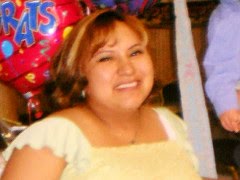
Her 19-year-old daughter, Daisy Davila, told the New York Daily News, "I'm upset because I never got a chance to say goodbye. She didn't want anyone to go with her. I made dinner and lunch ,,, hoping she would come back."
Eventually the medical board concluded that the doctor responsible for Alexandra's death was Robert F. Hosty. He had no hospital affiliation and hadn't taken any continuing medical education training since 2004.
Because of Alexandra's obstetric history, which included two c-sections, and the location of the placenta, Hosty should have known that it was unsafe to proceed with an abortion in an outpatient setting. Catastrophic complications are to be predicted, and the doctor must be certain that there is an adequate supply of blood for a possible transfusion, and a fully equipped operating room nearby in case an emergency hysterectomy is needed.
As a prudent physician would have suspected, the placenta had implanted deeply into the area of Alexandra's uterus that had been scarred by the prior surgery.
After the abortion, Alexandra began to bleed uncontrollably. Rather than seek the cause of the bleeding, Hosty administered medications, then stood by and did nothing while a nurse anesthetist intubated Alexandra and began providing oxygen. Nobody summoned an ambulance until over 45 minutes after blood began pouring out of Alexandra's body.
Paramedics arrived to find Alexandra still on the procedure table in stirrups, cold and gray and for all appearances already dead. Blood was still draining from her body into a pool on the floor. The only monitoring instrument in place was a pulse oximeter. The nurse anesthetist was administering oxygen, and because she was the only one who seemed to know what was going on, the emergency responders assumed that she was the physician. Nobody else was assisting the patient in any way.
The paramedics began a futile attempt to resuscitate Alexandra, but she was pronounced dead at the hospital.
A1 was an ambulatory surgical facility doing abortions and plastic surgery. They employed Hosty even though he had already allowed a gynecological patient to die by triggering massive bleeding then utterly failing to provide any effective lifesaving care.

1891: Notorious San Francisco Abortionist Finds Her Home in Chicago
On January 23, 1891, saloon keeper Joseph Hoffman summoned Dr. Dietrich to Shaeffer's Hotel in Chicago to tend to an ailing woman, 23-year-old Minnie Deering. Dietrich prescribed an oral medication and an alcohol and carbolic acid solution to be externally applied. The following day, Hoffman summoned Dr. Detrich and reported that he'd mixed up the medications and given Minnie the carbolic acid orally by mistake. Detrich and another doctor pumped Minnie's stomach and administered counter measures but to no avail. She died on January 25.
Even though this meant implicating himself in a crime, Hoffman told the doctors that he and Minnie had secretly married and had secretly come to the city to procure the services of an abortion doctor he referred to as "Mrs. Hageman." The coroner's jury concluded that ultimately Minnie had died because of the abortion since it had started the chain of events that led to her death. However, they did not conclusively determine that Hagenow herself had perpetrated it. They ordered her held to a grand jury pending further investigation and Hagenow was arrested.
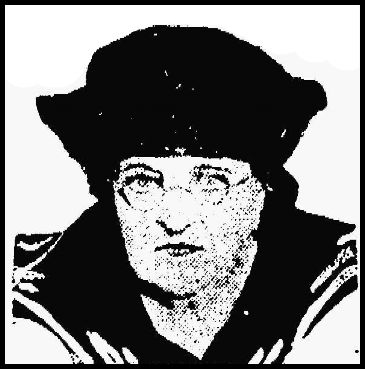
Hagenow, a prolific abortionist who had fled prosecution after the deaths of abortion patients in San Francisco, evidently had found a welcoming new home in Chicago. Her attorney, John C. King, requested a writ to get Hagenow released. Judge Tuthill "readily granted it, saying that the verdict was an admission and an exhibition of ignorance, and that Mrs. Hagenow should not have spent an hour in jail."
Tuthill thus released Hagenow to ply her trade in Chicago. She was subsequently implicated in more than a dozen subsequent abortion deaths: Sophia Kuhn, Emily Anderson, Hannah Carlson, Marie Hecht, May Putnam, Lola Madison, Annie Horvatich, Lottie Lowy, Nina H. Pierce, Jean Cohen, Bridget Masterson, Elizabeth Welter, and Mary Moorehead.
 |
| Lucy Hagenow |
Hagenow, a prolific abortionist who had fled prosecution after the deaths of abortion patients in San Francisco, evidently had found a welcoming new home in Chicago. Her attorney, John C. King, requested a writ to get Hagenow released. Judge Tuthill "readily granted it, saying that the verdict was an admission and an exhibition of ignorance, and that Mrs. Hagenow should not have spent an hour in jail."
Tuthill thus released Hagenow to ply her trade in Chicago. She was subsequently implicated in more than a dozen subsequent abortion deaths: Sophia Kuhn, Emily Anderson, Hannah Carlson, Marie Hecht, May Putnam, Lola Madison, Annie Horvatich, Lottie Lowy, Nina H. Pierce, Jean Cohen, Bridget Masterson, Elizabeth Welter, and Mary Moorehead.
Saturday, January 23, 2016
Abortion-Friendly Chicago, 1913-1944
|
| Lucy Hagenow |
As was the case nationwide before legalization, the majority of Chicago's illegal abortionists were midwives or physicians, though there were the occasional lay abortionists such as Katherine Bajda, identified as a homemaker in the Homicide in Chicago Interactive Database. Despite not being a medical professional, Bajda benefited from Chicago's catch-and-release system of dealing with deadly abortionists.
On January 23, 1929, 22-year-old Edna Vargo died in Chicago from an abortion performed that day, Katherine Bajda was held by the Coroner on February 14. On March 15, she was indicted for felony murder in Edna's death. Three days later, while free to ply her trade, Bajda got caught with 25-year-old abortion patient Violet Diancalana dead in her home.
Another Chicago midwife who evidently entered the abortion business was Caroline Orbach. On January 23, 1913, 32-year-old homemaker Margaret Wagner died at Post Graduate Hospital in Chicago from septic infection caused by an abortion perpetrated on January 9. Orbach was held by the Coroner on January 24. The case went to trial but Orbach was acquitted on November 25 for reasons I have been unable to determine. Another case played out similarly the following year. On January 23, 1914, 17-year-old Helen Kleich, who worked as a domestic servant, died at Cook County Hospital from sepsis, arising from an abortion perpetrated on January 17 and attributed to midwife Margared Wiedemann. Wiedemann was held by the Coroner for murder by abortion, but was acquitted, again, for reasons I've been unable to determine.
Blame is a bit fuzzier regarding a death on January 23, 1925. Thirty-four-year-old Kate Radochouski died at Chicago's Lakeside Hospital from complications of an abortion performed that day. The Homicide in Chicago database says that she died at the scene of the crime, which is likely to be an error, and that there was an arrest on February 11. However, there is no name given for the person arrested. I have been unable to identify the perpetrator.
 |
| Geraldine Schuyler |
Konradt took them to the home of George E. Fosberg, a physician whose license had been revoked when he'd gone to prison for bank fraud. Mrs. Schuyler paid Fosberg $100, and he took Geraldine into the basement for the abortion.
Geraldine became seriously ill the night of Saturday, January 22, and was quickly taken to St. Francis Hospital in Evanston. Less than half an hour later, she was dead.

It's interesting to note that during this period, during the first half of the 20th century, maternal deaths from all causes, including criminal abortions, were falling. Improved nutrition, sanitation, and medical care were rapidly improving women's chances of surviving pregnancy, abortion, and childbirth long before states started loosening up abortion laws in the late 1960s.

Friday, January 22, 2016
From Criminal in Chicago to Erstwhile Criminal in Texas
Criminal Chicago: Two Habitually Deadly Female Doctors
On January 22, 1900, Mrs. Barbara Shelgren, age 25, died at Augustana Hospital in Chicago of an abortion performed that day. Paulina Bechtel, identified as a midwife in the Homicide in Chicago Interactive Database, was arrested and held by Coroner's Jury and indicted of homicide by a grand jury, but the case was thrown out by Judge Holdom. Bechtel was tried in the October 3, 1895 abortion death of Mrs. Kittie Bassett. She was implicated in the abortion death of Ida Henry in 1900, but was identified as a physician in that case. According to Leslie Reagan, author of When Abortion Was a Crime, it was common for female physicians to be misidentified as midwives. Therefore I am going to assume that Bechtel was indeed a doctor. Bechtel went on to kill Mary Thorning in 1911.
|
| Lucy Hagenow |
Pre-Roe Legal in California
In June of 1967, then-Governor Ronald Reagan signed a bill legalizing abortion in California. The earlier law, passed in 1861, had allowed abortion only if intended to save the mother's life. The 1967 law allowed abortions in case of the mother's physical or mental health or for young teens pregnant through rape or incest. The mental health provision essentially allowed abortion on demand, since the woman could simply assert that she would kill herself were she not permitted the abortion. Abortions had to be performed by qualified physicians in an accredited hospital and could only be performed up to 20 weeks. The bill also allowed the establishment of dedicated abortion hospitals.
One of the purported beneficiaries of the new law was 26-year-old Kathryn Strong. On January 21, 1972, she went to Civic Center Hospital in Oakland, California for a legal abortion that was to be performed by Dr. Harold Van Maren. I have not been able to determine the grounds for Kathryn's abortion. During the procedure, her uterus was perforated. According to her medical records, she suffered extensive hemorrhage and shock. She died the following day, leaving behind a three-year-old son. It's difficult to judge if Kathryn's death was due to malpractice, since perforation was a known complication which could happen even if the abortion were performed with care, but, of course, could also be caused by carelessness.

 |
| Curtis Boyd |
However, because of the DIC, Vanessa's blood couldn't clot, and she bled to death from the liver laceration. Since second-trimester evacuation abortions were still new at the time, Boyd and his staff didn't realize that there was a risk of DIC. To Boyd's credit, he reported Vanessa's death to the Centers for Disease Control and wrote a medical journal article warning other abortion practitioners that DIC could occur during second-trimester evacuation abortions.
Wednesday, January 20, 2016
Four Deaths Over Two Centuries
Mary Ackerly, age 19, of Sing-Sing, New York, suffered a Dickensian life before finally dying, on January 20, 1846, from a forced abortion perpetrated in a New York brothel. The full story can be read here.
On January 20, 1910, homemaker Elizabeth Lambacher, age 27, died at her Robby Street home in Chicago from septic peritonitis caused by an abortion. A nurse or midwife named Mrs. Hopp was indicted by a grand jury. The source document does not indicate that the case ever went to trial. Note, please, that with general public health issues such as doctors not using proper aseptic techniques, lack of access to blood transfusions and antibiotics, and overall poor health to begin with, there was likely little difference between the performance of a legal abortion and illegal practice, and the aftercare for either type of abortion was probably equally unlikely to do the woman much, if any, good. For more information about early 20th Century abortion mortality, see Abortion Deaths 1910-1919.
"Andrea" is one of the women Life Dynamics identifies on their "Blackmun Wall" as having been killed by a safe and legal abortion. According to Life Dynamics, Andrea was 26 years old when she underwent a newly legalized abortion at a New York City abortion facility on January 12, 1971. After her abortion, Andrea contracted an infection. Her system was unable to fight the infection, and she died on January 20, 1971, leaving behind six children.
The survivors of 21-year-old Linda Fondren sued after her death. Linda had a safe and legal abortion performed by Mohammad Pourtabib at Pre-Birth in Chicago on New Years Day, 1974. She suffered bleeding, but Pourtabib did not provide follow-up care. Linda was taken by ambulance to Michael Reese Hospital, in shock and needing emergency care. They would not admit her, but instead sent her to Cook County Hospital, where doctors performed an emergency hysterectomy. Linda remained hospitalized at Cook County. On January 16, doctors tried to drain fluids from Linda's chest and inadvertently punctured her spleen. Linda died on January 20 from "hemoperitoneum with splenic rupture following hysterectomy and earlier dilatation and curettage." She left behind a small child.
On January 20, 1910, homemaker Elizabeth Lambacher, age 27, died at her Robby Street home in Chicago from septic peritonitis caused by an abortion. A nurse or midwife named Mrs. Hopp was indicted by a grand jury. The source document does not indicate that the case ever went to trial. Note, please, that with general public health issues such as doctors not using proper aseptic techniques, lack of access to blood transfusions and antibiotics, and overall poor health to begin with, there was likely little difference between the performance of a legal abortion and illegal practice, and the aftercare for either type of abortion was probably equally unlikely to do the woman much, if any, good. For more information about early 20th Century abortion mortality, see Abortion Deaths 1910-1919.
"Andrea" is one of the women Life Dynamics identifies on their "Blackmun Wall" as having been killed by a safe and legal abortion. According to Life Dynamics, Andrea was 26 years old when she underwent a newly legalized abortion at a New York City abortion facility on January 12, 1971. After her abortion, Andrea contracted an infection. Her system was unable to fight the infection, and she died on January 20, 1971, leaving behind six children.
The survivors of 21-year-old Linda Fondren sued after her death. Linda had a safe and legal abortion performed by Mohammad Pourtabib at Pre-Birth in Chicago on New Years Day, 1974. She suffered bleeding, but Pourtabib did not provide follow-up care. Linda was taken by ambulance to Michael Reese Hospital, in shock and needing emergency care. They would not admit her, but instead sent her to Cook County Hospital, where doctors performed an emergency hysterectomy. Linda remained hospitalized at Cook County. On January 16, doctors tried to drain fluids from Linda's chest and inadvertently punctured her spleen. Linda died on January 20 from "hemoperitoneum with splenic rupture following hysterectomy and earlier dilatation and curettage." She left behind a small child.
Tuesday, January 19, 2016
Two Deaths -- The Second Straight Out of a Horror Story
 |
| Morris Wortman |
The March 1990 Bernadell Technical Bulletin says that 17-year-old Glenna Jean Fox underwent a second trimester abortion at the hands of Dr. Morris Wortman in January of 1989. Glenna Jean continued to bleed for two days after this second-trimester abortion. She was taken to an emergency room but died from shock several hours later on January 19.
1993: The Body and the Trunk
Like the deaths of Jacqueline Smith and Barbara Lofrumento, the story of Angela Sanchez involves illegal abortion and attempts to hide the body. The difference is that Alicia Hannah's abortion clinic was operating openly and apparently legally.
On January 19, 1993, Angela Sanchez, age 27, went to Clinica Feminina de la Comunidad with two of her four children: 12-year-old Maria, and 2-year-old Victor. Maria and Victor waited for their mother in the lobby. A clinic staffer approached Maria and suggested that she take the car and drive Victor home. Maria protested that she was too young to drive. The children continued to wait for their mother.
At around noon, a staffer took the children to lunch. When they returned to the clinic, Angela's car was gone, and Maria was told that her mother had gone to another clinic. The children continued to wait, but when their mother failed to appear Maria finally called her Uncle Hemiberto, who took them home with him.
By 10:00, Angela's family was frantic, and Angela's sister Celia took Maria to the clinic to look for the missing woman. When they arrived, they saw Angela's car. Maria jumped out of her aunt's pickup truck and ran to the car. There she saw her mother lying on the ground. Maria asked two women from the clinic, who were standing nearby, what had happened to her mother, and they told her, "She's dead."
Sobbing, Maria clung to and kissed her mother while the two women from the clinic told Celia that a man had shoved Angela from a car and they were picking her up. One of the women, Alicia Ruiz Hanna, who operated the facility, told Maria that her mother had just come knocking on the door, then collapsed.
Celia put her sister's stiffened body in the back of her truck and flagged down a policeman, who led her and Maria to a hospital. There, Celia was told that her sister had been dead for several hours.
After a prolonged investigation, and Hanna's jailhouse conversion to Christianity, the full story finally emerged. Hanna, who had been passing herself off as a doctor and performing abortions at the facility, had given Angela an injection to induce abortion. Angela stopped breathing, and staffers attempted to revive her. One of them even tried to call 911, but Hanna told her employee, "No, I'll save her -- we'll get in trouble" and hung up the phone because she feared that she would go to jail and lose her children if it was discovered that she was running the clinic illegally. She and the other woman had planned to put Angela's stiffening body into the trunk of her own car and abandon the vehicle in Tijuana.
Hanna had originally used doctors to perform the abortions but eventually started doing them herself as a cost-cutting measure.
In December 1994, Hanna was convicted of second-degree murder for Angela's death. She was sentenced to 16 years to life.
Subscribe to:
Posts (Atom)