With the recent release of videos alleging that Planned Parenthood is selling fetal tissue, I thought it would be a good time to update and reprint an old article that examines the difference between mere pregnancy tissue and an unborn baby.
Two common prochoice euphamisms for the fetus destroyed by abortion -- "products of conception" and "pregnancy tissue" -- realy do accurately apply in those unusual circumstances when there is no fetus present in a pregnancy.
The two conditions in which a woman shows all the symptoms of pregnancy but is not sheltering a new human being are gestational trophoblastic disease (GTD) and blighted ovum.
In GTD, the conception results in what is called a "hydatidiform mole." This is a cluster of tissue with an appearance somewhat similar to a bunch of grapes. In blighted ovum, a placenta and amniotic sac form, but there is no fetus in the sac. Some researchers seem to believe that a blighted ova is caused by the same abnormal conception process that causes hydatidiform moles. Others say that they are two different kinds of abnormalities.
Actually, the existence of hydatidiform moles and blighted ova underscore the prolife position. One need only compare a fetus with a blighted ovum or a molar pregnancy of the same gestation age to see very clearly the difference between "pregnancy tissue" and a viable embryonic human being. In fact, even in a partial mole, there is a clear difference between the doomed fetus, which is recognizably a fetus, and the molar tissue. For those of you with a strong stomach, here are a removed mole, a blighted ovum opened after it was expelled, and aborted fetuses, for your comparison:
Hydatidiform Mole
Blighted Ovum
First Trimester Abortion Photos (Warning: Very Graphic!)
You can see that the mole really is just a blob of tissue. Ditto for the blighted ovum. Nobody is going to be harvesting lungs, liver, thymus, long bones, or neural tissue from either because there are none. When there is a tiny human being present it's different. No matter how thoroughly shredded the embryo is, you can still see recognizable human body parts, such as arms, legs, hands, feet, and face. Only the degree to which the organs are damaged would stop a procurement company from harvesting a heart or a head.
To reiterate for the benefit of the terminally clueless: Prolifers don't oppose removing tissue. We oppose killing fetuses. Any questions?
To email this post to a friend, use the icon below.
Tuesday, August 11, 2015


August 11, 1923: Chicago Midwife's Fatal Efforts
On August 11, 1923, 26-year-old Martha Byzynski died at Chicago's St. Mary's Hospital from an abortion performed that day.
The coroner named Jane Worchowski as the person responsible. Worchowski's profession is given as nurse or midwife.

The coroner named Jane Worchowski as the person responsible. Worchowski's profession is given as nurse or midwife.

Monday, August 10, 2015
From the "Back Alley" to "Safe and Legal"
On August 10, 1917, 29-year-old Emelia Gorman died at Chicago's St. Mary's Hospital from a criminal abortion perpetrated that day by Dr. Anna Sorenson. Although Sorenson was indicted by a Grand Jury on September 1, she remained free to perform fatal abortions on Mrs. M. Linstrom in November and Margaret Crowe
in January of the following year. Sorenson was finally arrested on
January 15, and her killing spree came to an end when she herself died
in prison while awaiting trial.
Let's move ahead to the era of safe, legal abortions in freestanding clinics.
Center for
Reproductive and Sexual Health ("CRASH") was the model abortion clinic
-- a published review of their earliest patient records, published by
Bernard Nathanson, played a key role in "proving the safety of legal
outpatient abortion."
On August 10, 1988, 19-year-old K.B. was given anesthesia for a safe, legal 14-week abortion. Since Life Dynamics calls her "Kelly" on their "Blackmun Wall" of women killed by abortion, I will refer to her as Kelly as well.
Shortly after the procedure, she showed signs of distress, but emergency measures were not instituted for almost an hour. Kelly was transported to Cabrini Medical Center where she was pronounced dead from complications of anesthesia.
After Kelly's death, the health department investigated and found a mystery: Kelly's chart listed her post-operative condition as "pink, responsive, alert," even though she had gone into full cardio-respiratory arrest by the time indicated on the assessment. They learned that the note had been entered into the chart before the abortion was even performed.
The inspectors noted that CRASH "did not employ proper monitoring equipment or procedures," "had no working EKG machine," and didn't have a cardiac defibrillator. They noted that no one on staff was qualified to perform CPR. No one on staff was qualified to administer anesthesia, and they did not use proper procedures or equipment. Anesthesia was administered "by eye," with no means of accurately measuring the dose. Dosage was estimated to be twice that recommended in the procedure manual.
The operating rooms were found to be ill-lit, and there was no soap or paper towels at the scrub sink. The scrub sinks were stained, the walls and floors dirty, trash was stored in the scrub room. There were red make-up stains on the oxygen masks and nitrous oxide masks, dusty tubing on the suction machines, and blood on the wheels of the operating table.
CRASH had no
documentation verifying the credentials or qualifications of medical
director David Gluck. Gluck had been previously convicted of felony
charges related to the sale of 48,000 Diluadid tablets to pay off
gambling debts. His license had actually been revoked two months before
K.B.'s death, but had been restored by judicial stay.
There was no evidence at the investigation two weeks after Kelly's death that Gluck had reviewed her chart, or the charts of 18 other patients identified as having suffered complications.
The state closed CRASH for 60 days, but it never re-opened.
Dr. Gluck went on to perform the fatal abortion on Alerte Desanges in 1994.

Let's move ahead to the era of safe, legal abortions in freestanding clinics.
 |
| Bernard Nathanson |
On August 10, 1988, 19-year-old K.B. was given anesthesia for a safe, legal 14-week abortion. Since Life Dynamics calls her "Kelly" on their "Blackmun Wall" of women killed by abortion, I will refer to her as Kelly as well.
Shortly after the procedure, she showed signs of distress, but emergency measures were not instituted for almost an hour. Kelly was transported to Cabrini Medical Center where she was pronounced dead from complications of anesthesia.
After Kelly's death, the health department investigated and found a mystery: Kelly's chart listed her post-operative condition as "pink, responsive, alert," even though she had gone into full cardio-respiratory arrest by the time indicated on the assessment. They learned that the note had been entered into the chart before the abortion was even performed.
The inspectors noted that CRASH "did not employ proper monitoring equipment or procedures," "had no working EKG machine," and didn't have a cardiac defibrillator. They noted that no one on staff was qualified to perform CPR. No one on staff was qualified to administer anesthesia, and they did not use proper procedures or equipment. Anesthesia was administered "by eye," with no means of accurately measuring the dose. Dosage was estimated to be twice that recommended in the procedure manual.
The operating rooms were found to be ill-lit, and there was no soap or paper towels at the scrub sink. The scrub sinks were stained, the walls and floors dirty, trash was stored in the scrub room. There were red make-up stains on the oxygen masks and nitrous oxide masks, dusty tubing on the suction machines, and blood on the wheels of the operating table.
 |
| David Gluck |
There was no evidence at the investigation two weeks after Kelly's death that Gluck had reviewed her chart, or the charts of 18 other patients identified as having suffered complications.
The state closed CRASH for 60 days, but it never re-opened.
Dr. Gluck went on to perform the fatal abortion on Alerte Desanges in 1994.

Saturday, August 08, 2015
1975: Death after Uterine Rupture
On August 6, 1975, 29-year-old Cheryl Tubbs underwent a saline abortion at Pacific Glen Hospital in Los Angeles County. A saline abortion involved using a large syringe to remove amniotic fluid from the womb and replace it with a strong salt solution that would kill the unborn baby.
Cheryl experienced heavy vaginal bleeding after this safe, legal abortion, so she was transferred to White Hospital on the evening of August 7. She continued to bleed profusely, and twice went into cardiac arrest. Staff performed a paracentesis on her to remove blood and fluids from her abdomen. About an hour after midnight, staff could no longer detect any blood pressure. For an hour they tried heart massage, to no avail. Cheryl was pronounced dead at 2:30AM on August 8.
An autopsy revealed that Cheryl's uterus had ruptured during the abortion, spilling blood and uterine material into her abdomen. She had bled to death.
Two years later, Jackie Bailey also bled to death from a ruptured uterus caused by a saline abortion at Pacific Glen.
Cheryl experienced heavy vaginal bleeding after this safe, legal abortion, so she was transferred to White Hospital on the evening of August 7. She continued to bleed profusely, and twice went into cardiac arrest. Staff performed a paracentesis on her to remove blood and fluids from her abdomen. About an hour after midnight, staff could no longer detect any blood pressure. For an hour they tried heart massage, to no avail. Cheryl was pronounced dead at 2:30AM on August 8.
An autopsy revealed that Cheryl's uterus had ruptured during the abortion, spilling blood and uterine material into her abdomen. She had bled to death.
Two years later, Jackie Bailey also bled to death from a ruptured uterus caused by a saline abortion at Pacific Glen.
Friday, August 07, 2015
Dubious Beneficiaries of "Safe and Legal" Abortion
Ruth Montero, age 23, underwent a safe and legal vacuum abortion of her 8-week pregnancy, under general anesthesia, August 1979, at Women's Care Center in Miami. Ruth awoke from anesthesia in the recovery room, and went into convulsions and cardiopulmonary arrest. She died from hemorrhage and a prolapsed mitral valve on August 7. Ruth, Myrta Baptiste, Maura Morales, and Shirley Payne all died in a clinic owned by Hipolito Barreiro,
trained in Argentina and West Africa, but not licensed in U.S. Barreiro
was accused of practicing without a license and tampering with witness.
Mary Ives was 28 when she had an abortion 19 weeks into her pregnancy. She was admitted to W.W. Backus Hospital in Norwich, Connecticut, for treatment of complications of the abortion, but her heart and lungs failed due to amniotic fluid embolism. Mary was pronounced dead on August 7, 1983.
Teresa Smith was 31 years of age when she submitted to a D&C abortion. She went into cardio-respiratory arrest from a pulmonary embolism and was pronounced dead at a local hospital on August 7, 1988.
The abortion lobby will argue that although all of these deaths are tragic, more women would be dying were abortion not legal. The evidence shows quite the contrary. Deaths from abortions were falling long before legalization, which didn't even show up as a blip on the data tracking those deaths. Improved overall health, improved medical care in general, and the development of better treatments for injuries and infections brought all maternal mortality, including abortion mortality, down. We should not let the abortion lobby claim credit for the benefits of other people's hard and laudable work.

Mary Ives was 28 when she had an abortion 19 weeks into her pregnancy. She was admitted to W.W. Backus Hospital in Norwich, Connecticut, for treatment of complications of the abortion, but her heart and lungs failed due to amniotic fluid embolism. Mary was pronounced dead on August 7, 1983.
Teresa Smith was 31 years of age when she submitted to a D&C abortion. She went into cardio-respiratory arrest from a pulmonary embolism and was pronounced dead at a local hospital on August 7, 1988.
The abortion lobby will argue that although all of these deaths are tragic, more women would be dying were abortion not legal. The evidence shows quite the contrary. Deaths from abortions were falling long before legalization, which didn't even show up as a blip on the data tracking those deaths. Improved overall health, improved medical care in general, and the development of better treatments for injuries and infections brought all maternal mortality, including abortion mortality, down. We should not let the abortion lobby claim credit for the benefits of other people's hard and laudable work.

Thursday, August 06, 2015
1920 and 1988, Equally Dead
On August 6, 1920, 35-year-old Christina Anderson died at Chicago's County Hospital from a criminal abortion. Midwife Emelia Schaffer
was arrested for murder, and a woman named Pearl Freese as an
accessory. Schaffer was indicted on August 14, but the case never went
to trial.
In late July of 1988, 30-year-old Laura Sorrels underwent an abortion at a facility in Lancaster, California.
Two weeks later, on August 6th, she was found dead in a motel room. Her one-year-old daughter was found in the room with her. Whoever had performed Laura's abortion had failed to notice that the embryo was not in her uterus, but was in her fallopian tube. The tube ruptured, and Laura died of blood loss and shock, her baby daughter by her side. Even though, in theory, women who choose abortion should be less likely to die of ectopic pregnancy complications, experiences shows that they're actually //more// likely to die, due to sloppy practices by abortion practitioners.
In late July of 1988, 30-year-old Laura Sorrels underwent an abortion at a facility in Lancaster, California.
Two weeks later, on August 6th, she was found dead in a motel room. Her one-year-old daughter was found in the room with her. Whoever had performed Laura's abortion had failed to notice that the embryo was not in her uterus, but was in her fallopian tube. The tube ruptured, and Laura died of blood loss and shock, her baby daughter by her side. Even though, in theory, women who choose abortion should be less likely to die of ectopic pregnancy complications, experiences shows that they're actually //more// likely to die, due to sloppy practices by abortion practitioners.
Wednesday, August 05, 2015
The Newest Planned Parenthood Video: Not Three Shots from a Smoking Gun
The Center for Medical Progress (CMP) released another Planned Parenthood video yesterday in which Melissa Farrell, Director of Research for Planned Parenthood Gulf Coast, appears to be saying that Planned Parenthood will deliberately abort fetuses intact in order to harvest their organs.
Because of CMP's misleading editing of the first video, I was very hesitant to affirm the current claims against Ms. Farrell. In the release of that first video, and subsequently, CMP claims that Dr. Deborah Nucatola admitted that Planned Parenthood uses illegal partial-birth abortions to harvest fetuses for their organs. As I explained elsewhere, she said no such thing. In fact, the use of a partial-birth abortion (PBA) would be counter-productive because the last step in a PBA is to collapse the fetal head by suctioning out the brain. One could hardly harvest an intact calvarium (head) in order to get an intact brain if one sucked out the brain, thus pulverizing it.
With this in mind I will looked at both the edited Farrell video and the transcript of the unedited video, available here. (The unedited video is not yet available on the CMP web site.) I'll examine three issues: procurement of intact specimens (with the implication of infanticide that goes with it), modification of abortion technique in order to obtain specimens, and profiteering from procurement of fetal tissues and organs.
Intact Specimens/Infanticide
CMP asserts that in the new video, Planned Parenthood is admitting to delivering intact fetuses, which would have to be delivered alive in order to be of any use in fetal tissue harvesting. Thus, CMP says, this implies infanticide. I think that the evidence from the transcript only indicates the possible live delivery of pre-viable infants of 20 or fewer weeks of gestation, though there is mention on page 104 of some clinics within the Planned Parenthood Gulf Cost doing abortions up to 22 weeks.
Allowing for the normal margin of error by ultrasound, 20-week babies might turn out to actually be 22 week babies at the cusp of viability. Abortions at 22 weeks might end up delivering a 24 week baby, typically considered viable.
A Planned Parenthood in New Jersey has already been caught admitting to live births up to 22 weeks, entirely independent of fetal tissue harvesting, and allowing the preemies to die, A Planned Parenthood representative testifying in Florida has admitted to simply letting the mother and doctor decide whether or not to just let a live-born infant die if he or she survives an abortion. This is independent of any attempt to harvest fetal tissue. So is it possible that if a live-born, potentially viable infant was born during an abortion at PPGC that the baby would be killed to harvest his or her organs? It's entirely possible.
What about the idea that these babies would deliberately be delivered alive and intact in order to harvest the organs? At the bottom of page 9, when the buyer asks about getting intact brains from 18 to 22 week fetuses.
On page 97, when they are in the lab, Tram Nguyen, the Ambulatory Surgery Center Director for Planned Parenthood Gulf Coast, says, "we can't really intend to bring it out intact." On page 98 he reiterates that "we can never intend to complete the procedure intact - you can't intend to, but it happens."
I'd say it's a bust, therefore, on the idea that Planned Parenthood admits to currently delivering live fetuses to harvest their organs. Ms. Farrell expresses a willingness to see if the doctors are willing to modify their techniques to get intact deliveries, but Dr. Nguyen is clearing giving a "No" before even being asked.
Modification of Abortion Techniques
Beginning at the bottom of page 9, Ms. Farrell says some pretty damning things:
At the bottom of page 14, Ms. Farrell says, "we get what we need to do to alter our standard of care so that we're still maintaining patient safety," which again indicates willingness to make changes to the abortion method.
On page 16, she in the context of compensation, she says, "obviously, the procedure is more complicated. .... So anything of a higher gestational age, there's more opportunity for complication...." This goes counter to what she said previously about not compromising patient safety. A prolonged and higher-risk procedure in order to harvest tissue would clearly be illegal.
This looks like an admission of making some changes to the abortion procedure, to the point of increasing patient risk.
Profiteering
Beginning on page 13, the buyer starts speaking about compensation Ms. Farrell mentions that the staff is already trained
Starting at the bottom of page 14, Ms. Farrell says, "we will definitely need to work out something as far as covering additional cost for additional things related to it -- .... I'm very particular about working with the language of the budgeted contract to where the language is specific to covering the administrative costs and not necessarily the per-specimen, because that borders on some language in the federal regs that's a little touchy." This is starting to muddy the waters. Is she really speaking of carefully covering additional costs, or about making it appear as though they are merely covering administrative costs?
On page 16, where she speaks about modifying procedures, she says that when collecting fetal tissue, "Sometimes the procedures are longer. So then, anything that we piggy-back onto that for collection purposes, obviously, would have to, that additional time, cost, administrative burden." She goes on, "we even will go as far as to have timed trials where we go up there with a stopwatch and time how much, so we can at least know what our cost is. Because I think, in terms of budgeting, if you don't even know your cost, how can you develop a budget to cover that." This indicates a mere desire to offset costs.
On page 17, she says:
But on page 21 she talks about delivering tissue to Louisiana, which is clearly expensive and time-consuming: "I rent a Ford explorer or something. I pack everything in the back because it's the only way I know, for sure, it's going to get there."
On page 59, Ms. Farrell mentions that she has a financial background in that she used to help her mother to do taxes. This is where we find the comment, "In terms of areas that I can contribute to the organization both locally and nationally is diversification of the revenue stream, so we can continue to do good work" She segued into that after talking about the movie After Tiller and how clinics get all sorts of inspections and audits, and how she started working at Planned Parenthood. The context isn't compensation for fetal tissue procurement. The purported buyers talk about profit and gold and bringing in money, and Ms. Farrell just makes the kind of "Yeah" comments one makes to indicate that one is listening.
On page 76 is where Ms. Farrell starts talking about line items:
On page 77 she talks about "a tissue banking part" where Planned Parenthood would freeze harvestable organs that don't have buyers yet, so that they could be provided later. The purported procurers indicated that these would be less desirable but perhaps some researchers would want them. The procurers bring up money again, though it's not clear if Ms. Farrell is thinking in terms of monetizing fetal parts or in terms of streamlining the harvesting process by collecting and labeling whatever is in good enough shape and then worrying about who wants what.
I would have to say that I'm not detecting anything other than fees for services rather than fees for tissues. If the fees were beyond the actual costs, this could constitute profiteering, but if it's on a by-service basis rather than a by-specimen basis, it might well be legal.
Final Verdict:
Aborting live fetuses and harvesting their organs: Possible but not verified.
Modifying abortion techniques to harvest organs: Confirmed to the point of willingness to increase patient risk.
Profiteering: No evidence.
This video, like the first one, is edited to produce clear evidence of guilt that most likely isn't there in some areas. I would admonish my readers to avoid Planned Parenthood Derangement Syndrome and refrain from asserting that this video shows any Planned Parenthood employee expressing willingness to deliver live babies in order to harvest their organs, and to refrain from asserting that this video shows profiteering.
Because of CMP's misleading editing of the first video, I was very hesitant to affirm the current claims against Ms. Farrell. In the release of that first video, and subsequently, CMP claims that Dr. Deborah Nucatola admitted that Planned Parenthood uses illegal partial-birth abortions to harvest fetuses for their organs. As I explained elsewhere, she said no such thing. In fact, the use of a partial-birth abortion (PBA) would be counter-productive because the last step in a PBA is to collapse the fetal head by suctioning out the brain. One could hardly harvest an intact calvarium (head) in order to get an intact brain if one sucked out the brain, thus pulverizing it.
With this in mind I will looked at both the edited Farrell video and the transcript of the unedited video, available here. (The unedited video is not yet available on the CMP web site.) I'll examine three issues: procurement of intact specimens (with the implication of infanticide that goes with it), modification of abortion technique in order to obtain specimens, and profiteering from procurement of fetal tissues and organs.
Intact Specimens/Infanticide
CMP asserts that in the new video, Planned Parenthood is admitting to delivering intact fetuses, which would have to be delivered alive in order to be of any use in fetal tissue harvesting. Thus, CMP says, this implies infanticide. I think that the evidence from the transcript only indicates the possible live delivery of pre-viable infants of 20 or fewer weeks of gestation, though there is mention on page 104 of some clinics within the Planned Parenthood Gulf Cost doing abortions up to 22 weeks.
Allowing for the normal margin of error by ultrasound, 20-week babies might turn out to actually be 22 week babies at the cusp of viability. Abortions at 22 weeks might end up delivering a 24 week baby, typically considered viable.
A Planned Parenthood in New Jersey has already been caught admitting to live births up to 22 weeks, entirely independent of fetal tissue harvesting, and allowing the preemies to die, A Planned Parenthood representative testifying in Florida has admitted to simply letting the mother and doctor decide whether or not to just let a live-born infant die if he or she survives an abortion. This is independent of any attempt to harvest fetal tissue. So is it possible that if a live-born, potentially viable infant was born during an abortion at PPGC that the baby would be killed to harvest his or her organs? It's entirely possible.
What about the idea that these babies would deliberately be delivered alive and intact in order to harvest the organs? At the bottom of page 9, when the buyer asks about getting intact brains from 18 to 22 week fetuses.
Yeah, I think we could do that. Some of it ... will be happenstance, because you know sometimes as the procedure's happening, you know the procedure itself, for the removal, is generally standardized. .... But it's something that we can look at and explore how we can make that happen so we can have a higher chance. .... when it matters, and the cases where it's mattered and the physicians have needed an intact specimen -- So, we can make it happen. We just need to figure out how that we can do this under our project needs.So Ms. Farrell is willing to try to get her doctors to change their procedures to increase the chances of an intact delivery.
On page 97, when they are in the lab, Tram Nguyen, the Ambulatory Surgery Center Director for Planned Parenthood Gulf Coast, says, "we can't really intend to bring it out intact." On page 98 he reiterates that "we can never intend to complete the procedure intact - you can't intend to, but it happens."
I'd say it's a bust, therefore, on the idea that Planned Parenthood admits to currently delivering live fetuses to harvest their organs. Ms. Farrell expresses a willingness to see if the doctors are willing to modify their techniques to get intact deliveries, but Dr. Nguyen is clearing giving a "No" before even being asked.
Modification of Abortion Techniques
Beginning at the bottom of page 9, Ms. Farrell says some pretty damning things:
[W]e've had studies in which the company or the investigator has a specific need, for certain portions of the products of conception. And we bake that into our contract, and our protocol, that we follow this. And we deviate from our standard in order to do that.This sounds like it goes beyond mere willingness to modify a procedure and into a willingness to deviate from Planned Parenthood's standards of care. But on page 12, we have this exchange:
Buyer: So it sounds like you have physicians that would be able to change the procedure, that if they're knowing --
Farrell: Yeah.
Buyer: That's okay, this patient could provide certain specimens, and we want 'em intact, so that physician has the knowledge and the ability to change the procedure just a bit to make sure we can get --
Farrell: Right. And it will depend, obviously the change in the procedure will have to be where it's not gonna put the patient at more risk, prolong the procedure and put her at more risk. .... And that's something we'll have to discuss with our doctors and see how they could do it. Because some of our doctors have projects and they're collecting the specimens, so they do it in a way they can get the best specimens. So I know it can happen --This sounds more like what Dr. Nucatola was saying about just changing where to place forceps in order to avoid crushing desired organs and switching to a breech presentation when trying to get an intact head. As I said before, I don't see changing where you grasp the fetus and which you grab first classifies ad really changing the procedure.
At the bottom of page 14, Ms. Farrell says, "we get what we need to do to alter our standard of care so that we're still maintaining patient safety," which again indicates willingness to make changes to the abortion method.
On page 16, she in the context of compensation, she says, "obviously, the procedure is more complicated. .... So anything of a higher gestational age, there's more opportunity for complication...." This goes counter to what she said previously about not compromising patient safety. A prolonged and higher-risk procedure in order to harvest tissue would clearly be illegal.
This looks like an admission of making some changes to the abortion procedure, to the point of increasing patient risk.
Profiteering
Beginning on page 13, the buyer starts speaking about compensation Ms. Farrell mentions that the staff is already trained
on how to protect human subjects. And so they know how to consent the patient, they know how to do everything and doing to where, we're kind of aware of the burden on the administrative side.... So, as far as the administrative burden it's working out the logistics on our end as we're having a research department like ours. .... I'm not saying it's necessarily easy but one of the things that we really work to do is integration. Seamless integration, the best we can, taking into consideration what the standards are and why these standards are here and the needs of the client and getting the samples, in the time, in the manner, in the condition that you need them. Not compromising patient safety, and we're not compromising clinic flow. .... And you said something about wanting to be on site?The purported buyer says, "Well, if you've got someone, that's great because when we have to be on site we kind of get in the way." At this point it sounds as if Planned Parenthood would have to invest the time in doing the informed consent and do the work in the lab. Elsewhere Ms. Farrell spoke about how they typically managed tissue, which is to check it for completeness then dump it in a common bucket for disposal. Having to set aside a specimen and pick through it using sterile technique would be additional work and staff time.
Starting at the bottom of page 14, Ms. Farrell says, "we will definitely need to work out something as far as covering additional cost for additional things related to it -- .... I'm very particular about working with the language of the budgeted contract to where the language is specific to covering the administrative costs and not necessarily the per-specimen, because that borders on some language in the federal regs that's a little touchy." This is starting to muddy the waters. Is she really speaking of carefully covering additional costs, or about making it appear as though they are merely covering administrative costs?
On page 16, where she speaks about modifying procedures, she says that when collecting fetal tissue, "Sometimes the procedures are longer. So then, anything that we piggy-back onto that for collection purposes, obviously, would have to, that additional time, cost, administrative burden." She goes on, "we even will go as far as to have timed trials where we go up there with a stopwatch and time how much, so we can at least know what our cost is. Because I think, in terms of budgeting, if you don't even know your cost, how can you develop a budget to cover that." This indicates a mere desire to offset costs.
On page 17, she says:
And that's the thing that it's, a lot of folks I get this mainly from academic institutions, they see Planned Parenthood and think, "Oh, you're non-profit. That means you're non-budget." And they will come to us with budgets that are, quite frankly, insulting. I mean, really? Where in the United States can you, an 8-page consent form for this amount of money? it takes 30 minutes to administer that to a patient. .... If anything, we serve the community and we have to provide services to the community at a very very low cost, and we can't underwrite anyone's research project.Ms. Farrell reiterates this concept on page 53, when she says:
They know they want to come to Planned Parenthood to get it but they don't bring us enough money. Then there's teh mentality where "you're no profit, you should just give us the stuff." I wasn't joking when I said insulting budgets, I mean they're wanting us to do all of these things consent the patient, collect the specimens, and do this, and do that and for nothing, literally, literally, zero.Here, this seems to indicate a desire to recoup costs. On page 18 she even seems to be indicating that the additional per-patient time would mean that they could schedule fewer patients, thus forgoing some patient fees. She also indicates that staff drive the specimens to FedEx for shipping.. She speaks about packaging on page 20, going into detail about the material, and by implication time, that needs to go into preparing specimens for shipment. However, further down she says:
Typically, our sponsors set up a FedEx account for us, and we just use that account. We go online, and we have it set up in our FedEx world account, put everything in, print up the air bill, put it on dry ice, put it in the freezer, bricks, whatever we need to do and either drop it off -- whatever we need to do -- we have FedEx pick up here about three or four pm. Then anything that is late, something that was collected late, we drop it off at FedEx. It's literally on the way home for me, so yeah.So this indicates that the transportation of the package to FedEx isn't any additional staff time or mileage reimbursement.
But on page 21 she talks about delivering tissue to Louisiana, which is clearly expensive and time-consuming: "I rent a Ford explorer or something. I pack everything in the back because it's the only way I know, for sure, it's going to get there."
On page 59, Ms. Farrell mentions that she has a financial background in that she used to help her mother to do taxes. This is where we find the comment, "In terms of areas that I can contribute to the organization both locally and nationally is diversification of the revenue stream, so we can continue to do good work" She segued into that after talking about the movie After Tiller and how clinics get all sorts of inspections and audits, and how she started working at Planned Parenthood. The context isn't compensation for fetal tissue procurement. The purported buyers talk about profit and gold and bringing in money, and Ms. Farrell just makes the kind of "Yeah" comments one makes to indicate that one is listening.
On page 76 is where Ms. Farrell starts talking about line items:
And if we are able to obtain intact fetal cadavers, then we can make it part of the budget that any dissections are this, and splitting the specimens into different shipments is that, that's, it's all just a matter of line items.This strikes me as billing for services, not for parts.
On page 77 she talks about "a tissue banking part" where Planned Parenthood would freeze harvestable organs that don't have buyers yet, so that they could be provided later. The purported procurers indicated that these would be less desirable but perhaps some researchers would want them. The procurers bring up money again, though it's not clear if Ms. Farrell is thinking in terms of monetizing fetal parts or in terms of streamlining the harvesting process by collecting and labeling whatever is in good enough shape and then worrying about who wants what.
I would have to say that I'm not detecting anything other than fees for services rather than fees for tissues. If the fees were beyond the actual costs, this could constitute profiteering, but if it's on a by-service basis rather than a by-specimen basis, it might well be legal.
Final Verdict:
Aborting live fetuses and harvesting their organs: Possible but not verified.
Modifying abortion techniques to harvest organs: Confirmed to the point of willingness to increase patient risk.
Profiteering: No evidence.
This video, like the first one, is edited to produce clear evidence of guilt that most likely isn't there in some areas. I would admonish my readers to avoid Planned Parenthood Derangement Syndrome and refrain from asserting that this video shows any Planned Parenthood employee expressing willingness to deliver live babies in order to harvest their organs, and to refrain from asserting that this video shows profiteering.
Monday, August 03, 2015
Two More Safe-n-Legal Deaths
Angel Dardie, age
22, left two children motherless when she died on August 3, 1982, of
disseminated intravascular coagulopathy (a clotting disorder) after a safe, legal saline abortion performed by Youl Choi at Plymouth General Hospital. Angel's mother
sued, saying that the abortion was performed negligently. Although she
sued for $5 million, she was awarded a settlement of $6000 from Choi and
$2500 from the hospital. $1744 of this went to the attorney, plus an
additional $667 given to him from the settlement for his expenses. $1528
of the settlement was ordered to be used to reimburse for funeral
expenses. This left Angel's mother and orphans with $4561. No settlement
was awarded for pain and suffering, nor was there any settlement for
Angel's surviving children.
 Dawn Mack, age 21, had an abortion performed at National Abortion Federation member facility Eastern Women's Center August 2, 1991. While at Eastern, Dawn went into cardiorespiratory arrest. The suit said that Eastern's staff failed to adequately respond to "the
precipitous drop in Plaintiff's blood pressure, cardiac arrhythmia
leading to cardiac arrest and cessation of respiration." Dawn was transported to a hospital by ambulance, where staff tried to resuscitate her to no avail. She died August 3. The suit contended that negligence in hiring and supervising staff, lack of emergency equipment and training, and failure to properly evaluate and monitor Dawn were all preventable factors in her death. The
suit further contended that "no reasonable person would have undergone
the procedures which were performed upon the decedent plaintiff if the
level of skills and ability of staff and other medical personnel,
together with the amount, kind and condition of equipment on the
premises had been disclosed to decedent plaintiff." Eastern Women's Center also performed the fatal abortions of Dawn Ravenell and Venus Ortiz.
Dawn Mack, age 21, had an abortion performed at National Abortion Federation member facility Eastern Women's Center August 2, 1991. While at Eastern, Dawn went into cardiorespiratory arrest. The suit said that Eastern's staff failed to adequately respond to "the
precipitous drop in Plaintiff's blood pressure, cardiac arrhythmia
leading to cardiac arrest and cessation of respiration." Dawn was transported to a hospital by ambulance, where staff tried to resuscitate her to no avail. She died August 3. The suit contended that negligence in hiring and supervising staff, lack of emergency equipment and training, and failure to properly evaluate and monitor Dawn were all preventable factors in her death. The
suit further contended that "no reasonable person would have undergone
the procedures which were performed upon the decedent plaintiff if the
level of skills and ability of staff and other medical personnel,
together with the amount, kind and condition of equipment on the
premises had been disclosed to decedent plaintiff." Eastern Women's Center also performed the fatal abortions of Dawn Ravenell and Venus Ortiz.
2009: Habitual Quack Kills California Woman
On July 28, 2009, 30-year-old Ying Chen, who did not speak English, went to Andrew Rutland's
abortion facility in San Gabriel, California, for a safe, legal
abortion. Ying was 16 or
17 weeks pregnant by examination. Rutland didn't document when Ying's
last period was, nor did he document her height and weight. He didn't
include an ultrasound report in her chart.
Because of how advanced Ying's pregnancy was, Rutland was going to insert laminaria, which are sticks of dried seaweed, in Ying's cervix to dilate it for the procedure, which Rutland planned to perform about six hours later. Rutland injected Ying with Demerol, which he was not authorized the dispense in his clinic setting. Rutland didn't document the administration of Demerol in Ying's chart.
 He positioned
Ying for the laminaria insertion procedure, and injected her cervix with
four injections of lidocaine, which he had also brought from his
Anaheim office. Within minutes of the injection, Rutland told the board,
Ying's arms and legs contracted, but she was alert and responsive, with
good blood pressure. About ten
minutes later, Ying was having some trouble speaking and breathing.
Rutland told an acupuncturist who worked at the same office to call 911.
Ying went into complete cardio-respiratory arrest. Clinic staff
reportedly performed CPR, but when paramedics arrived, they said that nobody was providing her with care. The medics took Ying to the
hospital, where she died six days later of lidocaine toxicity.
He positioned
Ying for the laminaria insertion procedure, and injected her cervix with
four injections of lidocaine, which he had also brought from his
Anaheim office. Within minutes of the injection, Rutland told the board,
Ying's arms and legs contracted, but she was alert and responsive, with
good blood pressure. About ten
minutes later, Ying was having some trouble speaking and breathing.
Rutland told an acupuncturist who worked at the same office to call 911.
Ying went into complete cardio-respiratory arrest. Clinic staff
reportedly performed CPR, but when paramedics arrived, they said that nobody was providing her with care. The medics took Ying to the
hospital, where she died six days later of lidocaine toxicity.
In his statement to the medical board, Rutland said that he wasn't aware that the clinic even had a crash cart, which was kept at the back of the facility. The crash cart in question was stocked with expired medications. Rutland didn't use his own crash cart, which he'd brought from his Anaheim clinic, because he'd left it in his car.
Nobody at the facility was certified in CPR.
The California medical board found that Rutland has been operating in a facility that wasn't adequate equipped for emergencies, which "casts doubt on his professional judgment." Rutland didn't carry malpractice insurance, and had lied to the DEA about his medical license having been previously suspended. The board also found that Rutland "administered Lidocaine without knowing the safe dosage range or maximum safe dose" and that his "response to the medical crisis was inappropriate in that he failed to recognize Lidocaine toxicity in a timely manner, did not give the patient an oxygen mask, and delayed in calling the paramedics."
Although Administrative Judge James Ahler said that Rutland "presents a risk of danger and there is a likelihood of injury to the public" if he wereallowed to continue to practice, the medical board failed to revoke or even suspend his license. Instead, in their January 7 hearing, they just banned him from performing any more abortions, performing other surgeries, or delivering any more babies. They will decide at another time whether or not to take further action.
California Deputy Attorney General Douglas Lee said that in his care of Ying Chen, Rutland "committed repeated negligent acts", and said that he had a history of dishonesty and corruption, including lying to patients and to authorities.
Rutland argued that banning him from performing abortions was uncalled for on the grounds that he wasn't actively performing an abortion on Ying when she suffered the fatal mistake. His lawyer, Peter Osinoff, asked the judge to give weight to the 100 abortions Rutland had performed without incident over a two year period.
This was not Rutland's first run-in with the medical board. He had surrendered his license in October of 2002 after allegations of negligence, misconduct, and incompetence in his treatment of pregnant women, gynecological patients, and newborns. Two babies died, one in January of 1997 and one in July of 1999. The board investigated reports that Rutland performed unnecessary hysterectomies, lied to patients, and had sex with patients in his office.
Because of how advanced Ying's pregnancy was, Rutland was going to insert laminaria, which are sticks of dried seaweed, in Ying's cervix to dilate it for the procedure, which Rutland planned to perform about six hours later. Rutland injected Ying with Demerol, which he was not authorized the dispense in his clinic setting. Rutland didn't document the administration of Demerol in Ying's chart.

In his statement to the medical board, Rutland said that he wasn't aware that the clinic even had a crash cart, which was kept at the back of the facility. The crash cart in question was stocked with expired medications. Rutland didn't use his own crash cart, which he'd brought from his Anaheim clinic, because he'd left it in his car.
Nobody at the facility was certified in CPR.
The California medical board found that Rutland has been operating in a facility that wasn't adequate equipped for emergencies, which "casts doubt on his professional judgment." Rutland didn't carry malpractice insurance, and had lied to the DEA about his medical license having been previously suspended. The board also found that Rutland "administered Lidocaine without knowing the safe dosage range or maximum safe dose" and that his "response to the medical crisis was inappropriate in that he failed to recognize Lidocaine toxicity in a timely manner, did not give the patient an oxygen mask, and delayed in calling the paramedics."
Although Administrative Judge James Ahler said that Rutland "presents a risk of danger and there is a likelihood of injury to the public" if he wereallowed to continue to practice, the medical board failed to revoke or even suspend his license. Instead, in their January 7 hearing, they just banned him from performing any more abortions, performing other surgeries, or delivering any more babies. They will decide at another time whether or not to take further action.
California Deputy Attorney General Douglas Lee said that in his care of Ying Chen, Rutland "committed repeated negligent acts", and said that he had a history of dishonesty and corruption, including lying to patients and to authorities.
Rutland argued that banning him from performing abortions was uncalled for on the grounds that he wasn't actively performing an abortion on Ying when she suffered the fatal mistake. His lawyer, Peter Osinoff, asked the judge to give weight to the 100 abortions Rutland had performed without incident over a two year period.
This was not Rutland's first run-in with the medical board. He had surrendered his license in October of 2002 after allegations of negligence, misconduct, and incompetence in his treatment of pregnant women, gynecological patients, and newborns. Two babies died, one in January of 1997 and one in July of 1999. The board investigated reports that Rutland performed unnecessary hysterectomies, lied to patients, and had sex with patients in his office.
Saturday, August 01, 2015
Two Criminal and a Safe and Legal
On August 1, 1922,
27-year-old divorcee Carrie McDonald died at the county hospital in
Denver, Colorado from the effects of an abortion. When she was
admitted, Carrie insisted that she'd been suffering from ptomaine
poisoning, but an inquest was ordered. Carrie's live-in love, a married man, left their home in a boarding house several weeks before Carrie's death and hadn't been seen since. Carrie's friend Sadie said that Carrie had
spoken for weeks about arranging an abortion. After the abortion, perpetrated on July 7, she'd gone for a car ride with Carrie, who then told her
that the baby had been born alive and that she'd heard it crying. Sadie got the impression that the baby had been killed shortly after
birth. Mrs. Alma Dittman, age 52, was suspected to have something to do with Carrie's death, though Alma
denied any knowledge of the fatal abortion. She had been implicated,
along with Mrs. Ida Cathcart, by Carrie's friend Margaret. Dittman was located
at Fort Morgan and brought back for questioning. Dittman said that
she'd been called in to care for Carrie after a self-induced abortion.
She denied any knowledge of what had happened to Carrie's baby. A search of her home had revealed surgical instruments.
On August 1, 1929,
23-year-old schoolteacher Violet Morse, of Anaconda, Montana, died from a
botched abortion. Her death certificate was signed by Gertrude Pitkanen
(pictured), who was listed as the attending doctor even though Pitkanen
was actually a surgical nurse and a chiropractor. Pitkanen attributed
Violet's death to myocarditis, a heart condition. Violet's father
requested a coroner's inquest, which revealed that Violet had actually
died of complications of an induced abortion. Pitkanen insisted that she
had only been called to Violet's bedside after her death. With no way
to verify that Pitkanen had performed the abortion, she was simple
censured for failing to notify proper officials about the death, as well
as for falsifying the death certificate.
Documents regarding the death of Ingrid Thomas, age 28, indicate that her uterus was perforated by Kanu Virani during a safe, legal abortion. Ingrid developed acute peritonitis, and died at Botsford General Hospital August 1, 1991, several days after the abortion. Other prolife activists in Michigan indicate that it was not Kanu Virani, but rather Roger Kusner, who perpetrated the fatal abortion.
 |
| Gertrude Pitkanen |
Documents regarding the death of Ingrid Thomas, age 28, indicate that her uterus was perforated by Kanu Virani during a safe, legal abortion. Ingrid developed acute peritonitis, and died at Botsford General Hospital August 1, 1991, several days after the abortion. Other prolife activists in Michigan indicate that it was not Kanu Virani, but rather Roger Kusner, who perpetrated the fatal abortion.
Friday, July 31, 2015
The Ghoulish World of Fetal Tissue Harvesting
I have been working to isolate segments from the 4th video in the Center For Medical Progress videos about Planned Parenthood's role in fetal tissue harvesting. I hope to put up something more in-depth soon, but in the mean time, I will let these sections from the transcript of the full video speak for themselves. I will be reposting them later with clarifying information and comments.
I have inset screenshots from the video. Click to enlarge.
Buyer: OK. So, if they know that what we're looking for is intact, and gestational age later, are they able to – I'm ignorant of this, so I'm relying on you. Are they able to adjust the technique to provide that?
I have inset screenshots from the video. Click to enlarge.
****
Transcript by the Center for Medical
Progress
7 April 2015
Speakers:
Savita Ginde, MD, Vice President and
Medical Director, Planned Parenthood of the Rocky Mountains
J.R. Johnstone, Clinical Research
Coordinator, PPRM
Jess, Medical Assistant, PPRM
Two buyers and a nurse
****
Ginde: Intact. So we do basically D&Es.
Intact is less than ten percent.
Buyer: Okay. Less than ten percent..
Buyer: OK. So, if they know that what we're looking for is intact, and gestational age later, are they able to – I'm ignorant of this, so I'm relying on you. Are they able to adjust the technique to provide that?
Ginde: No. Because we're not – It's
not like we do inductions or anything where we would have an intact
delivery of any type. So, it's really hit or miss on how everything
comes out in the cannula.
Buyer: OK, and you can't control that
at all? It's just what presents.
Ginde: Sometimes we get – if someone
delivers before we get to see them for a procedure, then they are
intact, but that's not what we go for.
Buyer: … Chemical contamination is
the only contamination that we would be concerned with. Which is why,
you know, for providers that use dig., they're can't use dig because
it nukes the stem cells. ….
Ginde: …. we're planning on going
from eighteen to twenty weeks by the end of the year....
(In the lab)
Jess: I just want to see another leg,
with a foot.
Ginde: It's a baby. The question is. So
–
….
Buyer: This is the placenta. This part
of –
Ginde: This is part of the head.
Buyer: Oh wow. That – This is high
quality.
Ginde. Yeah. The nose?
Buyer: Yeah, I see the mouth and
everything.
Ginde: Oh look, here's some intestines.
Once we take it out of water it will be harder to identify.
Buyer: This is –
Ginde: That's the pelvis.
Buyer: This is pelvis with rib cage.
Ginde: That's thorax
Buyer: Here, right?
Ginde: Exactly.
Buyer: So maybe –
Ginde: Look, something is attached to
this.
Buyer: If we flip this over, maybe
that's stomach.
Ginde: This is the head, I think. This
is the cervical spine, and this is the lumbar/thoracic spine.
Buyer: Got it. This is the beginnings
of the – so maybe if I flip it over, we might see heart.
Ginde: Possibly, it looks like a
spleen. (Inaudible)
Jess: Usually the organs are cleaner –
Ginde: Oh, look, here's the heart. Is
that right?
Buyer: Yeah.
Ginde: Here's the heart.
Jess: I'm trying to get in on it.
Ginde: My fingers will smoosh it if I
try to pick it up. The heart is right there.
Buyer: You found the heart right there.
I wonder if this is spleen. I'm sorry, not spleen, pancreas.
Ginde: So, what would be – the spear?
Is that the best thing to use?
Buyer: Oh, this? This is just to hunt
around and look. Then obviously, you'd have tweezers as well, to pick
up certain pieces.
Ginde: I was going to get you some as
well, but obviously that's not good use because it was possibly
stretch out – so I just don't know. We probably have to get some
proper instruments.
Buyer: Yeah. We would provide that.
What have we identified? So, calvarium, in three pieces. With, this
is –
Ginde: So you said they would want the
cal?
Buyer: Yeah, they want the cal because
they want the brain. This is neural matter over here, because here is
the lower part of the law and cervical spine. So this is spinal cord
and –
Ginde: So, that's what you want?
Buyer: So, yeah. This is neural matter.
I believe this might be thymus and stuff.
Ginde: Let me see if I can rinse that a
little more so it's not so bloody. You might be able to see a little
better.
Ginde: So, that would be it, because no
one ever wants hands or legs, anything like that.
Buyer: Sometimes.
Ginde: Really?
Buyer: Probably from larger gestations
though because they want muscle or bome marrow like, from the long
bones. And that would – this is very tiny. It would be difficult to
extract bone marrow from this. You would want something a little
bigger, it's easier to get in there. Oh, we've got a whole – is
this long bone, Jess?
Jess: No. I think it's shoulder.
Buyer: It's just shoulder muscle.
Ginde: But sometimes with the
residents, I tell them to poke around, and sometimes embryology will
come full circle. Find all the parts you know, see what you can see.
Especially with the thirteen, fourteen, fifteen weekers, I think it's
pretty amazing. We find heart, we've seen kidneys andrenals,
sometimes there's a thing I don't know what that is but it's a part.
Buyer: What's this? This is another six
or seven –
Jess: This is nine.
Buyer: Oh, this is nine.
Jess: Yes. I think this has a lot of
spinal fluid.
Buyer: That's the whole bottom half of
the cadaver, right there. You've got two legs and –
Ginde: There's two arms missing. Here's
the head, is this spinal column? Because here's her thorax.
Buyer: Must be. Yeah.
Ginde. Interesting. It's so big. Here's
her heart.
Buyer: Oh. Wow.
Jess: Here's something. I don't know
what it is but it looks like more than two.
Ginde: But, you don't want these,
right?
Buyer: Well that's a very intact
looking heart.
Ginde: Yeah, it is.
Jess: So fast, it's the twelve weeks
and everyone wants to know, is it twins?
Buyer: You've been looking for twins
all day.
Nurse: This might be (Inaudible)
Jess: As a trainee m y blood pressure
goes up any time I can't find it all right away. I'm like, “Ahh!
Where is it?”
Nurse: I found it in there.
Jess: Oh, the other one? OK, great.
Buyer: The other leg?
Jess: Yeah, the other leg. That's why I
said think you. It was stressing me out. She said she saw it – oh,
there it is. There's a little foot. There's another heart, completely
perfect.
Buyer: Is that the cal?
Jess: Yes. The cervical –
Buyer: Yeah, and there's brainstem in
there.
Jess: Yeah. I don't see the eyeballs.
That looks like an organ of some sort, but I don't know what it is.
Maybe – No, that's just placenta.
Buyer: You squeeze to try to find the
cal, all the little pieces of it because it will crack.
Jess: There's an eyeball. (Inaudible)
enough of the calvarium given how, I should talk to Dr. Ginde and see
if she's comfortable with this. What do you think of the size of the
calvarium? It looks like we don't have the whole thing in here.
Nurse: I think you do.
Jess: Yes, it just looks weird. There's
this part and I saw this part.
Nurse: Sure. And then there's this part
right here, too. It's the front and then I saw an eyeball, there's an
eyeball. (Inaudible) I thought I saw two. It's in there, the other
one's in there. See it?
Jess: This is where the nasal bridge
is. See it?
Buyer: Oh yeah. There you go.
Jess: So only one fetus.
Buyer: I think this big thing right
here is liver.
Ginde: Yeah. It's so soft though, but I
guess maybe it doesn't –
Buyer: No, it's definitely not like an
older liver. It's not doing all the same functions. I saw a kidney in
here. And the cal. At first there was brin in here but –
Ginde: It got blasted out.
Buyer: It got blasted out with water.
Ginde: Well you know a lot of times
especially with the second tris, we won't even put water because it's
so big you can just put your hand in there and pick it up, the parts.
Buyer: Right, just pick it up.
Ginde: And so, I don't think it would
be as -- war-torn.
Buyer: Ha. War-torn? Oh, dear. Our tech
[name] was telling me what I was looking at before and saying it was
thymus, he's pretty sure that's what it was. So I want to show him
that little one again.
Ginde: This little thing? Want me to
clean it off?
Buyer: So that, that definitely looks
like brain. I think this is pancreas because the pancreas has that
shape. It's got that long corn shape with a head and the tail of the
pancreas. Then there’s ducts running through it. If you look
closely, it looks like this is maybe half of it. We found the heart
in there but – Yeah, I'll bet, because you look at this rib cage
here and I bet there was a lot more stuff in there before it got the
fire hose. So that's the other thing.
Ginde: I wonder if that was part of
this. But is it, you know, do people say, they want twelve-week, I
don't know, liver?
Buyer: Yeah. It's a specific request at
twelve weeks. Brain is typically a later gestation but I've read
plenty of research studies where they were growing plenty of neural
progenitors out of seven week brain.
Ginde: I was just wondering if we shuold
know ahead of time if we had a twelve-weeker, our goal was to get –
Buyer: Absolutely.
Ginde: If they were going to hose it,
they would take the cal out first.
Ginde: I think, my experience at least,
anecdotally, if the patients could do something with that, they would
donate it. I don't know if they want to know that we are going to
pick it apart but –
Buyer: Organ donation.
Ginde: They want to donate organs, they
don't need to know the process you go through – the deceased
individual to harvest stuff.
Buyer: So, somebody else just did that
procedure, right? Because you were out here talking.
Ginde: She did. There's some organs for
you.
Buyer: They're all attached.
Ginde: Here's some stomach, a heart,
kidney, and adrenal. I don't know what else is in there.
Jess: Head, arms, I don't see any legs.
Do you see the legs?
Ginde: I didn't really look but –
Buyer: Yeah, there it goes. Yup, you
got all of them right there.
Jess: Another boy!
Wednesday, July 29, 2015
Two Deaths From the 1940s, One From 1985
On July 29, 1941,
34-year-old Agnes Pearson of White Plains, New York died at Grasslands
Hospital in New York of peritonitis caused by complications from an
abortion. Agnes left two children motherless. Dr. Nathan Schwartz, age 55, and Dr. Samuel Schwartz
(not related), age 68, were charged with manslaughter in Agnes' death.
The Grand Jury heard evidence from Agnes' husband, four hospital
doctors, three nurses, state police, and a laboratory worker. The charges were dismissed in 1946 for reasons I have been unable to determine.
On July 29, 1949 Dorothy Martin went to the home of P.D. Beigun for an abortion. Beigun was not a physician or qualified to practice medicine. Beigun took Dorothy into a bedroom while the man who had arranged the abortion, Virgil Echols, waited in the living room. About 15 or 20 minutes later, Echols heard a sound described as a "slump," and Beigun called for him to come and help. Beigun went into the other room and found Beigun supporting an unconscious Dorothy by the waist. Dorothy made a gurgling sound. Echols helped Beigun lay Dorothy on the bed. Echols tried to revive Dorothy, and asked Beigun what happened. Beigun indicated that he'd packed Dorothy's uterus with gauze. The men summoned police and an ambulance. While they waited, Beigun instructed Echols to say that Dorothy had fainted. When the police arrived, Dorothy was dead. The next day the toxicologist and a physician performed an autopsy. They found that Dorothy's cervix had been dialated, discolored, and abraded, and that her injury must have been very painful. They believed that gauze had been forced into Dorothy's uterus, even though no gauze was present at autopsy, because her injuries were consistent with this scenario. They also concluded that Dorothy had gone into shock and died within a few minutes of her injury. Dorothy had been in good health, with no abnormalities of her heart, lungs, or kidneys and no history of fainting. The fetus appeared to be about three to four months of gestation. In trial, it came out that Echols had previously brought his own wife to Beigun for an abortion, which had nearly killed her.
Twenty-six-year-old Yvette Poteat had an abortion performed by Dr. Marion D. Dorn Jr. at The Ladies Clinic in Charleston, South Carolina on July 16, 1985. On July 27, Yvette experienced "sudden, sharp, constant lower abdominal pains," and was taken to a hospital by her fiancee. Yvette was admitted to the emergency room, where she informed the doctors about the abortion. She was mistakenly diagnosed as having pelvic inflammatory disease, was given medication, and was discharged after several hours with instructions to seek follow-up care in two days. Throughout July 28, Yvette experienced continued pain. She called the hospital but "was instructed not to return but to give the medication a chance to work." Early in the morning of July 29, Yvette collapsed at home. She was taken by ambulance to the hospital. She went into cardiac arrest due to a ruptured ectopic pregnancy that both Dorn and the hospital staff had failed to diagnose, and was pronounced dead 6:15 a.m. A suit Yvette's family filed against Dorn, the clinic, the hospital, and hospital doctors won a small $23,000 plaintiff verdict in 1987.
On July 29, 1949 Dorothy Martin went to the home of P.D. Beigun for an abortion. Beigun was not a physician or qualified to practice medicine. Beigun took Dorothy into a bedroom while the man who had arranged the abortion, Virgil Echols, waited in the living room. About 15 or 20 minutes later, Echols heard a sound described as a "slump," and Beigun called for him to come and help. Beigun went into the other room and found Beigun supporting an unconscious Dorothy by the waist. Dorothy made a gurgling sound. Echols helped Beigun lay Dorothy on the bed. Echols tried to revive Dorothy, and asked Beigun what happened. Beigun indicated that he'd packed Dorothy's uterus with gauze. The men summoned police and an ambulance. While they waited, Beigun instructed Echols to say that Dorothy had fainted. When the police arrived, Dorothy was dead. The next day the toxicologist and a physician performed an autopsy. They found that Dorothy's cervix had been dialated, discolored, and abraded, and that her injury must have been very painful. They believed that gauze had been forced into Dorothy's uterus, even though no gauze was present at autopsy, because her injuries were consistent with this scenario. They also concluded that Dorothy had gone into shock and died within a few minutes of her injury. Dorothy had been in good health, with no abnormalities of her heart, lungs, or kidneys and no history of fainting. The fetus appeared to be about three to four months of gestation. In trial, it came out that Echols had previously brought his own wife to Beigun for an abortion, which had nearly killed her.
Twenty-six-year-old Yvette Poteat had an abortion performed by Dr. Marion D. Dorn Jr. at The Ladies Clinic in Charleston, South Carolina on July 16, 1985. On July 27, Yvette experienced "sudden, sharp, constant lower abdominal pains," and was taken to a hospital by her fiancee. Yvette was admitted to the emergency room, where she informed the doctors about the abortion. She was mistakenly diagnosed as having pelvic inflammatory disease, was given medication, and was discharged after several hours with instructions to seek follow-up care in two days. Throughout July 28, Yvette experienced continued pain. She called the hospital but "was instructed not to return but to give the medication a chance to work." Early in the morning of July 29, Yvette collapsed at home. She was taken by ambulance to the hospital. She went into cardiac arrest due to a ruptured ectopic pregnancy that both Dorn and the hospital staff had failed to diagnose, and was pronounced dead 6:15 a.m. A suit Yvette's family filed against Dorn, the clinic, the hospital, and hospital doctors won a small $23,000 plaintiff verdict in 1987.
Planned Parenthood/Body Parts: Human Capital Episode 1
Another video has been released about the relationship between Planned Parenthood and fetal tissue procurement companies.This one features a woman identified as a former employee a procurement company called StemExpress. This video has the ring of truth to it. What the woman describes happening in the lab is consistent with what is standard procedure in abortion facility labs.
Here is the video. The images become graphic after the wooden door is opened.
I took sets of images to illustrate two issues.
The Tissue in Question
First, I think it's important to get an idea of what's going on when fetal organs and tissues are being harvested. I took screenshots from the discussions about intact kidneys and usable neural tissue. The fetus whose body is being picked through is aged 11.6, which means 11 weeks and six days. I have inserted an image of a miscarried 12-week fetus for comparison. The size and appearance of the identifiable body parts are clearly consistent with a fetus of approximately 12 weeks.
The images are very graphic, so I am posting them in a very small size. You can click on the pictures to enlarge them.
I am unable to identify the kidneys being discussed in the screenshot, but I've never seen fetal kidneys so I don't know what they'd look like. In the screenshot inset I can only identify limbs and eyes. To get a better idea of what roughly 12-week fetal kidneys would look like, I did some googling. According to Embryology of the Kidney, the unborn human develops three forms of kidneys, the third and final of which begin to develop in the 5th week. This video helps to explain it. According to this video (which is long, technical, and narrated by a fast-speaking woman with a thick accent), the final kidney begins to function in about the 9th week, as the second kidney is regressing. This video shows diagrams of kidney development, and at 12 weeks the kidney is starting to take what we think of as a kidney shape. According to this embryology site, kidney development is completed at about week 15. At week 15, therefore, I'd expect a fetal kidney to be shaped enough like an adult kidney that it could be identified by a layman. I haven't been able to learn if a 12-week kidney would have the distinctive kidney shape. The blood had also drained out of the fetal remains, which might also drain the distinctive color out of a kidney.
It took me a while to see what was being identified in the second screenshot, showing the neural tissue. I have concluded that the white tissue to the left is the brain, with the spinal cord extending into the partial neck and thorax. This conclusion is consistent with the diagram I found which shows the parts of the 11-week fetal brain. I have marked structures in the screenshot that I believe I have identified.
This also makes sense in the context of the discussion about whether this specimen could be shipped out as-is, which was answered in the affirmative. The technician also indicated that some labs prefer to get neural tissue as it is in the image because it is more protected. One could see how the fragments of neck and thorax would protect the spinal cord.
Follow the Money
The issue is that of profiteering. I believe that this video shows compelling evidence. I have captured screenshots of the discussion. The screenshot shows fetal tissue, and I have added an inset of the 12-week miscarried fetus for comparison. Those images are very graphic. Click to enlarge.
Let's look at the exchange between Dr. Savita Ginde of Planned Parenthood and the purported buyer:
From what I see in this video, Dr. Ginde isn't expressing any desire to provide maximum benefit to medical research. She is not trying to calculate the cost to Planned Parenthood of extracting valuable organs and tissues out of that dish. She is trying to maximize the amount of money that Planned Parenthood gets from the procurement company, well above and beyond anything it can possibly be costing the facility to pick the organs and tissue out of the mangled remains of an aborted fetus. And from the overall context of the video, it's entirely possible that the Planned Parenthood lab staff would be doing nothing at all to harvest the salable tissues; all of that would be done by the procurement company employee at no cost to Planned Parenthood beyond a few minutes of making the light box and pie pans available.
Conclusion
In this third video, I think that the Center for Medical Progress has caught Dr. Ginde engaged in conspiracy to profiteer from fetal tissue.
Final note: Just in case YouTube takes it down, here's a low-res copy of the video:
Here is the video. The images become graphic after the wooden door is opened.
I took sets of images to illustrate two issues.
The Tissue in Question
First, I think it's important to get an idea of what's going on when fetal organs and tissues are being harvested. I took screenshots from the discussions about intact kidneys and usable neural tissue. The fetus whose body is being picked through is aged 11.6, which means 11 weeks and six days. I have inserted an image of a miscarried 12-week fetus for comparison. The size and appearance of the identifiable body parts are clearly consistent with a fetus of approximately 12 weeks.
The images are very graphic, so I am posting them in a very small size. You can click on the pictures to enlarge them.
 |
| Tissue |
 |
| Neural |
This also makes sense in the context of the discussion about whether this specimen could be shipped out as-is, which was answered in the affirmative. The technician also indicated that some labs prefer to get neural tissue as it is in the image because it is more protected. One could see how the fragments of neck and thorax would protect the spinal cord.
Follow the Money
The issue is that of profiteering. I believe that this video shows compelling evidence. I have captured screenshots of the discussion. The screenshot shows fetal tissue, and I have added an inset of the 12-week miscarried fetus for comparison. Those images are very graphic. Click to enlarge.
Let's look at the exchange between Dr. Savita Ginde of Planned Parenthood and the purported buyer:
BUYER: That 11.6 [week fetus] was pretty good. There was 9sic) three or four samples we could have taken out of the 11.6. If we were doing like $50 to $75 per specimen, that'd be like $200 to $300 [total from that fetus], and we'd be comfortable with that.But stuff like this, we don't want to be like just a flat fee of like $200, and then, it's like --


PP: No, and the, I think a per-item thing works a little better, just because we can see how much we can get out of it.This indicates to me that Planned Parenthood would be motivated to try to find more fetal tissue in order to get an additional $50 to $75. I can't see that the few minutes it would take to find additional tissue would be taking $50 to $75 worth of employee time.
From what I see in this video, Dr. Ginde isn't expressing any desire to provide maximum benefit to medical research. She is not trying to calculate the cost to Planned Parenthood of extracting valuable organs and tissues out of that dish. She is trying to maximize the amount of money that Planned Parenthood gets from the procurement company, well above and beyond anything it can possibly be costing the facility to pick the organs and tissue out of the mangled remains of an aborted fetus. And from the overall context of the video, it's entirely possible that the Planned Parenthood lab staff would be doing nothing at all to harvest the salable tissues; all of that would be done by the procurement company employee at no cost to Planned Parenthood beyond a few minutes of making the light box and pie pans available.
Conclusion
In this third video, I think that the Center for Medical Progress has caught Dr. Ginde engaged in conspiracy to profiteer from fetal tissue.
Tuesday, July 28, 2015
One Mystery Death, Two Safe and Legal
On July 28, 1928, 21-year-old homemaker Maud Thurmond died in Chicago from sepsis from a criminal abortion performed
that day. Nobody was ever held accountable for Maud's death.
Charisse Ards is one of the women Life Dynamics lists on the Blackmun Wall of women killed by safe and legal abortion. Life Dynamics indicates that Charisse was 20 years old, single, and a mother of one. According to Life Dynamics, Charisse died July 28, 1989, from a pelvic infection after a legal abortion.
Thirty-two-year-old Mary Ann Dancy was a mother of five when she went to Fleming Center in North Raleigh, North Carolina for a safe and legal abortion on July 27, 1990. The abortion was performed by Clarence J. Washington. He documented no complications. However, after Mary Ann went home, she bled heavily, and the next day, July 28, she was taken to Halifax Memorial Hospital. She died that night during emergency surgery from hemorrhage due to a lacerated cervix.
Charisse Ards is one of the women Life Dynamics lists on the Blackmun Wall of women killed by safe and legal abortion. Life Dynamics indicates that Charisse was 20 years old, single, and a mother of one. According to Life Dynamics, Charisse died July 28, 1989, from a pelvic infection after a legal abortion.
Thirty-two-year-old Mary Ann Dancy was a mother of five when she went to Fleming Center in North Raleigh, North Carolina for a safe and legal abortion on July 27, 1990. The abortion was performed by Clarence J. Washington. He documented no complications. However, after Mary Ann went home, she bled heavily, and the next day, July 28, she was taken to Halifax Memorial Hospital. She died that night during emergency surgery from hemorrhage due to a lacerated cervix.
Monday, July 27, 2015
From Criminal in 1884 to Safe and Legal in 1985
Twenty-five-year-old Lizzie Cook died suddenly on July 27, 1884, in Lockport, New York. Dr. Ira T. Richmond
(alias Butler) was arrested. Richmond had come to Lockport a year
earlier and opened a sanitarium, "which died for want of patronage." Richmond
was charged with first degree murder, and Lizzie's sister, Mrs. W. H.
Bowen, was charged as an accessory. Evidently Lizzie's brother-in-law,
Mr. W. H. Bowen, had taken her to Richmond's practice, where she was
examined in his presence and diagnosed with dropsy and blood poisoning. Two
days later, she was put to bed at Bowen's house at about 11:00 at
night, and remained there sick for nearly three weeks before her death. Richmond attended to her on a daily basis,
sometimes visiting more than once a day, during that time. "The secrecy in getting her body
removed to her home created suspicion," so her body was exhumed that
afternoon for an autopsy that revealed signs that she had died from a
surgically performed abortion.
On July 27, 1920, 38-year-old homemaker Adelaide Fowler died at her Chicago home after a criminal abortion. Dr. Barney Welty was arrested, and indicted by a Grand Jury on August 1, but the case never went to trial.
Eighteen-year-old Yvonne Mesteth was the second of two patients to die of infection after safe and legal abortionsby South Dakota abortionist Benjamin Munson. (The other was Linda Padfield.) Yvonne was in the second trimester of her pregnancy. The abortion was performed in Munson's office in Rapid City. Yvonne developed an infection, kidney failure, and adult respiratory distress syndrome. She died on July 27, 1985. Munson
is the third former criminal abortionist I've learned of who had a
clean record -- no patient deaths -- as a criminal abortionist, only to
go on to kill two patients in his legal practice. The others are Milan Vuitch (Georgianna English and Wilma Harris) and Jesse Ketchum (Margaret Smith and Carole Schaner). Despite having already killed Linda Padfield, Munson was welcomed into the National Abortion Federation
On July 27, 1920, 38-year-old homemaker Adelaide Fowler died at her Chicago home after a criminal abortion. Dr. Barney Welty was arrested, and indicted by a Grand Jury on August 1, but the case never went to trial.
 |
| Dr. Benjamin Munwon |
Sunday, July 26, 2015
Four Anniversaries, Many More Deaths
On July 26, 1877, Mrs. Augusta Boschen was found dead in the Chicago home and office of Dr. Muleck from complications of an illegal abortion. She had left her house the previous night and was never seen alive again. Dr. Muleck
fled to avoid arrest. Before leaving, he left a letter for his wife
saying that he had not performed the abortion, but had just provided
Augusta with the instruments, "she being so bashful and modest as not to
allow him to do the work." When Augusta went into convulsions, he said,
he'd concluded that she was going to die and skipped town. "The
scoundrel of a doctor has not yet been caught, and hence the evidence
was meagre."
On July 26, 1925, Mrs. Lottie Lowy, age 27, died at the Chicago office of Lucy Hagenow (pictured) from an abortion performed that day. Hagenow also operated under the name Louise
Hagenow. Hagenow, who had already been implicated of the abortion deaths of Louise Derchow, Annie Dorris, Abbia Richards, and Emma Dep in San Francisco, would go on to be linked to over a dozen Chicago abortion deaths: Minnie Deering, Sophia Kuhn, Emily Anderson, Hannah Carlson, Marie Hecht, Mary Putnam, Lola Madison, Annie Horvatich, Nina H. Pierce, Jean Cohen, Bridget Masterson, Elizabeth Welter, and Mary Moorehead. Hagenow was typical of criminal abortionists in that she was a physician.
On July 16, 1930, homemaker Evelyn Dellorto, age 20, underwent an illegal abortion believed to have been performed at the office of Dr. Frank Psota. Evelyn died on July 25. On August 1, Psota was booked for murder by abortion even though the coroner's verdict was "undetermined." Psota was indicted, and held on $10,000 bond by Judge Lyle. On December 10, he was acquitted of the murder charge.
Mildred Maddalone, age 32, died on July 26, 1944, steadfastly refusing to name the abortionist who had fatally injured her. Her husband, from whom she was separated, told investigators that he hadn't even known that she was pregnant.
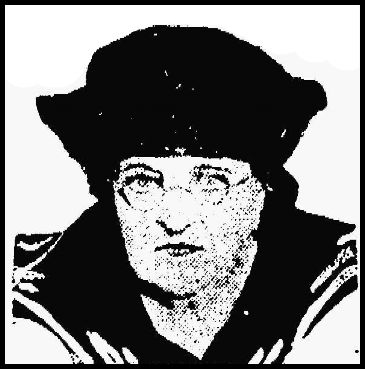 |
| Lucy Hagenow |
On July 16, 1930, homemaker Evelyn Dellorto, age 20, underwent an illegal abortion believed to have been performed at the office of Dr. Frank Psota. Evelyn died on July 25. On August 1, Psota was booked for murder by abortion even though the coroner's verdict was "undetermined." Psota was indicted, and held on $10,000 bond by Judge Lyle. On December 10, he was acquitted of the murder charge.
Mildred Maddalone, age 32, died on July 26, 1944, steadfastly refusing to name the abortionist who had fatally injured her. Her husband, from whom she was separated, told investigators that he hadn't even known that she was pregnant.
Saturday, July 25, 2015
The Planned Parenthood Baby Parts Sting: Dr. Mary Gatter and Using Different Techniques
The recently released Planned Parenthood videos have been making the rounds and rousing ire. When the first one was released, I wanted to really dig in and go into detail about how shady Planned Parenthood was being. In the first video however, with Dr. Deborah Nucotela, the only accurate allegation I saw when I watched the unedited version was that Dr. Nucotela really does provide a chipper explanation of how she chooses carefully where to crush the living unborn baby in order to get organs out undamaged. The allegations that she uses partial-birth abortion and that she was observed trying to help her organization to profiteer from fetal tissue harvesting, on the other hand, fell flat. You can find my analysis in these posts:
The Full Planned Parenthood Baby Parts Video provides the unedited video of the entire lunch meeting with Dr. Deborah Nucolela, along with a timeline indicating what is discussed at what points in the video. This enables the reader to verify what I am asserting.
The Shameful Edit of the Planned Parenthood Baby Parts Video examines the allegation that Dr. Nucotela uses partial-birth abortions to harvest the organs and tissues of aborted babies. I compare the edited video, which makes Dr. Nucotela look guilty, with the unedited video, which reveals that she said nothing that can honestly be construed as an admission of perpetrating partial-birth abortions.
Did She Really Say Planned Parenthood Sells Aborted Baby Parts does the same with the allegation that Dr. Nucotela admitted that Planned Parenthood profiteers from the tissues and organs of aborted babies.
Planned Parenthood Derangement Syndrome examines the prolife community's knee-jerk willingness to believe any allegations of evil committed by Planned Parenthood, and the tendency to cling to those allegations of evil even in the light of evidence to the contrary.
In a more recent post I moved on to the second video, recording a lunch meeting with Dr. Mary Gatter, President of the Medical Directions' Council of Planned Parenthood, and Laurel Felczer, Senior Director of Medical Services of Planned Parenthood Pasadena & San Gabriel Valley. You can refer to the full, unedited video of that meeting and the transcript of that meeting. The first thing I looked at was the allegation that Dr. Gatter was openly haggling and looking to maximize profits from the sale of fetal tissue. Though I found Dr. Gatter to be callous and off-putting, I didn't see any evidence of profiteering as a goal.
Today I'm going to look at the second allegation: That Planned Parenthood is willing to change how they do abortions in order to obtain usable fetal tissue. On this issue, Dr. Gatter expresses a willingness, only shying away from a commitment until she consults with their abortionist.
Here is the video:
The change being proposed isn't a major change, but it still is a change and can carry different risks to the patient. And, as Dr. Gatter points out, changing the technique just to get better fetal tissue is illegal. The image below, which you can click to enlarge, is the relevant section of the transcript of the Gatter video.
 The purported buyer approaches the issue of how intact a specimen would be at 10 to 12 weeks.
Dr. Gatter points out that the usual method is suction, which uses a suction machine similar to what a dentist uses to remove extra fluid from your mouth during dental work.
Dr. Gatter suggests that they might use an abortion method she called IPAS.
IPAS is actually an organization, the International Pregnancy Advisory Services. IPAS promotes an abortion method first popularized in the 1960s by a colorful and rather shady character named Harvey Karman. The method is actually called MVA, for manual vacuum aspiration.
As the name implies, manual vacuum aspiration uses manually-generated suction rather than machine-generated suction, and thus does less damage to the fetus.
Dr. Gatter recognizes that using MVA rather than a standard suction abortion for donation patients would be illegal, since MVA is considered a different technique. She even says that the buyer is talkign to her about taking money to do something that's not right. Nevertheless, she indicates a willingness to discuss the possibility of using MVA on donation patients when she talks to Ian, the facility's abortion practitioner.
While this video does not verify that Planned Parenthood as an organization does or would actually change an abortion technique in order to harvest fetal tissue, it does clearly demonstrate that Dr. Mary Gatter personally would have no problem with it. She tells the prospective buyers that she'll talk to Ian about using a "less crunchy" technique.
If a Planned Parenthood doctor wanted to give the patient a choice between a standard aspiration abortion and a manual vacuum aspiration abortion, somehow I doubt that MVA would be described to the patient as "less crunchy." And you can bet your bottom dollar that none of the current consent forms characterize a suction abortion as "crunchy."
 Dr. Gatter has put her foot firmly into her mouth on two counts: willingness to try to talk a Planned Parenthood doctor into helping her break the law, and extreme callousness.
The Full Planned Parenthood Baby Parts Video provides the unedited video of the entire lunch meeting with Dr. Deborah Nucolela, along with a timeline indicating what is discussed at what points in the video. This enables the reader to verify what I am asserting.
The Shameful Edit of the Planned Parenthood Baby Parts Video examines the allegation that Dr. Nucotela uses partial-birth abortions to harvest the organs and tissues of aborted babies. I compare the edited video, which makes Dr. Nucotela look guilty, with the unedited video, which reveals that she said nothing that can honestly be construed as an admission of perpetrating partial-birth abortions.
Did She Really Say Planned Parenthood Sells Aborted Baby Parts does the same with the allegation that Dr. Nucotela admitted that Planned Parenthood profiteers from the tissues and organs of aborted babies.
Planned Parenthood Derangement Syndrome examines the prolife community's knee-jerk willingness to believe any allegations of evil committed by Planned Parenthood, and the tendency to cling to those allegations of evil even in the light of evidence to the contrary.
In a more recent post I moved on to the second video, recording a lunch meeting with Dr. Mary Gatter, President of the Medical Directions' Council of Planned Parenthood, and Laurel Felczer, Senior Director of Medical Services of Planned Parenthood Pasadena & San Gabriel Valley. You can refer to the full, unedited video of that meeting and the transcript of that meeting. The first thing I looked at was the allegation that Dr. Gatter was openly haggling and looking to maximize profits from the sale of fetal tissue. Though I found Dr. Gatter to be callous and off-putting, I didn't see any evidence of profiteering as a goal.
Today I'm going to look at the second allegation: That Planned Parenthood is willing to change how they do abortions in order to obtain usable fetal tissue. On this issue, Dr. Gatter expresses a willingness, only shying away from a commitment until she consults with their abortionist.
Here is the video:
The change being proposed isn't a major change, but it still is a change and can carry different risks to the patient. And, as Dr. Gatter points out, changing the technique just to get better fetal tissue is illegal. The image below, which you can click to enlarge, is the relevant section of the transcript of the Gatter video.

Dr. Gatter points out that the usual method is suction, which uses a suction machine similar to what a dentist uses to remove extra fluid from your mouth during dental work.
Dr. Gatter suggests that they might use an abortion method she called IPAS.
IPAS is actually an organization, the International Pregnancy Advisory Services. IPAS promotes an abortion method first popularized in the 1960s by a colorful and rather shady character named Harvey Karman. The method is actually called MVA, for manual vacuum aspiration.
As the name implies, manual vacuum aspiration uses manually-generated suction rather than machine-generated suction, and thus does less damage to the fetus.
Dr. Gatter recognizes that using MVA rather than a standard suction abortion for donation patients would be illegal, since MVA is considered a different technique. She even says that the buyer is talkign to her about taking money to do something that's not right. Nevertheless, she indicates a willingness to discuss the possibility of using MVA on donation patients when she talks to Ian, the facility's abortion practitioner.
While this video does not verify that Planned Parenthood as an organization does or would actually change an abortion technique in order to harvest fetal tissue, it does clearly demonstrate that Dr. Mary Gatter personally would have no problem with it. She tells the prospective buyers that she'll talk to Ian about using a "less crunchy" technique.
If a Planned Parenthood doctor wanted to give the patient a choice between a standard aspiration abortion and a manual vacuum aspiration abortion, somehow I doubt that MVA would be described to the patient as "less crunchy." And you can bet your bottom dollar that none of the current consent forms characterize a suction abortion as "crunchy."

Subscribe to:
Posts (Atom)