Sunday, August 24, 2025

August 24, 1888: No Investigation into Dead Hagenow Patient

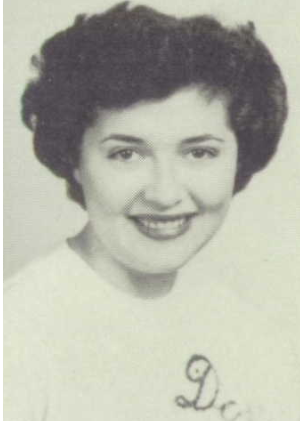
Dr. Louisa "Lucy" Hagenow

On August 24, 1888, Mrs. Emma Dep, who had recently been discharged from a maternity home run by known abortionist Dr. Louisa Hagenow, died at 537 Second Street in San Francisco. The San Francisco Bulletin indicated that a Dr.  Erenberg signed the death certificate attributing the death to peritonitis from a self-induced abortion.

I find it a bit odd that there was no evidence of a real investigation of the death. There is simply no explanation that makes any sense other than that Emma had gone to known Hagenow, had an abortion at the maternity home, thought she was recovering, went home, and died. Considering that there had recently been three Hagenow patients dying from botched abortions -- Louise DerchowAnnie Dories and Abbie Richards --  one would think that they'd dig deeper into the circumstances surrounding Emma's death. Furthermore, a man named Franz Krone had died on August 13 at Hagenow's maternity home, leaving behind jewelry and money that was never accounted for. 

Hagenow promptly relocated to Chicago, began using the name Lucy rather than Louise or Louisa, and began piling up dead bodies there as well. She was implicated in numerous abortion deaths, including 
Minnie DeeringSophia Kuhn , Emily AndersonHannah CarlsonMarie HechtMay PutnamLola MadisonAnnie HorvatichLottie LowyNina H. PierceJean CohenBridget MastersonElizabeth Welter and Mary Moorehead.


Watch Why No Investigation? on YouTube.

Source: "Body Exhumed," San Francisco Bulletin, August 29, 1888

August 24, 1955: Heiress's Mom Arranges Fatal Abortion

On August 25, 1955, the body of a young woman identified as Shirley Silver lay in the morgue in Philadelphia, where it had been since being brought there the previous day from the North Philadelphia apartment of 49-year-old bartender Milton Schwarts and his 42-year-old beautician wife, Rosalie. The young woman, they said, had suddenly taken ill and collapsed while sitting on a sofa in their living room. 

But when machinations began to try to remove the woman's body from the morgue without an autopsy, Detective Nathan M. Smith stepped in. He wanted to know who this woman was and how she had died.

Her real identity was revealed, and a scandal rocked the city. 

The dead woman was 
Doris Jean Silver Ostreicher, a 22-year-old heiress. Doris's father, Herman R. Silver, was vice-president of Food Fair Stores. Her uncle, Samuel Friendland of Miami Beach, was founder and chairman of the board of the chain. 

Doris hadn't just collapsed on the sofa for a mysterious reason. Her lung had collapsed when punctured by an instrument used in an attempted abortion. Doris had been about six weeks pregnant and had likely died within minutes of the abortion attempt.

Doris's Family

Herman Silver had been born in New York City. He started out working in factories and stores before he took up the more lucrative career of food distribution. Gertrude was the daughter of a central Pennsylvania merchant. She married Milton and her sister, Hattie Kline, married Samuel Friedland. Both young women thus improved their lot significantly.

Milton and Gertrude settled in Harrisburg, Pennsylvania. Doris Jean was born there in 1932, and her brother, Benjamin, in 1934.

The couple moved to Philadelphia, and they didn't live ostentatiously. The children attended Cheltenham High School. Doris briefly attended the Bessie V. Hicks School of Dramatic Art, and Benjamin went to work for their father.

It wasn't until the spring of 1955 that the Silver family began to display their wealth, moving into a $70,000 (over $820,000 in 2024) mansion in the Melrose Park neighborhood. Milton owned more than 28,000 shares of stock in Food Fair, with an estimated net worth of nearly $2,000,000 (over $23 million in 2024). 

The Silver family seemed to have a golden life.

Prelude to Tragedy

Doris had made front page news when she eloped in a "fairy tale romance" with Earl M. Ostreicher, a 29-year-old motorcycle cop from Miami Beach. They had met in April of 1955. Doris was staying with her uncle. Earl was patrolling when he saw Doris drive by. He pressed a friend to introduce him to the beautiful young woman.

Earl Ostreicher, a Chicago native, was the son of Charles Oesterreicher (Earl had shortened his surname), president of Chicago Wood and Coal Company, and his wife, Emma. He had attended engineering classes at Roosevelt College but dreamed of becoming a motorcycle cop. In 1953 he went to Miami to fulfil his dream. He was evidently a very personable young man, having been named runner-up as "the most courteous policeman" in Florida in 1954.

Earl held that he'd not known that his beautiful red-haired bride was wealthy. She'd told him, he said, that her father was a butcher and that she was working as a child's nurse at the Friedland home.

The pair met every night after Earl finished his shift at midnight. Doris would tell a desk sergeant where she wanted to meet Earl, and the officer would pass it over the police radio to the young lover.

The couple ran away together to Folkston, Georgia, on June 24, 1955. which was just over the state line, to wed. But fairy tale romances don't always lead to fairy tale marriages. Within a few weeks, Doris evidently was disillusioned, and had separated from her husband, returning to her family's Philadelphia home.

Earl told his father that he expected the separation to be temporary. Doris, he said, had gone to visit her parents because she was homesick.

In the mean time, Doris learned that her short-lived marriage had left her pregnant. She confided in her mother, 49-year-old Gertrude Silver. Gertrude helped her to arrange an abortion. 

Upon learning of his bride's death, Earl boarded a plane to Philadelphia.

The Deadly Couple

Milton Schwartz had served in the merchant marine before becoming a bartender. He married Rosalie Kershner in October of 1934. The couple honeymooned in Atlantic City then returned to Philadelphia, where they settled in the neighborhood of North Franklin Street. Their first-floor, 
$40-a-month apartment (c. $470 in 2024) was reportedly, according to the Philadelphia Inquirer, "fitted out sumptuously," much to the surprise of their neighbors. "Despite the fact that the Schwartzes have lived at that address for more than 10 years the neighbors purported to know little about them except that they appeared quiet and kept to themselves."

Milton managed and tended bar at the Cat 'n Fiddle CafĂ©, owned by a company that was managed by his stepfather, Morris Freedman. Rosalie had been a beautician for more then ten years at Hair Fashion Center. 

Each of them had petty crimes in their past. Milton Schwartz had been arrested in 1944 for stealing two bottles of whiskey and for hitting a man with a club. Rosalie had been arrested in 1940 for falsely stating that Milton was unemployed, thus receiving $143 (a little less than $1,700 in 2024) in public assistance. She pleaded guilty and made restitution. 

It's likely that they got abortion customers from the bar and the beauty shop.

The Fatal Visit

Gertrude and her husband accompanied Doris to the Schwartz's, There, the abortion was perpetrated with some sort of instrument and a "vegetable compound." Doris collapsed with her mother by her side. Dr. A. Samuel Manstein, who had an office across the street, was summoned to the apartment. He administered stimulants and attempted cardiac massage to no avail.

Though Doris was originally brought to the morgue under the false name, her weeping father eventually positively identified her.

Doris Silver Ostreicher
When police searched the apartment, they found abortion instruments there, including syringes, medications, dry mustard, absorbent cotton, mineral oil, and olive oil, along with a metal tube that was believed to be the fatal instrument in Doris' abortion. 

Doris's doctor, Samuel H. Katz, said that he had cared for Doris for about four years. She had been in very good health and had only needed treatment for minor ailments. She saw another doctor for allergy care.

Legal Consequences

It took just a minute for a Philadelphia grand jury to indict the guilty pair for operating an abortion, conspiracy to commit an abortion, abortion resulting in death, and perjury. They had listened to 12 witnesses over a period of a little more than an hour and a half.

The Schwartzes pleaded no contest to a charge of abortion resulting in death for their role. Rosalie got a sentence of indeterminate length, while Milton was sentenced to 3-10 years. Both were paroled after 11 months, based on a "pathetic" letter from their gown son asking that his parents be freed in time for Christmas. 

Doris' mother, who was hospitalized for "bereavement shock" in the early days after her daughter's death, was charged as an accessory. She pleaded no context to a charge of accessory before the fact of abortion. She was fined and given a suspended sentence for her role in her daughter's death. The judge said that he considered the memory of how her daughter had died "substantial punishment."


Saturday, August 23, 2025

August 23, 1990: Happy Birthday, Cheryl's Baby

"Cheryl" had an abortion performed by John Roe 263 at an abortion clinic in Maryland in early 1990. 

Staff concluded that the abortion had been complete so they didn't send the tissue to a pathology lab. 

On March 15, Cheryl realized she was still pregnant. She gave birth to a baby girl on August 23. 

Source: Maryland Health Claims Arbitration Board Claim No. HCA-90-242

August 23, 1910: The Abortionist Who Turned Over a New Leaf

Summary: On August 23, 1910, 20-year-old Mrs. Louise Heinrich died in the New York apartment of Dr. Charles Buffam, age 41, and his wife, nurse Vivian Anna Buffam.

The Parties Involved

AI image by Grok
Louise Wierauch was the child of Paul and Emma Setzmann Wierauch. Her mother had two daughters from a previous marriage, ages 11 and 4 when Louisa was born in Jersey City, New Jersey. Emma went on to have another daughter when Louise was 3 and her final daughter when Louise was 6. Paul, a native of Germany, was a dockworker. Emma stayed home and cared for the children. Paul's co-worker, Frank Peterson, boarded with the family in their apartment at 102 Ferry Street in Hoboken. Louise married Samuel Heinrich in New Jersey in 1910. Samuel worked as a clerk. They lived together in Samuel's home at 288 Webster Avenue in Jersey City. 

Andre Stapler, a native of Austria-Hungary, had come to the United States around 1900. He had been a drug clerk before becoming a physician. In 1910 he was a medical student working with a Dr. Samuel Short in Harlem. All of the news coverage lists him as a doctor without putting the term in quotes, so evidently he was considered a legitimate physician by the time the unfortunate Louise came into the picture.

Charles Buffam was a native of New York. According to the 1910 US Census, he, lived at 235 West 110th Street in New York with his wife, a nurse named Vivian. They had a servant named Jennie Saunders living with them and a boarder named Arthur Teets who worked as a clerk. Their home was an apartment right on Central Park North. News coverage, however, locates his apartment at 500 W. 111th Street, about a mile away. It's still an upscale neighborhood, but not nearly as posh as a home on Central Park.

Herman W. Holtzhauser, age 39, was originally a mason. Somehow he ended up getting elected as a coroner in New York. A Pennsylvania native, Holtzenhauzer lived at 301 West 117th street in New York, less than a mile from Dr. Buffam, with his wife, Rebecca, and their daughters, Anna and Fannie, ages 11 and 6, respectively.

The Deadly Journey

Louise and Samuel were newlyweds, married earlier in the year, when they traveled to the Buffams' flat at 500 West 111th Street in New York on August 23, 1910. Sam went out walking while his wife was being attended to by Stapler. Sam returned at around 5:00 that afternoon and found his wife dead. He threatened violence against Stapler, shouting, "You murdered her!"

Somehow those present managed to calm Sam down, perhaps reminding him that everybody had the threat of arrest hanging over their heads. I've been unable to follow Sam's side of the story from this point other that eventually he was able to get his wife's body buried at St. Joseph's Cemetery in Jersey City. 

Per the law requiring that bodies transported across state lines be embalmed, Sam arranged for this procedure before laying his wife to rest.

Chaos and Cover-Up

In the mean time, a total of $23 worth of telephone calls (over $600 in 2020 dollars) were made from the Buffam apartment to sort out how to handle the situation. 

Evidently the first person contacted was a Dr. Shaw, who arrived at the flat, said that it was a case for the Coroner, and left, refusing to sign a death certificate. 

Stapler then called an attorney. He tried to slip out of the apartment but Vivian Buffum restrained him. 

“Dr. Speir” – actually a drug clerk -- came to the apartment and assured everybody that everything would be okay. He said that he had “a pull” and, “It makes a difference who the coroner's physician is.” Vivian Buffum finally called the coroner's office at around 9:00 p.m. -- the shift of Coroner Herman W. Holtzhauser and physician Philip O'Hanlon. A clerk made an entry into the day book that Louise had died suddenly.

Though officially it was the duty of the coroner to go to the death scene to view the body, review the circumstances, and decide if the case was suspicious or not, Holtzhauser was not the most diligent of men. His qualifications for the post were dubious at best, since he had been a marble cutter before being elected. He's slid effortlessly into the role of slacker. He'd signed a paper giving O'Hanlon the authority to perform autopsies at his own discretion without getting a permit and left him and his clerks to their own devices. Holtzhauser later admitted in court that he'd never bothered with any of the five deaths that had occurred on his shift that night, neither seeing the bodies nor reviewing the paperwork. Spier had evidently understood how things worked under Holtzhauser and had waited until the 9:00 Holtzhauser/O'Hanlon shift to have Vivian Buffam make the call.

Louise's body was taken to an undertaking establishment, where O'Hanlon performed a cursory autopsy, not even bothering to open the abdomen and examine the organs, instead just making a shallow incision in the skin. As he explained later in court, “If I felt tired I would reach a conclusion as to the cause of death as soon as possible, without making a complete autopsy, and let it go at that.” He had, he said, taken Vivian Buffum at her word when she said that Louise was a friend of hers who had come for a visit, collapsed, and died. 

At 10:55 that night,  O'Hanlon put a slip in Holtzhauser's box stating the cause of death as apoplexy. He made another notation in a log that Louise had died from heart disease. He then filed a death certificate with the Bureau of Vital Statistics giving the cause of death as acute gastritis. 

Vivian Buffum later testified that O'Hanlon reiterated that everything was all right and would continue to be so as long as she kept her mouth shut. He'd written out a statement for her to sign stating that Louise was a friend who had come for a visit, then took ill and died suddenly.

All of the documents were filed, Louise was laid to rest, and everyone else got on with the business of life. Stapler finished medical school then quietly relocated to Chicago and set up a reputable practice towards the end of 1913. No doubt everybody thought that the whole sordid affair had blown over. They were wrong.

Revelations

In 1914, Mayor Mitchell in New York began an investigation of the New York City coroner's office, finding that money was being paid to officials to falsify documents. It was then that somebody noticed that each of the three documents regarding Louise Heinrich listed a different cause of death. Her body was exhumed and an autopsy was performed by Dr. Otto Schultze in the presence of the Hudson County Medical Officer. Fortunately the body had been expertly embalmed and thus could yield the necessary evidence to find the real cause of death. Louise had bled to death from abortion injuries. An investigation into the circumstances was begun and evidently the interested parties in New York pointed the finger at none other than Dr. Andre Stapler. 

Stapler had not been idle in Chicago. He had become the house physician at the Plymouth Hotel at 4700 Broadway, where he lived. He also kept offices at 1060 Wilson Avenue and 59 East Madison Street, and was a staff physician at Wesley Hospital and Columbus Hospital. He was a highly respected man with wealthy, well-connected patients.

On March 12, 1915, George Freer, an official from New York City, arrived in Chicago with a letter from the District Attorney of New York asking for a warrant for the arrest of Anton Stapler, aka Andre Stapler. Detectives Birmingham and Malone accompanied Freer to a building in the Loop and arrested Dr. Stapler, who posted $7,000 bond and Stapler gave an interview to the Chicago Tribune explaining his version of events:

In August, 1910, I was assistant to Dr. Samuel Short, who had an office at One Hundred and Fourth Street and Madison Avenue in New York. There was a Dr. W. C. Buffum who lived, as I remember it, on One Hundred and Eleventh Street, who deserted his wife and ran away with another woman. Dr. Short, who was a fellow lodge member of Buffum's, was doing some of his work. One afternoon Mrs. Buffum rang up the office and wanted somebody over there in a hurry. I went over and found this woman who is referred to, Mrs. Louise Heinrich, dead. That was my first sight of her. I called up Dr. Short. He came over, saw that the woman was dead, and notified the coroner. The body was taken to an undertaking establishment, where the corner performed an autopsy. The verdict, as I remember it, was that she died of heart disease. I never saw the coroner, and was not at the inquest, for there was no necessity of my being there. Now it seems that the easiest person to blame things on is the man out of town. Freer, who caused my arrest, asked me if I would go to New York without extradition, and I said I would. I packed up to go this morning. Apparently there is jealousy between the branches of government in New York, for Freer received a telegram from the New York district attorney that he would send one of his own men to accompany me to New York. I expect to start tomorrow at 12:40 or tomorrow night. I never had anything to do concerning any malpractice in my life except as a witness for the prosecution in the Dr. Arthur L. Blunt case.

Without first notifying Freer, accompanied by friends and his attorney, Stapler took a taxi to the train station on Sunday evening, March 14, 1915. He waved farewell to his friends from the observation platform. “I'm simply going to New York like a gentleman, without compulsion, to cut short this annoying affair, that has grown out of some tangle of misinformation,” Stapler said as he left. His attorney said, “My client is on his way to meet the charges in the same manner that he will return – voluntarily and as a free man.” One of Stapler's wealthy patients gave him a blank check to use to pay for his defense, though Stapler said he'd not need it.

Stapler's trial began on December 10. Vivian Buffam turned state's evidence. Her husband's whereabouts were unknown. The jury was out less than three hours, returning at 6:00 p.m. on December 23 with a verdict of guilty. Stapler was allowed to linger in the Tombs, with a possible 20-year sentence hanging over his head, before finally spilling his guts about his own involvement in Louise's death, nine other doctors perpetrating abortions in the city, and the bribes they would pay to employees in the coroner's office to cover things up. Stapler said that doctors would typically pay hush money of $200 (over $5,000 in 2020 dollars) but sometimes as much as $5,000 (over $130,000 in 2020 dollars). The money might be divided among various doctors and clerks. 

Stapler was sentenced to Sing Sing by Justice Bartow S. Weeks on February 4, 1916. Weeks referred to Stapler's post-conviction confession as the most amazing he had ever read, adding, “It is my belief that the defendant has for purposes of his own, protected the men higher up in this nefarious practice.” Stapler's assertions during his confession were confirmed by testimony from doctors and hospital attendants – including two doctors who were serving time in Sing Sing on manslaughter charges related to abortion deaths. 

During sentencing Weeks denounced Stapler as “a menace to the social structure of the country. Under the old law, a defendant convicted of the crime of which you have been convicted would have the death penalty imposed. In my careful consideration of your case and your statement, I have several times come to the conclusion that such a penalty would be very appropriate for you – not because of this one crime but because of the number of cases that preceded it. I shall impose a sentence which will allow you, by good behavior, to leave State's prison in time to rehabilitate yourself and possibly become a respectable member of society.”

Stapler's sentence was commuted on May 15, 1920. The New York Daily News identified him as “a leader of Sing Sing's 'idle rich.'” His friends feted him in a hotel, with the dinner guests including “several wealthy ex-prisoners.” He returned to Chicago, evidently having taken Justice Weeks' admonition to heart. He married a respectable young woman. He re-established a wealthy clientele, including Adolph B. Magnus, grandson of Adolphus Busch, the founder of Anheuser-Busch. He stopped dallying in criminal activities and cover-ups, instead dutifully reporting a woman who had come to him for treatment of gunshot wounds. 

Stapler died of a heart attack in his home on Lake Shore Drive on February 6, 1936. He left his widow, Helen, and three daughters assets worth $200,000 (nearly $3.5 million in 2020 dollars). 

As for what became of the widowed Samuel Heinrich, I've been unable to learn. I can't even find the cemetery where the unfortunate Louise was exhumed and given a proper autopsy. She was reburied in a different cemetery in a different county. 

Sources:

  • “Mystery Arrest on Old Charge,” Chicago Tribune, March 13, 1915
  • 'Mystery Case' Veil Removed,Chicago Tribune, March 14, 1915
  • “Stapler Leaves to Face Charge,” Chicago Tribune, March 15, 1915
  • Charges Physicians Concealed a Crime,” New York Times, December 11, 1915
  • Dr. O'Hanlon Named in Fatal Operation Trial,” New York Tribune, December 11, 1915
  • “O'Hanlon Accused in Woman's Death,” The New York Sun, December 11, 1915
  • “Court Hearing for Dr. O'Hanlon Denied,” The New York Sun, December 14, 1915
  • Says Coroners Rely on Clerks' Reports,” New York Times, December 14, 1915
  • Dr. O'Hanlon Denies Hiding Death Cause,” New York Times, December 22, 1915
  • Dr. Stapler Found Guilty,” New York Times, December 24, 1915
  • “Stapler Found Guilty,” New York Sun, December 24, 1915
  • “Coroners Named in N. Y. Graft Charges,” Middletown Daily Times-Press, January 14, 1916
  • “Detectives Trail Malpractice Band Stapler Accuses,” New York Evening World, January 14, 1916
  • Stapler Reveals Malpractice Ring,” New York Times, January 14, 1916
  • “Facts of Doctors' Crime Trust to Go to Grand Jury,” New York Evening World, February 4, 1916
  • State of New York Executive Chamber document dated May 15, 1920
  • “Sing Sing Bows Farewell to Two Noted Prisoners,” New York Daily News, May 26, 1920
  • “Engagement,” Chicago Tribune, May 11, 1922
  • “Find Furrier Slain in North Side Mystery,” Chicago Tribune, November 7, 1930
  • “Dr. Andre L. Stapler Dies; Physician Here 20 Years,” Chicago Tribune, February 7, 1936
  • “$15,647 Owed to Doctor; Accounts Sold for $5,000,” Chicago Tribune, January 28, 1937
  • Public record documents

August 23, 1940: The Abortion Death that Probably Wasn't

Pauline Shirley

After years of research, I finally uncovered the real cause of the death of Pauline Roberson Shirley, a woman whose death the abortion lobby tries to pin on an unspecified illegal abortion.

The Abortion-Lobby Claim

According to a multitude of abortion-rights web sites, none of which provide any substantiating documentation, Pauline Roberson Shirley was a 29-year-old married mother of six. She and the children, according to these claims, were living with her mother in Arizona while her husband was looking for work in California. These sites gives no details of the illegal abortion that Pauline reportedly underwent, but say that she was hospitalized for hemorrhage afterward and in need of transfusions. They then indicate that Pauline's mother was looking for donors for the needed blood when Pauline bled to death on August 22, 1940.

What The Death Certificate Says

Pauline Shirley's death certificate, with discrepancies noted between the abortion lobby claims and what the death certificate actually says.
Click to enlarge.

An exhaustive online search has finally yielded Pauline's death certificate. It straightforwardly indicated that yes, Pauline Shirley, born June 2, 1910, died in an Arizona hospital. The date disagrees slightly, with the death certificate saying August 23, 1940, rather than the August 22 that is on the prochoice sites.

One can also easily piece together from the information that Pauline was indeed living with her mother. She also wasn't living with her husband -- because she wasn't married any more. That's really not significant. (Of course, how many children she had and what her mother was doing during Pauline's final hours won't be on a death certificate one way or the other.)

The cause of death section indicates "secondary anemia" and "uterine hemorrhage," which I would say substantiates that Pauline had bled to death.

But the abortion-rights websites deviate from the death certificate in one extremely important way:

THE DEATH CERTIFICATE DOES NOT CONFIRM AN INDUCED ABORTION.

The cause of death is noted as "incomplete abortion, spontaneous (?)" "Abortion" is the medical term for a miscarriage. So what the medical examiner was indicating when he completed the death certificate was that it looked as if Pauline had died from a miscarriage, but he wasn't 100% sure.

There is a section of the death certificate for information about external causes of death. This section is completely blank, even after an autopsy. That means that there were no signs that anybody had used instruments of any kind -- either of the medical or "coat hanger" type -- to perform an abortion on Pauline.

Conclusion

I can never say with 100% certainty that Pauline didn't use some sort of abortifacient. She might have tried an herbal tea such as parsley, which is harmless, or pennyroyal, which can trigger an abortion. If she did take any kind of abortifacient, it didn't do any obvious damage to her body. By far the preponderance of evidence that I've been able to uncover is that Pauline's death was not a criminal abortion death.

Abortion-rights groups also claim that Becky Bell died from complications of an illegal abortion, when in fact she died of pneumonia concurrent with a miscarriage. (There was no evidence that Becky's pregnancy had been tampered with in any way.) I don't know why they persist in using those debunked examples of criminal abortion deaths when there are plenty of verifiable illegal abortion deaths with abundant documentation supporting them. I've done all the legwork already!

But nothing seems able to break into or out of the prochoice echo chamber, not even evidence like autopsy reports and death certificates.


August 23, 1870: A Fatal Abortifacient

Mary Ann Lafavor, the 15-year-old wife of Frank Lafavor, was "the victim of ... inhuman outrage".  

Frank had married his young bride over the objections of her family in March of 1870. The couple had settled as tenants on the farm of Thomas McIntyre in Pilot Mound Township, Minnesota. 

On August 15, Mary Ann went missing from her home. "The neighbors became alarmed at her absence from home and made search for her in every direction without success" until about midnight, "when she was discovered dragging herself around the corner of her dwelling more dead than alive." 

Two doctors came to her aid and found her to be in critical condition. She admitted that she had taken some sort of abortifacient that day, but refused to say who she had gotten it from. 

"Everything possible was done to restore her, but after suffering intensely for a whole week and died on Tuesday morning last [August 23] at about eight o'clock." 

Mary Ann's mother testified that her daughter was raised up in bed five minutes before her death to make her dying declaration, but all she was able to say was, "Tommy gave it to me! Tommy gave it to me!" Thus the young bride's landlord, Thomas McIntyre, was charged with her death. 

Watch Teen Bride's Untimely Death on YouTube.

Sources: 
  • "A Case of Abortion Resulting in Death", Winona (MN) Daily Republican, August 29, 1870
  • Untitled clippingThe St. Cloud Journal, September 1, 1870
  • "Minnesota," Chicago Tribune, September 2, 1870

Friday, August 22, 2025

August 22, 1971: Another Pre-Roe Safe 'n Legal New York Death

"April" Roe was 17 years old when she underwent a saline abortion in New York City on August 20, 1971. The next day she was admitted to the hospital -- indicating that this risky abortion was being performed on an outpatient basis. She was in shock, with a high fever. She was treated there until her death on August 22. 

What is a Saline Abortion?

Saline abortion was hardly a pleasant experience. The abortionist would remove as much amniotic fluid as he could using a needle and syringe. He would then replace the amniotic fluid with a concentrated saline (salt) solution that would poison and kill the fetus. The woman would then go into labor and expel the fetus.

Saline abortions became very popular in Japan following WWII. Within the Japanese medical community, however, word quickly spread: this method was unsatisfactory. Too many women were being injured and killed. Over 70 papers were published in the Japanese medical community reporting hazards of saline abortions, including at least 60 maternal deaths. The Japanese Obstetrical and Gynecological Society condemned the technique, and it was quickly abandoned. But the Japanese abortionists kept news of the trouble among themselves -- until Western nations discovered instillation abortions and embraced them with great enthusiasm.

Two Japanese doctors, Takashi Wagatsuma and Yukio Manabe, broke the silence. Wagatsuma wrote, "It is, I think, worthwhile to report its rather disastrous consequences which we experienced in Japan." Manabe wrote, "It is now known that any solution placed within the uterus can be absorbed rather rapidly into the general circulation through the vascular system of the uterus and placenta. Thus any solution used in the uterus for abortion must be absolutely safe even if given by direct intravenous injection. ... A solution deadly to the fetus may be equally toxic and dangerous to the mother. ... In spite of the accumulating undesirable reports, the use of hypertonic saline for abortion is still advocated and used ... in the United States and Great Britain. I would like to call attention to the danger of the method and would predict the further occurrence of deaths until this method is entirely forgotten in these countries."

As western abortionists gained experience with saline abortions, other grim reports arose. A British study published in 1966 found that the saline would enter the mother's bloodstream and cause brain damage. Swedish researchers noticed an unacceptably high rate of complications and deaths. Sweden and the Soviet Union abandoned saline abortion as too dangerous for women in the late 1960s.

For whatever reasons, American abortionists were deaf to these warnings. When New York had completely repealed its abortion law, doctors had tremendous leeway in abortion practice. In New York City in particular, it became popular to inject the woman with the saline in the office, then send her home with instructions to report to a hospital when she went into labor. This was, to say the least, a highly irresponsible way to use an abortion technique that was risky even when performed in a hospital under close medical supervision. Women started dying from these reckless saline abortions.

The Dubious Benefits of New York Law

"April" was one of many women who died in the window of opportunity between limited legalization and Roe's free-for-all. The Supreme Court could have looked at these deaths and decided enough was enough. They chose instead to trust in bogus reports -- such as the review of patient records from C.R.A.S.H. -- and pretend that legalization would magically make everything okay.

In addition to “April,” these are the women I know of who had the dubious benefit of dying from the newfangled safe-and-legal kind of abortion in pre-Roe New York:

  • Carmen Rodriguez, July, 1970, salt solution intended to kill the fetus accidentally injected into her bloodstream
  • Barbara Riley, July, 1970, sickle-cell crisis triggered by abortion recommended by doctor due to her sickle cell disease
  • Pearl Schwier, July, 1970, anesthesia complications
  • "Amanda" Roe, September, 1970, sent back to her home in Indiana with an untreated hole poked in her uterus
  • Maria Ortega, October, 1970, fetus shoved through her uterus into her pelvic cavity then left there
  • "Kimberly" Roe, December, 1970, cardiac arrest during abortion
  • "Amy" Roe, January, 1971, massive pulmonary embolism
  • "Andrea" Roe, January, 1971, overwhelming infection
  • "Sandra" Roe, April, 1971, committed suicide due to post-abortion remorse
  • "Anita" Roe, May, 1971, bled to death in her home during process of outpatient saline abortion
  • Margaret Smith, June 1971, hemorrhage from multiple lacerations during outpatient hysterotomy abortion
  • "Annie" Roe, June, 1971, cardiac arrest during anesthesia
  • "Audrey" Roe, July, 1971, cardiac arrest during abortion
  • "Vicki" Roe, August, 1971, post-abortion infection
  • "Barbara" Roe, September, 1971, cardiac arrest after saline injection for abortion
  • "Tammy" Roe, October, 1971, massive post-abortion infection
  • Carole Schaner, October, 1971, hemorrhage from multiple lacerations during outpatient hysterotomy abortion
  • "Beth" RoeDecember, 1971, saline injection meant to kill fetus accidentally injected into her bloodstream
  • "Roseann" Roe, February, 1971, vomiting with seizures causing pneumonia after saline abortion
  • "Connie" Roe, March, 1972, cardiac arrest during abortion
  • "Julie" Roe, April, 1972, holes torn in her uterus and bowel
  • "Roxanne," May, 1972, convulsions and death at start of abortion
  • "Robin" Roe, May, 1972, lingering abortion complications
  • Pamela Modugno, May, 1972, air in her bloodstream

Sources: 
  • "Maternal Mortality Associated With Legal Abortion in New York State: July 1, 1970 - June 30, 1972," Berger, Tietze, Pakter, Katz, Obstetrics and Gynecology, 43:3, March 1974, 321
  • Wagatsuma, "Intraamniotic Injection of Saline for Therapeutic Abortion," Am. Journ. Ob Gyn 11/1/65
  • Manabe, "Danger of Hypertonic Saline Induced Abortion," JAMA 12/15/69
  • Cameron, "Association of Brain Damage with Therapeutic Abortion Induced by Amniotic Fluid Replacement: Report of Two Cases," British Medical Journal, 4/23/66

August 22, 1986: An abortion-related suicide anniversary

AI illustration by Grok

Carol Cunningham was 21 years old when she underwent an abortion in the late summer of 1986. On August 22, she shut herself up in her garage at her home in Albuquerque, and started her car. She died from breathing the exhaust fumes. Her body was discovered on August 25, 1986.

It's been documented that suicide is more common after abortion than after childbirth, or in the woman who has not experienced pregnancy. (Actually, all forms of violent death are more common in post-abortion women.) A few of the women and girls who took their lives following abortions include:

  • Arlin della Cruz, age 19, who hanged herself in the woods near her house in October of 1992
  • Laura Grunas, age 30, who shot her baby’s father and then herself in August of 2006
  • Sandra Roe,” age 18, who killed herself using an unidentified means in April of 1971
  • Sandra Kaiser, age 15, who threw herself off an overpass into traffic in November of 1984
  • Stacy Zallie, age 20, who committed suicide in October of 2002
  • "Haley Mason," age 22, who overdosed on pills in April of 2001

The Centers for Disease Control also stumbled across some post-abortion suicide cases in their study of post-abortion mortality. Their stories and others are told on tumblr:

  • "Sheila Roe," age unknown, died 1970 or 1971
  • "Cathy Roe," age 19, died during the period 1972-1978
  • "Jade Roe," age unknown, died during the period 1972-1981, most likely 1973
  • "Sylvie Roe," age 22, died 1975

Source: New Mexico Death Certificate #092443

August 22, 1929: More Scanty Information From Chicago

According to the Homicide in Chicago Interactive Database, on August 22, 1929, 34-year-old Marjorie Johnson died in her home from complications of a criminal abortion performed that day. 

I can find no evidence that the perpetrator was ever identified or apprehended.

August 22, 1937: A Delayed Exhumation

Dr. Ernest C. Martin was convicted in murder in the abortion death of 42-year-old Anna Bilinski, and was sentenced to 15 years in the penitentiary. The abortion had been perpetrated on August 10, 1937. The indictment was not handed down until over two years later, November 10, 1939.

John's Story

Anna's husband, John Bilinski, testified in the trial. He did not speak English fluently and sometimes did not seem to understand the questions or instructions. 

AI illustration by Grok
He said that Anna did not have a period in April or May of 1937. On about July 15 or 16, he said, he went to Dr. Martin's office and told him that Anna was pregnant, that she was no longer a young woman, and they already had five children. He asked Martin what he could do to remedy the situation. He testified that Dr. Martin told him, "I will give you a prescription to the druggist for a certain kind of capsules." John said that he filled the prescription and Anna took the capsules but they did not have the desired effect. 

On August 10, John said, he went to Martin's office to report the lack of success. He said that Martin told him to bring Anna to him that afternoon and he would "open her womb." 

John said that he and Anna went to Dr. Martin's office at about 4 pm. Martin put some instruments in a sterilizer and told John not to watch. Martin reportedly took a tool about 10 or 12 inches long, round, about 3/8 inch thick, and resembling scissors or clippers, and put it into Anna's body. John said that Martin also wiped out Anna's body with gauze. He then asked Anna to sign a slip of paper but when she was unable to do so, John signed it. Afterwards they discussed the price. Martin said that he wanted $35. John said he gave Martin $20 and told him, "If my wife be healthy I will give you the rest of this."

John said that Martin took a quart bottle of Seagram's 7 whiskey from a drawer and filled two glasses. He gave one of them to John and said, "Let's have a drink to the murder." John's eyes flowed with tears as he drank with the doctor.

John said he took Anna home. She prepared supper for the family, then went to bed at about 6:00.

In the morning, John said, he noticed a lot of blood in the bed. Anna continued to bleed vaginally so John phoned Dr. Martin, who came to the house at around 11:00 that morning. He examined Anna and said, "That's the way it should be. Don't be worried." John said that Martin gave him a prescription which he filled and gave to Anna. 

Anna passed the fetus, which John put into a quart jar which he filled with alcohol. 

On August 12, John called Martin again to say that Anna was still bleeding. Martin came to the house, examined Anna, and left some pills for her.

John said that Martin came back to the home on the 13th, 14th, 15th, and 16th to attend to Anna. On the 16th he treated Anna with an injection into her arm. 

From then on, John said, he called Martin two or three times a day. At some point on August 20, John said, Martin packed Anna's uterus with gauze and cotton. 

On Friday, August 20, John said, Dr. Martin summoned Dr. Warren Blim to consult with him. John said that Dr. Blim removed the packing from Anna's uterus, along with a quantity of clotted blood. 

John said that at about 5:00 that evening Anna grabbed him around the neck, kissed him, and said, "I got to die."

John said that it wasn't until Sunday, August 22, that Dr. Martin finally called an ambulance for Anna. She died before it arrived.

Dr. Warren Blim's Involvement

Dr. Warren Blim and John gave similar testimony about his treatment of Anna. 

Blim said that on August 20, Dr. Martin asked him to consult about a woman having a miscarriage. He found Anna to be bleeding vaginally. He massaged Anna's uterus through her abdomen, which enabled her to pass a clot. This reduced the bleeding. He instructed Dr. Martin to administer an intramuscular ergotrate injection to further control the bleeding. He did not believe that Anna was in critical condition and left her in Martin's care.

Dr. Martin's Version of Events

Martin's story was that Anna had been a patient of his for about eight years when, in mid-July of 1937, John had consulted him about Anna. Martin had prescribed something to treat symptoms of menopause. He next saw John on the 8th or 10th of August. He said that John told him that Anna was still suffering aches and pains, so he instructed John to bring Anna to his office.

They arrived between 3 and 5 pm, Martin said. He did a routine examination including a bi-manual pelvic exam. He said that Anna had a crooked uterus and her cervix was widely dilated. He said he hadn't known if she was about to miscarry -- which seems an odd assertion if she was pregnant and her cervix was widely dilated. Surely she'd have been in the middle of a miscarriage if that had been the case.

Martin said that Anna called him the next day so he went to her home to see her. Martin said that Anna told him she'd begun menstruating, and that John told him Anna had passed a baby. Martin said that he took the baby with him and left some pills and instructions for the couple to call him if Anna felt worse.

A day or two later, he said, Anna reported coughing, chest pains, and a headache along with continued menstrual bleeding. He left a prescription.

Martin said that he had called Dr. Blim in for a consult, and Blim had massaged Anna's abdomen, helping her to expel a clot. He said that Blim recommended elevating the foot of the bed and administering an ergotrate injection.

Martin said that he returned the next day and found Anna's condition to be satisfactory, with no further bleeding.

Martin said that on the day of Anna's death he had gone to a neighbor's house to call an ambulance. It arrived accompanied by a Chicago Heights police squad car. John had not complained to the police at that time that anybody had perpetrated an abortion on his wife.

Martin said that he had filled out a death certificate attributing Anna's death to "influenza and bronchial pneumonia." 

He denied requesting a $35 fee, dilating Anna's uterus, or asking the husband or wife to sign a paper.

A Delayed Autopsy

AI illustration by Grok
Dr. Jerry J. Kearns performed the autopsy, which for some reason did not take place until November 3, 1939. John was first called in to identify his wife's body as it lay in a white metal casket. The autopsy found uterine infection and recent pregnancy. Dr. Kearns concluded that Anna had died from septicemia or blood poisoning from an infection affecting only the uterus. The cervix was dilated, most likely by an instrument. 

The fetus John had put in the bottle had been of about 2 1/2 months gestation. 

Between the condition of Anna's body, and the fetus in the bottle, authorities concluded that Anna had indeed died from a septic abortion, and Martin was convicted of murder by abortion.  His attorney appealed his conviction on this and multiple other issues, but the court upheld the conviction.

Watch Exhumed Two Years Later on YouTube.

Source: 

Thursday, August 21, 2025

August 21, 1887: The First Known Victim of Dr. Hagenow

Louise Derchow, age 23, is the first known victim of notorious criminal abortionist Dr. Louisa "Lucy" Hagenow

Louise had been born in a village near Hamburg, Germany. Some time in the mid 1880s she moved to San Francisco and took work as a domestic servant in the home of Mrs. Steinhart at 1090 Post Street. She was courted by another German immigrant, a barkeep named Henry Peckelhoff. Those who knew the couple anticipated that they'd marry soon.

In early August of 1887, Louise moved in with Henry and began using his surname. 

On August 9, 1887 Louise told Peckelhoff that she was pregnant, and he told her to go to Dr. Hagenow's “maternity hospital” at 19 Twelfth Street in San Francisco to be examined. She was admitted, and Peckelhoff later said that she seemed well when he visited her there until but something went wrong. Louise died at about 1 a.m. on Monday, August 21.

Peckelhoff went to an undertaker named Suhr at about 2 a.m., saying that he needed a burial for his wife. The undertaker's assistant removed Louise's body from Hagenow's establishment at about 3 a.m., then went to get a death certificate from Hagenow. The Assistant Secretary of the Health Department refused to issue a burial permit with a death certificate signed by Hagenow because she was on a list of "illegal practitioners." The clerk said that Dr. S. S. Kahn was authorized to examine the body and issue a death certificate if no qualified doctor could sign one. Mr. Suhr said that he could get a new certificate signed by a properly qualified physician.

The undertaker's assistant and Hagenow went looking for Dr. F. F. DeDerky, who had also attended Louise. They couldn't find him, so Hagenow's cook forged DeDerky's signature on a death certificate identifying the woman as Louise I. Peckelshoff  in order to get the health department to accept the death certificate and issue the burial permit, which was finally released at 3 p.m. 

The funeral was held an hour later. 

Because of the suspicious circumstances surrounding Louise's death, the City Physician disinterred Louise's remains and performed an autopsy at the Odd Fellow's Cemetery on September 1. He found what was termed “conclusive evidence” of an abortion, with inflammation caused by an instrument. 


Hagenow insisted that Louise had shown up at her door already seriously ill and bleeding heavily. Prior to her death, Hagenow admitted, Louise was delivered of a four-month fetus. She also admitted that the young woman had died of peritonitis.

All told, Hagenow was tried three times in Louise's death, and acquitted in the third trial, just around the time she was being investigated in the abortion deaths of Annie Dorris and Abbia Richards, as well as for the suspicious death of Emma Dep shortly after discharge from Hagenow's maternity home. The third acquittal was largely attributed to the death of the state's star witness, a journalist who had originally broken the story. 

One of Peckelhoff's friends helped him to go through the young woman's possessions and found the necessary addresses to write to her friends back home in Germany about her death.

Hagenow relocated to Chicago and began piling up dead bodies there as well. She was implicated in numerous abortion deaths, including Minnie Deering, Sophia Kuhn , Emily Anderson, Hannah Carlson, Marie Hecht, May Putnam, Lola Madison, Annie Horvatich, Lottie Lowy, Nina Pierce, Jean Cohen, Bridget Masterson, Elizabeth Welter, and Mary Moorehead.

Watch Hagenow's First Known Victim on YouTube.

Sources:

August 21, 1923: Doctor on City Council Implicated in Fatal Abortion

On August 21, 1923, 32-year-old Mrs. Catherine Stange died in Denver of septicemia due to an abortion blamed on Dr. Daniel R. Lucy. The coroner's inquest determined that the abortion had been perpetrated using some sort of medical instrument.

This was quite the scandal, since in addition to being a doctor, Lucy was a city councilman. His high position also meant that he was given warning of his pending arrest for second degree murder, to give him time to arrange to pay his $7,500 bond (just over $141,000 in 2025).

Lucy's only comment to the press after being told of the charge against him was to note that he was not surprised, that this was what he had expected from the coroner's jury. He admitted to having treated Catherine but denied using surgical instruments of any kind. 

In October of that year, judge George F. Dunklee instructed the jury to acquit Lucy after he had ruled Catherine's deathbed statement inadmissible. 

Sources: 


August 21, 1929: An Abortion-Advocacy Poster Child

According to abortion-rights organizations such as Peoplesworld.orgRuth Friedl was a married, 27-year-old mother of two living in Denver in 1929. Those sources say that pregnancy was life-threatening for Ruth, but they don't specify why, nor do they say why she was denied an abortion, since there were always exceptions made for abortions deemed necessary to save the mother's life. 

Abortion-rights organizations say that Ruth drank ergot apiol, an herbal abortifacient, on August 21, 1929. That night, according to NOW, Ruth collapsed at the dinner table in front of her husband and children, and died on the spot. 

The only verification I can find of Ruth's death is a Find-a-Grave memorial for Ruth I. Freidl, 1901-1929, buried in Colorado, and a FaceBook post that has a bit more information and some photos: 

Ruth Irene Friedl (Aug. 24, 1901 - Aug. 21, 1929) After having her daughter, Ruth Friedl was told that another pregnancy would be medically dangerous. When she became pregnant, her uncle, a doctor, said he would not perform an abortion, since he could lose his license and be imprisoned. She did not tell her husband she was pregnant and attempted to self-abort by drinking a plant poison, ergot apiol. She died that night in front of her husband and two small children.
In 1967, Colorado legalized abortion for rape, incest, suspected fetal anomaly, and threat to the mother's health. However, even before then, doctors were allowed to take steps they thought were necessary to save the mother's life. There's no clarification of what risks there were to Ruth, but whatever the risks were, they weren't serious enough that Ruth's physician uncle thought he could do the abortion legally or legally refer her for an abortion. I'd welcome any verifying information on Ruth's death. After all, abortion rights groups also claim that Becky Bell died from complications of an illegal abortion, when in fact she died of pneumonia concurrent with a miscarriage, and they claim that Pauline Shirley died from an illegal abortion when her death certificate indicates a miscarriage. Their claim that Clara Duvall died from a self-induced abortion is based on what she purportedly told her 12-year-old daughter shortly before her death, which was attributed to pneumonia. It's therefore hardly surprising that I can't find anything to verify that Ruth died from an abortion.

Watch A Fruitless Search for Sources on YouTube.