On February 5, 1906, 15-year-old Mercedes Berriogobel, the daughter of the Mexican Consul in Chicago, died at Wesley Hospital from complications of an abortion perpetrated by a person, perhaps a doctor, whose name I've been unable to determine. Mercedes's father moved his family back to Mexico immediately after the inquest and was very uncooperative with the police as they investigated. The family admitted that Mercedes had gone to her mother with news of the pregnancy, the abortion attempt, or both. They had sought the care of Dr. Bayard Holmes, a highly reputable and respected physician, who admitted the girl to the hospital under a false name and performed an abortion there in an attempt to save her life. However, he failed to report the abortion to the authorities, who learned of it only after an undertaker tipped them off. News coverage indicates that the coroner had leads on the guilty party or parties but that the police never felt that they had enough evidence to prosecute.
On February 5, 1918, Carmile Ghant died at 3746 State Street in Chicago from an abortion perpetrated by two doctors, Ges. Miller and Robert J. Miller. There is some odd mention of the defendants being "Outside labor force (incl. criminals" and the business owner of a bar or saloon." It is therefore unclear if one or both of these doctors also owned a bar, or if the bar owner was somehow an accomplice in Carmile's death. Either way, the men were indicted on March 1, but the case never went to trial.
On January 29, 1929, Glasgow native Louise Allman, age 25, underwent an abortion at the home of Amelia K. Jaruez, a midwife. The address is also listed as a medical facility, so evidently she provided care to legitimate patients there as well. On February 5, Louise died, leaving behind a husband. Jaruez was held by the coroner on February 23, and indicted for homicide by a grand jury, but she was acquitted on July 2.
Carolina Gutierrez turned 21 while hospitalized for lingering complications of a abortion performed at Maber Medical Center in Miami on December 19, 1995. She had taken ill after the abortion but for several days had been unable to get the clinic to either answer the phone or return her messages. Finally she collapsed and her family called 911. After numerous amputations to try to stop gangrenous infection, Carolina died on February 5, 1996, leaving her two small children motherless.
Thursday, February 05, 2015
Tuesday, February 03, 2015
1986: Sloppy Diagnostics Cause Patient Death
Janyth Caldwell, age 36, died February 4, 1986, a month after George Wayne Patterson attempted to perform a safe and legal abortion on her.
The Alabama state Medical Examiner attributed her death to loss of oxygen to the brain, due to internal hemorrhaging from an ectopic pregnancy.
A proper pre-abortion examination should be able to determine if the pregnancy is ectopic, in which case standard abortion techniques will not touch the embryo. Proper post-abortion pathology reports would detect that no embryo was removed from the uterus, and would clue the abortionist in to the fact that the pregnancy was ectopic. Patterson evidently missed both of these opportunities to detect Janyth's ectopic pregnancy and prevent her death.
Even though, in theory, women who choose abortion should be less likely to die of ectopic pregnancy complications, experiences shows that they're actually more likely to die, due to sloppy practices by abortion practitioners. Brenda Visesuffered this fate after getting abortion drugs at a clinic that was operating illegally after having been shut down by Tennessee authorities.
The Alabama state Medical Examiner attributed her death to loss of oxygen to the brain, due to internal hemorrhaging from an ectopic pregnancy.
A proper pre-abortion examination should be able to determine if the pregnancy is ectopic, in which case standard abortion techniques will not touch the embryo. Proper post-abortion pathology reports would detect that no embryo was removed from the uterus, and would clue the abortionist in to the fact that the pregnancy was ectopic. Patterson evidently missed both of these opportunities to detect Janyth's ectopic pregnancy and prevent her death.
Even though, in theory, women who choose abortion should be less likely to die of ectopic pregnancy complications, experiences shows that they're actually more likely to die, due to sloppy practices by abortion practitioners. Brenda Visesuffered this fate after getting abortion drugs at a clinic that was operating illegally after having been shut down by Tennessee authorities.
Four Doctors' Deadly Work Over a Century
On February 3, 1912, 37-year-old homemaker Helen Imhoff died on the scene from blood poisoning caused by an abortion perpetrated by Dr. W. A. Beringer and midwife Margaret Meyer. They were indicted by a Grand Jury on March 1, but the case never went to trial.
Mary Strugnall, age 17, died February 3, 1929 from an abortion performed that a month earlier by Dr. Joseph A. Harter. Harter was held by the coroner on February 28. His brother, a student named Irving Harter, and Vernon Keyser, the baby's father, were arrested as accessories. Dr. Harter was indicted for homicide, but was acquitted on June 26.
Denise Crowe was 21 years old when she went to Dr. Romeo Ferrer's private practice, which looked like and advertised as a clinic, on February 3, 2006. She was 16 weeks pregnant. Ferrer started the abortion at about 1:00 p.m., using ultrasound guidance. The abortion took over 45 minutes, and Denise was administered multiple doses of Demerol and Versed because she was finding the procedure so painful. After Denise was moved to the recovery room, Ferrer's staff were unable to get a blood pressure or pulse reading on Denise, and told him. He gave a verbal order for 0.4 mg Narcan, a drug to counteract narcotics. At 1:50, Ferrer began efforts to resuscitate Denise. Staff called 911 while Ferrer continued resuscitation efforts, maintaining an open airway with the non-professional method of head tilt and chin lift rather than an airway or endotracheal tube. The medics arrived to find Denise still unresponsive and without a pulse. They used an oxygen mask and additional drugs as they transported Denise to Anne Arundel Medical Center. There, emergency room staff continued the attempts to resuscitate her, to no avail. She was pronounced dead at 2:57 p.m. The autopsy found that Denise had died from a Demerol overdose. The medical board faulted Ferrer for carelessly administering medications too rapidly and in excessive amounts, not appropriately monitoring Denise's vital signs, and not resuscitating Denise properly.
Jennifer McKenna-Morbelli, age 29, and her husband, TJ Morbelli, had eagerly anticipated the birth of their baby, named Madison Leigh. However, because of a prenatal diagnosis, Jennifer, accompanied by her parents, husband, and sister traveled from New Rochelle, New York to a late-term abortion facility in Germantown, Maryland on Sunday, February 3, 2013. Madison was 33 weeks gestational age. Germantown Reproductive Health Services is a National Abortion Federationmember facility, which means that it supposedly provides only the best and safest care. However, it is operated by Dr. Leroy Carhart, who had already had a less than savory history. The prolifers who gather outside report seeing Jennifer arriving for her appointments on Monday, Tuesday, and Wednesday, appearing "pale and weak." Jennifer spent over nine hours at the facility on Wednesday. After she was discharged, Carhart and his wife left the state to work at another abortion facility. According to Operation Rescue's anonymous source, Jennifer started suffering chest pain early on Thursday morning. She was unsuccessful in her attempts to reach Carhart. Finally, at about 5:00 a.m. her family took her from the hotel to the emergency room. Hospital staff were unable to get in touch with Carhart either, though he eventually did return their calls. Jennifer was suffering from massive internal bleeding and coded six times as staff struggled to stabilize her. She finally died at around 9:30 a.m. The medical examiner indicated that Jennifer died from disseminated intravascular coagulopathy caused by an amniotic fluid embolism -- in other words, amniotic fluid and /or fetal tissue got into her blood stream and caused a cascading series of catastrophic problems including the inability of her blood to clot. This is the second third-trimester abortion patient to die under Carhart's care. The first was Christin Gilbert, who was being treated by Carhart at George Tiller's Wichita abortion facility in 2004.
Mary Strugnall, age 17, died February 3, 1929 from an abortion performed that a month earlier by Dr. Joseph A. Harter. Harter was held by the coroner on February 28. His brother, a student named Irving Harter, and Vernon Keyser, the baby's father, were arrested as accessories. Dr. Harter was indicted for homicide, but was acquitted on June 26.
![]() |
| Romeo Ferrer |
![]() |
| Jennifer McKenna-Morbelli |
Sunday, February 01, 2015
Criminal in 1915, Legal in 1971, Equally Lethal
On January 25, 1915, Dr. E. M. Ullrich of Brooklyn, was called in to attend to 20-year-old Margaret Bereis of Stanhope Street in Ridgewood, New York. He found her with a high fever. The next day he consulted with Dr. Jensen concerning Margaret's high fever. They concurred that she was suffering from septicemia. Ullrich continued to care for her until her death on January 31, filling out her death certificate attributing her death to peritonitis and blood poisoning brought on by an abortion.
Fifteen-year-old Gwendolyn Drummer was a student at Harry Ellis High in Richmond, California, when she was admitted to Doctor's Hospital of Pinole for a safe and legal abortion, to be performed January 28, 1972. Her doctor chose the saline abortion method. These abortions are performed by replacing amniotic fluid with a strong salt solution. In the decades after WWII, saline was being abandoned in countries where abortion was legal, in favor of safer methods. But as laws loosened up in the US, American doctors adopted the method. A British study published in 1966 found that the saline would enter the mother's bloodstream and cause brain damage. Swedish researchers noticed an unacceptably high rate of complications and deaths. Sweden and the Soviet Union followed Japan in abandoning saline abortion as too dangerous by the late 1960s. Gwendolyn's doctor injected the saline into her uterus. It got into Gwendolyn's blood stream, just as British, Japanese, Soviet, and Swedish doctors had repeatedly warned it could do. Gwendolyn suffered organ damage. She developed pneumonia, and died on January 31.
Saturday, January 31, 2015
Michigan Abortion Clinic License Suspended; Docs Have Unsavory Pasts
State suspends Lathrup Village abortion clinic license after failed health inspection
According to the Michigan Attorney General’s Office, the state has suspended the license of a local clinic where abortions are performed after authorities discovered several health code violations. .... According to a document sent to the facility by the Department of Licensing and Regulatory Affairs, the center failed to maintain a sterile facility and inform a patient of risks, consent or complications of a procedure. Workers allegedly were performing charting improperly, and did not have adequate supplies and tools, among other things.
![]() |
| Jacob Kalo |
Dr. Jacob Kalo owns the facility and Dr. Reginald Sharpe, who was also mentioned in the article, evidently does abortions there.
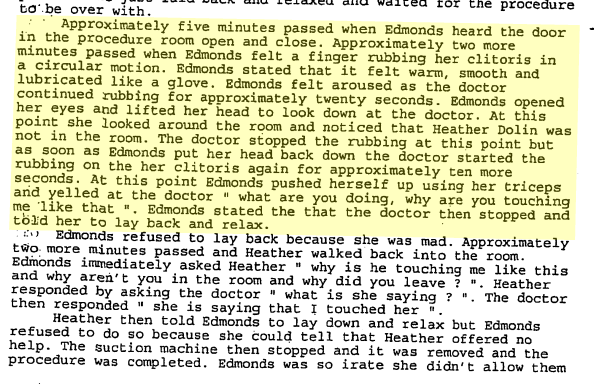
Kalo has an unsavory history. He was investigated in 1998 after two patients reported that he had sexually abused them. One reported then when she was in the stirrups for her abortion he performed oral sex on her. The other reported that he had sexually manipulated her clitoris while she was in the stirrups.
![]() |
| Reginald Sharpe |
Dr. Reginald Sharpe has not, to my knowledge, been accused of sexual abuse, but he does have a history of malpractice, including the death of a 26-year-old patient in 2008. Life Site News reported that Sharpe had perforated the patient's uterus, and once the instruments were inside her pelvic cavity had managed to cut a uterine blood vessel and lacerate her intestines and her liver. Because I have only just now learned of this patient's death, I will begin searching for substantiating documents. Since the woman's family sued, there will be court documents regarding the case.
Sharpe had already been reprimanded in 2005 for "general negligence or failure to exercise due care, including negligent delegation to or supervision of employees or other individuals" at his facility. The Board of Osteopathic Medicine detailed Sharpe's care of patient "R. C," whom he abandoned for several house while she suffered such intense pain and bleeding that she eventually screamed for her mother, who called 911. Sharpe called and instructed EMS not to transfer his patient to a hospital. After waiting fifteen minutes for him to arrive, they took her to the hospital anyway, where her bleeding and her abnormally low blood pressure and racing pulse were finally addressed.
Sharpe had also been disciplined in 1998 for allowing unqualified staff to administer drugs in his absence.
How much sooner might this place have been closed down if abortion-rights groups had invested 10% of the time they spend investigating prolife pregnancy centers investigating seedy abortion clinics instead?
Pervy Abortionist Still Running Clinic While Prochoice Investigate Pregnancy Help Centers
State suspends Lathrup Village abortion clinic license after failed health inspection
According to the Michigan Attorney General’s Office, the state has suspended the license of a local clinic where abortions are performed after authorities discovered several health code violations. .... According to a document sent to the facility by the Department of Licensing and Regulatory Affairs, the center failed to maintain a sterile facility and inform a patient of risks, consent or complications of a procedure. Workers allegedly were performing charting improperly, and did not have adequate supplies and tools, among other things.
![]() |
| Jacob Kalo |
Dr. Jacob Kalo owns the facility. He has an unsavory history. He was investigated in 1998 after two patients reported sexual abuse. The first patient said he groped her breast during the counseling session, then when she was in the stirrups for her abortion he performed oral sex on her. She was unable to move or protest because she had been paralyzed by drugs Kalo had injected.
![]() |
| Click to enlarge. |
When a police officer interviewed staff at the clinic, one assistant said that a female employee would be in the room during the procedure -- but also that Kalo would go into the room with the patient first and would press a buzzer to summon the assistant when he was ready for her to come into the procedure room. Several days later, when interviewed at the police station, this employee stated that Kalo was "rarely" alone in the room with a patient.
Kalo admitted to manipulating the patient's breast, but claimed that he only did it because he was unable to determine by ultrasound if the patient was pregnant, so he was checking her breast to see if it showed signs of being stimulated by pregnancy hormones. He denied licking the patient's genitals but said that he often sniffed the patient's vagina to smell for signs of infection.
![]() |
| Click to enlarge |
During the investigation another patient came forward with allegations that while she was on the procedure table the female assistant left the room and Kalo began rubbing her clitoris with his fingers. She sat up and told him to stop. The female assistant returned to the room. Kalo insisted that he had merely been cleaning the patient's genitals. The patient was so outraged and distressed that she immediately dressed and refused to lay back down.
Kalo was never arrested because authorities dismissed the women's complaints as being due to being under the influence of medications and being confused about the nature of the acts being performed by Kalo. Though it is difficult to understand how sexually experienced women could possibly be unable to distinguish between gynecological care and sexual activity.
Here's a question that's never been adequately answered: Abortion-rights group devote massive efforts to investigating prolife pregnancy centers and demanding that state authorities watch them like a hawk. Why do they have no interest in keeping a close eye on abortion facilities where patients are sexually abused? Whose interests are they really protecting?
Why Did Abortion-Rights Groups Tolerate This Clinic and its Pervy, Quacky Docs?
State suspends Lathrup Village abortion clinic license after failed health inspection
According to the Michigan Attorney General’s Office, the state has suspended the license of a local clinic where abortions are performed after authorities discovered several health code violations. .... According to a document sent to the facility by the Department of Licensing and Regulatory Affairs, the center failed to maintain a sterile facility and inform a patient of risks, consent or complications of a procedure. Workers allegedly were performing charting improperly, and did not have adequate supplies and tools, among other things.
Dr. Jacob Kalo owns the facility and Dr. Reginald Sharpe, who was also mentioned in the article, evidently does abortions there. Kalo has an unsavory history. He was investigated in 1998 after two patients reported that he had sexually abused them. More on him elsewhere.
![]() |
| Reginald Sharpe |
Dr. Reginald Sharpe has not, to my knowledge, been accused of sexual abuse, but he does have a history of malpractice, including the death of a 26-year-old patient in 2008. Life Site News reported that Sharpe had perforated the patient's uterus, and once the instruments were inside her pelvic cavity had managed to cut a uterine blood vessel and lacerate her intestines and her liver. Because I have only just now learned of this patient's death, I will begin searching for substantiating documents. Since the woman's family sued, there will be court documents regarding the case.
Sharpe had already been reprimanded in 2005 for "general negligence or failure to exercise due care, including negligent delegation to or supervision of employees or other individuals" at his facility. The Board of Osteopathic Medicine detailed Sharpe's care of patient "R. C." I will refer to her as "Reba."
On February 24, 2005, Reba had gone to Sharpe's facility, Women's Advisory Center, for an abortion to be preformed by Dr. Rudolfo Finkelstein. On the first day, Finkelstein performed an ultrasound and told Reba that she was 23.5 weeks pregnant and needed to undergo an immediate abortion. Reba returned on March 1 for Finkelstein to insert laminaria (small sterile seaweed sticks used to dilate the cervix) in preparation for the procedure the following day. Sharpe then told Reba that he would be the one to perform the abortion.
On March 2, Sharpe administered a sedative then began the procedure. After a few minutes, Sharpe told Reba that the fetus was too high in the uterus and he would have to let her rest quietly for a while so that he could complete the abortion when the fetus was in a better position. She was moved to the recovery room. Fifteen minutes later, Sharpe checked in on Reba, then left the facility.
Over the next several hours, Reba had painful contractions and profuse bleeding. She asked staff to contact Sharpe, and they kept telling her that he'd be back soon. The only care they provided was to move Reba to a different room and replace the bloody bedding. Reba began asking staff to either let her mother come back to her or to call an ambulance, but this request was refused. At 12:20 p.m., about three hours after Sharpe had left, Reba screamed for her mother, who heard her and demanded to be brought to her daughter. Reba was in full labor. Her mother asked the assistants to help, and when they refused she delivered the weak but live-born infant herself.
Reba's mother asked the staff to call an ambulance, but they refused so she called from her own cell phone. EMS staff were denied entrance to the building. While they waited to get in, Reba's mother spoke to Sharpe on the phone, and he said he'd be there in five minutes.
Eight minutes after EMS arrived, clinic staff grudgingly unlocked the door but told the medics that their help wasn't needed because Sharpe would be there soon. They demanded access to the patient. They found her with a racing pulse and alarmingly low blood pressure, the placenta still in place and the 27-week baby's cord not cut. After waiting more than 15 minutes for the arrival of Sharpe -- who had spoken to medics on the phone and insisted that they not transport Reba to the hospital -- the medics took Reba to the ambulance and moved to a nearby parking lot. They assessed Reba again. Her blood pressure was still low and her pulse was still high, so EMS gave up on waiting for Reba's doctor and transported her to the hospital, where a doctor attended to the delivery of the placenta and assessed the baby, which had died.
The fact that anybody would allow this man to treat patients is alarming in and of itself. Even more alarming is the fact that prochoicers never investigated this clinic and the backgrounds of the doctors that patients were trusting with their care. Abortion-rights groups never seem to have trouble pulling together the resources to go after prolife pregnancy centers, despite the fact that they've never been able to document a single case of one of those centers causing a woman's injury or death. But they somehow show no interest in checking up on abortion facilities that endanger, injure, and kill women.
What are their priorities?
Friday, January 30, 2015
Late 19th & Early 20th Century Deaths
New York, 1893
On January 29, 1893, 21-year-old German immigrant Bertha Kern was taken to St. Mark's Hospital in New York. The doctors who examined her concluded that her case was hopeless and told Bertha that she was dying. Bertha "reluctantly acknowledged that she had been in the hands of Mrs. Caroline Kraft, a woman who called herself a midwife...."
The coroner was summoned, arriving at midnight to take Bertha's statement. "With death staring her in the face, she declared that a man who lived on St. Mark's place had betrayed her. But she exonerated him from all complicity in the crime that had brought her to death's door. Two weeks before, she said, realizing her position, she had gone to Mrs. Kraft. She had read her advertisement in an afternoon newspaper."
Kraft quoted a price of $20, and Bertha returned with the money. She was taken to "a dark room in the middle of the flat" where the abortion was then perpetrated.
Bertha took ill, but still reported to her job as a domestic servant. Her condition must have deteriorated rapidly, because her employers took one look at her and quickly took her to the hospital, accompanied by her sister, Bertha's only living relative, who was also in their employ.
The coroner notified the police, who quickly went to Kraft's apartment. A woman there told them that Kraft was out and wouldn't return for several days. However, the police searched the house, finding a case of instruments. They then turned their attention to the roof, where they found Kraft crouching behind the chimney. "Of course she denied her guilt. But she was terribly excited."
The police immediately took Kraft to Bertha's bedside, where the dying woman made a positive identification of her killer.
Bertha had also said that her lover, Franz Steinbrenner, had purchased abortifacient pills for her at some point, though she insisted that he'd known nothing of her decision to entrust herself to Caroline Kraft when the pills failed to dislodge the fetus.
Police sought Steinbrenner and found evidence that he was planning to flee. Acting on a hunch that he'd want to see Bertha one last time, police staked out the hospital. Sure enough, Steinbrenner went to Bertha's bedside, where the two of them wept and "renewed protestations of devotion."
Bertha breathed her last at around 5:00 the afternoon of the 30th.
An autopsy was conducted which found "unmistakably that she had died of septic peritonitis resulting from the operation; had been killed as surely as if Mrs. Kraft had cut her throat."
A coroner's inquest was held on February 2, with the coroner's jury identifying Kraft as responsible for Bertha's death. Her lover, Franz Steinbrenner, was exonerated.
During Kraft's trial, three jurors reported being approached by a man, later identified as John Wagner, Caroline Kraft's brother-in-law, who attempted to bribe them. In spite of -- or perhaps in part because of -- the bribery attempt, Kraft was convicted of manslaughter, sentenced to six years. However, Kraft later got the case overturned on appeal based on technicalities surrounding Bertha's deathbed statement. A headline relating to the case indicates the possibility of corruption. "Her Husband Has a Political Pull -- He Belongs to Keating's Tammany Club."
Chicago, 1912
On January 30, 1912, 21-year-old Jeanette Mebzarek died in Chicago from an abortion perpetrated by nurse/midwife Anna Chezanowaki that same day. Chezanowaki was indicted by a Grand Jury on February 15, but the case never went to trial.
On January 29, 1893, 21-year-old German immigrant Bertha Kern was taken to St. Mark's Hospital in New York. The doctors who examined her concluded that her case was hopeless and told Bertha that she was dying. Bertha "reluctantly acknowledged that she had been in the hands of Mrs. Caroline Kraft, a woman who called herself a midwife...."
The coroner was summoned, arriving at midnight to take Bertha's statement. "With death staring her in the face, she declared that a man who lived on St. Mark's place had betrayed her. But she exonerated him from all complicity in the crime that had brought her to death's door. Two weeks before, she said, realizing her position, she had gone to Mrs. Kraft. She had read her advertisement in an afternoon newspaper."
Kraft quoted a price of $20, and Bertha returned with the money. She was taken to "a dark room in the middle of the flat" where the abortion was then perpetrated.
Bertha took ill, but still reported to her job as a domestic servant. Her condition must have deteriorated rapidly, because her employers took one look at her and quickly took her to the hospital, accompanied by her sister, Bertha's only living relative, who was also in their employ.
The coroner notified the police, who quickly went to Kraft's apartment. A woman there told them that Kraft was out and wouldn't return for several days. However, the police searched the house, finding a case of instruments. They then turned their attention to the roof, where they found Kraft crouching behind the chimney. "Of course she denied her guilt. But she was terribly excited."
The police immediately took Kraft to Bertha's bedside, where the dying woman made a positive identification of her killer.
Bertha had also said that her lover, Franz Steinbrenner, had purchased abortifacient pills for her at some point, though she insisted that he'd known nothing of her decision to entrust herself to Caroline Kraft when the pills failed to dislodge the fetus.
Police sought Steinbrenner and found evidence that he was planning to flee. Acting on a hunch that he'd want to see Bertha one last time, police staked out the hospital. Sure enough, Steinbrenner went to Bertha's bedside, where the two of them wept and "renewed protestations of devotion."
Bertha breathed her last at around 5:00 the afternoon of the 30th.
An autopsy was conducted which found "unmistakably that she had died of septic peritonitis resulting from the operation; had been killed as surely as if Mrs. Kraft had cut her throat."
A coroner's inquest was held on February 2, with the coroner's jury identifying Kraft as responsible for Bertha's death. Her lover, Franz Steinbrenner, was exonerated.
During Kraft's trial, three jurors reported being approached by a man, later identified as John Wagner, Caroline Kraft's brother-in-law, who attempted to bribe them. In spite of -- or perhaps in part because of -- the bribery attempt, Kraft was convicted of manslaughter, sentenced to six years. However, Kraft later got the case overturned on appeal based on technicalities surrounding Bertha's deathbed statement. A headline relating to the case indicates the possibility of corruption. "Her Husband Has a Political Pull -- He Belongs to Keating's Tammany Club."
Chicago, 1912
On January 30, 1912, 21-year-old Jeanette Mebzarek died in Chicago from an abortion perpetrated by nurse/midwife Anna Chezanowaki that same day. Chezanowaki was indicted by a Grand Jury on February 15, but the case never went to trial.
Thursday, January 29, 2015
Three Criminal Deaths
On December 28, 1857, 20-year-old Olive Ash and her twin sister, Olivia, left their home and went by rail to the home of their cousin, Levi M. Aldrich, in Bradford, Vermont, ostensibly to visit his widowed mother. The sisters remained at Aldrich's home about two weeks, then said that they were going to meet some friends for an excursion into New York or Massachusetts. Instead, they went to the home and office of Dr. William Howard, about three miles south of Bradford. On Friday, January 29, 1858, Olive's mother, Mahitable, got a telegram telling her to come to Howard's home. She quickly complied, and was there when her daughter died at about 6 in the evening. Dr. Howard got a coffin for Olive, and the twins' mother took her daughter's body by train to Sutton. On February 3, Olive's body was exhumed for an autopsy, which showed evidence of recent pregnancy as well as signs of instrumentation and damage to the cervix. Dr. Frost believed that Olive had hemorrhaged due to the damage to her cervix. He removed and preserved her uterus. Another physician examined the uterus and concluded that the placenta had been retained for some time after the abortion, and that this retained placenta would also cause hemorrhage. Howard was tried in Olive's death. Olivia testified that she had taken her sister to Howard for the express purpose of an abortion. Olive was perhaps six months pregnant. After consultation and discussion, the young women paid Howard $100. Details of Olive's last weeks can be found here. Howard was convicted in Olive's death.
On January 29, 1883, a widow named Adeline Savroch died in a carriage on the way home from having a criminal abortion perpetrated by midwife Bertha Twachaus, who was held without bail for murder in Adeline's death. A saloon keeper named Julius Grosse, and his housekeeper, Celia Arlep or Ortlepp, were held as accessories.
Rose Lipner, age 32, mother of 2, died at Riverdale Hospital on January 29, 1936. Rose was buried the next day at Mount Judah Cemetery in Cypress Hills, New York. After the funeral, several people, including an anonymous caller, notified police and the District Attorney's office that the death was suspicious, and Rose was exhumed for an autopsy. The medical examiner determined that Rose had died from an abortion. Katz was arraigned for second-degree manslaughter. Dr. Maxwell C. Katz, who owned and lived at Riverdale (maternity) Hospital, which he operated, signed a death certificate indicating that Rose had been operated on there for a tumor. During his trial, his defense brought forth a large number of character witnesses testifying to Katz's 25 years as a physician and his good reputation. Katz did admit to performing an abortion on Rose, but said that it was in an attempt to save her life. This defense was successful, and he was acquitted.
On January 29, 1883, a widow named Adeline Savroch died in a carriage on the way home from having a criminal abortion perpetrated by midwife Bertha Twachaus, who was held without bail for murder in Adeline's death. A saloon keeper named Julius Grosse, and his housekeeper, Celia Arlep or Ortlepp, were held as accessories.
Rose Lipner, age 32, mother of 2, died at Riverdale Hospital on January 29, 1936. Rose was buried the next day at Mount Judah Cemetery in Cypress Hills, New York. After the funeral, several people, including an anonymous caller, notified police and the District Attorney's office that the death was suspicious, and Rose was exhumed for an autopsy. The medical examiner determined that Rose had died from an abortion. Katz was arraigned for second-degree manslaughter. Dr. Maxwell C. Katz, who owned and lived at Riverdale (maternity) Hospital, which he operated, signed a death certificate indicating that Rose had been operated on there for a tumor. During his trial, his defense brought forth a large number of character witnesses testifying to Katz's 25 years as a physician and his good reputation. Katz did admit to performing an abortion on Rose, but said that it was in an attempt to save her life. This defense was successful, and he was acquitted.
Wednesday, January 28, 2015
Fatal Abortions by Doctor, Midwife, Self, Doctor, Lay Abortionist, and Doctor
On January 28, 1911, 18-year-old homemaker Lillie Hirst died in Chicago from septicemia caused by an abortion that had been perpetrated less than a week prior. Dr. Aldrich and Mrs. Treshelling were held by the Coroner's Jury and indicted, but the case never went to trial.
On January 28, 1912, 28-year-old homemaker Mary Balogh, an immigrant from Hungary, died at the practice of midwife Anna Klickner from an abortion perpetrated there the previous day. Klickner was arrested at the scene but escaped. She was captured on November 26 and indicted on December 15. The case never went to trial.
On January 28, 1918, 27-year-old Annabella Lewis, a homemaker, died in at West Penn Hospital in Allegheny County, Pennsylvania. The autopsy concluded that she had performed a self-induced abortion using slippery elm bark. She had told her husband, Albert, about the abortion, but had denied even being ill to anybody else until her admission to the hospital
Lavern Perez, age 22, died at her home in Chicago on January 28, 1943. Dr. Henry Gross, age 58, was found guilty of manslaughter by abortion. Gross had a respectable medical practice. However, after a Dr. Ira Willits died, Gross set up shop in Willits's old office as an abortionist under Willit's name. It was at this office, Lavern's mother-in-law, Olga Perez, testified. Mrs. Perez said that Lavern had paid an office attendant $60 for the abortion. The day after Lavern died, Mrs. Perez said, Dr. Gross appeared at her home with a gun, which he used to threaten both her and her son. They wrestled the gun away from him, whereupon he begged for the weapon back so he could kill himself. Gross had insisted that he'd only been treating Lavern for a cold. However, he was also investigated for the February 20, 1943 abortion death of Dorothy Webber, age 20.
Evangeline McKenna, a Louisiana native, was 38 years old when she checked into Cedars of Lebanon Hospital in Los Angeles for an abortion and tubal ligation. Two days after the procedure, she had a seizure. She stopped breathing and went into cardiac arrest. Doctors told the family that Evanegline was brain dead, but they held out hope and asked that she be put on life support. On January 28, 1974, after twelve days on life support, Evangeline was pronounced dead. She left behind five children.
On January 28, 1912, 28-year-old homemaker Mary Balogh, an immigrant from Hungary, died at the practice of midwife Anna Klickner from an abortion perpetrated there the previous day. Klickner was arrested at the scene but escaped. She was captured on November 26 and indicted on December 15. The case never went to trial.
On January 28, 1918, 27-year-old Annabella Lewis, a homemaker, died in at West Penn Hospital in Allegheny County, Pennsylvania. The autopsy concluded that she had performed a self-induced abortion using slippery elm bark. She had told her husband, Albert, about the abortion, but had denied even being ill to anybody else until her admission to the hospital
Lavern Perez, age 22, died at her home in Chicago on January 28, 1943. Dr. Henry Gross, age 58, was found guilty of manslaughter by abortion. Gross had a respectable medical practice. However, after a Dr. Ira Willits died, Gross set up shop in Willits's old office as an abortionist under Willit's name. It was at this office, Lavern's mother-in-law, Olga Perez, testified. Mrs. Perez said that Lavern had paid an office attendant $60 for the abortion. The day after Lavern died, Mrs. Perez said, Dr. Gross appeared at her home with a gun, which he used to threaten both her and her son. They wrestled the gun away from him, whereupon he begged for the weapon back so he could kill himself. Gross had insisted that he'd only been treating Lavern for a cold. However, he was also investigated for the February 20, 1943 abortion death of Dorothy Webber, age 20.
Sometime in early January, 1947, Iva Coffman performed an abortion on Kerneda Bennett, resulting in her death on January 28. Kerneda had asked her friend, Irene Davis, to help her arrange an abortion. The two of them visited Coffman at her home. Coffman took Kerneda into a bedroom. "When they came out," according to legal records, "Mrs. Coffman told Mrs. Bennett to come back if nothing had happened in fourteen days, and if anything was said about why they were there to say they came to have a dress made." Kerneda "had not had the result expected," so she and Irene took a taxi back to Coffman's home on the evening of January 28. While the taxi was waiting, Coffman took Kerneda back into the bedroom. About fifteen or twenty minutes later, Coffman told Irene that Kerneda had fainted and asked her to come back to the bedroom. Irene found Kerneda lying, groaning, face-down on the floor beside the bed, dressed except for her shoes and coat. Coffman said that they needed to get Kerneda to a hospital. Irene summoned the taxi driver, who carried Kerneda out to the cab. Kerneda, who had been nearly lifeless when loaded into the taxi, was dead on arrival at the hospital. That night Coffman's home was searched, but nothing of evidential value was found. Coffman told the sheriff that Kerneda had asked for a glass of water, which she had used to wash down two pills from her purse, joking that they were poison. A few minutes later, Coffman said, Kerneda fell onto the floor. The coroner, Dr. Byers, performed the autopsy assisted and concluded that an abortion had been attempted, which had caused a fatal air embolism. After the embolism killed Kerneda, the baby died as well. He based the embolism diagnosis on the crepitation (feeling as if air was present) of the uterus. Coffman was convicted of performing the fatal abortion and incarcerated to serve a five year sentence.
Evangeline McKenna, a Louisiana native, was 38 years old when she checked into Cedars of Lebanon Hospital in Los Angeles for an abortion and tubal ligation. Two days after the procedure, she had a seizure. She stopped breathing and went into cardiac arrest. Doctors told the family that Evanegline was brain dead, but they held out hope and asked that she be put on life support. On January 28, 1974, after twelve days on life support, Evangeline was pronounced dead. She left behind five children.
Tuesday, January 27, 2015
Do Black Women's Lives Matter? Beliinda Byrd
On January 24, 1987, 37-year-old Belinda Ann Byrd had a safe and legal abortion performed by Stephen Pine at Inglewood Women's Hospital in Los Angeles, California. Belinda was left unattended for three hours after the abortion, and was found unresponsive. Staff at Inglewood delayed an additional two hours before transferring her to a hospital with appropriate emergency services.
![]() |
| Belinda Byrd |
Belinda was one of 74 women who had abortions in Inglewood's single operating room that day, and one of 24 whose abortions were performed in the final two hours of the day. Belinda remained comatose until her death on January 27.
Belinda's mother wrote to a Los Angeles district attorney:
- I am the mother of Belinda Byrd, victim of abortionists at [Inglewood]. I am also the grandmother of her three young children who are left behind and motherless. I cry every day when I think how horrible her death was. She was slashed by them and then she bled to death ... and nobody cares. I know that other young black women are now dead after abortion at that address. ... Where is [the abortionist] now? Has he been stopped? Has anything happened to him because of what he did to my Belinda? Has he served jail time for any of these cruel deaths? People tell me nothing has happened, that nothing ever happens to white abortionists who leave young black women dead. I'm hurting real bad and want some justice for Belinda and all other women who go like sheep to slaughter.
In the wake of the series of abortion deaths at Inglewood, the authorities inspected the place. Among other things, they caught an abortionist writing post-operative examination notes without even examining the patients. When the state closed Inglewood for numerous violations, the facility simply re-opened as Inglewood Women's Clinic; as a clinic rather than a hospital they were no longer subject to the same intense scrutiny and were able to remain in business.
Other women known to have died after abortions at the Inglewood facility include Kathy Murphy, Cora Lewis, Lynette Wallace, and Elizabeth Tsuji.
Monday, January 26, 2015
Two Criminal, Two Safe-n-Legal, All Dead
On January 26, 1920, 24-year-old Lydia Swanson died at Chicago'sPost Graduate Hospital from an abortion perpetrated by Dr. Rosa Gollnick. Lydia had developed septic inflammation of both lungs. Gollnick was arrested on January 27 and went to trial, but was acquitted on June 18.
Twenty-six-year-old Lucy Sanchez and her roommate, Clara Thornton, were both pregnant in January of 1956. After asking around they found an abortionist named Lois Brown. They met with Brown on January 18. Clara was about three months pregnant; Lucy was around six months. Only Clara had the money that day, $100 she had borrowed from Lucy, so Brown took Clara and sent Lucy home. Brown used a syringe to inject Clara with a solution which looked and smelled like Lifebouy soap. Clara suffered alarming complications that evening, and Brown came to her home. After attending to Clara, Brown pressured Lucy to come up with the money to have an abortion as well. On January 26, Clara repaid Lucy the $100. Brown came to their home to take Lucy for the abortion. That evening, Brown went to Clara's workplace, telling her to come and fetch Lucy because she was suffering from complications and her moans were disturbing the neighbors. When Clara arrived house, Lucy was lying on a couch amid bloody newspapers and covered with a blood blanket and bedspread. Clara helped Brown carry Lucy down to the car, and they drove her to a hospital. As they sat outside the emergency room Brown told Clara "she knew she shouldn't have done it, and took out her wallet, took out $30 and gave it to me and said those $30 were to help me in case Lucy needed anything." But Lucy was beyond needing any help. A doctor came out and informed the three women that Lucy had been dead on arrival. She had bled to death from a blunt injury to a uterine blood vessel. Brown was placed on trial and was found guilty of both abortions -- Lucy's and Clara's -- and of the murder of Lucy.
Ingar Weber, age 28, died January 26, 1990, in a Louisiana hospital. She had been treated for acute kidney failure after a safe and legal abortion performed at Delta Women's Clinic in Baton Rouge on January 20, 1990. Ingar's family sued the clinic and its doctors, Richardson P. Glidden and Thomas Booker. They faulted the doctors with failing to diagnose Ingar's kidney problems, or her deteriorating physical condition, before, during, or after the abortion. Delta had also been sued following the death of another abortion patient. This woman was most likely 27-year-old Sheila Hebert, who died after an abortion on June 6, 1984.
On January 22, 2001, 19-year-old Melissa Heim went to Access Health Center in Downers Grove, Illinois.She was given "twilight anesthesia" with a drug cocktail including Versed, Fentanyl, and Brevital for a safe, legal abortion. After the abortion, she was moved to the recovery area, where she went into cardio-respiratory arrest about half an hour later. An ambulance was summoned, and Melissa was resuscitated by the paramedics, but due to the brain injury she had suffered, she died on January 26. Her survivors filed suit against Access, doctors Victor Espinosa and Alfonso Del Granado, and nurse Pat Hurt, holding that they had failed to monitor Melissa properly in recovery and failed to resuscitate her quickly enough to save her life.
Twenty-six-year-old Lucy Sanchez and her roommate, Clara Thornton, were both pregnant in January of 1956. After asking around they found an abortionist named Lois Brown. They met with Brown on January 18. Clara was about three months pregnant; Lucy was around six months. Only Clara had the money that day, $100 she had borrowed from Lucy, so Brown took Clara and sent Lucy home. Brown used a syringe to inject Clara with a solution which looked and smelled like Lifebouy soap. Clara suffered alarming complications that evening, and Brown came to her home. After attending to Clara, Brown pressured Lucy to come up with the money to have an abortion as well. On January 26, Clara repaid Lucy the $100. Brown came to their home to take Lucy for the abortion. That evening, Brown went to Clara's workplace, telling her to come and fetch Lucy because she was suffering from complications and her moans were disturbing the neighbors. When Clara arrived house, Lucy was lying on a couch amid bloody newspapers and covered with a blood blanket and bedspread. Clara helped Brown carry Lucy down to the car, and they drove her to a hospital. As they sat outside the emergency room Brown told Clara "she knew she shouldn't have done it, and took out her wallet, took out $30 and gave it to me and said those $30 were to help me in case Lucy needed anything." But Lucy was beyond needing any help. A doctor came out and informed the three women that Lucy had been dead on arrival. She had bled to death from a blunt injury to a uterine blood vessel. Brown was placed on trial and was found guilty of both abortions -- Lucy's and Clara's -- and of the murder of Lucy.
Ingar Weber, age 28, died January 26, 1990, in a Louisiana hospital. She had been treated for acute kidney failure after a safe and legal abortion performed at Delta Women's Clinic in Baton Rouge on January 20, 1990. Ingar's family sued the clinic and its doctors, Richardson P. Glidden and Thomas Booker. They faulted the doctors with failing to diagnose Ingar's kidney problems, or her deteriorating physical condition, before, during, or after the abortion. Delta had also been sued following the death of another abortion patient. This woman was most likely 27-year-old Sheila Hebert, who died after an abortion on June 6, 1984.
On January 22, 2001, 19-year-old Melissa Heim went to Access Health Center in Downers Grove, Illinois.She was given "twilight anesthesia" with a drug cocktail including Versed, Fentanyl, and Brevital for a safe, legal abortion. After the abortion, she was moved to the recovery area, where she went into cardio-respiratory arrest about half an hour later. An ambulance was summoned, and Melissa was resuscitated by the paramedics, but due to the brain injury she had suffered, she died on January 26. Her survivors filed suit against Access, doctors Victor Espinosa and Alfonso Del Granado, and nurse Pat Hurt, holding that they had failed to monitor Melissa properly in recovery and failed to resuscitate her quickly enough to save her life.
Sunday, January 25, 2015
"Safe and Legal" in Queens, 2010
![]() |
| Alexandra Nunez |
Her 19-year-old daughter, Daisy Davila, told the New York Daily News, "I'm upset because I never got a chance to say goodbye. She didn't want anyone to go with her. I made dinner and lunch ,,, hoping she would come back."
Eventually the medical board concluded that the doctor responsible for Alexandra's death was Robert F. Hosty. He had no hospital affiliation and hadn't taken any continuing medical education training since 2004.
Because of Alexandra's obstetric history, which included two c-sections, and the location of the placenta, Hosty should have known that it was unsafe to proceed with an abortion in an outpatient setting. Catastrophic complications are to be predicted, and the doctor must be certain that there is an adequate supply of blood for a possible transfusion, and a fully equipped operating room nearby in case an emergency hysterectomy is needed.
As a prudent physician would have suspected, the placenta had implanted deeply into the area of Alexandra's uterus that had been scarred by the prior surgery.
![]() |
| A1 Medicine in Queens |
Paramedics arrived to find Alexandra still on the procedure table in stirrups, cold and gray and for all appearances already dead. Blood was still draining from her body into a pool on the floor. The only monitoring instrument in place was a pulse oximeter. The nurse anesthetist was administering oxygen, and because she was the only one who seemed to know what was going on, the emergency responders assumed that she was the physician. Nobody else was assisting the patient in any way.
The paramedics began a futile attempt to resuscitate Alexandra, but she was pronounced dead at the hospital.
Operation Rescue describes the facility where Alexandra's abortion was done as "located in a run-down building in a predominately Hispanic neighborhood," and was operated by Salomon Epstein. An employee at A1 insisted that all had gone well at their facility. "The patient was transferred to the hospital, she didn't die at the clinic. Nothing happened here."
"Nothing happened." Except that a woman was fatally injured. It's like the thank you note that Steve Lichtenberg sent for the referral after Deanna Bell's death: "Uneventful D&E". A dead patient. "Uneventful." "Nothing happened."
A1 was an ambulatory surgical facility doing abortions and plastic surgery. They employed Hosty even though he had already allowed a gynecological patient to die by triggering massive bleeding then utterly failing to provide any effective lifesaving care.
Subscribe to:
Posts (Atom)